

Quick Answer
Natural personal care products are skincare, haircare, and hygiene products made with ingredients sourced partly or mainly from nature. Common ingredients include aloe vera, shea butter, sunflower oil, jojoba oil, and botanical extracts.
These products can support everyday personal care by helping moisturize skin, condition hair, and maintain hygiene. However, natural does not automatically mean safe or suitable for everyone. Always check ingredient labels, choose products according to your skin type, and patch-test new products before regular use.
Author: Saira
Role: Publisher & Skincare Content Writer
Content Review: Evidence-informed skincare content based on trusted dermatology resources and skincare research.
Introduction
Have you ever looked at the ingredients in your skincare, shampoo, or body lotion and wondered whether there are gentler alternatives for everyday use? Many people are becoming more interested in natural personal care products because they prefer simple routines and ingredients obtained from plants and other natural sources.
From aloe vera moisturizers to plant-based hair oils and gentle cleansing products, natural ingredients are used in many personal care formulas. They offer different benefits depending on their formulation and how they are used.
However, choosing the right products is not always easy. Some natural ingredients may work well for dry skin but feel too heavy for oily or acne-prone skin. Others, such as essential oils and natural fragrances, can cause irritation in sensitive individuals.
The goal is not to replace every conventional product with a natural alternative. Instead, it is to understand ingredients, identify your personal care needs, and choose products that support healthy skin and hair without unnecessary irritation.
In this guide, we will explore natural personal care products, commonly used ingredients, their potential benefits, how to choose suitable options, and mistakes to avoid when creating a daily routine.
1. What Are Natural Personal Care Products?

Natural personal care products are everyday products designed for skincare, haircare, body care, and hygiene that contain ingredients obtained from natural sources.
These ingredients may come from plants, seeds, fruits, minerals, and other naturally occurring materials.
Common examples include:
- Aloe vera gels and moisturizers.
- Plant-based facial cleansers.
- Shea butter body creams.
- Jojoba and sunflower oil hair products.
- Natural bar soaps.
- Botanical shampoos and conditioners.
- Lip balms containing plant oils.
- Mineral-based sunscreens.
- Gentle body washes.
Natural personal care products are available in different forms, including creams, lotions, oils, gels, powders, and cleansing bars.
Natural, Organic, and Plant-Based: What Is the Difference?
These terms often appear together on product packaging, but they have different meanings.
Natural: Usually describes ingredients obtained from natural sources. However, there is no universal legal definition for the term across all cosmetic markets.
Organic: Refers to agricultural ingredients produced under specific organic farming and certification standards.
Plant-based: Describes products or ingredients that come from plants. A plant-based formula may still contain other types of ingredients.
Understanding these differences helps you avoid choosing products based only on attractive packaging or marketing claims.
2. Why Are Natural Personal Care Products Becoming Popular?
People are paying more attention to what they apply to their skin and hair. Instead of choosing products based only on advertisements, many consumers want to understand ingredients and their possible effects.
Natural personal care products appeal to people who prefer botanical ingredients, simple routines, and products that match their personal preferences.
Interest in Simple Ingredients
Some consumers prefer products with shorter or easier-to-understand ingredient lists.
They may look for familiar ingredients such as aloe vera, shea butter, sunflower oil, and colloidal oatmeal.
However, a short ingredient list does not automatically mean that a product is safer or more effective. The complete formulation matters.
Preference for Plant-Derived Ingredients
Plant-derived ingredients are commonly used in modern skincare and haircare products.
Depending on the formula, they may help:
- Soften dry skin.
- Reduce moisture loss.
- Improve the feel of rough skin.
- Condition dry hair.
- Support a comfortable cleansing routine.
Growing Awareness of Skin Sensitivity
People with sensitive skin often pay closer attention to fragrances, preservatives, and other ingredients that may trigger reactions.
Some natural personal care products are available in fragrance-free formulas, which may be useful for people who are sensitive to scented products.
Remember that natural fragrances and essential oils can also cause irritation.
Interest in Environmental Responsibility
Some consumers prefer products with recyclable packaging, responsibly sourced ingredients, or reduced packaging waste.
These environmental features are separate from whether a product is natural. A botanical product is not automatically environmentally friendly.
3. 9 Natural Personal Care Products to Consider for Everyday Use
You do not need dozens of products to maintain personal hygiene and care for your skin and hair. A few suitable products can support a simple daily routine.
Here are nine types of natural personal care products worth understanding.
1. Aloe Vera Moisturizer

Aloe vera is a plant ingredient commonly used in moisturizers, gels, and after-sun skincare products.
It contains water and naturally occurring plant compounds. In a properly formulated moisturizer, aloe vera can contribute to a lightweight and comfortable skin feel.
Potential benefits:
- Provides a lightweight moisturizing feel.
- Can suit people who dislike heavy creams.
- Is commonly included in formulas for normal and oily skin.
How to choose it: Look for a properly formulated aloe vera moisturizer without unnecessary fragrance if your skin is sensitive. Aloe vera gel alone may not provide enough moisture for very dry skin.
2. Plant-Based Facial Cleanser

A facial cleanser removes excess oil, sweat, sunscreen, makeup, and everyday dirt.
Plant-derived cleansing ingredients are used in many gentle facial wash formulas. However, the overall formulation matters more than whether a cleanser is marketed as natural.
Potential benefits:
- Removes everyday surface impurities.
- Helps prepare skin for moisturizer.
- Supports a consistent cleansing routine.
How to choose it: Choose a gentle cleanser that does not leave your face feeling tight or uncomfortable. If you have acne-prone skin, look for a non-comedogenic formula when available.
3. Natural Body Lotion

Body lotions containing shea butter, sunflower oil, or plant-derived emollients can help soften dry skin.
Emollients improve the feel of the skin by filling spaces between dry surface cells. Some moisturizing formulas also contain ingredients that help reduce water loss.
Potential benefits:
- Softens rough areas.
- Helps improve dry skin.
- Supports the skin’s moisture barrier.
Apply body lotion after bathing while your skin is slightly damp.
4. Plant-Based Hair Oil
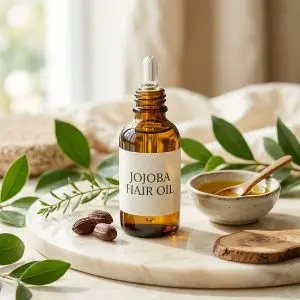
Plant oils such as jojoba, argan, and coconut oil are used in haircare products.
Depending on the oil and your hair type, they may help reduce dryness, improve softness, and make hair easier to manage.
Potential benefits:
- Adds softness and shine.
- Helps condition dry hair.
- Can reduce friction during hair styling.
Use a small amount, mainly on the mid-lengths and ends. If you have an oily scalp or forehead acne, avoid applying heavy oils near your hairline.
5. Gentle Natural Bar Soap

Some bar soaps contain plant oils, glycerin, and other moisturizing ingredients.
A well-formulated cleansing bar can be useful for everyday hand and body hygiene.
However, traditional soaps can be more drying than synthetic detergent cleansers, especially for people with sensitive or eczema-prone skin.
Potential benefits:
- Provides everyday cleansing.
- Is easy to store and carry.
- May be available with simple formulations.
Choose a gentle cleansing bar rather than a strongly fragranced product if your skin becomes dry easily.
6. Natural Lip Balm

Lip balms may contain beeswax, shea butter, petrolatum, or plant oils.
These ingredients can help protect lips and reduce moisture loss.
Potential benefits:
- Softens dry lips.
- Helps protect against environmental dryness.
- Supports comfortable daily lip care.
Choose a fragrance-free balm if you frequently experience lip irritation. Avoid products that sting or burn when applied.
7. Mineral-Based Sunscreen

Mineral sunscreens commonly use zinc oxide, titanium dioxide, or both as active sunscreen ingredients.
These are mineral-based ingredients, but that does not mean the entire sunscreen is natural or organic.
A properly labeled broad-spectrum sunscreen helps protect skin from ultraviolet A and B radiation.
Potential benefits:
- Helps protect against sunburn.
- Reduces UV exposure when applied correctly.
- Helps prevent some forms of sun-related skin damage.
Choose broad-spectrum SPF 30 or higher and apply it according to the product directions. Reapply when needed, especially after swimming, sweating, or towel drying.
8. Botanical Hand Cream

Frequent handwashing and environmental exposure can leave hands dry.
Hand creams containing plant oils, glycerin, or shea butter can help improve skin softness and reduce dryness.
Potential benefits:
- Softens dry hands.
- Helps maintain skin moisture.
- Supports daily hand care.
Apply after washing your hands, particularly when your skin feels tight.
9. Gentle Plant-Based Body Wash

Plant-derived cleansing ingredients are used in many body washes.
A gentle body wash can remove sweat, excess oil, and everyday dirt without leaving the skin feeling excessively dry.
Potential benefits:
- Supports everyday body hygiene.
- Provides convenient cleansing.
- May be available in fragrance-free formulas.
Choose a product that suits your skin type rather than relying on botanical claims alone.
4. Common Natural Ingredients Used in Personal Care Products
Understanding individual ingredients makes it easier to select suitable products. Different ingredients serve different purposes, and their effects depend on concentration, formulation, and how they are used.
Aloe Vera
Aloe vera is commonly included in gels, moisturizers, and soothing skincare products.
It can contribute to a lightweight moisturizing formula. However, some people may develop irritation or an allergic reaction.
Shea Butter
Shea butter is a plant-derived fat obtained from shea tree nuts.
It is used in body creams, lip balms, and moisturizers because it helps soften skin and reduce moisture loss.
It may feel too rich for some people, particularly when applied heavily to acne-prone facial areas.
Coconut Oil
Coconut oil is used in haircare, body care, and some cleansing products.
It can help condition dry hair and soften skin. However, it may clog pores in some acne-prone individuals, so it is not an ideal facial moisturizer for everyone.
Jojoba Oil
Jojoba oil is a wax ester obtained from jojoba seeds.
It is used in facial oils, moisturizers, and haircare products. It can help soften skin and improve hair manageability.
Sunflower Seed Oil
Sunflower seed oil is used in moisturizers and body lotions.
It contains fatty acids that help soften skin and support its moisture barrier.
Oat-Based Ingredients
Colloidal oatmeal is finely processed oatmeal used in certain skincare products.
It can help soothe dry, itchy skin and support skin comfort. It is commonly found in moisturizers and body-care formulas.
Green Tea Extract
Green tea extract contains plant compounds called polyphenols, including catechins.
It is included in some skincare formulas because of its antioxidant properties. However, its presence does not mean a product will automatically treat acne or prevent skin aging.
5. How to Choose Natural Personal Care Products for Your Skin Type
Not every natural ingredient works for every skin type. Your skin’s oil production, moisture levels, sensitivity, and existing concerns should guide your choices.
For Oily Skin
If your face becomes shiny quickly, choose lightweight products that do not leave a greasy layer.
Look for:
- Lightweight aloe vera moisturizers.
- Gentle gel-based cleansers.
- Non-comedogenic facial products.
- Lightweight lotions instead of thick creams.
Avoid applying heavy oils to your entire face if they trigger clogged pores or breakouts.
For Dry Skin
Dry skin needs products that help soften the surface and reduce moisture loss.
Consider:
- Shea butter-based moisturizers.
- Sunflower seed oil in suitable formulas.
- Glycerin-based lotions.
- Gentle, non-stripping cleansers.
Apply moisturizer after bathing to help maintain skin hydration.
For Sensitive Skin
Sensitive skin may react to fragrance, essential oils, botanical extracts, or certain preservatives.
Look for:
- Fragrance-free moisturizers.
- Simple cleansing formulas.
- Products designed for sensitive skin.
- Shorter ingredient lists when practical.
Remember that fragrance-free does not mean allergy-proof. Read the full ingredient list and avoid ingredients that have caused reactions before.
For Acne-Prone Skin
Acne-prone skin needs products that cleanse gently without adding unnecessary irritation.
Consider:
- Gentle facial cleansers.
- Lightweight moisturizers.
- Non-comedogenic sunscreen.
- Fragrance-free skincare when sensitivity is a concern.
Do not assume that coconut oil, shea butter, or other plant oils will suit acne-prone facial skin. Some formulas may feel too heavy or contribute to clogged pores.
You can also read GlowVixa’s guide to choosing the best exfoliator for acne-prone skin for more information about selecting suitable skincare products.
For Normal or Combination Skin
If some areas of your face are oily while others feel dry, choose products that balance comfort and hydration.
For example:
- Use a gentle cleanser.
- Apply a lightweight moisturizer.
- Use a richer moisturizer only on dry areas if needed.
- Apply broad-spectrum sunscreen every morning.
Table 1: Natural Ingredients and Their Common Personal Care Uses
| Ingredient | Common use | Important consideration |
| Aloe vera | Lightweight gels and moisturizers | May irritate some people |
| Shea butter | Body creams and lip balms | Can feel heavy on facial skin |
| Jojoba oil | Hair and skin conditioning | Patch-test before use |
| Sunflower oil | Moisturizers and body lotions | Choose a suitable formulation |
| Coconut oil | Hair conditioning and body care | May clog facial pores |
| Colloidal oatmeal | Moisturizers for dry skin | Avoid if you have a known allergy |
| Green tea extract | Antioxidant skincare | Benefits depend on the formula |
| Glycerin | Hydrating lotions and creams | Works well in a complete moisturizer |
6. How to Build a Simple Natural Personal Care Routine
You do not need ten different products to care for your skin and body. A simple routine can be easier to follow and can reduce the chance of introducing too many new ingredients at once.
Here is an example of a practical daily routine.
Morning Skincare Routine
Step 1: Cleanse your face
Use a gentle facial cleanser suitable for your skin type. Avoid harsh scrubbing and very hot water.
Step 2: Apply a moisturizer
Choose a lightweight moisturizer if your skin is oily or a richer formula if it is dry.
Step 3: Protect your skin with sunscreen
Apply a broad-spectrum SPF 30 or higher sunscreen. A mineral formula containing zinc oxide or titanium dioxide is one option if you prefer mineral UV filters.
Step 4: Apply lip balm
Use a comfortable lip balm to reduce dryness and protect your lips.
Evening Skincare Routine
Step 1: Remove sunscreen and makeup
Clean your face gently to remove makeup, sunscreen, sweat, and daily impurities.
Step 2: Apply a suitable skincare product
You can use a simple moisturizer or a suitable treatment product based on your skin concerns.
Step 3: Moisturize
Apply a moisturizer to help maintain your skin’s moisture barrier overnight.
Weekly Hair and Body Care
In addition to daily skincare, you can maintain a simple hair and body routine.
- Use a gentle shampoo according to your scalp’s needs.
- Apply conditioner mainly to your hair lengths and ends.
- Use a suitable body lotion after bathing.
- Apply hair oil occasionally if your hair needs extra conditioning.
- Avoid excessive scrubbing or frequent use of harsh exfoliating products.
A weekly routine does not need to be complicated. Consistency and choosing suitable products are more important than using many products.
7. Natural Personal Care Products: Safety, Risks, and Common Mistakes
One of the biggest misunderstandings about natural personal care products is that ingredients from plants are always gentle.
This is not true. Natural ingredients can cause irritation, allergic reactions, or other unwanted effects. Their safety depends on the ingredient, concentration, formulation, application area, and individual sensitivity.
The U.S. Food and Drug Administration explains that the term natural does not have a formal regulatory definition for cosmetics in the United States. It also explains that cosmetic labeling claims must be truthful and not misleading. Read the FDA guidance on cosmetic labeling claims before relying on marketing terms such as natural or organic.
Mistake 1: Assuming Natural Means Hypoallergenic
A product containing botanical extracts or essential oils can still trigger a skin reaction.
If you have sensitive skin, look for fragrance-free formulas and avoid ingredients that have caused problems before.
Mistake 2: Applying Essential Oils Directly to the Face
Essential oils are highly concentrated plant extracts. Applying them directly to the skin can cause irritation or allergic contact dermatitis.
Do not use undiluted essential oils as facial serums or acne treatments. Even diluted oils are not suitable for everyone.
Mistake 3: Using Every Natural Ingredient at Once
Trying aloe vera, coconut oil, essential oils, scrubs, and several new botanical products together makes it difficult to identify what is helping or irritating your skin.
Introduce one new product at a time.
Mistake 4: Ignoring the Ingredient Label
Some products use attractive packaging and phrases such as clean, botanical, green, or plant-powered without explaining the full formulation clearly.
Always check:
- The complete ingredient list.
- Product directions.
- Warnings and precautions.
- Expiry information or period-after-opening symbol.
- Manufacturer and product details.
Mistake 5: Replacing Sunscreen With Natural Oils
Coconut oil, olive oil, aloe vera, and other plant ingredients should not replace a properly tested sunscreen.
A natural oil is not a reliable substitute for broad-spectrum SPF protection.
Mistake 6: Making Homemade Products Without Considering Preservation
Homemade mixtures containing water, aloe vera, fruit, or herbal preparations can become contaminated if they are stored improperly.
Commercial cosmetic products use formulation and preservation systems to help maintain product safety.
Do not assume that a homemade product is safe simply because it contains fresh ingredients.
Mistake 7: Choosing Products Only Because They Say Organic
Organic certification relates to how certain agricultural ingredients are produced. It does not guarantee that the finished product will suit your skin.
The FDA explains that the source of an ingredient does not determine its safety. Natural and organic ingredients can also cause allergic reactions.
How to Patch-Test a New Product
Before using a new skincare product regularly:
- Read the label and follow the manufacturer’s instructions.
- Apply a small amount to a discreet area of skin, such as the inner forearm.
- Repeat according to the product’s directions over several days.
- Watch for itching, burning, swelling, or redness.
- Stop using the product if you notice a reaction.
A home patch test cannot guarantee that a product will never cause irritation or an allergic reaction on your face.
If you develop severe swelling, breathing difficulty, or other signs of a serious allergic reaction, seek emergency medical care.
8. Natural Personal Care Products vs. Conventional Products
Many people believe natural personal care products are always better than conventional skincare and hygiene products. However, both types can contain useful ingredients, and both can cause unwanted reactions.
The best choice depends on the formula, safety testing, your skin’s needs, and how comfortably you can use the product.
Main Differences
Natural personal care products often highlight plant-derived oils, extracts, and mineral ingredients.
Conventional products may use a combination of plant-derived and laboratory-made ingredients, including moisturizers, preservatives, cleansing agents, and other ingredients selected for their performance.
Neither category is automatically superior.
Table 2: Natural vs. Conventional Personal Care Products
| Feature | Natural personal care products | Conventional personal care products |
| Ingredients | Often highlight botanical or mineral ingredients | May combine different ingredient sources |
| Fragrance | May contain essential oils or natural fragrances | May contain synthetic or natural fragrances |
| Skin compatibility | Depends on the complete formula | Depends on the complete formula |
| Preservation | May use different preservation systems | May use established cosmetic preservatives |
| Product variety | Includes botanical skincare and body care | Available across many skincare categories |
| Safety | Requires suitable formulation and use | Requires suitable formulation and use |
| Environmental impact | Depends on sourcing and packaging | Depends on sourcing and packaging |
| Best choice | A product that suits your individual needs | A product that suits your individual needs |
A conventional fragrance-free moisturizer may be a better choice for one person than a strongly scented botanical cream. Another person may enjoy a plant-oil-based body lotion without any problems.
Focus on ingredients and performance instead of assuming that one category is always healthier.
9. How to Shop for Natural Personal Care Products and When to Seek Professional Advice
Choosing a personal care product can feel confusing when shelves are full of different claims. A few simple shopping habits can make the process easier.
Check the Full Ingredient List
Do not make your decision based only on the front of the packaging.
Look for ingredients you understand and check whether the product contains known irritants or allergens for your skin.
Choose Products From Reliable Manufacturers
Look for:
- Clear ingredient information.
- Proper product labeling.
- Manufacturer contact details.
- Usage instructions and warnings.
- Appropriate packaging.
- Expiry or storage information where applicable.
Avoid products with unclear ingredient lists or exaggerated claims.
Be Careful With Medical Claims
A cosmetic moisturizer may improve skin softness, but that does not mean it can treat eczema, cure acne, or reverse skin disease.
Products making claims to treat or prevent medical conditions may be regulated differently depending on the country.
Consider Your Budget
You do not need expensive products to build an effective personal care routine.
Start with essential items:
- A gentle cleanser.
- A suitable moisturizer.
- A broad-spectrum sunscreen.
- A basic body lotion.
- A shampoo and conditioner that suit your hair.
Add optional products only when they meet a specific need.
When Should You Seek Professional Advice?
Consider speaking with a dermatologist or qualified healthcare professional if:
- Your skin develops persistent itching or redness.
- You experience repeated allergic reactions.
- You have painful or persistent acne.
- Your skin becomes very dry, cracked, or inflamed.
- You develop swelling or a rash after using a personal care product.
- You are unsure whether an ingredient is suitable for an existing skin condition.
Stop using a suspected irritating product rather than continuing to apply it in the hope that your skin will adjust.
Natural personal care products can support everyday hygiene and beauty routines, but they should not replace appropriate medical treatment.
How Long Does It Take to Notice a Difference?
The time needed to notice changes depends on the product, your skin or hair condition, and how consistently you use it.
Here is a general guide:
- Immediately: Some moisturizers and body lotions can make skin feel softer after application.
- Within 1–2 weeks: You may notice improved comfort and less dryness from a suitable moisturizing routine.
- Within 4–8 weeks: Consistent use may help improve the appearance and feel of dry or rough skin.
- Longer periods: Changes in acne, dark spots, or other persistent skin concerns may require specific treatments and professional guidance.
These are general expectations, not guaranteed timelines. Natural ingredients do not produce overnight results.
You can also explore GlowVixa’s guide to understanding acne on the cheeks if you are choosing personal care products because of recurring facial breakouts.
For readers who also use makeup, choosing suitable products matters. GlowVixa’s guide to the best primer for acne-prone skin explains what to consider when selecting face makeup.
For readers interested in lifestyle and skin-friendly food choices, explore turmeric oats for acne and our guide to foods that may cause acne breakouts.
Frequently Asked Questions
1. What are natural personal care products?
They are skincare, haircare, and hygiene products that contain ingredients obtained from natural sources, such as plants, minerals, and botanical extracts.
2. Are natural personal care products better for sensitive skin?
Not always. Some natural ingredients, especially essential oils and fragrances, can irritate sensitive skin.
3. Can natural personal care products cause acne?
Yes. Some oils and rich formulations may clog pores in certain people. Choose products according to your skin type.
4. Are organic and natural personal care products the same?
No. Natural describes ingredient sources, while organic refers to ingredients produced under specific agricultural standards.
5. Can I use natural personal care products every day?
Yes, if the products are properly formulated, suitable for your skin, and used according to their instructions.
Conclusion
Natural personal care products offer many options for people who enjoy plant-derived ingredients and simple everyday beauty routines. From aloe vera moisturizers and botanical cleansers to plant-based hair oils and gentle body lotions, there are different products for different personal care needs.
However, choosing the right product requires more than looking for natural or organic labels. You should understand the ingredients, consider your skin type, check product quality, and pay attention to possible irritation.
If you have oily or acne-prone skin, lightweight and non-comedogenic formulas may be more suitable. If your skin is dry, moisturizing ingredients such as shea butter, glycerin, and sunflower seed oil may help improve skin comfort.
Remember that natural does not automatically mean safe, chemical-free, or more effective. Both natural and conventional products can be useful when they are properly formulated and suitable for your needs.
Start with a simple routine, introduce new products gradually, and choose products that make your skin and body feel comfortable. A consistent and informed approach is more valuable than following every new beauty trend.






Leave a Reply