

Author: Saira
Role: Publisher & Skincare Content Writer
Content Review: Evidence-informed skincare content based on trusted dermatology resources and skincare research.
Quick Answer
No, you should not put toothpaste on a zit or pimple. Toothpaste is designed to clean teeth, not treat acne. Some ingredients in toothpaste may irritate facial skin and cause redness, burning, dryness, or peeling.
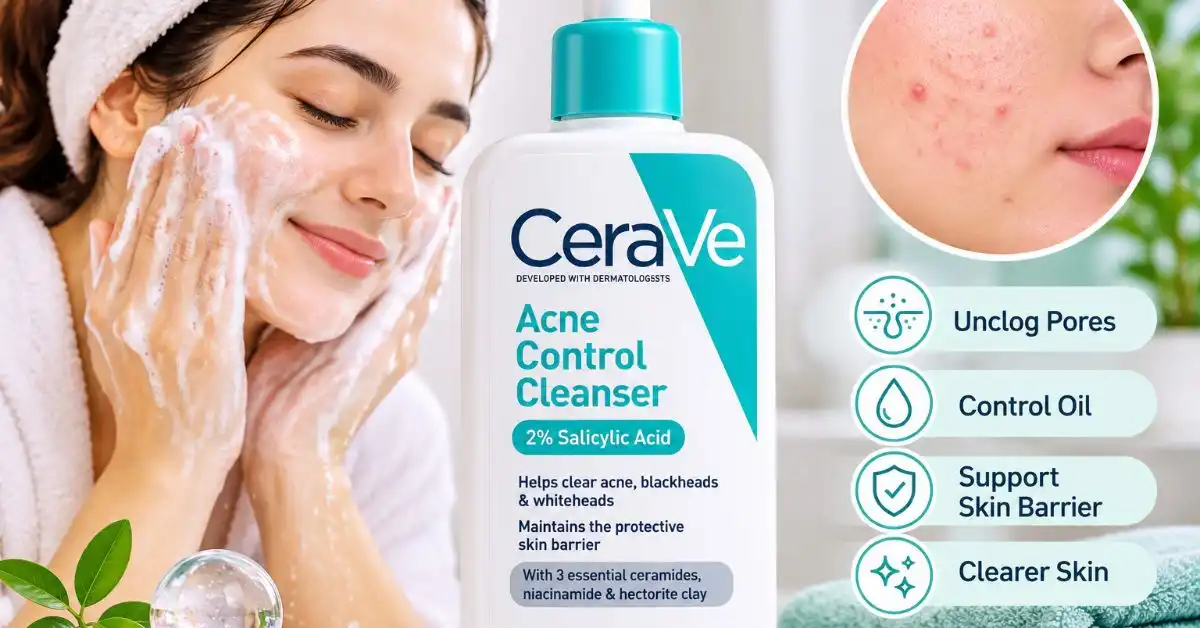
Instead, choose safer acne treatments such as benzoyl peroxide, salicylic acid, azelaic acid, or hydrocolloid pimple patches. These products are designed for skin and can help manage different types of breakouts when used correctly.
Introduction
Have you ever noticed a new pimple on your face just before an important event? You may have searched for a quick home remedy to make it disappear overnight. One common suggestion is applying toothpaste directly to the affected area.
But should I put toothpaste on a zit when I want to reduce redness and make a pimple smaller quickly?
This beauty hack has circulated for years because toothpaste can leave the skin feeling dry. Some people believe that drying out a pimple will make it disappear faster. However, this approach can do more harm than good, especially if your skin is sensitive or acne-prone.
Your facial skin is different from the surfaces of your teeth. It needs products that support its natural protective barrier rather than ingredients designed for oral hygiene.w
In this guide, we will explain why toothpaste is not a suitable acne treatment, which ingredients may irritate your skin, and what you can use instead. You will also learn how to treat different types of pimples, avoid common mistakes, and build a simple skincare routine.
If you are wondering, should I put toothpaste on a zit, the short answer is no.
1. Why Do People Put Toothpaste on Pimples?
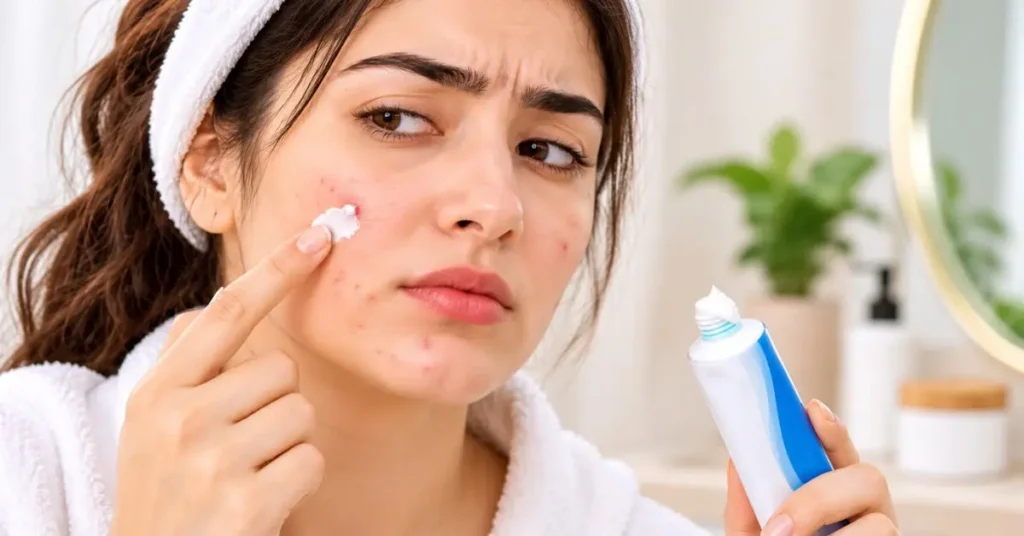
The toothpaste trick became popular because people noticed that certain toothpaste formulas could make the skin feel dry after application.
The idea is simple: if toothpaste dries out a pimple, perhaps the pimple will become smaller. However, drying the surface of your skin does not necessarily treat the inflammation and clogged pore underneath.
Where Did This Beauty Hack Come From?
Older toothpaste formulas sometimes contained ingredients that people believed might have antibacterial effects. Some assumed these ingredients could also fight acne-causing bacteria.
Toothpaste was also an inexpensive product already available in most homes. This made it an attractive alternative to buying acne treatments.
However, there is an important difference between an ingredient being useful for cleaning teeth and being suitable for treating facial skin.
Modern acne treatments are specifically formulated for skin use. Toothpaste is not.
Does Toothpaste Actually Dry Out Pimples?
Some toothpaste formulas contain ingredients that can dry or irritate the skin. This may make a pimple appear less oily temporarily.
But temporary dryness is not the same as acne treatment.
A pimple develops through a combination of clogged pores, excess oil, dead skin cells, and inflammation. Toothpaste does not reliably address these processes.
In some cases, the irritation caused by toothpaste can make the affected area look redder and more noticeable.
Many people ask, should I put toothpaste on a zit overnight to reduce redness and swelling?
2. Why You Should Not Put Toothpaste on a Zit
If you are wondering, should I put toothpaste on a zit, the safest answer is no.
Toothpaste contains ingredients selected for oral hygiene. Some of these ingredients can cause irritation when they remain on delicate facial skin.
Here are the main reasons to avoid this popular home remedy.
1. It Can Irritate Your Skin
Toothpaste may contain flavoring agents, detergents, and other ingredients that are not designed for use on the face.
These ingredients can cause:
- Redness around the pimple.
- Burning or stinging sensations.
- Itching and discomfort.
- Dry or flaky patches.
- Irritation around the mouth and nose.
People with sensitive or acne-prone skin may be particularly uncomfortable after using toothpaste as a spot treatment.
2. It Can Damage Your Skin Barrier
Your skin barrier is the outer protective layer that helps retain moisture and protect your skin from irritants.
When you apply an unsuitable product, you may disrupt this protective layer.
A weakened skin barrier can lead to:
- Increased dryness.
- Tightness after washing.
- Greater sensitivity to skincare products.
- Redness and irritation.
- More difficulty tolerating acne treatments.
This is why gentle skincare is important, especially when you already have active breakouts.
3. It May Make Redness More Noticeable
An inflamed pimple is already sensitive. Applying an irritating substance can increase discomfort and make the surrounding skin look more inflamed.
Instead of reducing the appearance of your zit, toothpaste may create an additional irritated patch.
This is particularly frustrating if you are trying to make a pimple less visible before an event.
4. It Can Cause Peeling and Excessive Dryness
Some toothpaste ingredients can remove moisture from the skin or irritate its surface.
You may notice:
- Flaking around the affected area.
- Rough skin texture.
- Tightness.
- Small dry patches.
- Increased sensitivity when applying moisturizer.
Peeling does not mean that acne is healing faster.
5. It May Leave Dark Marks After Irritation
Inflammation can sometimes trigger post-inflammatory hyperpigmentation, which appears as brown, grey, or darker marks after a skin injury or pimple.
This concern can be more noticeable in medium and deeper skin tones.
If toothpaste causes significant irritation, the affected area may take time to return to its usual appearance.
Avoiding unnecessary irritation is an important part of preventing additional skin concerns.
6. It Does Not Treat the Actual Causes of Acne
Acne develops when hair follicles become blocked with oil and dead skin cells. Inflammation and bacteria can also contribute to the development of pimples.
Toothpaste is not formulated to regulate these acne-related processes.
Ingredients such as salicylic acid and benzoyl peroxide have specific roles in acne treatment and are more appropriate choices.
The American Academy of Dermatology’s acne treatment guidance advises against using toothpaste for acne and recommends established acne-fighting ingredients instead.
The important lesson is that a product should be chosen for its intended use, not simply because it creates a drying sensation.
3. Which Toothpaste Ingredients Can Harm Facial Skin?
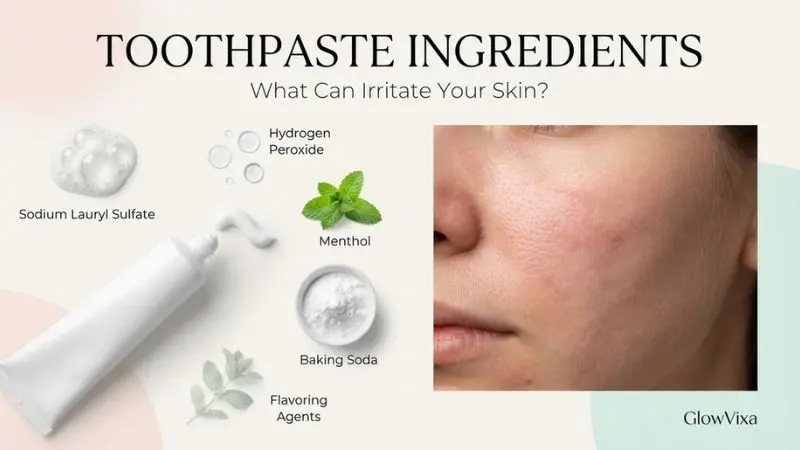
Not every toothpaste has the same formula. Ingredients differ between whitening, herbal, sensitive-teeth, gel, and regular toothpaste products.
However, several ingredients may cause problems when toothpaste is applied directly to facial skin.
Sodium Lauryl Sulfate (SLS)
SLS is a cleansing and foaming ingredient found in some toothpaste formulas.
It helps create foam during brushing. However, it may irritate sensitive skin in some people, especially when applied directly and left on the face.
Hydrogen Peroxide
Some whitening toothpaste formulas contain peroxide ingredients.
These ingredients are used for tooth whitening, but applying them as an acne treatment is not recommended. They may contribute to irritation.
Menthol and Flavoring Agents
Mint and other flavoring ingredients create a fresh feeling in the mouth.
However, a cooling sensation does not mean that an ingredient is soothing or safe for a pimple. Menthol and certain flavoring agents may irritate sensitive skin.
Baking Soda
Baking soda is used in some toothpaste products for cleaning and polishing.
It is not a proven acne treatment. Applying a toothpaste containing baking soda may contribute to skin irritation or dryness.
Whitening and Abrasive Ingredients
Some toothpaste formulas contain polishing agents and whitening ingredients designed for dental use.
They are not intended to exfoliate facial skin or clear clogged pores.
Toothpaste Ingredients and Their Possible Skin Effects
| Toothpaste ingredient | Purpose in toothpaste | Possible skin concern |
| Sodium lauryl sulfate | Creates foam | Irritation and dryness |
| Hydrogen peroxide | Helps whiten teeth | Irritation |
| Menthol | Provides a cooling sensation | Stinging or sensitivity |
| Baking soda | Cleaning and polishing | Possible irritation |
| Flavoring agents | Adds flavor | Contact sensitivity |
| Abrasive particles | Helps remove surface stains | Unnecessary friction |
Not everyone will react to every ingredient. The actual risk depends on the formula, concentration, contact time, and individual skin sensitivity.
Is Herbal or Natural Toothpaste Safer for Pimples?
Not necessarily.
Natural toothpaste can still contain essential oils, fragrances, flavoring ingredients, and other substances that may irritate facial skin.
A natural label does not make a product suitable for acne treatment.
If your goal is to treat a pimple, choose a product specifically formulated for facial skin.
4. What Happens If You Put Toothpaste on a Zit Overnight?

Leaving toothpaste on a pimple overnight increases the amount of time your skin is exposed to ingredients that were not designed for facial use.
The exact reaction varies between people and toothpaste formulas.
Possible Skin Reactions
You may experience the following reactions.
Temporary Dryness: The skin around the pimple may feel tight or rough.
Redness: The treated area may become more noticeable because of irritation.
Burning or Stinging: Sensitive skin may react with discomfort.
Peeling: The surface of the skin may become flaky.
Contact Dermatitis: Some people may develop an itchy, red, swollen rash after exposure to an irritating or allergenic ingredient.
Does Toothpaste Make a Pimple Disappear Overnight?
No reliable evidence shows that toothpaste can safely make pimples disappear overnight.
A small pimple may naturally become less noticeable with time. However, that does not prove that toothpaste treated it.
Inflamed pimples often need several days or longer to settle, depending on their type and severity.
Avoid judging a treatment by how dry the skin feels immediately after application.
What If You Have Already Applied Toothpaste?
Do not panic. One application does not automatically mean you will have permanent skin damage.
Take these steps:
- Gently rinse the toothpaste away with lukewarm water.
- Do not scrub or rub the affected area.
- Pat your face dry using a clean, soft towel.
- Apply a simple, fragrance-free moisturizer.
- Avoid exfoliating acids, retinoids, and other potentially irritating treatments until the skin feels comfortable again.
- Use sunscreen during the day.
If you develop severe burning, swelling, blistering, significant pain, or a persistent rash, seek medical advice.
5. Should I Put Toothpaste on a Zit? Try These 7 Safer Alternatives
Instead of using toothpaste, choose an acne treatment that is designed for facial skin.
The best option depends on whether you have a small whitehead, a blackhead, or an inflamed red pimple.
Here are seven alternatives worth understanding.
1. Benzoyl Peroxide for Inflamed Pimples
Benzoyl peroxide is a well-established acne treatment.
It helps reduce acne-causing bacteria and can improve inflammatory pimples.
Best for:
- Red pimples.
- Inflamed breakouts.
- Small pustules.
- Mild inflammatory acne.
How to use it:
- Cleanse your face gently.
- Allow the skin to dry.
- Apply a thin layer of a suitable low-strength product, following its instructions.
- Use moisturizer if needed.
- Start slowly to assess your skin’s tolerance.
A 2.5% product can be a reasonable starting strength for many people.
Benzoyl peroxide may cause dryness, redness, and peeling. It can also bleach towels, pillowcases, and clothing.
Do not apply extra product to make a pimple disappear faster.
2. Salicylic Acid for Whiteheads and Clogged Pores
Salicylic acid is a beta-hydroxy acid (BHA) used in many acne products.
It helps loosen the buildup of dead skin cells inside pores.
Best for:
- Whiteheads.
- Blackheads.
- Clogged pores.
- Oily skin.
- Mild acne-related congestion.
How to use it:
- Start with a product containing a suitable concentration of salicylic acid.
- Follow the product’s directions.
- Begin with less frequent use if you have sensitive skin.
- Apply moisturizer afterward.
- Avoid combining several exfoliating products at the beginning.
Salicylic acid is not an instant pimple eraser. Consistent use may help improve clogged pores over time.
You can also read GlowVixa’s guide to the best exfoliator for acne-prone skin to understand how exfoliating ingredients work.
3. Hydrocolloid Pimple Patches
Pimple patches are small adhesive patches designed to cover individual blemishes.
Many contain hydrocolloid, a material that absorbs fluid from superficial, open pimples.
Best for:
- Superficial whiteheads.
- Pimples that have come to a head.
- Protecting a spot from picking.
- Preventing unnecessary touching.
How to use them:
- Cleanse and dry your skin.
- Choose a patch that covers the pimple.
- Apply it according to the package directions.
- Leave it on for the recommended period.
- Remove it gently.
Hydrocolloid patches do not remove deep cystic acne or prevent every future breakout.
However, they can provide a useful protective covering while a superficial spot heals.
4. Ice Compress for Temporary Swelling
A cold compress may temporarily reduce swelling and discomfort around an inflamed pimple.
Unlike toothpaste, it does not introduce dental ingredients to your skin.
How to use it safely:
- Wrap a clean cold pack or ice cube in a soft cloth.
- Hold it gently against the affected area for a short period.
- Remove it and allow your skin to return to normal.
- Repeat only if comfortable.
Never place ice directly against your skin or hold it in one spot for too long.
Ice may temporarily improve swelling, but it does not clear the clogged pore or treat the underlying acne.
5. Azelaic Acid for Acne and Post-Pimple Marks
Azelaic acid is an ingredient used to treat acne and certain forms of uneven pigmentation.
It has anti-inflammatory and antibacterial properties and may help improve the appearance of acne-related marks.
Best for:
- Mild acne.
- Redness associated with acne.
- Post-acne dark marks.
- Uneven skin tone.
How to use it:
- Choose a suitable facial product.
- Follow the product instructions.
- Introduce it gradually.
- Apply moisturizer as needed.
- Wear sunscreen during the day.
Some people experience tingling, dryness, or irritation when starting azelaic acid.
For additional guidance, see GlowVixa’s beginner’s guide to azelaic acid for acne scars and redness.
6. Sulfur-Based Acne Treatments
Sulfur is used in some acne products because it helps reduce excess oil and supports the removal of dead skin cells.
It may be useful for certain superficial breakouts.
Best for:
- Some whiteheads.
- Oily areas.
- Occasional superficial pimples.
How to use it:
Use a product specifically formulated for acne and follow its instructions. Some sulfur treatments can cause dryness or irritation.
Avoid applying household sulfur products or mixing ingredients yourself.
7. Gentle Moisturizer to Support Skin Recovery
Moisturizer does not directly remove a pimple, but it plays an important role in maintaining the skin barrier.
This becomes especially important when using acne treatments that can cause dryness.
Look for products labelled:
- Non-comedogenic.
- Oil-free, if that suits your skin.
- Fragrance-free.
- Suitable for sensitive skin.
A lightweight moisturizer can help reduce discomfort and make your acne routine easier to tolerate.
Which Alternative Should You Choose?
| Your skin concern | Suitable option | Main purpose |
| Inflamed red pimple | Benzoyl peroxide | Treats inflammatory acne |
| Whiteheads and blackheads | Salicylic acid | Helps unclog pores |
| Superficial whitehead | Hydrocolloid patch | Absorbs fluid and protects |
| Temporary swelling | Cold compress | Reduces swelling temporarily |
| Acne and dark marks | Azelaic acid | Helps improve acne and pigmentation |
| Some superficial breakouts | Sulfur treatment | Helps reduce oil and dead skin buildup |
| Dry or irritated skin | Gentle moisturizer | Supports skin barrier |
You do not need all seven products. Choose according to your skin concern and introduce new treatments carefully.
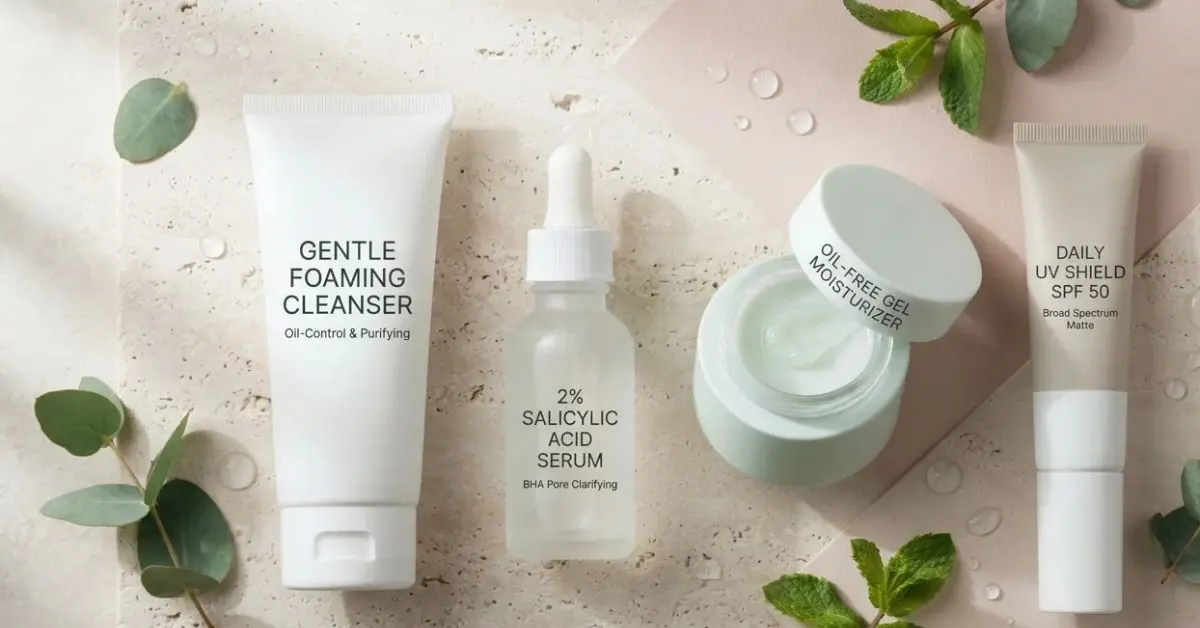
6. A Simple Skincare Routine for Pimples and Acne-Prone Skin
Treating a pimple does not require an expensive skincare collection. A simple routine with suitable products can help manage breakouts while protecting your skin.
Morning Skincare Routine
Step 1: Use a Gentle Cleanser
Wash your face with a mild facial cleanser to remove excess oil, sweat, and dirt.
Avoid harsh soaps and aggressive scrubbing.
If your skin is oily, choose a gentle cleanser that leaves your face feeling comfortable rather than tight.
Step 2: Apply an Appropriate Acne Treatment
If you need an acne treatment, choose one suitable for your concern.
For example:
- Benzoyl peroxide may help with inflamed pimples.
- Salicylic acid may help with clogged pores.
- Azelaic acid may help with acne and uneven pigmentation.
You do not need to apply all these ingredients together.
Step 3: Apply Moisturizer
Use a lightweight, non-comedogenic moisturizer.
Even oily skin needs hydration. Skipping moisturizer can make your routine harder to tolerate, especially when using acne treatments.
Step 4: Apply Sunscreen
Finish your morning routine with broad-spectrum sunscreen with SPF 30 or higher.
Sun protection helps protect your skin from UV damage and may help prevent post-acne dark marks from becoming more noticeable.
Evening Skincare Routine
Your evening routine should focus on removing daily buildup and supporting your skin while it recovers.
Step 1: Remove Makeup and Sunscreen
If you wear makeup or sunscreen, remove it gently before bed.
Avoid rubbing your skin repeatedly.
Step 2: Cleanse Your Face
Use your gentle facial cleanser to remove remaining oil, sweat, and dirt.
Washing your face twice daily is generally enough for most people.
Step 3: Apply Your Acne Treatment
Use your selected acne treatment according to its directions.
If you are a beginner, introduce one active ingredient at a time. This makes it easier to identify which product is helping and whether something is irritating your skin.
Step 4: Moisturize
Finish with a suitable moisturizer to support your skin barrier.
Weekly Habits That Support Clearer Skin
You can also make a few simple changes to reduce unnecessary irritation and support your skincare routine.
- Change pillowcases regularly.
- Clean makeup brushes and sponges.
- Avoid sharing facial towels.
- Remove makeup before sleeping.
- Keep your hands away from active pimples.
- Clean your phone screen regularly.
- Avoid excessive exfoliation.
If you have frequent breakouts, understanding your skin type and acne triggers can help you make better product choices.
Our complete acne-prone skin guide explains how to build a practical routine for oily skin, clogged pores, and recurring pimples.
7. Common Mistakes to Avoid When Treating a Zit
Even when you choose a suitable acne product, certain habits can make your breakouts worse.
Here are some common mistakes to avoid.
1. Applying Toothpaste or Other Household Products
Toothpaste, lemon juice, baking soda, and undiluted essential oils are not reliable acne treatments.
They may irritate your skin and create additional problems.
Choose products formulated for facial use instead.
2. Popping or Squeezing Pimples
Squeezing a pimple can push inflammation deeper into the surrounding skin.
It may increase the risk of:
- More redness and swelling.
- Infection.
- Dark marks.
- Permanent acne scars.
Allow the pimple to settle naturally. If you need to protect a superficial spot from touching, a hydrocolloid patch may help.
3. Using Too Many Acne Ingredients
Combining benzoyl peroxide, salicylic acid, retinoids, and exfoliating acids without a suitable plan may cause irritation.
More active ingredients do not automatically mean faster results.
Start with one treatment and assess how your skin responds.
4. Washing Your Face Too Often
Repeatedly washing your face does not remove acne faster.
Over-cleansing can cause dryness, tightness, and irritation.
For most people, cleansing in the morning and evening is sufficient.
5. Skipping Moisturizer
Some people believe that moisturizer causes pimples, particularly if they have oily skin.
However, a suitable non-comedogenic moisturizer can support the skin barrier and reduce dryness from acne treatments.
Choose a lightweight formula that feels comfortable on your skin.
6. Expecting Overnight Results
Most acne treatments require consistent use over several weeks.
Trying a new product every day can make your skin more irritated and prevent you from understanding what works.
Give a suitable treatment enough time, unless you experience a concerning reaction.
7. Ignoring the Type of Pimple
Not every bump on your face is the same.
A small whitehead, an inflamed papule, and a deep cyst-like lesion may need different approaches.
If you frequently develop breakouts around your chin or cheeks, understanding their pattern can help.
You can read our guide on acne on cheeks and what different breakouts may mean.
Remember that the location of acne alone cannot reliably identify its cause.
8. How Long Does It Take for Safe Acne Treatments to Work?
One reason people try toothpaste is that they want a quick result.
Unfortunately, no safe acne treatment can guarantee that every pimple will disappear overnight.
The time required depends on the type of acne, the product, its strength, and your skin’s response.
What to Expect
Cold Compress: May temporarily reduce swelling and discomfort.
Hydrocolloid Patch: May absorb fluid from a superficial pimple over several hours, depending on the spot.
Benzoyl Peroxide: May begin showing improvement within a few weeks. The NHS notes that it usually starts working within approximately four weeks.
Salicylic Acid: May gradually improve clogged pores and mild acne with consistent use.
Azelaic Acid: May take several weeks or longer to improve acne and pigmentation.
For ongoing acne, the NHS advises allowing appropriate treatment time and seeking professional advice if acne worsens or does not improve.
Why Patience Matters
Your skin needs time to respond to treatment.
Using more product, applying several treatments together, or repeatedly drying out a pimple will not necessarily speed up healing.
A consistent routine is usually a better approach than trying a different home remedy every night.
9. When Should You See a Dermatologist?
Occasional pimples can often be managed with appropriate over-the-counter skincare products.
However, some types of acne need professional treatment.
Consider seeing a dermatologist if:
- You have large, painful, deep pimples.
- You frequently develop cyst-like breakouts.
- Acne is leaving permanent scars.
- Dark marks continue appearing after breakouts.
- Your skin becomes severely irritated after using acne products.
- Over-the-counter treatments are not helping.
- Acne is affecting your confidence or emotional well-being.
A dermatologist can identify the type of acne and recommend suitable treatment.
Depending on your condition, treatment may include prescription topical medicines, oral medication, or other professional procedures.
Do not try to treat severe acne by repeatedly applying stronger household remedies.
Special Precautions for Sensitive Skin
If you have sensitive skin, introduce new products carefully.
- Patch test new skincare products according to their instructions.
- Avoid applying treatments to broken or severely irritated skin.
- Do not combine several strong acne ingredients without guidance.
- Stop using a product that causes significant irritation.
- Ask a healthcare professional before using acne medication if you are pregnant, planning pregnancy, or breastfeeding.
If you develop severe swelling, blistering, or signs of an allergic reaction, seek medical help.
Frequently Asked Questions
1. Should I put toothpaste on a zit overnight?
No. Toothpaste can cause dryness, irritation, redness, and peeling. Use an acne treatment designed for facial skin instead.
2. Does toothpaste remove pimples in one day?
No reliable evidence shows that toothpaste can safely remove pimples in one day. A suitable acne treatment may help, but results take time.
3. What is the fastest safe way to reduce a pimple?
A cold compress may temporarily reduce swelling. Benzoyl peroxide or a hydrocolloid patch may also help, depending on the type of pimple.
4. Can toothpaste cause dark spots on the face?
Toothpaste-related irritation may trigger inflammation, which can contribute to post-inflammatory hyperpigmentation in some people.
5. What should I put on a pimple instead of toothpaste?
Consider benzoyl peroxide, salicylic acid, azelaic acid, or a hydrocolloid pimple patch. Choose according to your skin concern and follow product directions.
Conclusion
So, should I put toothpaste on a zit? The answer is no. Although this traditional beauty hack may seem like an easy way to dry out a pimple, toothpaste is not designed to treat acne.
Its ingredients may irritate your skin, damage your skin barrier, and leave redness or dark marks behind.
Instead, choose safer alternatives such as benzoyl peroxide, salicylic acid, hydrocolloid patches, and azelaic acid. Keep your skincare routine gentle, moisturize regularly, and use sunscreen during the day.
Remember that a pimple does not need to be dried out aggressively to heal. The best approach is to treat it with suitable skincare ingredients and give your skin time to recover.
Healthy-looking skin comes from consistent care, not harsh overnight remedies.
Think
To pick up a draggable item, press the space bar. While dragging, use the arrow keys to move the item. Press space again to drop the item in its new position, or press escape to cancel.



Leave a Reply