
Quick Answer
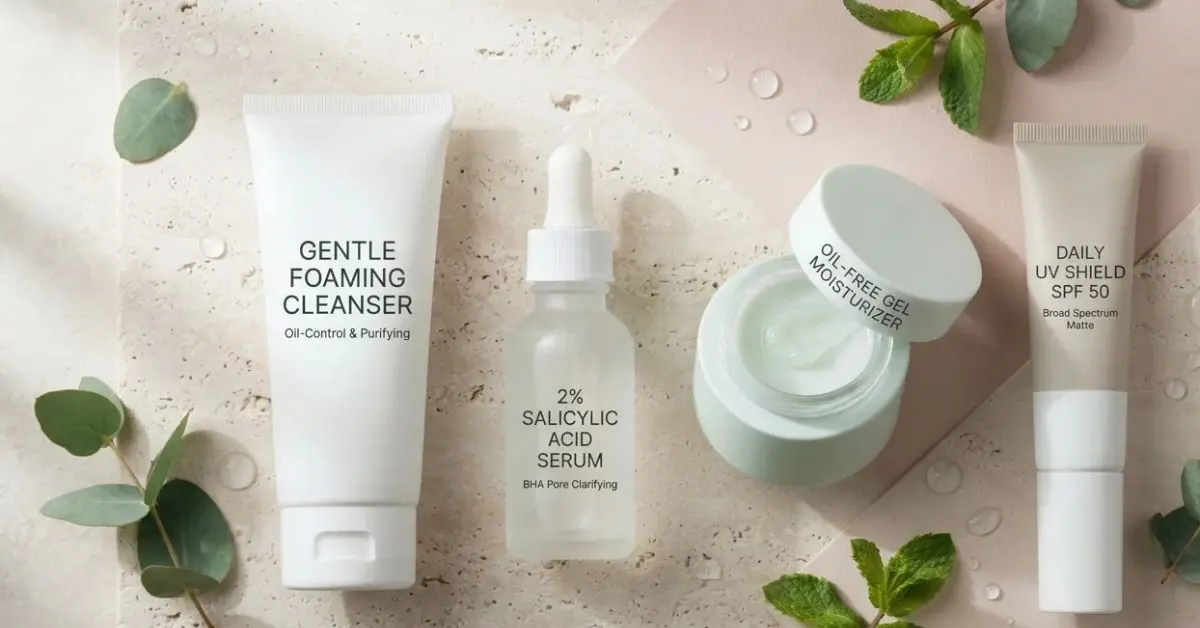
The best acne products for oily skin are gentle cleansers, salicylic acid treatments, benzoyl peroxide products, lightweight non-comedogenic moisturizers, and broad-spectrum sunscreens. These products help manage excess oil, unclog pores, reduce acne-causing bacteria, and protect the skin without unnecessary irritation.
Using too many acne treatments at once can make oily skin feel irritated and uncomfortable. Start with a few suitable products, introduce active ingredients slowly, and observe how your skin responds.
If acne is painful, persistent, or leaves scars, consider consulting a dermatologist for personalized treatment.
Choose products according to your acne type, introduce active ingredients gradually, and give your skin enough time to respond. People with persistent, painful, or scarring acne should seek advice from a dermatologist
Author Box
Author: Saira
Role: Publisher & Skincare Content Writer
Content Review: Evidence-informed skincare content based on trusted dermatology resources and skincare research.
Introduction
Does your face become shiny only a few hours after washing it? Do you regularly notice blackheads, whiteheads, clogged pores, or new pimples around your forehead, nose, and chin? If so, choosing the best acne products for oily skin may help you manage these concerns more effectively.
Oily skin produces more sebum, the natural oil that helps protect the skin. However, excess sebum can mix with dead skin cells and contribute to blocked pores. When inflammation and acne-related bacteria are also involved, breakouts may develop.
Finding suitable skincare products can feel confusing because stores offer hundreds of cleansers, serums, creams, and spot treatments. Some promise quick results, while others contain several active ingredients in one formula.
The truth is that you do not need an expensive skincare collection to care for acne-prone skin. A few carefully selected products can support a healthier-looking complexion.
This guide explains which acne products are worth considering, which ingredients have dermatological support, how to build a simple routine, and what mistakes to avoid. It also explains how to choose affordable options without buying unnecessary products.
Choosing the best acne products for oily skin starts with understanding your skin type and selecting ingredients that help control breakouts without causing irritation.
1. Why Does Oily Skin Need Special Acne Products?
Oily skin and acne often occur together, although not everyone with oily skin develops acne. Understanding how excess oil contributes to breakouts can make product selection easier.
How excess sebum contributes to acne
Sebum is produced by sebaceous glands located near hair follicles. Its natural purpose is to lubricate the skin and help protect its surface.
However, several factors can contribute to acne:
- Excess sebum can collect inside hair follicles.
- Dead skin cells may build up and block pores.
- Blocked follicles can develop blackheads and whiteheads.
- Acne-related bacteria can multiply inside clogged follicles.
- Inflammation can produce red, swollen, or painful pimples.
Hormonal changes, genetics, certain medications, and individual skin characteristics can also influence acne development.
Why ordinary skincare products may not be enough
A basic facial cleanser helps wash away daily impurities, including sweat, leftover sunscreen, and excess oil. However, cleansing alone may not control every factor that contributes to acne. Some people also need targeted ingredients to manage blocked pores and inflamed breakouts. Choose skincare products that remove unwanted buildup without leaving your face feeling dry, tight, or uncomfortable.
Signs you may need acne-focused skincare
Look for these common concerns:
- Persistent shine, especially around the forehead and nose.
- Frequent blackheads around the nose.
- Small whiteheads on the chin or forehead.
- Red pimples that return regularly.
- Clogged pores and uneven skin texture.
- Breakouts after using certain makeup or skincare products.
If your acne is painful, deep, or leaving scars, basic cosmetic skincare may not be enough. Professional treatment can help prevent further skin damage.
The best acne products for oily skin should address excess sebum, clogged pores, and inflammation while maintaining skin comfort.
2. Best Acne Products for Oily Skin: 7 Types Worth Considering
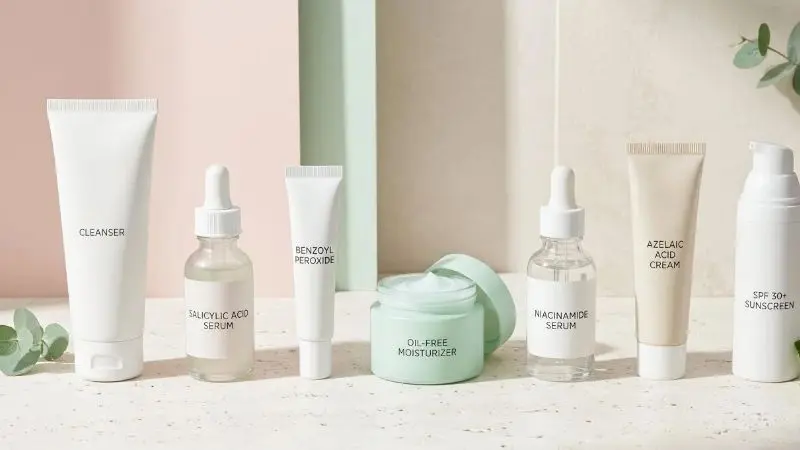
When comparing the best acne products for oily skin, focus on gentle formulas and ingredients that target your main acne concerns.
The most suitable products depend on your skin’s needs. Rather than buying everything at once, understand what each product does before adding it to your routine.
1. Gentle facial cleanser
A cleanser is the foundation of an acne skincare routine.
People with oily skin sometimes choose very strong face washes because they want their faces to feel completely oil-free. However, harsh cleansing can damage the skin barrier and increase dryness and irritation.
Choose a cleanser that:
- Removes excess oil without leaving the skin tight.
- Has a gentle cleansing formula.
- Is suitable for oily or acne-prone skin.
- Is labelled non-comedogenic when possible.
- Does not cause persistent burning or irritation.
A gentle foaming cleanser can be a practical choice for many people with oily skin.
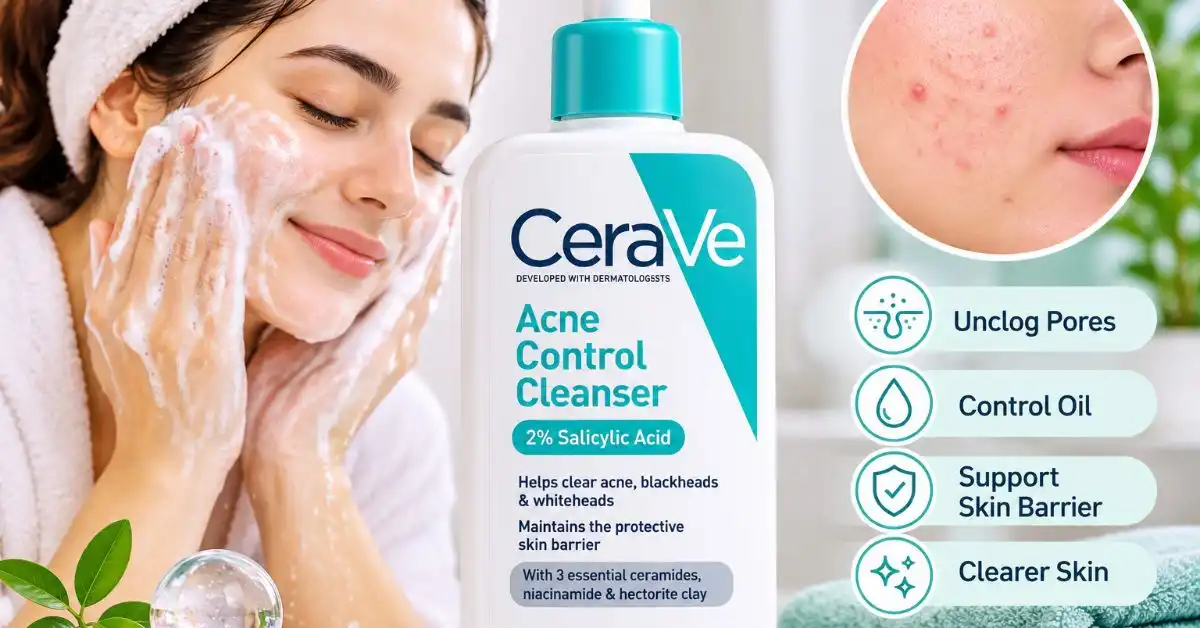
You can also consider a salicylic acid cleanser if clogged pores and blackheads are your main concerns. However, beginners with sensitive skin may prefer starting with a basic cleanser.
Helpful tip: Wash your face gently up to twice daily and after sweating. Avoid repeatedly washing it throughout the day.
2. Salicylic acid products
Salicylic acid is a beta hydroxy acid (BHA) commonly used in acne skincare.
It helps loosen dead skin cells and unclog pores. This makes it particularly useful for people who experience blackheads, whiteheads, and pore congestion.
Salicylic acid is available in different product types:
- Facial cleansers.
- Leave-on serums.
- Toners.
- Acne treatment gels.
- Moisturizing products.
A cleanser containing salicylic acid may be convenient for someone who prefers a simple routine. A leave-on treatment provides a different type of exposure, so the product instructions matter.
Start with one salicylic acid product rather than combining several exfoliating products immediately.
If you notice persistent redness, peeling, or burning, reduce use or stop the product.
For a more detailed comparison, read GlowVixa’s guide tosalicylic acid serum vs face wash.
This makes salicylic acid one of the useful ingredients to consider when choosing the best acne products for oily skin.
3. Benzoyl peroxide treatments
Benzoyl peroxide is an established acne treatment that helps reduce acne-related bacteria and inflammation.
It is commonly available in gels, creams, and facial washes.
It may be particularly helpful for inflammatory acne, including red pimples and small pus-filled spots.
Some useful points to remember:
- Lower strengths may be sufficient for many beginners.
- Start according to the product instructions.
- Avoid applying it too close to the eyes and lips.
- Do not apply it to broken or severely irritated skin.
- Use a suitable moisturizer if dryness develops.
Benzoyl peroxide can bleach towels, pillowcases, and clothing. Allow the product to dry properly and wash your hands after application.
Do not automatically combine it with several other strong acne treatments. If you are unsure about combining ingredients, ask a pharmacist or dermatologist.
4. Lightweight moisturizer
One of the most common skincare mistakes is skipping moisturizer because the face already feels oily.
However, oily skin still needs hydration.
Acne treatments such as salicylic acid and benzoyl peroxide can cause dryness. A suitable moisturizer helps maintain skin comfort and supports the protective skin barrier.
Look for products labelled:
- Oil-free.
- Non-comedogenic.
- Lightweight.
- Won’t clog pores.
- Fragrance-free, particularly if your skin is sensitive.
Gel creams and lightweight lotions may feel more comfortable than thick creams on oily skin.
Ingredients such as glycerin, hyaluronic acid, and ceramides can help maintain hydration.
A moisturizer does not directly cure acne, but it can make an acne treatment routine easier to tolerate.
Read GlowVixa’s guide tochoosing a good lotion for acne-prone skin.
A lightweight moisturizer is an important part of the best acne products for oily skin because hydration helps support the skin barrier.
5. Niacinamide serums
Niacinamide is a form of vitamin B3 used in many skincare products.
It supports the skin barrier and may help improve the appearance of redness and excess oil. Some people also find it useful as part of a routine for uneven skin tone.
Possible benefits include:
- Supporting skin barrier function.
- Helping improve the appearance of oily skin.
- Reducing the appearance of redness.
- Supporting a more even-looking complexion.
Niacinamide is available in different concentrations. A higher percentage does not automatically mean better results.
If you have sensitive skin, choose a simple formula and introduce it gradually.
Remember that niacinamide is not a replacement for established acne treatments when you have persistent inflammatory acne.
6. Azelaic acid products
Azelaic acid is another ingredient used in acne care.
It has several useful properties. It can help unclog pores, reduce inflammation, and improve the appearance of dark marks left after pimples.
It may be worth discussing with a healthcare professional if you experience both acne and post-acne discoloration.
Azelaic acid is available in different strengths and formulations.
When selecting a product:
- Check the concentration and instructions.
- Introduce it gradually.
- Avoid combining several irritating treatments without guidance.
- Apply moisturizer if your skin becomes dry.
- Use sunscreen during the day.
People with sensitive skin should still be cautious because azelaic acid can sometimes cause itching, stinging, or dryness.
7. Non-comedogenic sunscreen
Sunscreen is an important part of an acne skincare routine.
People sometimes skip sunscreen because they believe it will make their oily skin look greasy. However, the right formula can protect the skin without feeling excessively heavy.
Choose a sunscreen that offers:
- Broad-spectrum protection.
- SPF 30 or higher.
- Water resistance when needed.
- A non-comedogenic or oil-free formula.
- A lightweight texture that feels comfortable.
Gel-based and fluid sunscreens may be more comfortable for some people with oily skin.
Sunscreen is especially important if you use acne treatments that increase sensitivity or irritation.
It also helps protect post-acne marks from becoming more noticeable with sun exposure.
3. Which Acne Ingredients Work Best for Different Skin Concerns?
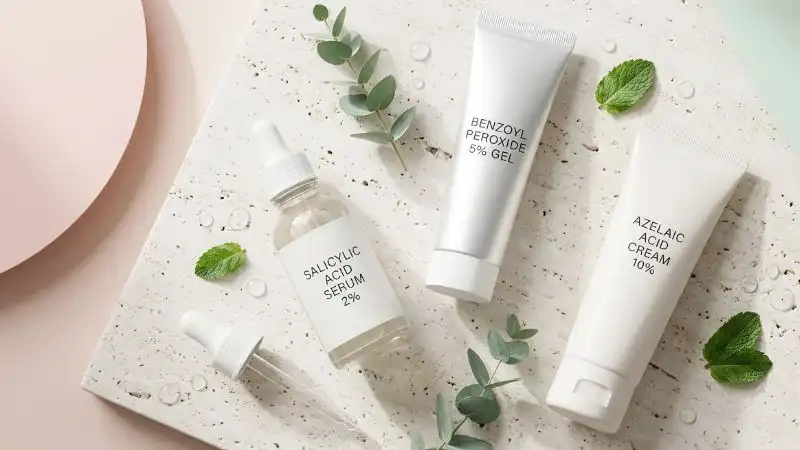
Not every acne ingredient does the same job. Choosing one according to your main skin concern can help you avoid unnecessary products.
Salicylic acid for clogged pores
Salicylic acid is useful for blackheads, whiteheads, and clogged pores.
It helps loosen the buildup of dead skin cells inside pores. People who frequently notice small bumps or congestion may benefit from an appropriate salicylic acid product.
Benzoyl peroxide for inflamed pimples
Benzoyl peroxide helps reduce acne-related bacteria and can improve inflammatory breakouts.
It may be useful for people who regularly develop red pimples. However, dryness and irritation are possible, so careful use matters.
Adapalene for recurring comedonal acne
Adapalene is a topical retinoid used to treat acne.
It helps prevent clogged pores and is often recommended for blackheads, whiteheads, and recurring acne.
However, adapalene is not suitable for everyone without medical guidance. It can cause dryness and irritation, and people who are pregnant or planning pregnancy should consult a healthcare professional before using topical retinoids.
Azelaic acid for acne and dark marks
Azelaic acid can help with acne and the dark spots that remain after breakouts.
This makes it a useful ingredient to discuss when acne and uneven skin tone occur together.
Niacinamide for barrier support
Niacinamide is mainly useful for supporting the skin barrier and improving the appearance of redness and oiliness.
It can complement an acne routine, but it should not be treated as a complete replacement for acne medication.
Table 1: Acne Ingredients Compared
| Ingredient | Main purpose | Best suited for |
| Salicylic acid | Helps unclog pores | Blackheads and whiteheads |
| Benzoyl peroxide | Reduces acne-related bacteria | Inflamed pimples |
| Adapalene | Helps prevent clogged pores | Recurring acne |
| Azelaic acid | Helps reduce acne and dark marks | Acne and discoloration |
| Niacinamide | Supports skin barrier | Oiliness and redness |
| Glycerin | Attracts and retains moisture | Dehydrated skin |
| Ceramides | Support skin barrier | Dryness and irritation |
The best ingredient depends on your acne type, skin sensitivity, and existing routine. You do not need to use every ingredient listed above.
4. How to Build a Simple Skincare Routine for Oily Acne-Prone Skin
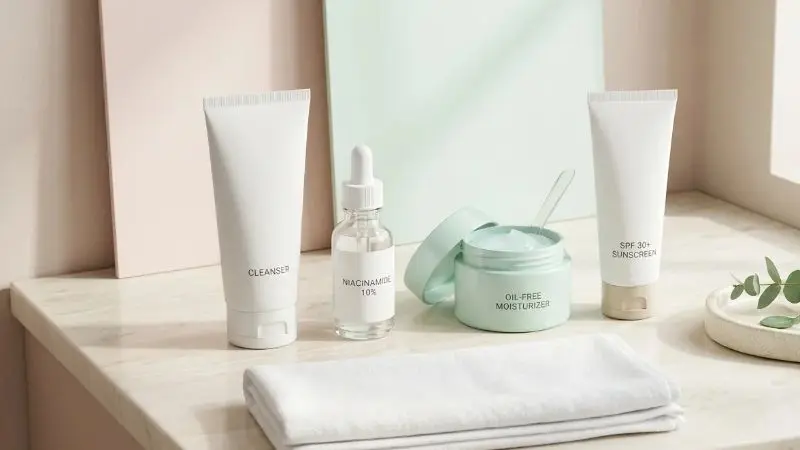
A good skincare routine should be easy to follow and comfortable enough to maintain.
A consistent routine helps you get better results from the best acne products for oily skin without overwhelming your skin.
Using too many products can increase irritation and make it difficult to identify which ingredient is helping.
Morning skincare routine
Step 1: Cleanse gently
Wash your face with a gentle cleanser to remove overnight oil and buildup.
Use lukewarm water and your fingertips. Avoid rough cleansing brushes and aggressive scrubbing.
Step 2: Apply a suitable treatment if needed
If your skin tolerates niacinamide or another suitable morning treatment, apply it according to its instructions.
You do not need multiple serums.
Step 3: Moisturize
Apply a lightweight, non-comedogenic moisturizer.
Even oily skin can become dehydrated, particularly when using acne treatments.
Step 4: Apply sunscreen
Finish with broad-spectrum SPF 30 or higher.
Use enough sunscreen to cover exposed skin and reapply according to its instructions, especially after sweating or swimming.
Evening skincare routine
Step 1: Remove makeup and sunscreen
If you wear makeup, remove it gently before cleansing.
Avoid rubbing your face repeatedly.
Step 2: Cleanse your skin
Use your gentle cleanser to remove sweat, oil, makeup residue, and daily buildup.
Step 3: Apply one acne treatment
Choose a treatment that matches your main concern.
For example:
- Salicylic acid for clogged pores.
- Benzoyl peroxide for inflammatory pimples.
- Azelaic acid for acne and dark marks.
- Adapalene for recurring clogged pores, when appropriate.
Follow the product directions or your dermatologist’s instructions.
Step 4: Moisturize
Apply your lightweight moisturizer to help maintain skin comfort.
Table 2: Morning vs Evening Routine
| Routine step | Morning | Evening |
| Cleanser | Gentle facial wash | Gentle facial wash |
| Treatment | Optional suitable serum | One selected acne treatment |
| Moisturizer | Lightweight moisturizer | Lightweight moisturizer |
| Sun protection | SPF 30 or higher | Not usually required indoors at night |
Important: Do not introduce several new acne treatments on the same day. Begin with one active ingredient and observe how your skin responds.
5. How to Choose Affordable Acne Products Without Wasting Money
Good acne skincare does not always require expensive products.
You can find the best acne products for oily skin without spending money on unnecessary serums or expensive skincare collections.
A basic routine can be effective when the products suit your skin and contain appropriate ingredients.
Focus on essential products first
If you are working with a limited budget, prioritize:
- A gentle facial cleanser.
- A suitable moisturizer.
- A broad-spectrum sunscreen.
- One targeted acne treatment if needed.
You can add other products later if there is a clear reason to use them.
Read ingredient labels carefully
Do not choose a product only because its packaging says acne control, oil control, or clear skin.
Look at its ingredients and instructions.
For example, a salicylic acid cleanser and a salicylic acid serum may have different uses. A moisturizer may contain helpful hydrating ingredients even if it is not marketed as an acne treatment.
Do not pay extra for unnecessary claims
Be careful with products promising:
- Completely poreless skin.
- Permanent acne removal.
- Overnight acne clearance.
- Instant removal of acne scars.
- Guaranteed oil-free skin throughout the day.
Acne is a complex skin condition. No cosmetic product can guarantee that breakouts will never return.
Choose products according to your skin type
A product that works for someone else may not suit your skin.
If you have oily but sensitive skin, a strong exfoliating cleanser may cause discomfort. A gentle cleanser and a carefully selected treatment may be a better starting point.
For more guidance, explore GlowVixa’s acne-prone skin guide.
Check the product’s authenticity
When purchasing skincare, especially online:
- Buy from a reputable pharmacy or trusted retailer.
- Check the packaging and ingredient list.
- Look for batch and expiry information.
- Avoid products with damaged or suspicious packaging.
- Be cautious of unusually cheap products claiming to be premium brands.
Do not use products with unclear ingredients or missing safety information.
6. Common Mistakes to Avoid When Using Acne Products
Even suitable products can cause problems when used incorrectly.
Here are some common mistakes that may make oily acne-prone skin more irritated.
Overwashing your face
Washing repeatedly to remove oil can strip the skin and cause irritation.
A gentle cleanse up to twice daily and after sweating is usually enough.
Using too many active ingredients
Combining salicylic acid, benzoyl peroxide, retinoids, and exfoliating acids without a plan can increase dryness and irritation.
Start with one treatment and follow its instructions.
Skipping moisturizer
Oily skin still needs hydration.
Skipping moisturizer can make acne treatments harder to tolerate, particularly when they cause dryness.
Using harsh scrubs
Physical scrubs with rough particles can irritate inflamed skin.
Choose gentle cleansing and appropriate acne treatments instead.
Picking or squeezing pimples
Squeezing acne can increase inflammation and raise the risk of scars and dark marks.
Allow pimples to heal without repeatedly touching them.
Following every viral skincare trend
Toothpaste, lemon juice, baking soda, and other harsh DIY remedies are not reliable acne treatments.
They may irritate your skin or cause further problems.
Use ingredients with established skincare purposes instead.
Changing products too frequently
Switching between different treatments every few days makes it difficult to understand what is working.
Give a suitable treatment enough time unless you develop an adverse reaction.
7. How Long Do Acne Products Take to Work?
One of the most important parts of acne care is patience.
Many people stop using a product after a few days because they do not notice immediate changes. However, acne treatments generally need several weeks to show meaningful improvement.
The timeline depends on the ingredient, formulation, acne severity, and how consistently the product is used.
What to expect during the first few weeks
During the first days, your skin may simply become accustomed to a new product.
Some ingredients can cause mild dryness or irritation. Persistent burning, swelling, or significant redness is not something to ignore.
After four to eight weeks
Some people begin noticing improvements in breakouts during this period.
However, results are not guaranteed within a specific number of weeks.
The American Academy of Dermatology advises allowing an acne treatment around six to eight weeks before deciding whether it is helping, provided you are using it correctly and tolerating it.
After eight to twelve weeks
If acne is not improving, or if it continues to worsen, speak with a dermatologist.
You may need a different ingredient, prescription treatment, or a combination approach.
Be realistic about acne marks
Active pimples and post-acne marks are different concerns.
A product that helps prevent new breakouts may not quickly fade existing discoloration. Dark marks can take months to improve, depending on their depth, skin tone, sun exposure, and treatment.
Avoid expecting a cleanser or serum to remove deep acne scars.
8. When Should You See a Dermatologist?
Over-the-counter skincare products can help manage mild acne, but some forms need professional treatment.
Consider seeing a dermatologist if:
- You have deep, painful pimples.
- You frequently develop cyst-like breakouts.
- Acne is leaving scars.
- Your acne affects your confidence or daily life.
- Your skin becomes severely irritated by treatments.
- Breakouts continue despite consistent skincare.
- You are unsure which treatment is appropriate.
A dermatologist can assess your acne and recommend a treatment based on its type and severity.
Treatment may include prescription topical medicines, oral medication, or a combination of approaches.
Do not start prescription acne medicines on your own.
If you are pregnant, breastfeeding, or planning pregnancy, discuss acne treatments with a healthcare professional before use. Some acne medicines are unsuitable during pregnancy.
You can also explore the NHS guide to acne to understand acne symptoms and available treatments.
Professional advice is particularly important when acne is painful or leaving permanent marks.
Frequently Asked Questions
1. What are the best acne products for oily skin?
Gentle cleansers, salicylic acid treatments, benzoyl peroxide products, lightweight moisturizers, and non-comedogenic sunscreens are useful options. The best choice depends on your acne type and skin sensitivity.
2. Is salicylic acid good for oily acne-prone skin?
Yes. Salicylic acid helps unclog pores and remove dead skin cell buildup. It can be useful for blackheads, whiteheads, and clogged pores.
3. Should I use moisturizer if my face is very oily?
Yes. Oily skin still needs hydration. Choose a lightweight, oil-free, non-comedogenic moisturizer that does not leave your face feeling excessively greasy.
4. Can I use benzoyl peroxide and salicylic acid together?
They can sometimes be used in the same treatment plan, but combining them may increase dryness and irritation. Beginners should avoid introducing both at once and should seek professional guidance if unsure.
5. How long do acne products take to show results?
Some people notice improvement within four to eight weeks, while others need longer. If acne does not improve after approximately eight to twelve weeks, consult a dermatologist.
Conclusion
Choosing the best acne products for oily skin is about understanding your skin rather than purchasing the largest number of skincare products.
Selecting the best acne products for oily skin requires patience, consistency, and products that match your individual skin concerns.
Start with a gentle cleanser, a lightweight moisturizer, and a suitable sunscreen. If you experience clogged pores or inflammatory breakouts, consider an evidence-supported acne treatment such as salicylic acid or benzoyl peroxide.
Niacinamide and azelaic acid may also support specific skincare concerns, including visible redness and post-acne marks.
Introduce new products gradually, avoid harsh scrubbing, and give suitable treatments enough time to work. Remember that oily skin does not need to feel completely dry to be healthy.
Most importantly, persistent, painful, or scarring acne deserves professional attention. A dermatologist can help you find an effective treatment plan that suits your skin.
Healthy skincare is not about using more products. It is about choosing the right products and using them consistently.





Leave a Reply