

Quick Answer
You can use green tea for acne by applying cooled, freshly brewed green tea to clean skin, trying a simple green tea compress, or using a fragrance-free skincare product containing green tea extract. Green tea contains antioxidants called polyphenols, including EGCG, which have been studied for their possible anti-inflammatory effects and their role in managing excess skin oil.
Research on topical green tea extract suggests that it may help reduce some acne lesions, but the evidence is still limited. Homemade green tea preparations have not been studied as thoroughly as formulated skincare products. Green tea should therefore be treated as an optional addition to a gentle skincare routine, not a replacement for proven acne treatments.
Author Box
Author: Saira
Role: Publisher & Skincare Content Writer
Content Review: Evidence-informed skincare content based on trusted dermatology resources and skincare research.
Introduction
Have you ever noticed red pimples, oily skin, or small breakouts appearing just when you want your skin to look its best? If you prefer simple skincare methods, you may be curious about how to use green tea for acne without irritating your skin or spending money on several new products.
Green tea is widely known as a drink, but it also contains plant compounds that researchers have studied for their possible skin benefits. These compounds may help calm inflammation and influence sebum, the natural oil produced by your skin. This makes green tea an interesting ingredient for people who experience oily skin and inflammatory breakouts.
However, natural does not always mean effective or irritation-free. A cup of green tea, a homemade green tea toner, and a professionally formulated green tea serum are different preparations. They may contain different concentrations of active compounds, and their effects on acne may not be the same.
In this guide, you will learn three practical ways to try green tea, how to apply it safely, which mistakes to avoid, and when a dermatologist may be a better option.
1. How Does Green Tea Help Acne-Prone Skin?
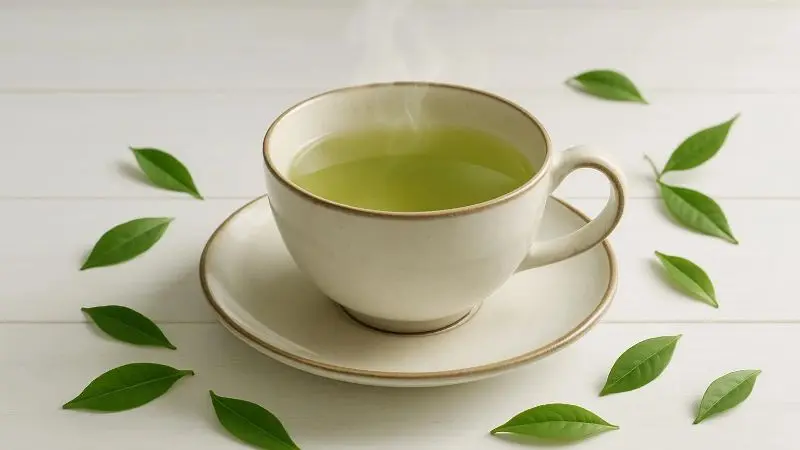
Green tea comes from the leaves of Camellia sinensis. It contains polyphenols, a group of plant compounds that includes catechins. One well-studied catechin is epigallocatechin gallate, commonly called EGCG.
Researchers have investigated these compounds because inflammation, excess oil, and changes inside clogged pores all play a role in acne. Green tea may support certain aspects of skin care, but it cannot address every cause of breakouts.
It may help calm inflammation
Inflammation contributes to the redness and swelling associated with pimples. Some green tea compounds have anti-inflammatory properties in laboratory studies, and clinical research has explored whether topical green tea extract can improve inflammatory acne lesions.
Green tea extract has attracted research interest because its plant compounds may help manage inflammation associated with acne. Some clinical studies have examined topical green tea preparations, but the results cannot be applied equally to every green tea product. Homemade green tea water has not been shown to work as reliably as a tested skincare formulation .
The findings suggested that topical preparations may reduce acne lesions, although the researchers called for more high-quality studies.
These results are promising, but they do not prove that homemade green tea water will produce the same effects.
It may influence excess oil
Sebum helps protect the skin, but excess sebum can contribute to the conditions in which acne develops. Some research suggests that topical tea polyphenols may help reduce sebum production.
This is relevant if your face becomes shiny during the day or your pores frequently become clogged. Still, green tea should not be expected to remove all facial oil or permanently change your skin type.
It provides antioxidant compounds
Antioxidants help counter oxidative processes in the body and have been studied for their potential role in skin health. Green tea contains several antioxidant compounds, including EGCG.
However, an antioxidant effect does not automatically mean that a product will clear acne, fade acne scars, or prevent future breakouts. Those outcomes require separate evidence.
For further reading, see the publishedsystematic review on green tea and acne.
2. How to Use Green Tea for Acne: Three Simple Methods
You do not need to try every green tea method at once. Start with one approach, watch how your skin responds, and avoid introducing several new ingredients on the same day.
Method 1: Apply cooled green tea as a gentle skin rinse
A simple green tea rinse is an inexpensive way to explore whether your skin tolerates a homemade preparation. It should be used as an optional step rather than a proven acne treatment.

What you need:
- One plain green tea bag or a small amount of loose-leaf green tea
- One cup of clean drinking water
- A clean cup
- Clean hands or a fresh cotton pad
Steps:
- Prepare the green tea according to the package directions, then remove the tea bag and let the liquid cool completely before applying it to your skin.
- Remove the tea bag or strain out the leaves.
- Let the tea cool completely. Never apply hot or warm tea that could burn or irritate your skin.
- Wash your face with a mild, non-abrasive cleanser.
- Apply a small amount of cooled tea gently with clean fingertips or a fresh cotton pad. Avoid the eyes and lips.
- If your skin feels comfortable, leave it on briefly and rinse it off if you notice stickiness or discomfort.
- Pat your face dry with a clean towel and apply a lightweight, non-comedogenic moisturizer.
How often should you use it?
Begin with a small test area rather than applying it all over your face. If your skin tolerates it, occasional use is a cautious starting point.
There is no established schedule for using homemade green tea water to manage acne. If you choose to try it, prepare a fresh batch each time and discard any remaining liquid after use.
Homemade green tea does not contain a tested preservative system, so storing it for several days may allow microorganisms to grow. Fresh preparation and clean application tools can help reduce contamination risks, although they cannot guarantee that the mixture is free from microbes.
Prepare a fresh batch for each use and discard any leftover tea. Do not keep homemade tea water for several days because it does not contain a validated preservative system.
Method 2: Use a cool green tea compress for temporary comfort
A cool compress may feel soothing when your skin feels warm or looks mildly irritated. Its cooling effect is not the same as treating the underlying acne.

What you need:
- Freshly brewed green tea that has cooled completely
- A clean, soft washcloth
- A clean bowl
Steps:
- Brew plain green tea and allow it to cool completely.
- Wash your hands and cleanse your face gently.
- Dip the clean washcloth into the tea.
- Wring out excess liquid so the cloth is damp rather than dripping.
- Place it lightly on the affected area for around five minutes.
- Remove the cloth without rubbing or pressing on pimples.
- Rinse your face with clean water if needed and apply moisturizer.
Use a fresh, clean cloth each time. Do not share washcloths, scrub active breakouts, or press the compress against open or bleeding pimples.
What results should you expect?
The cool temperature may temporarily make irritated skin feel more comfortable. However, there is not enough evidence to say that a green tea compress will flatten pimples, remove clogged pores, or prevent new acne.
Do not apply ice directly to your skin, and stop if the compress causes burning, itching, or increased redness.
Method 3: Try a skincare product containing green tea extract
For people who want a more consistent preparation, a ready-made skincare product may be a more practical choice than homemade tea water.
Formulated products can use controlled ingredients and packaging designed for regular skin care. Their quality and effects still depend on the complete formula, the concentration of green tea extract, and the way the product is used.

How to choose a product:
- Look for green tea extract or Camellia sinensis leaf extract in the ingredient list.
- Choose a fragrance-free formula if your skin is sensitive.
- Prefer products labelled non-comedogenic when possible.
- Avoid products that combine several strong exfoliating ingredients if your skin is already irritated.
- Check the full ingredient list rather than assuming green tea is the only active ingredient.
How to apply it:
- Cleanse your face with a gentle cleanser.
- Apply the product according to its label. If it is a serum, use the recommended amount.
- Follow with a suitable moisturizer.
- In the morning, finish with broad-spectrum sunscreen of SPF 30 or higher.
Patch-test the product first. Introduce it gradually and avoid adding multiple new acne products simultaneously.
A formulated green tea product is not automatically better than every homemade preparation, and it is not guaranteed to clear acne. However, it offers a more controlled formulation than an unpreserved homemade mixture.
3. Which Green Tea Method Is Best for Acne?
The best choice depends on your skin sensitivity, budget, and reason for trying green tea. None of these methods is guaranteed to clear active breakouts.
| Method | Potential benefit | Main limitation | Practical guidance |
| Cooled green tea rinse | Simple, inexpensive way to try green tea on the skin | Acne benefits of homemade tea water are unproven | Use fresh tea and test a small area first |
| Cool green tea compress | May temporarily soothe mild discomfort | Does not reliably unclog pores or treat acne | Use a clean cloth and avoid rubbing |
| Green tea skincare product | Offers a more controlled formulation; topical extract has some clinical evidence | Results depend on the formula and evidence remains limited | Choose a gentle product and follow its label |
If your main concern is frequent inflammatory pimples, a properly formulated green tea product may be worth considering as an additional skincare step. If you only want a temporary cooling effect, a cool compress may be enough.
If you have persistent blackheads, whiteheads, or deep painful acne, green tea alone is unlikely to provide the level of treatment you need.
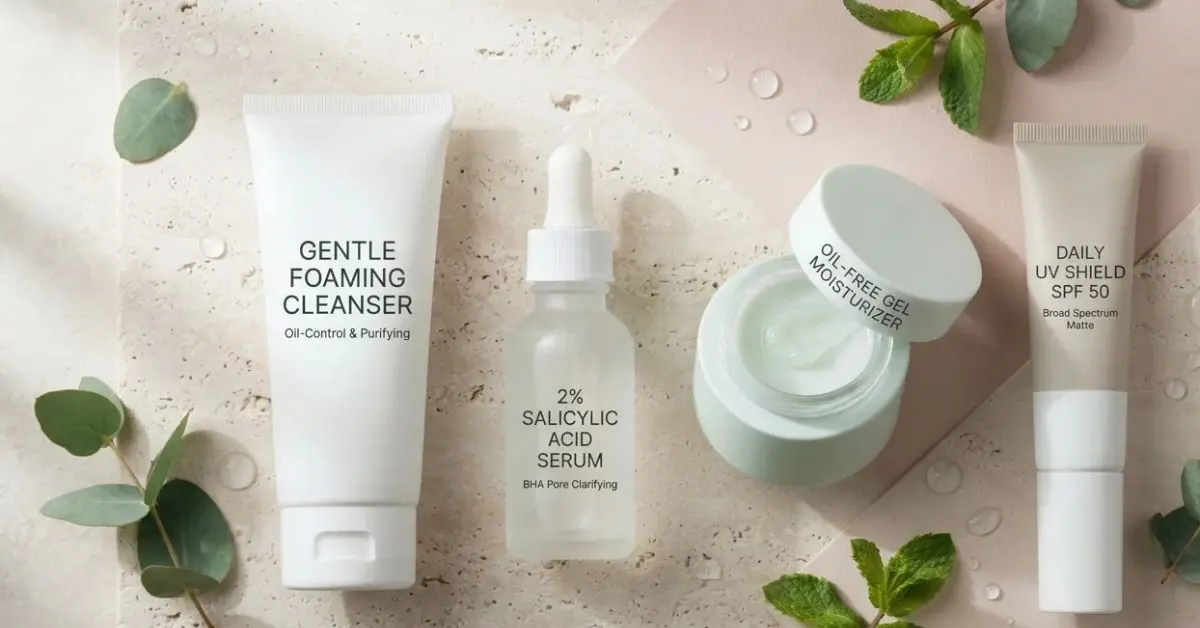
4. How to Build a Simple Acne Routine With Green Tea
Green tea works best as an optional addition to a routine that protects the skin barrier. A routine does not need many products to be useful.

Morning routine
Step 1: Cleanse gently
Use a mild cleanser that removes excess oil, sweat, and dirt without leaving your skin tight or uncomfortable. Washing too often or scrubbing aggressively can worsen irritation.
Step 2: Use your green tea product, if tolerated
If you choose a green tea serum or other leave-on product, apply it according to its directions. You can skip this step if you are using homemade green tea occasionally or if your skin feels irritated.
Step 3: Moisturize
Choose a lightweight moisturizer labelled oil-free or non-comedogenic. Oily skin still needs hydration, especially if you use acne treatments that can cause dryness.
Step 4: Apply sunscreen
Use broad-spectrum SPF 30 or higher. Sun protection is particularly important if you have acne marks, because ultraviolet exposure can make some dark marks more noticeable or persistent.
Evening routine
Step 1: Remove sunscreen and cleanse
Wash away sunscreen, makeup, sweat, and excess oil using a gentle cleanser. Avoid harsh brushes and rough scrubs.
Step 2: Apply one treatment
If you want to try green tea, use your chosen product as directed. If you already use a proven acne treatment, do not replace it with green tea without considering whether the treatment is working and whether your skin is tolerating it.
Step 3: Moisturize
Apply a suitable moisturizer to help reduce dryness and support your skin barrier.
For more guidance on gentle exfoliation, read GlowVixa’sguide to the best exfoliator for acne-prone skin.
Should you combine green tea with acne ingredients?
Green tea does not automatically make every combination safe. The overall formula, concentration, and your skin’s tolerance matter.
- Salicylic acid: Helps unclog pores. Adding a new green tea product at the same time may make it harder to identify the cause of irritation.
- Benzoyl peroxide: Helps treat inflammatory acne. Follow its directions and use a moisturizer if dryness develops.
- Retinoids: Ingredients such as adapalene can help prevent clogged pores, but they may irritate skin when first introduced.
- Niacinamide: Often used to support the skin barrier and manage the appearance of oiliness. Tolerance still depends on the complete product.
You do not need to combine all these ingredients. Choose an acne routine that matches your skin concerns, introduce products gradually, and seek professional advice if you are unsure how to use them together.
5. Common Mistakes to Avoid When Using Green Tea for Acne
Natural skincare can still cause problems when it is prepared or applied incorrectly. Avoid these common mistakes to make your routine gentler and more predictable.
Applying hot tea to active breakouts
Hot liquid can irritate or burn skin. Always allow green tea to cool completely before using it as a rinse or compress.
Using tea that has been stored for too long
Homemade green tea water does not have the same preservation system as commercial skincare. Microorganisms may grow during storage, even if the liquid still looks normal.
Make a fresh batch for each application and discard leftovers.
Adding lemon juice or other harsh ingredients
Lemon juice, undiluted essential oils, baking soda, and rough scrubs are not necessary for a green tea routine. They can irritate skin, and irritation may make redness and dark marks more noticeable.
Keep your preparation simple: plain green tea and clean water are enough for a basic rinse or compress.
Scrubbing or squeezing pimples
Scrubbing does not remove acne at its source. Picking, squeezing, or repeatedly rubbing inflamed spots can increase irritation and the risk of scars or post-inflammatory dark marks.
Use gentle movements and let your routine work over time.
Expecting overnight results
Green tea is not an instant acne solution. Even treatments with better-established evidence take time to show improvement. Changing products too often can also irritate your skin and make it difficult to identify what helps.
Replacing effective treatment with green tea
If you already use an acne treatment recommended by a healthcare professional, do not stop it solely because you have started using green tea. Ask your clinician or pharmacist before making changes, particularly if your acne is moderate or severe.
For more information on acne and its possible causes, see GlowVixa’scomplete guide to the meaning of acne on the cheeks.
6. Safety Tips for Sensitive and Acne-Prone Skin
Green tea may be tolerated by many people, but any topical preparation can cause a reaction. Sensitive skin, a damaged skin barrier, eczema, or allergies may increase the chance of irritation.
Patch-test before applying it to your face
Before using a new green tea product or homemade preparation over a large area:
- Apply a small amount to a limited area of skin.
- Follow the product instructions, or rinse off a homemade preparation after a brief test.
- Watch for redness, itching, swelling, burning, or a rash.
- Do not proceed if a reaction occurs.
A patch test cannot guarantee that a product will never cause a reaction, but it can help you identify some problems before wider use.
Stop if irritation develops
Stop using green tea if your skin becomes more red, itchy, swollen, painful, or uncomfortable. Rinse off the preparation gently. Seek urgent medical care for serious symptoms such as difficulty breathing or swelling of the lips or tongue.
Do not apply green tea to open wounds, severely irritated skin, or areas affected by a suspected skin infection.
Remember that green tea is not a substitute for acne treatment
Acne can develop because of several interacting factors, including clogged pores, sebum, inflammation, and hormonal influences. A topical botanical ingredient may help with some aspects of acne, but it cannot be relied on to address every factor.
For established acne care, the American Academy of Dermatology recommends gentle skin care, avoiding irritating habits, and using appropriate acne treatments. Read itsdermatologist-recommended acne skin-care tips.
What about drinking green tea?
Drinking plain green tea can be part of an ordinary diet if you enjoy it and tolerate caffeine. However, drinking green tea has not been established as a reliable treatment for acne.
Concentrated green tea extract supplements are different from a normal cup of tea and may carry additional risks, including side effects and medication interactions. Do not take high-dose supplements specifically to treat acne without consulting a healthcare professional.
7. How Long Does Green Tea Take to Improve Acne?
There is no established timeline for homemade green tea rinses or compresses to improve acne. Some people may find a cool compress soothing immediately, but temporary comfort does not mean that the underlying acne has improved.
Clinical studies of topical green tea extracts have used specific formulations over several weeks. Their results cannot be directly applied to every serum, tea rinse, or homemade preparation.
Use the following expectations as a practical guide rather than a promise:
- Immediately: A cool compress may temporarily soothe the skin.
- Over several weeks: A formulated product may show changes if its ingredients are effective and your skin tolerates it. The amount of improvement varies.
- If breakouts continue: Reconsider your routine rather than repeatedly adding new home remedies.
- If acne becomes painful or starts scarring: Seek medical advice instead of waiting for green tea to work.
Many established acne treatments need several weeks, sometimes longer, to produce noticeable improvement. Consistency with an appropriate treatment plan is more useful than switching between remedies every few days.
Signs that your routine may be helping
Look for gradual changes rather than expecting perfectly clear skin overnight. Possible signs include fewer new inflamed pimples, less discomfort, and improved tolerance of your daily skincare products.
A simple weekly note or photograph taken under similar lighting may help you track changes. Avoid judging your skin several times a day or changing your entire routine after every new breakout.
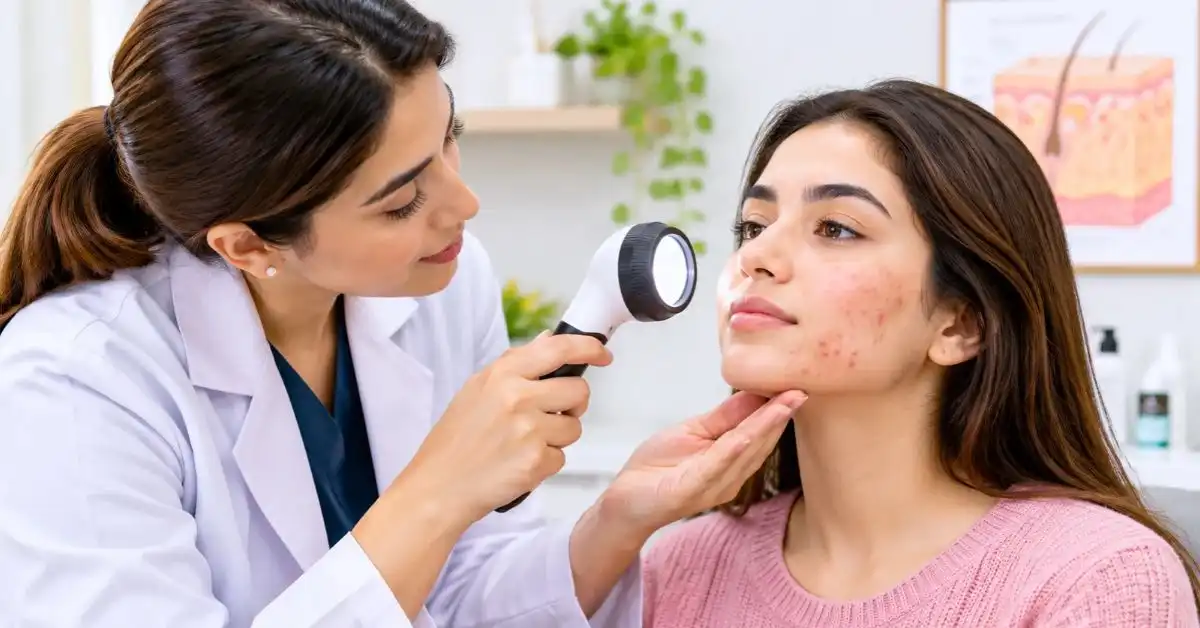
8. When Should You Seek Professional Acne Treatment?
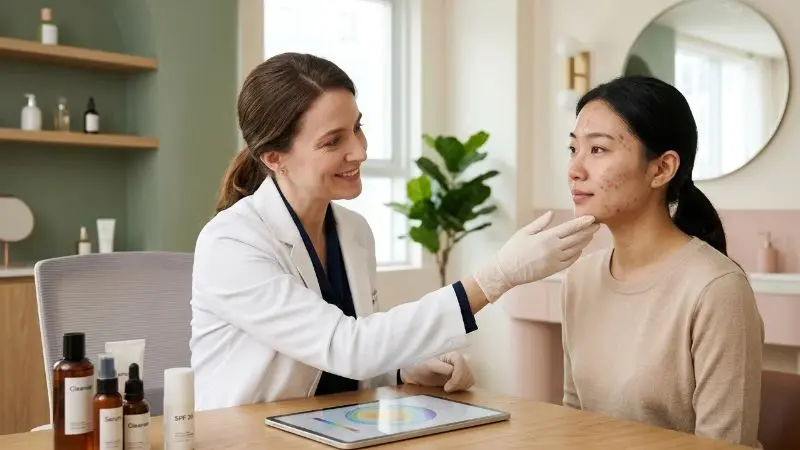
Green tea may be a reasonable optional skincare step for some people with mild acne, but persistent or severe acne deserves appropriate treatment.
Consider contacting a dermatologist or other qualified healthcare professional if:
- You have deep, painful lumps or cyst-like breakouts.
- Your acne is leaving scars or persistent dark marks.
- You have widespread or worsening breakouts.
- Your skin becomes very irritated after trying home remedies or skincare products.
- Your acne has not improved despite a consistent, appropriate treatment routine.
- Acne is affecting your confidence, mood, or daily life.
A healthcare professional can help identify the type and severity of your acne and recommend treatments suited to your skin. Depending on the situation, options may include topical retinoids, benzoyl peroxide, azelaic acid, prescription medicines, or other treatments.
Do not assume that every breakout is acne. A rash, infection, or another skin condition can sometimes look similar and may require a different approach.
If cost is a concern, a primary-care clinician or qualified pharmacist may be a useful starting point for discussing suitable, affordable acne treatments where available.
Frequently Asked Questions
1. Can green tea remove acne overnight?
No. A cool compress may temporarily soothe your skin, but green tea is not proven to clear acne overnight.
2. Can I apply green tea to my face every day?
There is no established daily schedule for homemade green tea water. Start cautiously, patch-test first, and stop if irritation develops.
3. Is green tea good for oily, acne-prone skin?
Topical green tea extract may help with some inflammatory acne lesions and possibly excess oil, but the evidence remains limited.
4. Should I wash my face after applying green tea?
For a homemade rinse or compress, rinsing afterward is a cautious option, especially if your skin is sensitive. Follow the label for a formulated leave-on product.
5. Can green tea fade acne scars and dark spots?
There is not enough evidence to rely on green tea for fading acne scars. Sun protection and appropriate treatments for post-acne dark marks may be more helpful.
Conclusion
Learning how to use green tea for acne can help you explore a simple addition to your skincare routine without relying on harsh home remedies. A cooled green tea rinse, a clean cool compress, and a carefully selected green tea skincare product are three options to consider.
The strongest available evidence relates to certain topical green tea extracts, not every homemade preparation. Green tea may support the management of some inflammatory breakouts, but it is not a guaranteed acne cure and should not replace an effective treatment plan.
Keep your routine gentle, patch-test new preparations, use moisturizer and sunscreen, and give appropriate treatments enough time to work. If your acne is painful, persistent, or causing scars, seek professional guidance so you can find a treatment that suits your skin.





Leave a Reply