


Quick Answer
Blue light skin damage is a topic that has attracted attention as people spend more time using smartphones, laptops, tablets, and other digital devices. Blue light, also called high-energy visible light (HEV light), is part of the visible light spectrum. Research suggests that sufficiently intense blue light exposure can affect skin cells, increase oxidative stress, and contribute to pigmentation changes.
However, there is an important difference between sunlight and light emitted by digital screens. Sunlight provides much higher levels of blue and other visible light than ordinary mobile phones and laptops. Current research has not established that normal screen exposure causes premature skin aging or significant skin damage.
You do not need to stop using your devices or purchase expensive blue-light skincare products. A consistent skincare routine, daily sunscreen, healthy sleep habits, and sensible screen use are practical ways to support your skin.
Author: Saira
Role: Publisher & Skincare Content Writer
Content Review: Evidence-informed skincare content based on trusted dermatology resources and skincare research.
Introduction
Have you ever looked at your face after spending hours working on a laptop or scrolling through your mobile phone and noticed that your skin looks tired, dull, or less fresh than usual? Many people who spend most of their day in front of digital screens wonder whether their devices are affecting their skin.
This concern has become known as digital aging. It describes the possible effects of frequent exposure to artificial light from digital devices and the lifestyle habits associated with extended screen use.
The discussion around blue light skin damage has grown because blue light can influence certain biological processes in the skin. Scientists have studied its possible effects on pigmentation, oxidative stress, collagen-related processes, and the natural skin barrier.
However, not every finding from laboratory research applies directly to everyday smartphone use. Some experiments expose skin cells to controlled levels of blue light that are different from the low-intensity light produced by ordinary screens.
This distinction matters because skincare advice should be based on realistic exposure and reliable evidence rather than fear-based marketing.
In this guide, we will explore what blue light is, how it interacts with the skin, whether mobile phones and laptops can cause premature aging, and which practical skincare habits may help protect your complexion.
Understanding blue light skin damage can help readers separate scientifically supported skincare concerns from common myths about digital aging.
1. What Is Blue Light and Where Does It Come From?

Blue light is a part of the visible light spectrum that the human eye can see. It generally refers to wavelengths around 400–500 nanometres, although scientific definitions may vary slightly.
Unlike ultraviolet radiation, blue light is visible to the human eye. It comes from natural and artificial sources, meaning that exposure is part of everyday life.
Natural sources of blue light
The sun is the main natural source of blue light exposure. Sunlight contains different types of radiation, including ultraviolet, visible, and infrared light.
During daylight hours, your skin receives visible light whenever exposed areas are uncovered. The amount of exposure depends on factors such as the time of day, weather, location, and whether you are outdoors or in the shade.
Artificial sources of blue light
Several everyday devices also produce blue light.
Common sources include:
- Smartphones.
- Laptop screens.
- Desktop computer monitors.
- Tablets.
- LED televisions.
- LED lighting.
These devices can produce visible blue light, but the intensity is generally much lower than natural sunlight.
Why is blue light discussed in skincare?
Scientists are interested in blue light because research has identified biological responses in skin exposed to sufficiently high doses.
These responses may include oxidative stress and increased pigment production.
However, the effects depend on the light’s intensity, wavelength, exposure time, and individual skin characteristics.
This is why research about blue light from sunlight should not automatically be used to claim that a phone screen causes wrinkles.
Although blue light skin damage is widely discussed in skincare, its effects depend on the intensity and duration of exposure.
2. Blue Light Skin Damage: How Does It Affect Your Skin?
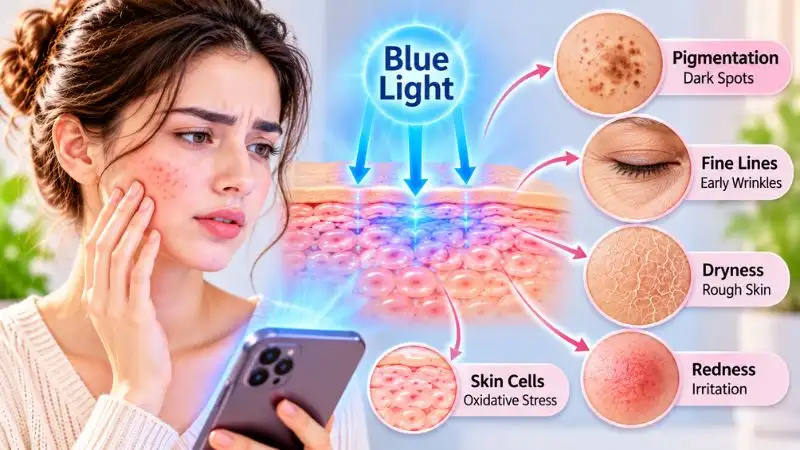
Blue light can interact with different structures inside the skin. Some biological effects have been demonstrated in experimental studies, but their importance during everyday screen use remains uncertain.
Understanding these mechanisms helps explain why blue light has become a subject of dermatological research.
A. Oxidative stress and skin cells
One possible effect of high-intensity blue light exposure is oxidative stress.
Oxidative stress happens when unstable molecules called free radicals build up faster than the body’s antioxidant systems can manage them.
These molecules can affect important cell structures, including proteins, lipids, and DNA.
In laboratory and controlled exposure studies, visible blue light has been associated with the production of reactive oxygen species.
Over time, oxidative stress can contribute to several biological processes involved in skin aging. However, ordinary exposure from a laptop or smartphone has not been shown to produce the same effects in real-world skin.
B. Possible effects on collagen
Collagen is a structural protein that helps give skin its firmness and support.
As people age, collagen production and skin structure naturally change. Sun exposure, smoking, and other environmental factors can also contribute to visible aging.
Some laboratory studies suggest that high-dose visible light may affect enzymes involved in the breakdown of the skin’s supporting structures.
These findings have increased interest in the relationship between blue light and collagen.
However, there is currently insufficient evidence to conclude that normal mobile phone or laptop use causes meaningful collagen loss.
C. Pigmentation and dark spots
Pigmentation is one of the more established areas of research involving visible light.
High-energy visible light can stimulate pigment-producing cells called melanocytes. These cells produce melanin, the pigment responsible for skin and hair colour.
Depending on the exposure and individual skin characteristics, visible light may contribute to persistent pigmentation.
People with darker skin tones may be more susceptible to certain visible-light-induced pigmentation responses.
This evidence mainly relates to controlled exposure and sunlight. It does not prove that ordinary screen exposure will cause dark spots.
D. Skin inflammation
High doses of blue light may influence inflammatory processes in skin cells.
Inflammation is part of the body’s normal protective response. However, excessive or prolonged inflammation can contribute to irritation and other skin changes.
The effects depend on the type of exposure and the condition of the skin.
It is important not to assume that every episode of facial redness or irritation is caused by digital screens.
What does research actually say?
A 2023 systematic review examined research on blue light emitted by electronic devices. It found that the available evidence did not identify ordinary device exposure as a demonstrated hazard for skin pigmentation, redness, yellowness, melasma worsening, or photoaging.
The authors also highlighted limitations in the available research and the need for better studies.
You can read the published review here:
The Cutaneous Effects of Blue Light From Electronic Devices: A Systematic Review.
This is an important distinction: blue light can affect skin under certain experimental conditions, but that does not mean everyday screen exposure has been proven to age your face.
3. Can Mobile Phones and Laptop Screens Really Cause Digital Aging?

This is one of the most common questions people ask about digital skincare.
The short answer is that current evidence does not establish that normal mobile phone or laptop use causes premature skin aging.
Digital screens produce blue light, but the amount reaching your skin is much lower than the visible light exposure you receive from sunlight.
Screen exposure versus sunlight
Sunlight contains a broad range of radiation, including substantial visible light and ultraviolet radiation.
A smartphone or laptop produces much less blue light than the sun.
A 2025 study measuring visible and blue light from commonly used electronic devices found that the measured exposure levels were small and unlikely to harm human skin during everyday use.
The researchers also observed that screen brightness, screen size, and distance affected the amount of light reaching the skin.
Does spending eight hours on a laptop damage your face?
Spending eight hours in front of a computer does not automatically mean your skin is receiving a harmful blue light dose.
Exposure depends on several factors:
- The brightness of your screen.
- The distance between your face and the device.
- The size and type of screen.
- The duration of exposure.
- The amount of other light exposure you receive.
Although reducing unnecessary screen brightness is sensible for comfort, there is no established skin-protection requirement to avoid normal computer use.
Why do some people notice tired-looking skin after screen use?
The appearance of tired skin after a long digital workday may have several explanations.
For example:
- Reduced sleep after late-night scrolling.
- Spending long periods in an air-conditioned room.
- Forgetting to drink fluids regularly.
- Skipping regular skincare steps.
- Looking tired because of eye strain or fatigue.
- Sitting indoors for extended periods without taking breaks.
These factors may influence how your face looks and feels, but they should not automatically be labelled blue light skin damage.
What about a 2024 dermatology review?
A 2024 review published in the Journal of Drugs in Dermatology discussed the possible benefits and harmful effects of blue light.
The authors concluded that available evidence did not establish a need for routine blue-light photoprotection.
This supports a balanced approach instead of buying special products out of fear.The available evidence does not show that everyday smartphone use causes significant blue light skin damage.
4. Signs of Skin Aging and Changes That Should Not Be Blamed on Screens
Many skin changes can occur during adulthood. Some are associated with natural aging, while others may result from sun exposure, genetics, hormonal changes, or lifestyle habits.
It is useful to understand the difference between actual skin changes and temporary tiredness.
Fine lines and wrinkles
Fine lines can develop naturally as the skin changes with age.
Repeated facial expressions, genetics, reduced collagen production, and long-term sun exposure can all influence their appearance.
If you notice fine lines after a long day of computer work, dehydration or temporary dryness may make them look more noticeable.
This does not prove that screen light has damaged your collagen.
Uneven skin tone
Uneven pigmentation may appear as brown spots, darker patches, or areas of discoloration.
Possible causes include:
- Sun exposure.
- Melasma.
- Post-inflammatory hyperpigmentation.
- Hormonal changes.
- Certain medications.
- Previous skin inflammation.
Visible light can contribute to pigmentation under certain conditions, but the cause of persistent dark patches should not be assumed.
Dry or dull-looking skin
Dry skin may feel tight, rough, or flaky. Dullness may make the complexion appear less radiant.
These changes can be associated with:
- Inadequate moisturizing.
- Harsh cleansing products.
- Weather changes.
- Skin barrier disruption.
- Insufficient sleep.
- Certain skincare ingredients.
A suitable moisturizer can help improve hydration and the appearance of dryness-related fine lines.
Dark circles and tired eyes
Dark circles can have several causes, including genetics, pigmentation, allergies, aging, and visible blood vessels beneath thin skin.
Long periods of screen use may contribute to eye fatigue, particularly when you do not take breaks.
However, screen light is not an established direct cause of every type of dark circle.
If dark circles are persistent or worsening, consider discussing them with a qualified healthcare professional.
5. How to Protect Your Skin From Blue Light and Digital Aging

You do not need an expensive skincare collection to maintain healthy-looking skin.
A simple routine based on hydration, sun protection, and gentle skincare is a more practical starting point.
Step 1: Use broad-spectrum sunscreen every morning
Sun exposure is a much better-established contributor to premature skin aging than ordinary digital screen exposure.
Choose a broad-spectrum sunscreen with SPF 30 or higher.
A suitable sunscreen helps protect against UVA and UVB radiation.
Apply it to exposed areas, including:
- Face.
- Neck.
- Ears.
- Hands.
Reapply approximately every two hours when outdoors, and after swimming, sweating, or towel-drying, following the product instructions.
Step 2: Consider a tinted sunscreen with iron oxides
Visible light from sunlight can contribute to pigmentation, particularly in people who are prone to melasma or post-inflammatory dark marks.
Tinted sunscreens containing iron oxides may provide additional protection against visible light.
However, this does not mean everyone who uses a smartphone needs a special tinted sunscreen.
Consider this option if pigmentation is a concern and the product suits your skin.
Step 3: Use an antioxidant skincare product if suitable
Antioxidants help protect against oxidative stress.
Some skincare products contain ingredients such as:
- Vitamin C.
- Vitamin E.
- Niacinamide.
- Ferulic acid.
These ingredients have different properties and may support specific skincare goals.
Vitamin C is commonly used to improve the appearance of uneven skin tone. Niacinamide may support the skin barrier and improve the appearance of some dark marks.
Choose one suitable product rather than combining several strong ingredients immediately.
For additional guidance, read our guide to niacinamide vs vitamin C for dark spots and acne marks.
Step 4: Maintain a healthy skin barrier
Your skin barrier is the outer protective layer that helps retain moisture and protect against external irritants.
A damaged or irritated skin barrier can make the face feel dry, tight, or uncomfortable.
Use a gentle cleanser and moisturizer suited to your skin type.
Useful moisturizer ingredients include:
- Glycerin.
- Ceramides.
- Hyaluronic acid.
- Panthenol.
If your skin is oily, a lightweight gel or lotion may feel more comfortable than a heavy cream.
Step 5: Take regular screen breaks
Taking breaks is useful for eye comfort and general well-being.
Follow the 20-20-20 approach:
- Every 20 minutes, look away from your screen.
- Focus on something approximately 20 feet away.
- Continue looking at it for around 20 seconds.
This habit is intended to reduce digital eye strain, not to prevent proven skin damage.
You can also stand up, stretch, and move around during longer working sessions.
Step 6: Adjust screen brightness and distance
Keep your screen at a comfortable brightness level.
Avoid holding your phone extremely close to your face for long periods.
A comfortable viewing distance and appropriate brightness can make digital use easier on your eyes.
Night mode and warmer screen settings may improve comfort at night, but they should not be presented as proven anti-aging treatments.
Step 7: Build a consistent nighttime routine
Your skin benefits from a regular routine that supports cleansing and hydration.
Before bed:
- Remove makeup and sunscreen.
- Cleanse your face gently.
- Apply a suitable moisturizer.
- Use targeted skincare ingredients only when appropriate.
- Maintain a consistent sleep schedule.
A nighttime routine cannot reverse damage caused by every environmental factor, but it can support normal skin health.
For a complete routine, explore GlowVixa’s best anti-aging skincare routine for beginners.
6. Lifestyle Habits That Support Healthy-Looking Skin

Skincare products are only one part of maintaining healthy skin. Your everyday habits also influence hydration, skin comfort, and general well-being.
If you spend most of your day working on a computer, small changes to your daily routine can make a difference to your comfort and overall health.
Get enough sleep
Sleep is important for normal body functions, including skin maintenance and repair.
Staying awake late to scroll through social media or watch videos can disturb your sleep schedule.
Try to:
- Maintain a regular bedtime.
- Reduce unnecessary phone use before sleeping.
- Keep your bedroom comfortable and dark.
- Aim for sufficient sleep according to your age and individual needs.
A consistent sleep schedule may help you look more rested, although it cannot remove established wrinkles.
Eat a balanced diet
Your skin needs several nutrients to maintain its normal structure and function.
Include a variety of foods in your daily meals, such as:
- Fruits rich in vitamin C.
- Vegetables containing antioxidants.
- Nuts and seeds.
- Protein-rich foods.
- Whole grains.
- Healthy sources of dietary fat.
Vitamin C supports normal collagen production, while vitamin E contributes to antioxidant protection.
You can also explore our avocado anti-wrinkle skin smoothie recipe for a simple way to include nutritious ingredients in your diet.
Stay hydrated
Drinking enough fluids supports normal body functions.
Dehydration can make your skin feel less comfortable, but drinking excessive water does not erase wrinkles or reverse photoaging.
Drink according to your thirst, activity level, and environmental conditions.
Manage everyday stress
Long working hours, academic pressure, and constant digital notifications can make it difficult to relax.
Consider simple activities such as walking, stretching, reading, or spending time outdoors.
These habits can support general well-being and help you maintain a healthier daily routine.
Choose suitable personal care products
Avoid purchasing every product advertised as an anti-aging or blue-light treatment.
Focus on products that suit your skin type and have a clear purpose.
Read our guide to natural personal care products to understand how to choose everyday personal care items more carefully.
7. Common Blue Light Skincare Mistakes to Avoid

Many people become concerned about digital aging after reading skincare advertisements or watching social media videos.
However, some popular recommendations are unnecessary or unsupported by current evidence.
Here are common mistakes to avoid.
Buying expensive blue-light protection creams unnecessarily
Some brands advertise special blue-light creams as essential products for people who use computers.
However, there is no established need for everyone to purchase a separate blue-light skincare product.
A good moisturizer and regular sunscreen are more practical priorities.
Skipping sunscreen because you stay indoors
Staying indoors does not always mean avoiding sunlight.
UVA radiation can pass through ordinary window glass to varying degrees.
If you sit near a sunny window for long periods, consider your overall sun exposure and use suitable sun protection.
Remember that sunscreen protects against established ultraviolet risks. It should not be marketed as essential protection against ordinary laptop light.
Using too many antioxidant serums
Using several antioxidant products at once does not guarantee better results.
Combining multiple active ingredients may increase the chance of irritation, particularly if you have sensitive skin.
Start with one suitable product and follow its instructions.
Replacing sunscreen with blue-light glasses
Blue-light-filtering glasses are designed primarily for visual comfort or other eye-related purposes, depending on the product.
They are not a replacement for sunscreen or other skin-protection measures.
Ignoring everyday sun exposure
This is one of the most important mistakes.
People sometimes focus heavily on phone screens while overlooking the much better-established effects of ultraviolet radiation.
Regular sun protection remains a key part of preventing premature skin aging.
For more information, read GlowVixa’s guide to mineral vs chemical sunscreen and their differences.
Believing every anti-aging claim
A product labelled digital defense, screen shield, or blue-light protection is not automatically supported by strong clinical evidence.
Look for clear ingredient information and reliable research rather than relying on advertising promises.
8. How Long Does Skin Protection Take to Show Results, and When Should You See a Dermatologist?
A healthy skincare routine supports your skin over time, but results depend on your skin type, existing concerns, product formulation, and consistency.
There is no medically established timeline for preventing digital aging because normal screen exposure has not been proven to cause premature skin aging.
However, different skincare steps may provide different benefits.
What changes can you expect?
Hydration: A suitable moisturizer can improve the appearance of dryness and make the skin feel more comfortable relatively quickly.
Uneven skin tone: Products designed for pigmentation may require several weeks or months of consistent use before noticeable changes occur.
Fine lines: Moisturizers may temporarily make dryness-related lines less visible. Targeted anti-aging treatments may take longer and do not guarantee complete wrinkle removal.
Sun protection: Consistent sunscreen use helps reduce ongoing UV exposure. Its preventive benefits are more important than expecting immediate visible changes.
When should you seek professional advice?
Consider consulting a qualified dermatologist if you experience:
- Persistent or worsening dark patches.
- New or changing skin spots.
- Unexplained facial redness.
- Ongoing irritation or inflammation.
- Sudden changes in skin texture.
- Pigmentation that does not improve with appropriate skincare.
A dermatologist can assess possible causes and recommend suitable treatments.
Do not assume that persistent pigmentation or skin irritation is caused by your mobile phone or laptop.
A simple daily routine for digital users
The following table provides a practical routine without unnecessary blue-light products.
| Time | Skincare step | Main purpose |
| Morning | Gentle cleanser | Remove overnight oil and buildup |
| Morning | Optional antioxidant serum | Support antioxidant skincare |
| Morning | Lightweight moisturizer | Maintain hydration |
| Morning | Broad-spectrum SPF 30+ | Protect against UVA and UVB |
| During the day | Screen breaks | Support eye comfort |
| Evening | Gentle cleansing | Remove makeup, sunscreen, and dirt |
| Evening | Suitable treatment | Address specific skin concerns |
| Night | Moisturizer | Support skin hydration |
Screen light versus sunlight: Understanding the difference
| Light source | Skin-related evidence | Practical approach |
| Natural sunlight | Established effects on pigmentation and photoaging | Use sunscreen and protective clothing |
| Smartphone screens | Low exposure; harmful skin effects not established | Normal use is reasonable |
| Laptop screens | Low exposure; harmful skin effects not established | Maintain comfortable screen settings |
| LED indoor lighting | Effects depend on light intensity and exposure | Normal indoor use does not require special skin protection |
Frequently Asked Questions
1. Can blue light from phones cause wrinkles?
Current evidence does not establish that normal smartphone exposure causes wrinkles or premature skin aging.
2. Should I wear sunscreen when using a laptop indoors?
Laptop light alone does not create an established need for sunscreen. However, sunscreen is useful when you receive meaningful daylight or sun exposure.
3. Does blue light cause dark spots?
High-intensity visible light can contribute to pigmentation, but ordinary exposure from digital screens has not been established as a cause of dark spots.
4. Is vitamin C good for protecting skin from blue light?
Vitamin C is an antioxidant that may support skin health and improve uneven skin tone. However, it is not proven to prevent damage from ordinary screen exposure.
5. Are blue-light skincare products necessary?
No. Current evidence does not establish that everyone needs special blue-light skincare products. A suitable moisturizer and regular sun protection are more important priorities.
Conclusion
Digital devices have become an important part of everyday life, but you do not need to fear your mobile phone or laptop to maintain healthy-looking skin.
Research shows that blue light can influence skin cells and pigmentation under certain exposure conditions. However, ordinary light from digital screens is much weaker than sunlight, and current evidence has not established that normal screen use causes premature skin aging.
The most practical approach is to focus on proven skincare habits. Use a suitable moisturizer, apply broad-spectrum sunscreen, maintain a balanced diet, and get enough sleep.
You can also take regular breaks from your screen to support eye comfort and general well-being.
Instead of purchasing expensive products based on digital-aging advertisements, choose a simple routine that suits your skin type and budget.
Healthy skin comes from consistent care, realistic expectations, and informed choices.










Leave a Reply