
About the Author
Saira | Publisher & Skincare Content Writer
Saira creates informative content about skincare, acne care, and beauty. Her writing focuses on practical skincare routines, ingredient education, and evidence-informed guidance to help readers make informed decisions about their skin.
Introduction
Choosing the right sunscreen can feel confusing when you see so many formulas on the market. Some products are labeled mineral, while others are called chemical sunscreens. Both options help protect your skin from ultraviolet (UV) radiation, but they use different active ingredients and may feel different on your face.
Understanding Mineral vs Chemical Sunscreen can help you choose a formula that suits your skin type, daily routine, budget, and personal preferences. For example, someone with sensitive skin may prefer a mineral formula, while someone who dislikes a thick texture may find a lightweight chemical sunscreen easier to wear.
Sunscreen also plays an important role in preventing sunburn, premature skin aging, and some forms of skin damage. It can help protect dark spots from becoming more noticeable with sun exposure. However, no sunscreen replaces shade, protective clothing, or other sun-safety habits.
You do not need to choose a sunscreen simply because one type is described as natural, clean, or more advanced. Instead, focus on the active ingredients, broad-spectrum protection, SPF rating, water resistance, and how comfortably the product fits into your routine.
This guide explains the main differences, benefits, limitations, application methods, and common mistakes so you can make a more informed choice.
1. What Is the Difference Between Mineral vs Chemical Sunscreen?
The main difference between mineral and chemical sunscreen is the type of active UV filters each formula contains.
Mineral sunscreen, also called physical sunscreen, commonly uses zinc oxide, titanium dioxide, or both. Chemical sunscreen uses other UV-filtering ingredients, such as avobenzone, octocrylene, octisalate, or other approved filters, depending on the country and product.
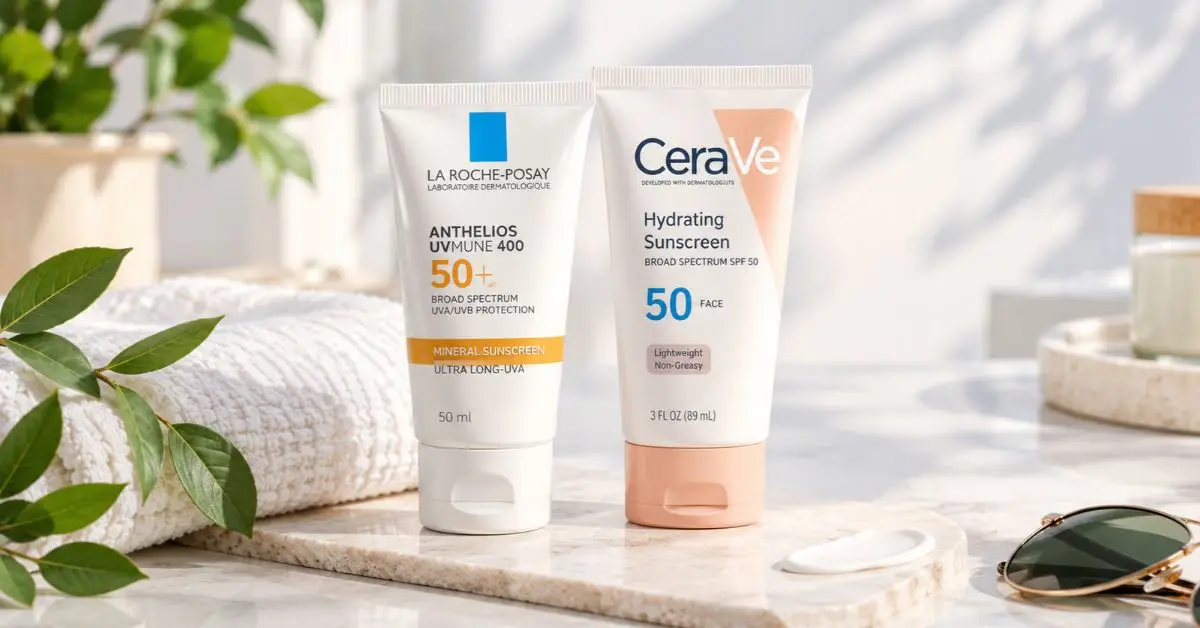
Mineral and chemical sunscreens both help protect the skin from harmful ultraviolet (UV) rays.
Mineral formulas use zinc oxide or titanium dioxide to protect the skin, mainly by absorbing UV radiation and also reflecting or scattering some of it. Chemical sunscreens use UV filters that absorb UV energy and convert it into other forms of energy. The difference between these sunscreen types is more complex than simply saying that one reflects sunlight while the other absorbs it.
. Mineral filters absorb UV radiation and can also reflect or scatter some of it. Chemical filters mainly absorb UV radiation and release the energy in different forms.
The idea that mineral sunscreen only reflects sunlight while chemical sunscreen only absorbs it is an oversimplification. Their protection depends on the complete formulation, not just the category printed on the bottle.
According to the American Academy of Dermatology, both types can provide effective protection when you select a suitable broad-spectrum product with SPF 30 or higher and water resistance.
You can read theAmerican Academy of Dermatology’s sunscreen label guide to learn what these labels mean.
How to identify each type
- Mineral sunscreen: Check the active ingredients for zinc oxide and/or titanium dioxide.
- Chemical sunscreen: Look for other UV filters in the active ingredient list without zinc oxide or titanium dioxide as active filters.
- Hybrid sunscreen: Some products combine mineral and chemical UV filters.
Always check the ingredient label instead of relying only on the product’s marketing claims.
2. Mineral vs Chemical Sunscreen: Key Differences Compared
When comparing mineral vs chemical sunscreen, consider more than the ingredient list. Texture, white cast, sensitivity, water resistance, and your willingness to reapply all affect your everyday experience.
| Feature | Mineral Sunscreen | Chemical Sunscreen |
| Common active ingredients | Zinc oxide, titanium dioxide | Avobenzone, octocrylene, octisalate, and other UV filters |
| How it protects skin | Absorbs UV and also reflects or scatters some radiation | Primarily absorbs UV radiation |
| Texture | May feel thicker or heavier | Often available in lightweight, fluid formulas |
| White cast | More likely, depending on the formula | Usually less visible, depending on the formula |
| Sensitive skin | Often a good starting option | Some formulas may irritate certain users |
| Darker skin tones | Tinted options can help reduce white cast | Many formulas blend transparently |
| Acne-prone skin | Depends on the complete formulation | Depends on the complete formulation |
| Water resistance | Depends on the product label | Depends on the product label |
Neither type wins in every category. A well-formulated mineral sunscreen may feel comfortable, while another may leave a visible white layer. Likewise, some chemical sunscreens feel weightless, but others may sting around the eyes.
Which one offers better protection?
When choosing a sunscreen, consider how well it protects your skin and whether you can use it comfortably every day. Choose a broad-spectrum product with SPF 30 or above to help protect against UVA and UVB rays.
If you expect to swim or sweat, look for water resistance on the label and follow the product’s reapplication instructions.
SPF mainly measures protection against sunburn-causing UVB radiation. Broad-spectrum labeling indicates protection against both UVA and UVB rays.
For everyday use, choose a formula you can apply generously and reapply as directed. A sunscreen that stays unused in your drawer cannot protect your skin.
3. Benefits and Limitations of Mineral Sunscreen
Mineral sunscreen can be a useful option for people who want a formula with zinc oxide or titanium dioxide. These filters are widely used in sunscreens, and mineral products are often recommended as a starting point for people with sensitive skin.

However, mineral sunscreen is not automatically perfect for everyone. Its finish and comfort depend on the formulation.
Benefits of mineral sunscreen
1. It can suit sensitive skin. Mineral formulas may be less irritating for some people, particularly those who experience stinging with certain other sunscreen formulas. However, any product can cause a reaction to another ingredient.
2. It offers established UV protection. Zinc oxide and titanium dioxide help protect against UV radiation. The overall level of protection depends on the formula and its tested SPF and broad-spectrum performance.
3. Tinted options can reduce white cast. Some mineral sunscreens contain pigments that help the product blend better with different skin tones.
4. It can fit into a simple routine. You can apply mineral sunscreen after moisturizer in the morning and before makeup, provided the layers sit comfortably on your skin.
5. It is available in different formats. Mineral sunscreens come in creams, lotions, sticks, and other formulations. A lotion or cream is often a practical starting point for facial use.
Limitations of mineral sunscreen
The most common drawback is white cast. This happens when the formula leaves a pale or chalky appearance on the skin. The effect varies with the amount applied, the ingredients, and your skin tone.
Some mineral products also feel thick, leave visible residue, or become difficult to spread evenly. These problems can make people apply too little sunscreen.
Mineral formulas can also contain fragrances, preservatives, or other ingredients that do not suit every user. The word mineral does not mean that the whole product is automatically hypoallergenic or suitable for acne-prone skin.
Who may prefer mineral sunscreen?
You may want to try a mineral formula if:
- Your skin is sensitive to some sunscreen products.
- You experience stinging with certain formulas.
- You prefer zinc oxide or titanium dioxide as active UV filters.
- You can find a texture and finish that you enjoy wearing daily.
Patch-test a new product and stop using it if it causes persistent irritation.
4. Benefits and Limitations of Chemical Sunscreen
Chemical sunscreen is popular because many formulas spread easily and leave little visible residue. This can make it convenient for people who prefer a lightweight finish or want sunscreen to sit smoothly under makeup.

However, chemical sunscreen is not one single ingredient. Products use different combinations of UV filters and supporting ingredients, so their performance and feel can vary considerably.
Benefits of chemical sunscreen
1. Lightweight textures are widely available. Many chemical sunscreens come in fluid, gel, or lotion formulas that feel comfortable on oily or combination skin.
2. Many formulas blend without a noticeable white cast. This can be helpful for people with medium, deep, or darker skin tones who find some mineral sunscreens difficult to blend.
3. It works well in many daily routines. A comfortable formula can fit under makeup and other skincare products without leaving a heavy finish.
4. Different formulas meet different needs. You can find chemical sunscreens designed for facial use, outdoor activities, and water-resistant protection.
5. It can be suitable for acne-prone skin. Some lightweight chemical formulas work well for acne-prone skin, especially when labeled non-comedogenic. However, that label does not guarantee that a product will suit everyone.
Limitations of chemical sunscreen
Some chemical sunscreen formulas may sting the eyes or irritate sensitive skin. This does not happen to everyone, and reactions depend on the individual and the complete formulation.
You may also dislike a formula that feels greasy, pills under makeup, or leaves a shiny finish. These issues are not exclusive to chemical sunscreens.
Certain ingredients have received environmental or safety scrutiny. However, it is misleading to assume that all chemical sunscreens are unsafe. Ingredient assessments depend on the specific filter, concentration, exposure, and available evidence.
Choose a sunscreen that complies with the applicable regulations where it is sold. Do not skip sun protection because of alarming social media claims.
Who may prefer chemical sunscreen?
You may prefer a chemical formula if:
- You dislike a visible white cast.
- You want a lightweight or fluid texture.
- You wear makeup and want a sunscreen that layers comfortably.
- You find a particular formula gentle and easy to reapply.
If a sunscreen repeatedly causes burning, itching, or redness, stop using it and consider a different formula.
5. Mineral vs Chemical Sunscreen for Different Skin Types
Your skin type can help narrow your choices, but it should not be the only factor. Two people with oily skin may respond differently to the same product.
When choosing mineral vs chemical sunscreen, consider your skin’s oil production, sensitivity, dryness, acne history, and preferred finish.
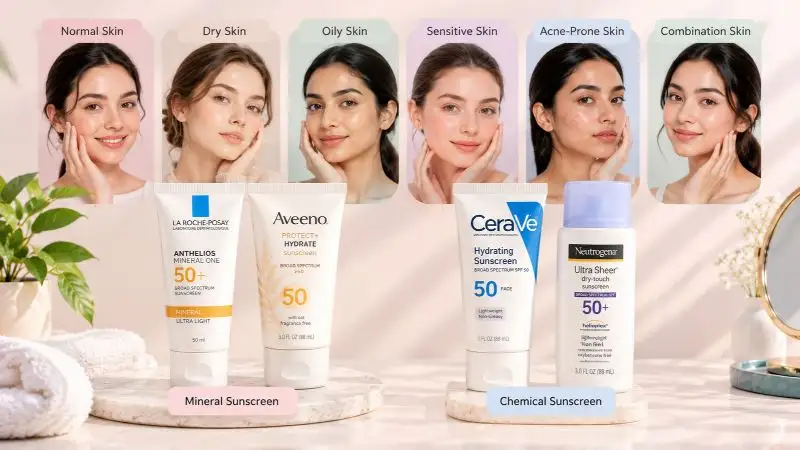
Oily skin
If your face becomes shiny during the day, look for a lightweight lotion, gel, or fluid sunscreen. A non-greasy or matte finish may feel more comfortable.
Both mineral and chemical products can work for oily skin. Check whether the formula is non-comedogenic, and remember that this term does not guarantee that breakouts will never occur.
Avoid assuming that a mineral formula will automatically control oil. Sunscreen is primarily for UV protection, not a replacement for acne treatment.
Acne-prone skin
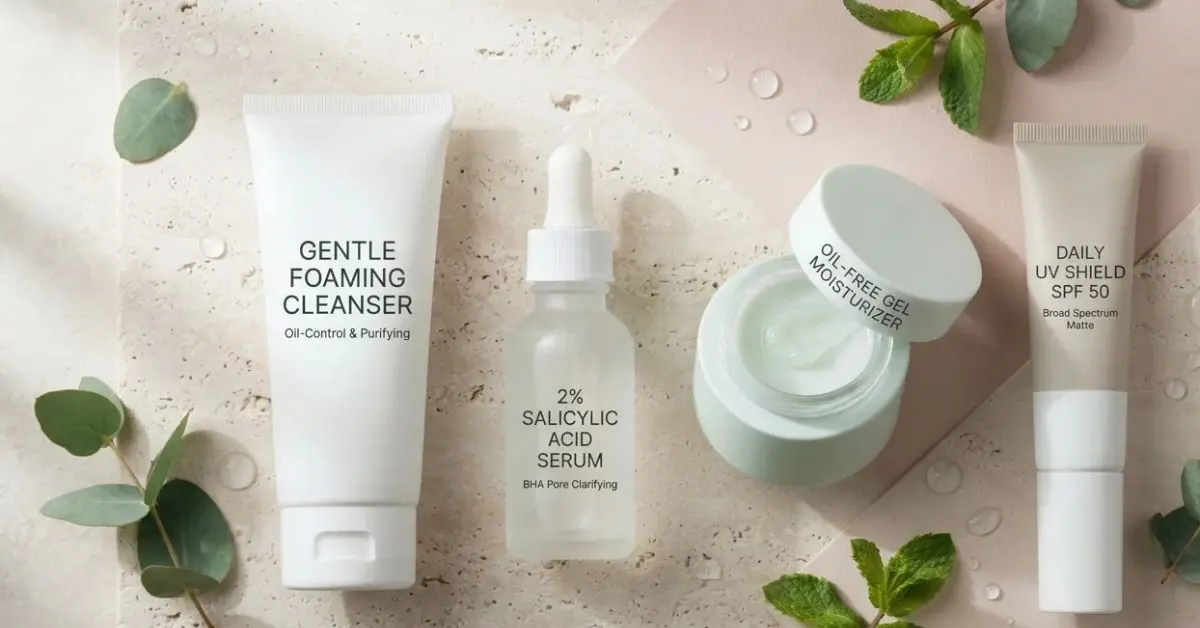
People with acne-prone skin should look for products that feel comfortable and do not seem to worsen clogged pores. Lightweight, fragrance-free, and non-comedogenic options may be useful starting points.
You do not need to avoid all chemical filters simply because you have acne. Likewise, a mineral sunscreen is not automatically breakout-proof.
Introduce one new product at a time so you can identify possible triggers. If you are also using acne treatments, select sunscreen that feels gentle and does not add unnecessary irritation.
For more skincare guidance, read GlowVixa’sguide to the best tinted moisturizer for acne-prone skin.
Sensitive skin
Mineral sunscreen is often worth trying first if your skin reacts easily to skincare products. Choose a simple formula without fragrance if fragrance tends to bother your skin.
However, sunscreen ingredients are only one part of the equation. Preservatives, fragrances, and other components may also trigger a reaction.
If you have persistent eczema, rosacea, or repeated reactions to sunscreens, ask a healthcare professional for individualized advice.
Dry skin
If your skin feels tight or flaky, look for a sunscreen with moisturizing ingredients and a creamy texture. You may need a separate moisturizer underneath.
Mineral and chemical sunscreens can both suit dry skin. The best choice is the one that protects your skin without making it feel uncomfortable.
Combination skin
Combination skin may benefit from a lightweight formula that does not feel excessively greasy on the forehead, nose, and chin while remaining comfortable on drier areas.
Test how the sunscreen behaves throughout the day. A product that feels pleasant for the first few minutes may become shiny or dry later.
Skin with dark spots or uneven tone
Consistent sun protection helps prevent existing dark spots from becoming darker and supports the management of uneven pigmentation.
A tinted sunscreen containing iron oxides may provide additional protection against some visible light, which can contribute to pigmentation in certain skin conditions. Tint alone does not guarantee this benefit; check the formula and its claims.
If pigmentation persists or worsens, a dermatologist can help identify its cause and suitable treatment options.
6. How to Choose the Right Sunscreen for Everyday Use
The best sunscreen is not necessarily the most expensive one or the formula with the longest ingredient list. It is the product that offers suitable protection and that you will use consistently.

Use this checklist when comparing mineral vs chemical sunscreen options.
Your sunscreen shopping checklist
- Choose broad-spectrum protection against UVA and UVB.
- Select SPF 30 or higher for routine daily use.
- Look for water resistance if you will swim or sweat.
- Consider a non-comedogenic formula if you are prone to acne.
- Choose fragrance-free options if fragrance irritates your skin.
- Check the finish and texture before committing to a product.
- Consider a tinted formula if white cast is a concern.
- Buy from a reliable seller and check the expiry date.
- Follow the directions on the product label.
- Choose a formula you can apply generously and reapply as directed.
The American Academy of Dermatology provides further guidance onchoosing the right sunscreen.
How to compare products in the shop
| Your main concern | What to look for | Important reminder |
| Sensitive skin | A simple mineral formula | Check every ingredient for possible triggers |
| Oily skin | Lightweight, non-greasy finish | Mineral and chemical formulas can both work |
| Acne-prone skin | Non-comedogenic labeling | No product can guarantee zero breakouts |
| White cast | Tinted mineral or transparent chemical formula | Test the finish on your own skin tone |
| Dry skin | Moisturizing cream or lotion | Add moisturizer if needed |
| Swimming or sweating | Water-resistant sunscreen | Reapply according to the label |
Use this comparison as a starting point, not as a guarantee of how a product will perform on your skin.
7. How to Apply Sunscreen Correctly: Morning Routine and Common Mistakes
Even an excellent sunscreen may offer less protection than expected if you apply too little, miss areas, or fail to reapply. Correct use matters just as much as choosing between mineral and chemical formulas.

A simple morning skincare routine
Step 1: Cleanse gently. Wash your face with a cleanser that suits your skin. Avoid harsh scrubbing.
Step 2: Apply moisturizer. If your skin needs hydration, use a comfortable moisturizer and allow it to settle.
Step 3: Apply sunscreen. Use your sunscreen as the final step of your morning skincare routine before makeup. Follow the product directions and apply enough to cover exposed skin evenly.
Step 4: Cover often-missed areas. Remember your ears, neck, hairline, and other exposed areas. Take care around your eyes and follow the product’s directions.
Step 5: Reapply. When outdoors, reapply approximately every two hours and after swimming or sweating, following the product’s water-resistance instructions. Reapply sooner when the label or conditions require it.
Step 6: Add other sun protection. Seek shade and wear protective clothing, a wide-brimmed hat, and sunglasses when appropriate.
Do mineral and chemical sunscreens need different application methods?
Both require adequate, even application. Mineral sunscreen does not provide complete protection simply because it sits on the skin, and chemical sunscreen should not be applied sparingly because it feels lightweight.
Follow the directions for your specific product. Some chemical sunscreen labels recommend applying it before sun exposure, but the exact instructions vary. Do not assume that every formula follows an identical waiting period.
Common sunscreen mistakes to avoid
Using too little: Applying a thin layer can reduce the protection you receive compared with the SPF tested on the label.
Skipping sunscreen on cloudy days: UV radiation can still reach your skin when the sky is overcast.
Choosing SPF but ignoring broad-spectrum protection: SPF alone does not tell you the complete UVA protection story.
Forgetting reapplication: Morning application does not provide unlimited protection throughout the day.
Relying on makeup with SPF alone: Makeup is often applied too thinly to provide the labeled protection. Use a dedicated sunscreen underneath.
Ignoring irritation: Persistent burning, itching, or redness is a reason to stop using a product and consider professional advice.
Believing one type is always superior: The overall formulation, tested protection, and consistent use matter more than a simple mineral-versus-chemical label.
Can you use mineral and chemical sunscreen together?
You can use a product that combines mineral and chemical UV filters if it is formulated and tested as a sunscreen. These are often called hybrid sunscreens.
However, layering two different sunscreens does not automatically double your SPF. Use one suitable product in the amount and manner directed on its label, rather than relying on several layers to compensate for inadequate application.
Frequently Asked Questions
1. Is mineral or chemical sunscreen better?
Neither is universally better. Choose a broad-spectrum SPF 30 or higher sunscreen that suits your skin and that you can apply consistently.
2. Is mineral sunscreen better for sensitive skin?
It can be a useful starting option because some mineral formulas are less irritating for sensitive users. However, other ingredients in the product can still cause reactions.
3. Which sunscreen is better for oily, acne-prone skin?
Either type can work. Look for a lightweight, non-comedogenic formula and pay attention to how your skin responds.
4. Does mineral sunscreen leave a white cast?
It can, especially on deeper skin tones, but the effect depends on the formulation. Tinted mineral sunscreens may blend more naturally.
5. Can I use sunscreen every day?
Yes. Daily broad-spectrum sun protection is useful whenever your skin is exposed to UV radiation. Reapply as directed, particularly during extended outdoor exposure.
Conclusion
Understanding Mineral vs Chemical Sunscreen makes it easier to select a product that fits your skin type, comfort level, and daily habits. Mineral sunscreen uses zinc oxide and/or titanium dioxide and may suit people who prefer these filters or have sensitive skin. Chemical sunscreen uses other UV filters and often offers lightweight formulas that blend with little visible residue.
Neither option is automatically best for everyone. Mineral products may leave a white cast or feel heavy, while certain chemical formulas may irritate some users. Your individual response depends on the complete formulation, not just its sunscreen category.
For everyday protection, prioritize a broad-spectrum sunscreen with SPF 30 or higher. Choose a water-resistant product when swimming or sweating, apply it generously according to the label, and reapply approximately every two hours outdoors and after swimming or sweating as directed.
If you have oily or acne-prone skin, consider a lightweight, non-comedogenic formula. If you have sensitive skin, a simple mineral sunscreen may be worth trying first. Tinted formulas can also help reduce visible white cast.
Remember that sunscreen works best alongside shade, protective clothing, and other sun-safe habits. Start with a formula you enjoy wearing, monitor how your skin responds, and stay consistent with your routine.
Disclaimer: This article is for educational purposes only and does not replace individualized medical advice. Seek professional guidance if you experience persistent skin irritation or have a skin condition that affects your sunscreen choices.








Leave a Reply