

Quick Answer
When comparing niacinamide vs vitamin C for dark spots and acne marks, both ingredients may help improve uneven skin tone, but they work differently. Niacinamide, a form of vitamin B3, supports the skin barrier and may help reduce the appearance of some dark spots. Vitamin C is an antioxidant that may help brighten the complexion and improve the appearance of certain types of pigmentation.
If your main concern is dark marks left after pimples, either ingredient may be worth considering. Niacinamide may be a good starting point if you have oily or sensitive skin, while vitamin C may suit you if you want antioxidant protection and a brighter-looking complexion. Your results will depend on the product formulation, your skin’s tolerance, and the cause of the marks.
You can use both ingredients together if your skin tolerates them. However, daily sunscreen and appropriate acne treatment are essential parts of a routine for preventing new marks and helping existing ones fade.
About the Author
Author: Saira
Role: Publisher & Skincare Content Writer
Content Review: Evidence-informed skincare content based on trusted dermatology resources and skincare research.
Introduction
Have you ever noticed that a pimple disappears, but a brown or dark mark remains on your face for weeks or even months? These marks can be frustrating, especially when you are trying to achieve a smoother, more even-looking complexion.
If you have acne-prone skin, you may be wondering whether niacinamide or vitamin C is the better choice. Both ingredients are popular in skincare, but choosing between them can be confusing when so many serums promise brighter skin and fewer dark spots.
Understanding niacinamide vs vitamin c starts with identifying the problem you want to address. Some marks appear because the skin produces extra pigment after inflammation. Others may be red or pink marks that remain after a pimple heals. True acne scars, meanwhile, can involve changes in skin texture rather than color alone.
Niacinamide can help support the skin barrier and may improve the appearance of certain dark spots. Vitamin C offers antioxidant protection and may help reduce the appearance of some forms of hyperpigmentation.
The American Academy of Dermatology explains that treating the underlying cause, protecting the skin from sunlight, and choosing appropriate ingredients can help manage dark spots.
In this guide, you will learn how these ingredients compare, which may suit your skin type, whether you can combine them, and how to build a simple routine for dark spots and acne marks.
What Are Dark Spots and Acne Marks?
Before choosing a serum, it helps to understand why marks remain after a breakout.
Acne can trigger inflammation in the skin. As the affected area heals, the skin may produce additional melanin, the pigment responsible for skin color. This can leave a darker patch where the pimple previously appeared.
This type of discoloration is called post-inflammatory hyperpigmentation, or PIH.
It is particularly common in people with medium to darker skin tones, although it can affect anyone.
Different Types of Marks After Acne
1. Brown or dark acne marks
These marks are usually associated with extra pigment produced during the skin’s response to inflammation. They may appear brown, dark brown, or grayish, depending on your skin and the depth of the pigmentation.
Niacinamide and vitamin C may help improve the appearance of some of these marks over time.
2. Red or pink marks
Some marks look red or pink rather than brown. These can reflect lingering changes associated with inflammation and blood vessels rather than excess melanin alone.
Brightening ingredients may not address every type of red mark equally well.
3. Indented or raised acne scars
Acne scars can create depressions, uneven texture, or raised areas of skin. These are different from flat dark marks.
Niacinamide and vitamin C are not reliable ways to remove established, indented or raised scars. Depending on the scar type, a dermatologist may recommend other treatments.
Understanding the difference matters because the best skincare ingredient depends on what you are actually treating.
If you still have active pimples, managing the acne itself is also important. New breakouts can lead to additional marks even while older ones are fading.
What Is Niacinamide, and How Does It Help Dark Spots?
Niacinamide is a form of vitamin B3 used in serums, moisturizers, cleansers, and other skincare products.

It is valued for its ability to support the skin barrier, improve moisture retention, and help calm visible redness. Research also suggests that niacinamide can help improve the appearance of certain types of hyperpigmentation.
Benefits of Niacinamide for Acne Marks
Supports a healthier skin barrier
Your skin barrier helps retain moisture and protect against everyday irritants. Niacinamide supports barrier function, which may make your skincare routine easier to tolerate.
This is useful if acne treatments leave your face feeling dry or uncomfortable.
May help fade certain dark spots
Niacinamide may influence the transfer of melanin to skin cells, helping reduce the appearance of some forms of discoloration.
However, the amount of improvement depends on the formulation, concentration, and cause of your pigmentation.
May help reduce visible redness
Niacinamide has anti-inflammatory properties and may help improve the appearance of redness associated with certain skin conditions.
It will not eliminate every type of redness or replace appropriate acne treatment.
May help with excess oil
Some studies suggest that topical niacinamide can help regulate sebum production. This may be useful for people who experience oily skin.
However, it does not stop natural oil production or guarantee that acne will disappear.
Can support a simple skincare routine
Niacinamide is available in many moisturizers and other products. You may not need a separate serum if your existing skincare products already contain it.
What Strength Should You Choose?
Many niacinamide serums contain concentrations between 2% and 5%, although products vary.
A higher concentration is not automatically better. Beginners and people with sensitive skin may prefer a lower-strength formula before considering stronger products.
For more information about the ingredient, readCleveland Clinic’s guide to niacinamide benefits.
What Is Vitamin C, and How Does It Help Dark Spots?
Vitamin C is an antioxidant that helps protect the skin from oxidative stress associated with environmental exposure. It also plays an important role in collagen production.
In skincare, vitamin C is commonly used to improve the appearance of dull skin, uneven pigmentation, and certain signs of sun-related aging.
Benefits of Vitamin C for Acne Marks
May improve the appearance of dark spots
Vitamin C can help reduce the appearance of certain types of hyperpigmentation. It may be useful for people dealing with brown marks left after acne.
However, it will not remove every mark, particularly if the discoloration is deep or has another underlying cause.
Supports a brighter-looking complexion
A suitable vitamin C product may help the skin look more radiant and even in tone.
The goal is to improve the appearance of uneven pigmentation, not to change your natural skin color.
Provides antioxidant protection
Vitamin C helps neutralize free radicals associated with environmental damage.
This is one reason it is commonly included in morning skincare routines.
Supports collagen production
Collagen helps maintain the skin’s structure. Vitamin C is required for normal collagen formation and may help improve some visible signs of photoaging.
However, this does not mean that a vitamin C serum will fill acne scars or completely remove deep skin depressions.
Which Vitamin C Formula Should You Choose?
L-ascorbic acid is a widely studied form of topical vitamin C. Other products contain vitamin C derivatives, which differ in stability and formulation.
Some vitamin C products can cause dryness, stinging, or redness, particularly when they contain higher concentrations of L-ascorbic acid.
If you have sensitive skin, start with a formula you can tolerate comfortably. A stronger product is not necessarily the best product for you.
Niacinamide vs Vitamin C: Which Works Better for Dark Spots?
Neither ingredient is universally better for every type of dark spot.

Niacinamide may suit people who want to support their skin barrier while improving the appearance of uneven pigmentation. Vitamin C may be particularly appealing if dark spots and dullness are the main concerns.
The evidence for both ingredients is promising, but results vary. There is not enough direct comparative evidence to claim that one ingredient always fades acne marks faster than the other.
Comparison Table
| Feature | Niacinamide | Vitamin C |
| Main skincare role | Supports the skin barrier and helps with visible redness | Antioxidant protection and skin brightening |
| Dark spots | May improve the appearance of some pigmentation | May improve the appearance of certain dark spots |
| Acne-prone skin | May support a routine for oily, acne-prone skin | May help with some post-acne dark marks |
| Sensitive skin | Often well tolerated, but reactions can occur | Some formulas may cause stinging or irritation |
| Skin barrier | Supports barrier function | Benefits depend on the formula and overall routine |
| Oily skin | May help with visible excess oil | Suitability depends on the product formulation |
| Fine lines | May improve the appearance of some fine lines | Supports collagen formation and may help with visible photoaging |
| Best routine priority | Barrier support and a more balanced-looking complexion | Antioxidant protection and brighter-looking skin |
The table compares their general roles rather than promising particular results.
Choose Niacinamide If…
- Your skin is oily or combination.
- You want to support your skin barrier.
- You experience visible redness or irritation.
- You want to address uneven tone without introducing several active ingredients.
- You prefer a simple serum or moisturizer.
Choose Vitamin C If…
- Brown acne marks are your main concern.
- You want to improve the appearance of dull skin.
- You want antioxidant protection in your daytime routine.
- You are concerned about certain signs of sun-related skin aging.
- Your skin tolerates your chosen vitamin C formula.
If you have several concerns, you may eventually benefit from both ingredients. Start with one so you can assess your skin’s response before adding another product.
Which Ingredient Is Better for Oily and Acne-Prone Skin?
If your skin becomes shiny quickly or you regularly experience clogged pores, niacinamide may be a practical starting point.
It can support the skin barrier and may help reduce the appearance of excess oil and redness. These benefits can be useful when building a routine for acne-prone skin.
However, niacinamide is not a guaranteed treatment for active acne. It may not be enough to clear persistent whiteheads, blackheads, or inflamed pimples.
Vitamin C may also suit acne-prone skin, especially when post-acne marks are the main concern. The right formula matters because irritation can make skin discomfort worse.
A Practical Approach
If you have oily skin and dark acne marks:
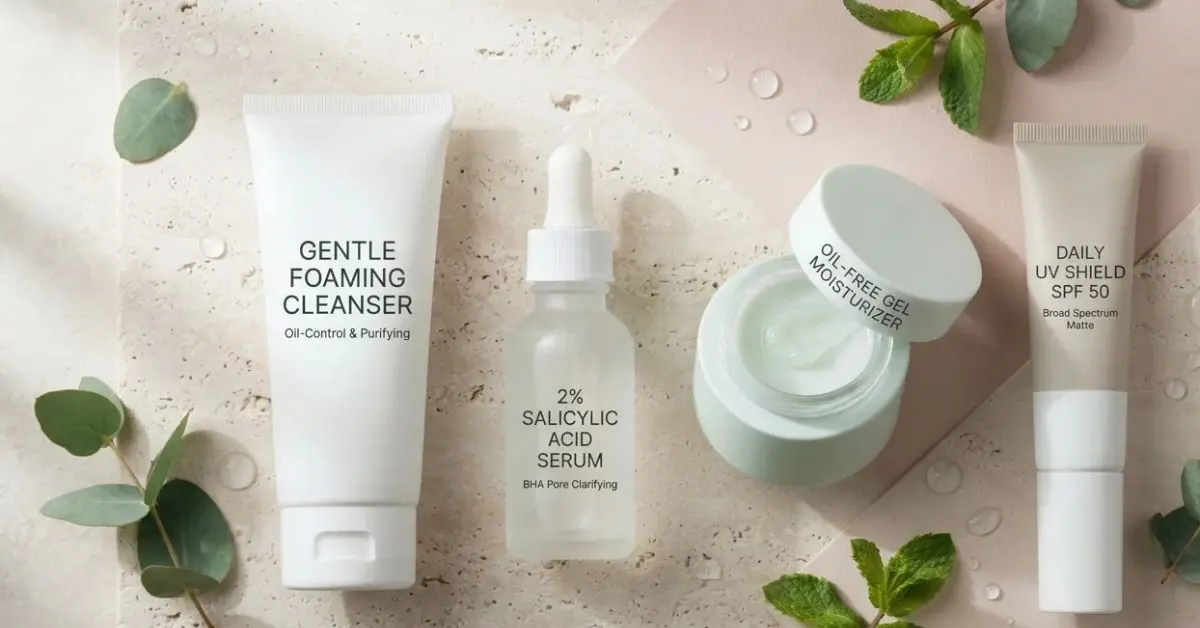
- Begin with a gentle cleanser.
- Choose either a niacinamide serum or a suitable vitamin C serum.
- Apply a moisturizer that suits your skin.
- Use broad-spectrum sunscreen with SPF 30 or higher during the day.
- Introduce additional treatments only when your skin tolerates the existing routine.
If active acne continues to appear, consider an established acne treatment rather than relying on a brightening serum alone.
You can explore GlowVixa’sguide to the best exfoliator for acne-prone skin for additional routine guidance. Exfoliation is optional, and overusing exfoliating products can irritate the skin.
Can You Use Niacinamide and Vitamin C Together?
Yes. Many people can use niacinamide and vitamin C in the same skincare routine.
The ingredients have different primary roles, so using both may help address more than one concern. Vitamin C may help improve the appearance of dark spots, while niacinamide supports the skin barrier.
There is no general rule that these ingredients must never be combined. However, using multiple serums may increase the chance of irritation, especially if you also use exfoliating acids or retinoids.
How to Combine Them Safely
- Introduce one product at a time.
- Follow the application instructions for each formula.
- Start with less frequent use if your skin is sensitive.
- Use a moisturizer to support skin comfort.
- Apply sunscreen every morning.
- Stop using a product that causes persistent burning, swelling, or significant irritation.
You do not have to use both ingredients to achieve healthier-looking skin. One well-tolerated product may be a better starting point than a complicated routine.
Morning and Night Routine for Dark Spots and Acne Marks
Consistency matters more than using a large number of products. A simple routine can help you care for your skin without creating unnecessary irritation.

Morning Routine
Step 1: Cleanse gently.
Use a mild cleanser that removes excess oil without leaving your skin tight or dry.
Step 2: Apply vitamin C if suitable.
If you choose vitamin C, apply it according to the product instructions. Morning use is common because of its antioxidant role.
Step 3: Apply niacinamide if desired.
If you are using both ingredients, niacinamide can follow vitamin C when the product instructions allow. You can also use a moisturizer containing niacinamide instead of applying a separate serum.
Step 4: Moisturize.
Choose a moisturizer suitable for your skin type. Even oily skin needs appropriate hydration.
Step 5: Apply sunscreen.
Use a broad-spectrum sunscreen with SPF 30 or higher. Reapply according to the label, especially after sweating, swimming, or prolonged outdoor exposure.
Sun protection helps prevent new dark spots and supports the treatment of existing pigmentation.
Evening Routine
Step 1: Remove makeup and sunscreen.
Cleanse gently to remove daily buildup without scrubbing your skin.
Step 2: Apply niacinamide if desired.
Niacinamide can be used in the evening to support the skin barrier and improve the appearance of uneven skin tone.
If you already use it in the morning, a second application is not automatically necessary.
Step 3: Moisturize.
Finish with a suitable moisturizer to help reduce dryness and maintain skin comfort.
If you prefer to use vitamin C at night, you can do so when the product instructions permit. The most important factors are suitability, consistency, and avoiding irritation.
How Long Does It Take for Dark Spots to Fade?
Dark spots do not disappear overnight. The time required for improvement depends on the depth of pigmentation, the cause of the marks, your skin tone, sun exposure, and the products you use.
Some superficial marks fade gradually over several months. Deeper pigmentation may take considerably longer.
The American Academy of Dermatology notes that some spots can take six to twelve months to fade naturally after the cause has been addressed. Treatment may help speed improvement, but results vary.
What You Can Do While Waiting for Results
Weeks 1–2: Focus on tolerance.
Introduce one product at a time. Watch for irritation, dryness, or redness.
Weeks 3–6: Maintain consistency.
Continue with a suitable routine and use sunscreen daily. Avoid repeatedly changing products in search of immediate results.
Weeks 6–12: Review your progress.
Look for gradual changes in the appearance of marks. Take photographs under similar lighting if you want to compare your progress.
This is a monitoring guide, not a promise that your dark spots will clear within twelve weeks.
If your marks worsen, your acne remains active, or the pigmentation is persistent, a dermatologist can help identify a more appropriate treatment.
Common Mistakes to Avoid
Using Too Many Active Ingredients
Combining several serums, exfoliating acids, and retinoids at once can increase irritation. Introduce products gradually.
Skipping Sunscreen
Sun exposure can make pigmentation more noticeable and slow your progress. Use broad-spectrum SPF 30 or higher consistently.
Picking Pimples
Squeezing or picking acne can increase inflammation and raise the risk of additional dark marks and scars.
Choosing the Highest Concentration
A higher percentage does not guarantee better results. Choose a formula that your skin tolerates comfortably.
Expecting One Serum to Treat Every Problem
Dark spots, active acne, red marks, and indented scars are different concerns. They may need different approaches.
Using Harsh DIY Remedies
Lemon juice, abrasive scrubs, and other irritating home remedies can damage the skin barrier and potentially worsen discoloration. Choose products formulated for facial skin instead.
For more information about pigmentation and appropriate treatment options, read the American Academy of Dermatology’sguide to fading dark spots.
When Should You See a Dermatologist?
Consider professional advice if:
- Your acne is painful, deep, or leaving scars.
- New dark spots continue appearing despite treating the acne.
- Pigmentation persists or becomes more noticeable.
- Your skin develops significant irritation from skincare products.
- You are unsure whether a mark is pigmentation, redness, or a scar.
- A spot changes rapidly in size, shape, or color, or bleeds unexpectedly.
A dermatologist can identify the type of mark and discuss suitable treatments. Depending on your condition, options may include prescription creams, acne medication, or supervised procedures.
Do not assume every dark mark is caused by acne. Some pigmentation has other causes and may need a different approach.
Frequently Asked Questions
1. Is niacinamide or vitamin C better for acne marks?
Both may help improve the appearance of certain dark marks. Niacinamide supports the skin barrier, while vitamin C offers antioxidant benefits and may improve uneven pigmentation.
2. Can I use niacinamide and vitamin C together?
Yes, many people can combine them. Introduce products gradually and stop if significant irritation develops.
3. Which is better for oily skin and dark spots?
Niacinamide may be a useful starting point for oily skin, while vitamin C may help with certain dark spots. Your skin’s tolerance matters.
4. How long do acne marks take to fade?
Some marks fade over several months, while deeper pigmentation can take longer. Sunscreen and appropriate acne care can help prevent further marks.
5. Does vitamin C remove acne scars?
Vitamin C may improve the appearance of some dark marks, but it will not reliably remove indented or raised acne scars.
Conclusion
When comparing niacinamide vs vitamin C for dark spots and acne marks, the better choice depends on your skin concerns and the type of marks you want to address.
Niacinamide may help support the skin barrier, improve the appearance of excess oil, and reduce the appearance of some discoloration. Vitamin C may help brighten the complexion, improve certain dark spots, and provide antioxidant protection.
You can use both ingredients together if your skin tolerates them, but you do not need to start with multiple serums. Choose a suitable product, introduce it gradually, moisturize regularly, and make sunscreen part of your daily routine.
Remember that flat dark marks are different from acne scars, and persistent pigmentation may require professional treatment. With consistent care and realistic expectations, you can work toward a healthier-looking, more even complexion.








Leave a Reply