


Quick Answer
Yes, stress can make acne worse, especially if you already have acne-prone skin. During stressful periods, the body releases stress-related hormones and other chemical signals that may increase oil production and inflammation. Excess oil can contribute to clogged pores, whiteheads, blackheads, and inflamed pimples.
However, stress is not the only cause of acne. Hormonal changes, genetics, clogged pores, irritating skincare products, and other factors can also contribute to breakouts. Managing stress may help you control flare-ups, but it does not replace an appropriate acne treatment.
Author Box
Author: Saira
Role: Publisher & Skincare Content Writer
Experience: Passionate about evidence-based acne care, digital skincare research, and natural lifestyle remedies.
Content Review: Evidence-informed skincare content based on trusted dermatology resources and skincare research.
Introduction
Have you ever noticed new pimples appearing before an important exam, during a difficult week, or after several nights of poor sleep?
If your skin seems to break out whenever life becomes stressful, you are not alone. Many people wonder, does stress cause acne, especially when new breakouts appear during stressful periods.
Stress affects more than your mood. It can influence your sleep, daily habits, hormones, and skin health. For people who are already prone to acne, these changes may make existing breakouts more noticeable or difficult to manage.
But does stress cause acne, or is there another reason your skin becomes worse when you feel anxious?
The relationship between stress and acne is more complicated than it may seem. Many readers ask, does stress cause acne, and the answer depends on several factors, including skin type, hormones, and existing acne.
Research suggests that psychological stress can worsen acne through several biological pathways. Stress may also affect skincare habits, sleep quality, and other behaviors that influence skin health.
The American Academy of Dermatology (AAD) explains that stress can worsen acne by increasing oil production in people who are prone to breakouts.
In this guide, you will learn how stress affects your skin, why anxiety may trigger breakouts, how to recognize possible stress-related flare-ups, and which skincare and lifestyle habits may help. You will also discover when persistent acne needs professional treatment.
If you are wondering, does stress cause acne, understanding the connection between stress and skin Stress may worsen acne breakouts in some people.
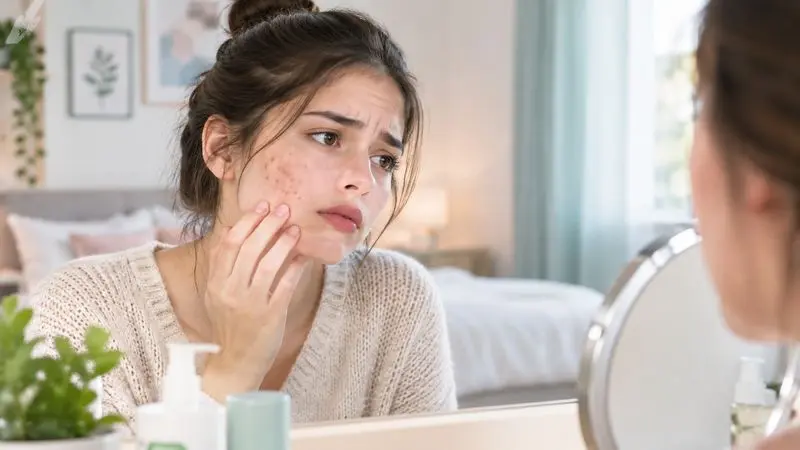
What Is Stress Acne?
Understanding whether stress causes acne can help you identify possible triggers and improve your skincare routine.
Stress acne refers to acne breakouts that appear to worsen during periods of emotional or physical stress. It is a common way to describe stress-associated flare-ups, rather than a separate medical type of acne.
When you experience stress, your body activates its stress-response system. This process involves hormones and chemical messengers that help your body respond to challenging situations. However, these responses can also influence the skin.
Stress may stimulate oil-producing glands and contribute to inflammation. When excess oil combines with dead skin cells inside a pore, the pore can become blocked. Bacteria and inflammatory responses can then contribute to acne lesions.
Stress-related flare-ups may include:
- Whiteheads: Small, flesh-colored or whitish bumps caused by clogged pores.
- Blackheads: Open clogged pores that appear dark at the surface.
- Inflamed pimples: Red, tender bumps that may develop a white or yellow center.
- Deeper acne lesions: Painful bumps beneath the skin that may require medical treatment.
These signs do not prove that stress is responsible. Acne can look similar regardless of its trigger, and several factors may be acting together.
For example, you might experience hormonal acne while also dealing with exam stress and poor sleep. Stress could worsen the existing problem without being its original cause.
Understanding this distinction helps you avoid blaming every breakout on anxiety.
If you are wondering, does stress cause acne in everyone, the answer is no. Stress may worsen breakouts in some people, but it does not affect every person’s skin in the same way.
How Does Stress Cause Acne? Understanding the Science
Stress and acne are connected through several processes in the body. Although researchers continue to study the details, evidence suggests that stress can influence oil production, inflammation, skin healing, and behaviors related to skincare.
So, does stress cause acne through hormones alone? No. Oil production, inflammation, sleep, and skincare habits may all contribute to stress-related flare-ups.
1. Stress Hormones May Increase Oil Production
Your skin contains sebaceous glands that produce sebum, a natural oily substance that helps protect the skin.
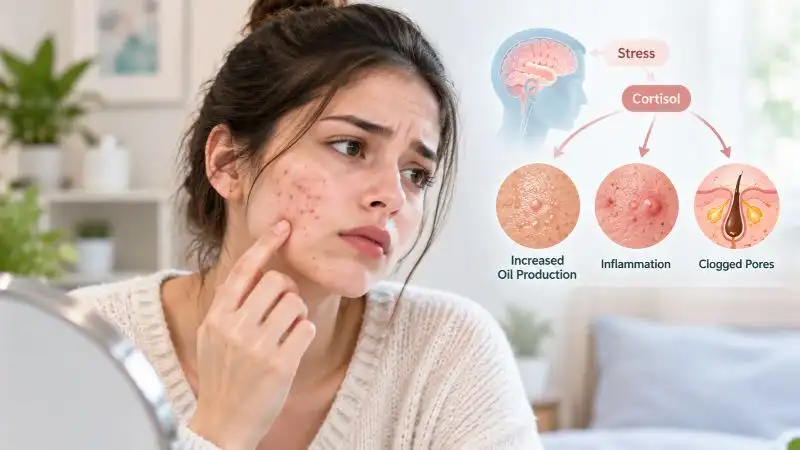
When you experience stress, your body activates systems involved in the stress response, including the hypothalamic-pituitary-adrenal (HPA) axis. This system helps regulate the release of hormones such as cortisol.
Stress-related hormonal signals may also influence oil-producing glands and other processes involved in acne.
When the skin produces excess oil, that oil can combine with dead skin cells and contribute to clogged pores. If inflammation develops, the blockage may become an inflamed pimple.
This is one reason people with oily or acne-prone skin may notice more breakouts during stressful periods.
However, cortisol is not the only hormone involved, and stress does not cause the same skin response in everyone.
2. Stress May Increase Skin Inflammation
Acne is an inflammatory skin condition. A clogged pore can develop into a red, swollen, or painful lesion when inflammatory processes become involved.
Psychological stress can influence immune activity and the release of inflammatory signals. Research reviews suggest that these changes may worsen inflammatory skin conditions, including acne.
This means stress may affect not only how much oil your skin produces but also how your skin responds to an existing breakout.
For example, you may notice that pimples become more inflamed during a demanding week. However, the appearance of a pimple alone cannot confirm that stress caused the inflammation.
3. Anxiety Can Disrupt Your Skin-Care Routine
Stress may affect your skin indirectly by changing your everyday habits.
When you feel overwhelmed, you may forget to wash your face, sleep in makeup, pick at pimples, or use several products in an attempt to clear your skin quickly.
These habits can make acne management more difficult.
For example, repeatedly applying exfoliating acids or harsh cleansers may irritate your skin. Picking pimples can increase inflammation and raise the risk of marks and scars.
A simple, consistent routine is often more helpful than adding several new products during a breakout.
4. Stress and Poor Sleep Can Occur Together
Stress can make it harder to fall asleep or maintain a regular sleep schedule. Poor sleep may also affect your mood and make daily stress feel more difficult to manage.
These factors can overlap with changes in skincare habits and other acne-related influences.
Although the relationship between sleep and acne is complex, maintaining a regular sleep schedule is a practical part of overall skin care and well-being.
You do not need to assume that one sleepless night will cause pimples. Instead, pay attention to patterns over time.
5. Stress May Slow Skin Recovery
Stress can affect processes involved in skin-barrier function and wound healing. This may be relevant when your skin is already irritated or inflamed.
For example, if you have active acne and repeatedly pick at the affected areas, your skin may take longer to recover. Ongoing stress may make it harder to maintain the gentle habits that support healing.
Remember that acne marks and scars can develop for several reasons. Stress alone does not determine whether a breakout will leave a mark.
Key takeaway: Stress may worsen acne through a combination of hormonal signals, oil production, inflammation, sleep disruption, and skincare habits. It is one possible contributor, not a complete explanation for every breakout.
Does Anxiety Cause Acne Breakouts?
Anxiety and acne can be connected, but anxiety does not automatically cause pimples.

Anxiety is an emotional response that may involve persistent worry, tension, or physical symptoms. During anxious periods, your body can activate stress-response pathways that may influence the skin.
If you already have acne-prone skin, these changes may contribute to flare-ups.
Research has found associations between psychological stress and acne severity. However, an association does not prove that anxiety is the sole cause of an individual’s acne.
There can also be a two-way relationship: stress may worsen acne, while visible breakouts may increase embarrassment, worry, or self-consciousness.
This can create a difficult cycle:
Stress or anxiety → possible acne flare-up → concern about skin → more stress
Breaking this cycle involves addressing both sides of the problem. You can treat acne with appropriate skincare while also finding manageable ways to reduce stress.
You do not need to eliminate every source of anxiety to have healthier skin. Nor should you feel responsible for your acne because you are experiencing stress.
If anxiety regularly affects your sleep, studies, relationships, or daily life, speaking with a qualified healthcare professional may help.
People often ask, does stress cause acne or does anxiety simply make existing acne worse? Stress may contribute to either pattern, but other acne triggers should also be considered.
What Does Stress Acne Look Like, and Where Does It Appear?
There is no single appearance or location that identifies stress-related acne. Stress-associated breakouts can look like ordinary acne because the underlying lesions are the same.
You may notice more pimples during periods of increased pressure, but their location alone cannot confirm the trigger.
Forehead Breakouts
Forehead acne may include small bumps, whiteheads, blackheads, and inflamed pimples.
Stress may contribute to flare-ups, but forehead breakouts can also be associated with oily hair products, sweat, friction, and clogged pores.
If your forehead is your main concern, read GlowVixa’s guide towhat forehead breakouts may mean.
Chin and Jawline Acne
Breakouts around the chin and jawline can occur alongside hormonal changes, including changes associated with the menstrual cycle.
Stress may also worsen existing acne. However, pimples in this area do not automatically mean that your hormones are abnormal or that stress is the main trigger.
If breakouts are deep, painful, recurrent, or accompanied by other concerning symptoms, consider seeking medical advice.
Cheek Acne
Cheek acne may include inflamed pimples, whiteheads, and clogged pores.
Possible contributing factors include skincare products, makeup, friction, and other acne-related processes. Stress may worsen existing breakouts, but it is not the only explanation.
GlowVixa’s guide toacne on the cheeks and its possible causes provides additional information about common cheek-breakout patterns.
How Can You Tell Whether Stress Is a Possible Trigger?
Look for a repeated pattern rather than relying on the appearance of individual pimples.
You may suspect a connection if:
- Your acne repeatedly worsens during exams, deadlines, or emotionally difficult periods.
- You notice more breakouts when stress and sleep problems occur together.
- Your skin seems calmer during less stressful periods, even when other habits remain similar.
- You can identify other changes, such as picking at your skin or using harsher products, during stressful weeks.
These observations may help you identify patterns, but they cannot establish a medical diagnosis.
| Possible sign | What it may suggest | What to remember |
| Breakouts during stressful weeks | Stress may be contributing | Other triggers may be present |
| More oily skin | Changes in oil production may be involved | Oiliness alone does not confirm stress acne |
| Red, inflamed pimples | Inflammatory acne | Inflammation has several possible causes |
| Breakouts with poor sleep | Lifestyle factors may overlap | One factor may not explain everything |
| Recurring chin or jawline acne | Hormonal or other acne-related factors may be involved | Location alone cannot identify the cause |
How to Manage Stress Acne With a Simple Skincare Routine
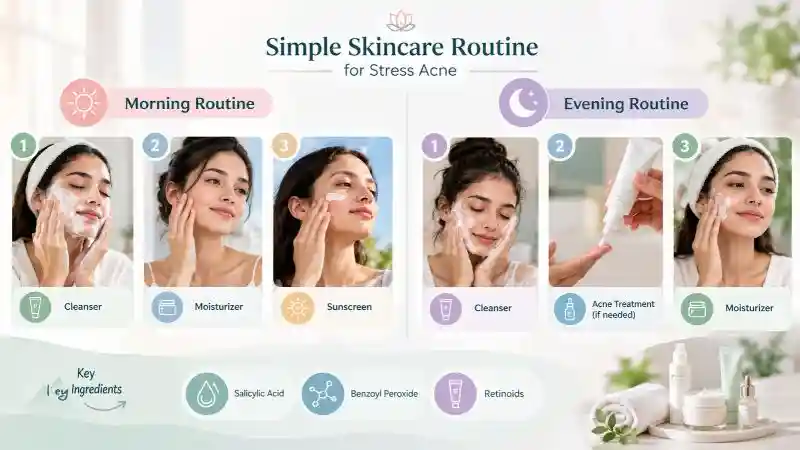
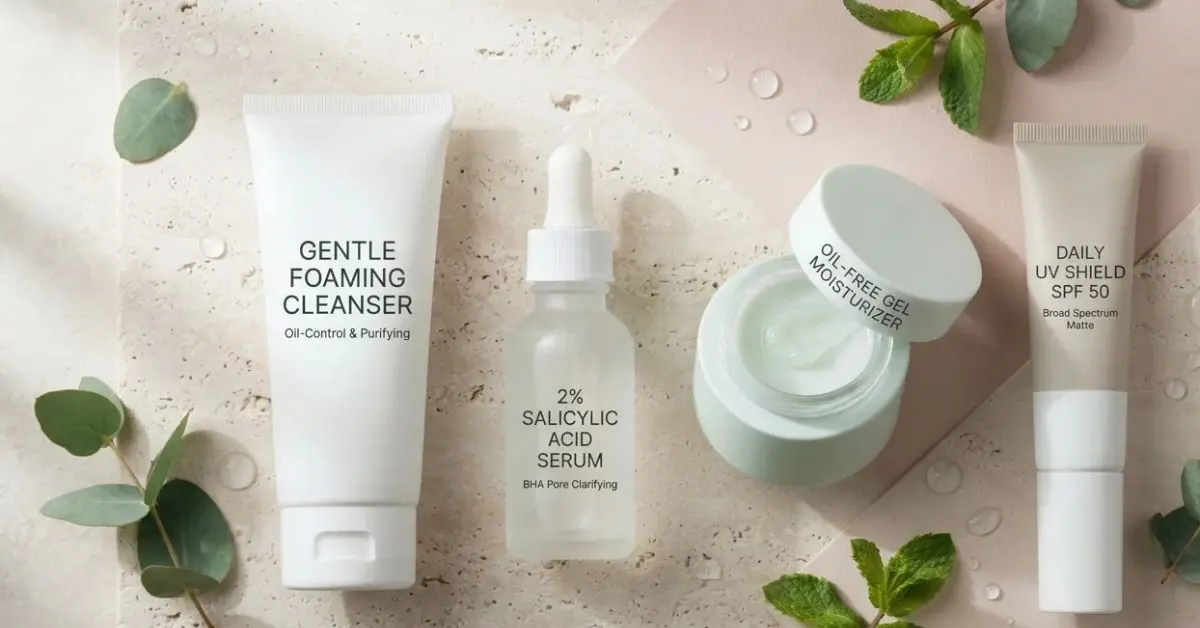
If stress appears to worsen your acne, focus on two goals: keeping your skincare routine gentle and managing the factors that may contribute to flare-ups.
You do not need an expensive collection of skincare products. A consistent routine can help you care for your skin without adding unnecessary irritation.
Morning Routine
1. Use a gentle cleanser.
Wash your face with a mild cleanser suited to your skin. Avoid aggressive scrubbing, which can irritate acne-prone skin.
2. Apply a moisturizer.
Choose a lightweight, non-comedogenic moisturizer if it suits your skin. Oily skin can still need hydration, especially when acne treatments cause dryness.
3. Use sunscreen.
Apply a broad-spectrum sunscreen with SPF 30 or higher. Sun protection helps reduce the effects of ultraviolet exposure and can help prevent acne marks from becoming more noticeable.
Evening Routine
1. Cleanse gently.
Remove makeup, sunscreen, sweat, and excess oil without repeatedly washing or scrubbing your face.
2. Use an appropriate acne treatment if needed.
Depending on your acne, an over-the-counter treatment containing an established acne ingredient may help. Salicylic acid, benzoyl peroxide, and topical retinoids are examples of treatments used for acne, but they are not interchangeable and may not suit everyone.
Introduce products carefully and follow their directions. If you are pregnant, planning pregnancy, or breastfeeding, seek appropriate medical advice before using acne medicines, particularly retinoids.
3. Moisturize.
Use a suitable moisturizer to help maintain skin comfort and reduce excessive dryness.
You can also read GlowVixa’s guide to thebest toner for acne-prone skin if you are considering adding a toner. Remember that toner is optional and is not a cure for stress-related breakouts.
Skincare Mistakes to Avoid During Stressful Periods
When pimples appear, it is tempting to change your entire routine. However, several common habits may make your skin harder to manage.
- Overwashing your face: Washing repeatedly can cause dryness and irritation.
- Using too many active ingredients: Combining several exfoliants or acne products may irritate your skin.
- Picking or squeezing pimples: This can worsen inflammation and increase the risk of scarring.
- Skipping moisturizer: Dryness from acne treatments may make your routine harder to tolerate.
- Trying a new product every few days: Frequent changes make it difficult to assess what is helping and may cause irritation.
- Expecting instant results: Acne treatments usually require consistent use over several weeks, and some need longer.
If a product causes significant burning, swelling, or persistent irritation, stop using it and seek medical advice when appropriate.
Natural Ways to Reduce Stress and Support Healthier Skin
Stress management will not guarantee clear skin, but it may help reduce one possible contributor to acne while supporting your overall well-being.

Choose simple habits that fit your routine instead of treating stress reduction as another demanding task.
1. Practise Slow Breathing
Try taking a few minutes to breathe slowly and comfortably. Relax your shoulders, avoid forcing deep breaths, and focus on a steady rhythm.
You can practise this before an exam, after a difficult day, or whenever you feel overwhelmed.
Breathing exercises may help you manage stress, although they do not directly treat clogged pores or replace acne medication.
2. Maintain a Regular Sleep Schedule
Aim for a consistent bedtime and wake-up time that allows you to get enough sleep.
Try putting your phone aside before bed and creating a quiet, comfortable sleeping environment.
Better sleep can support mood and daily functioning. It is not a guaranteed acne treatment, but it is a useful part of a healthy routine.
3. Include Regular Physical Activity
Walking, stretching, cycling, or another activity you enjoy may help you manage stress.
If you sweat during exercise, gently cleanse your skin afterward and avoid rubbing it with rough towels. Clean workout clothing and reducing friction may also help.
You do not need an intense exercise plan to benefit from regular movement.
4. Eat Balanced Meals
There is no single diet that cures stress acne.
Aim for balanced meals that include a variety of vegetables, fruits, protein sources, whole grains, and other foods that meet your nutritional needs.
Some dietary patterns may be associated with acne in certain people, but individual responses vary. Avoid restrictive diets or blaming yourself for eating a particular food after a breakout.
5. Avoid Constantly Checking Your Skin
Repeatedly examining your face in a mirror or searching for new pimples can increase worry for some people.
Try following a consistent routine and checking your skin at reasonable intervals instead of monitoring every small change throughout the day.
If acne affects your confidence, remember that it is a common skin condition and not a sign of poor hygiene or personal failure.
6. Use Mind-Body Practices
Meditation, gentle yoga, visualization, and other relaxation practices may help some people manage stress.
The American Academy of Dermatology recommends considering stress-management approaches alongside appropriate treatment for stress-sensitive skin conditions.
These practices should support your acne-care plan rather than replace it.
7. Seek Support When Stress Feels Overwhelming
Talking with a trusted person, counselor, or qualified mental-health professional may help you cope with persistent stress or anxiety.
You do not need to wait until your stress becomes severe to ask for help.
| Daily habit | How it may help | Practical starting point |
| Slow breathing | Supports relaxation | Practise for a few comfortable minutes |
| Regular sleep | Supports mood and daily functioning | Keep a consistent sleep schedule |
| Physical activity | May help manage stress | Take a walk or stretch |
| Balanced meals | Supports general health | Eat regular, varied meals |
| Gentle skincare | Reduces avoidable irritation | Cleanse, moisturize, and protect |
| Emotional support | Helps you cope with ongoing stress | Talk to someone you trust |
How Long Does Stress Acne Take to Improve?
There is no fixed timeline for stress-related acne to clear.
The time needed for improvement depends on the type and severity of acne, your existing skincare routine, other triggers, and whether you are using an effective treatment.
If stress decreases, your skin may not improve immediately. A pimple that has already developed can remain visible while it heals.
Likewise, managing stress alone may not control acne if clogged pores, hormonal influences, or other factors continue to contribute to breakouts.
If you are asking, does stress cause acne that lasts for weeks, remember that acne may continue even after a stressful period ends.
What Should You Do Over the Next Few Weeks?
Week 1: Simplify your routine.
Use a gentle cleanser, suitable moisturizer, and sunscreen. Avoid introducing several new products at once.
Week 2: Observe possible triggers.
Notice whether breakouts seem to coincide with stressful events, poor sleep, particular products, or changes in your routine. Avoid assuming that every new pimple has the same cause.
Weeks 3–4: Review your progress.
Look for changes in the number of new pimples, inflammation, irritation, and overall skin comfort. Continue using suitable acne treatments according to their instructions.
These time periods are a practical monitoring framework, not a promise that acne will clear within four weeks. Some treatments need six to eight weeks or longer before their benefits become apparent.
If acne is worsening, painful, or leaving scars, do not delay appropriate medical care simply to complete a self-monitoring plan.
When Should You See a Dermatologist for Stress Acne?
Stress management and gentle skincare can help, but they are not enough for every case of acne.
Consider seeking professional advice if:
- You develop deep, painful pimples or cyst-like lesions.
- Breakouts repeatedly return or continue to worsen.
- Acne is leaving scars or persistent marks.
- Over-the-counter treatments have not helped after consistent use.
- Your skin becomes severely irritated by skincare products.
- You are unsure whether your bumps are acne or another skin condition.
- Acne is causing significant emotional distress or affecting your daily life.
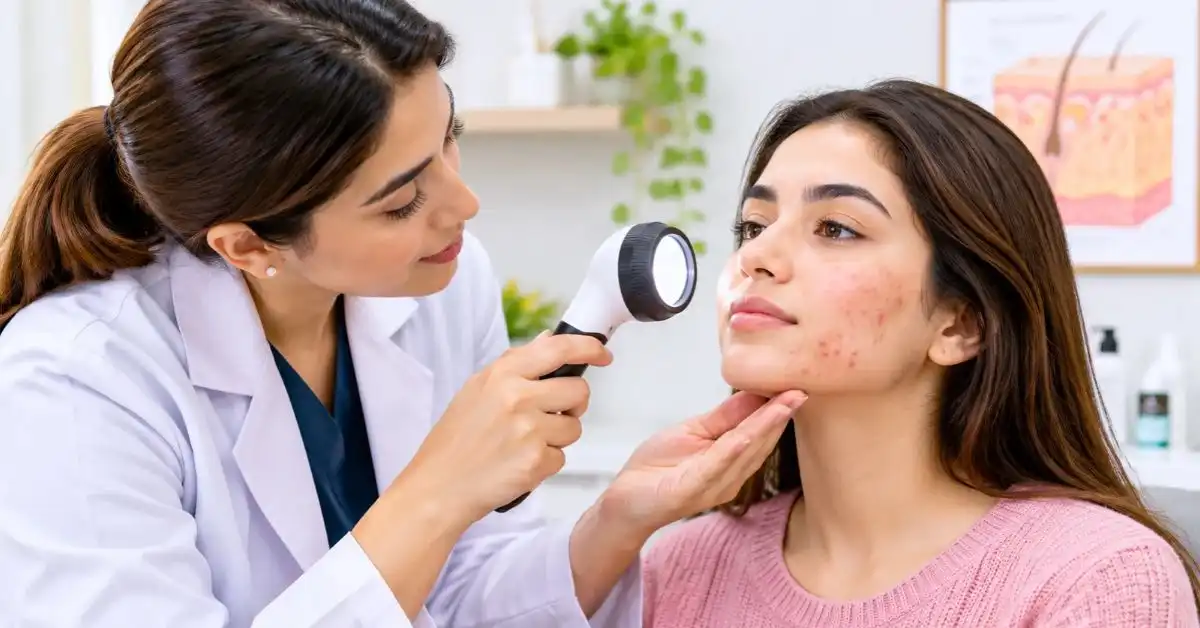
A dermatologist can assess the type and severity of your acne and recommend an appropriate treatment plan.
Depending on your needs, treatment may include topical medication, oral medication, or a combination of approaches. The best option depends on your skin, medical history, and other individual factors.
Do not stop prescribed medication or change a treatment plan solely because you suspect stress is contributing to your acne.
If you cannot access a dermatologist immediately, a qualified general healthcare professional may be able to provide initial guidance and help you identify suitable next steps.
Frequently Asked Questions
1. Does stress cause acne?
Yes, stress can worsen acne by affecting oil production and inflammation.
2. Can anxiety cause pimples overnight?
Not necessarily. A pimple may already be developing beneath the skin.
3. Where does stress acne usually appear?
It can appear on the forehead, cheeks, chin, jawline, or other acne-prone areas.
4. How can I get rid of stress acne naturally?
Use gentle skincare, get enough sleep, exercise regularly, and practise stress management.
5. Can stress acne leave scars or dark marks?
Yes, inflamed acne can leave dark marks or scars, especially if you pick or squeeze pimples.
Conclusion
Stress can make acne worse, especially if you already have oily or acne-prone skin. Stress-related hormonal signals may influence oil production and inflammation, while anxiety, poor sleep, and changes in skincare habits can make breakouts more difficult to manage.
However, stress is only one possible acne trigger. Hormonal changes, genetics, clogged pores, and irritating products may also play a role.
For healthier-looking skin, combine a gentle and consistent skincare routine with practical stress-management habits. Avoid harsh products, resist picking pimples, and give appropriate treatments enough time to work.
If your acne is painful, persistent, or leaving scars, seek professional advice rather than relying on stress management alone.
Does stress cause acne in every case? No. Stress is one possible contributor, and effective acne care should also address other causes and triggers.





Leave a Reply