
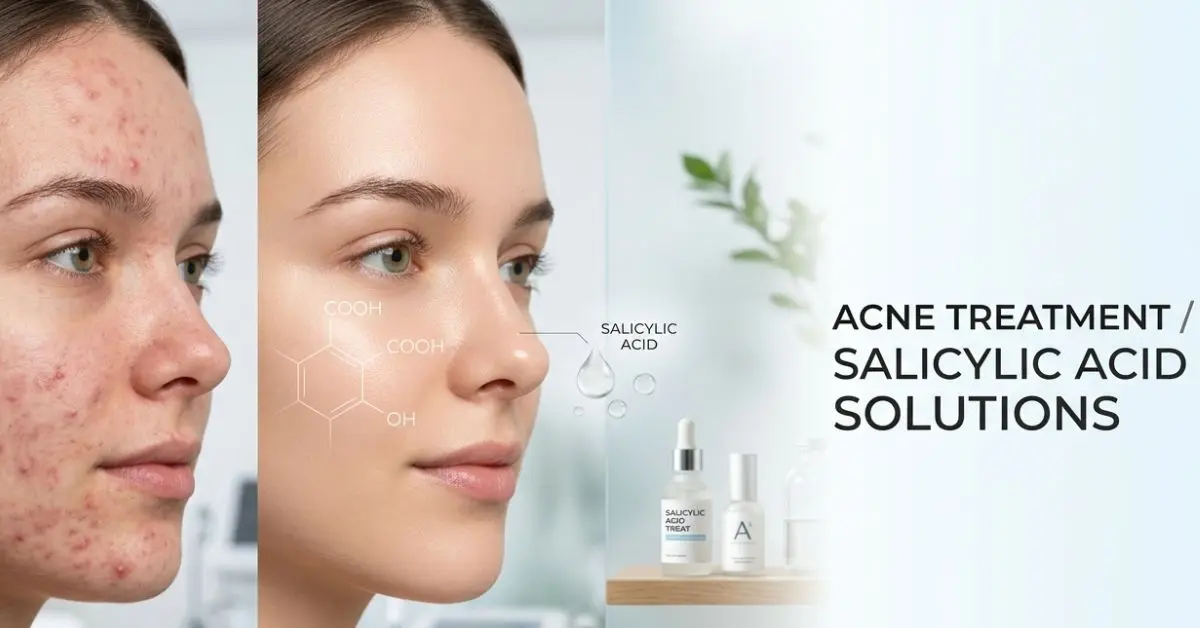
Acne is one of the most common skin concerns worldwide, and it affects people of all ages. Acne-prone skin often struggles with clogged pores, excess oil production, blackheads, whiteheads, and painful breakouts. Many skincare products claim to treat acne, but only a few ingredients are truly backed by science and dermatologists. One of the most effective ingredients is salicylic acid.

Salicylic acid is widely used in cleansers, serums, toners, and spot treatments because it penetrates deep into pores and helps clear out dirt, oil, and dead skin cells. Unlike many surface-level treatments, it works inside the pore where acne actually starts. This makes it a powerful solution for people dealing with persistent breakouts.
In this article, we will explore How Salicylic Acid Helps Acne Prone Skin Clear Breakouts Faster, how it works, its benefits, how to use it safely, and whether it is the right choice for your skin type. You will also learn expert tips, comparisons, and FAQs to help you build a better acne-fighting skincare routine.
What is Salicylic Acid?
Salicylic acid is a beta hydroxy acid (BHA) derived from willow bark. It is oil-soluble, which means it can penetrate deep into oily pores and dissolve the buildup inside them. This is the main reason it is highly effective for acne-prone skin.
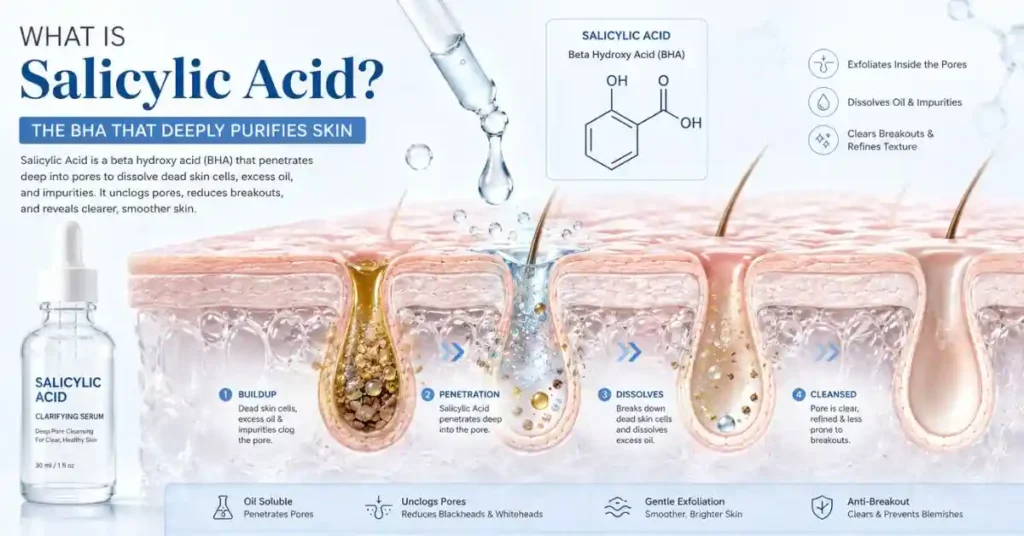
Unlike water-based exfoliants that only work on the surface, salicylic acid goes deeper into the skin. It removes dead skin cells that clog pores and cause breakouts. It also has anti-inflammatory properties, which help reduce redness and swelling caused by acne.
In simple terms, salicylic acid acts like a deep cleanser for your pores. It clears blockages, reduces excess oil, and helps prevent new acne from forming.
How Salicylic Acid Works on Acne-Prone Skin
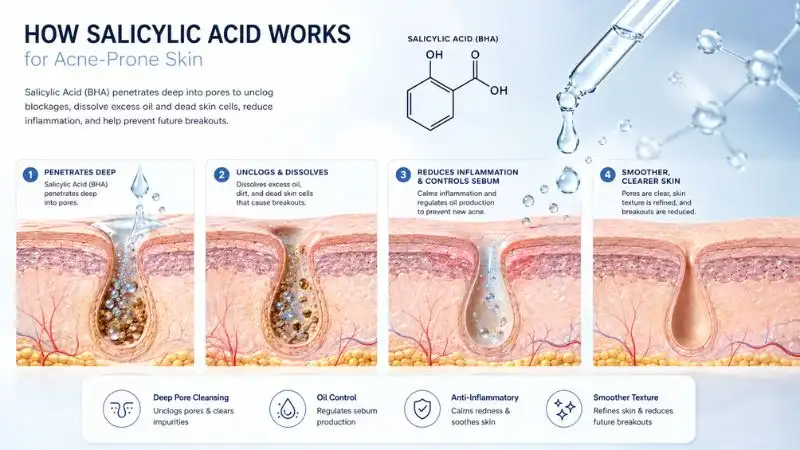
BHA acid works in multiple ways to improve acne-prone skin. Its effectiveness comes from its ability to target the root causes of acne instead of just treating the surface symptoms.
Deep Pore Cleansing
Salicylic acid penetrates inside the pores and breaks down oil, dirt, and dead skin cells. This helps prevent clogged pores, which are the main cause of acne formation.
Oil Control
Excess sebum (oil) is a major contributor to acne. BHA acid helps regulate oil production, making the skin less greasy and less prone to breakouts.
Anti-Inflammatory Action
Inflamed acne lesions often appear red, swollen, and painful. Salicylic acid reduces inflammation, helping the skin heal faster and look calmer.
Gentle Exfoliation
It removes dead skin cells from the surface and inside the pores, promoting smoother and clearer skin over time.
Benefits of Salicylic Acid for Acne-Prone Skin
BHA acid for acne offers several benefits that make it a staple in acne skincare routines:
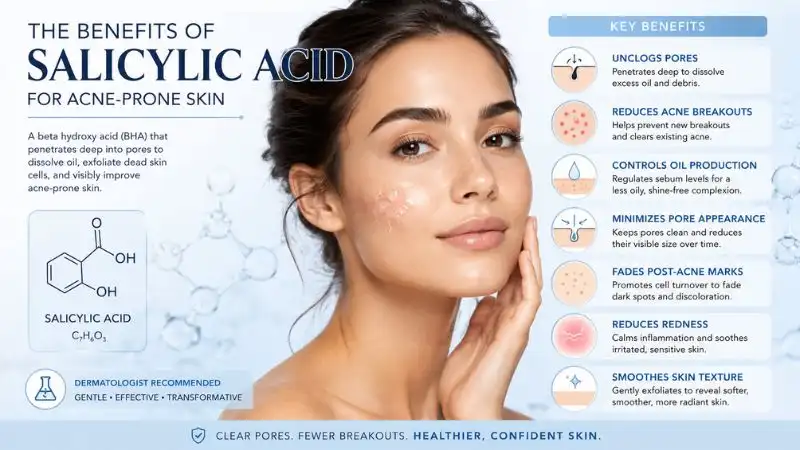
- Deeply unclogs pores and prevents blackheads
- Reduces whiteheads and active breakouts
- Controls excess oil production
- Minimizes pore appearance over time
- Helps fade post-acne marks gradually
- Calms redness and inflammation
- Supports smoother and clearer skin texture
Because it targets multiple acne triggers, BHA for acne skin is considered one of the most effective over-the-counter acne treatments.
Comparison Table: Salicylic Acid vs Other Acne Treatments
| Feature | Salicylic Acid | Benzoyl Peroxide | Natural Remedies |
| Effect on acne | Works deep inside pores to prevent and treat acne | Kills acne-causing bacteria on surface | Mild support, slower results |
| Skin irritation | Low to moderate (depends on usage) | High irritation for some skin types | Very low irritation |
| Results speed | Medium (1–4 weeks visible improvement) | Fast (3–7 days for active acne) | Slow (weeks to months) |
| Oil control | Strong oil regulation | Limited | Minimal |
| Best for | Blackheads, whiteheads, clogged pores | Inflammatory acne, cystic acne | Mild skin maintenance |
This comparison shows that salicylic acid is especially effective for clogged pores and long-term acne prevention.
Step-by-Step Guide to Using Salicylic Acid Safely
Using BHA acid correctly is very important to avoid irritation and get the best results.
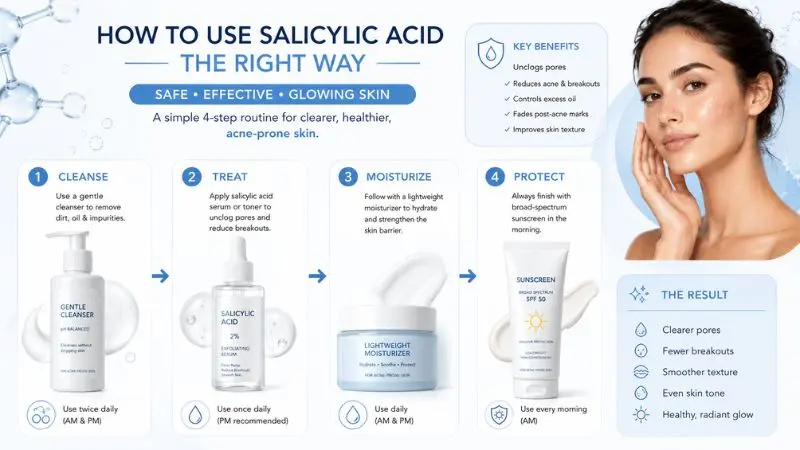
Step-by-Step Routine
Step 1: Cleanser
Start with a gentle face cleanser to remove surface dirt and oil.
Step 2: Salicylic Acid Product
Apply asalicylic acid for acne toner, serum, or gel on clean, dry skin.
Step 3: Moisturizer
Always follow with a lightweight, non-comedogenic moisturizer to protect your skin barrier.
Step 4: Sunscreen (Morning Routine)
If used in the morning, apply sunscreen because salicylic acid can increase sun sensitivity.
Usage Frequency
- Beginners: 2–3 times per week
- Intermediate users: Once daily
- Sensitive skin: 1–2 times per week only
Do’s and Don’ts
Do:
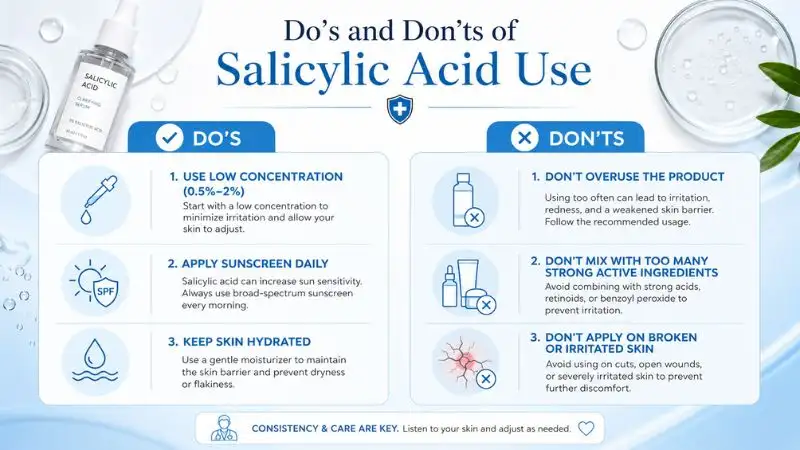
- Start with low concentration (0.5%–2%)
- Use sunscreen daily
- Keep skin hydrated
Don’t:
- Overuse the product
- Mix with too many strong actives at once
- Apply on broken or irritated skin
Best Skin Types for Salicylic Acid
Salicylic acid works best for specific skin types:
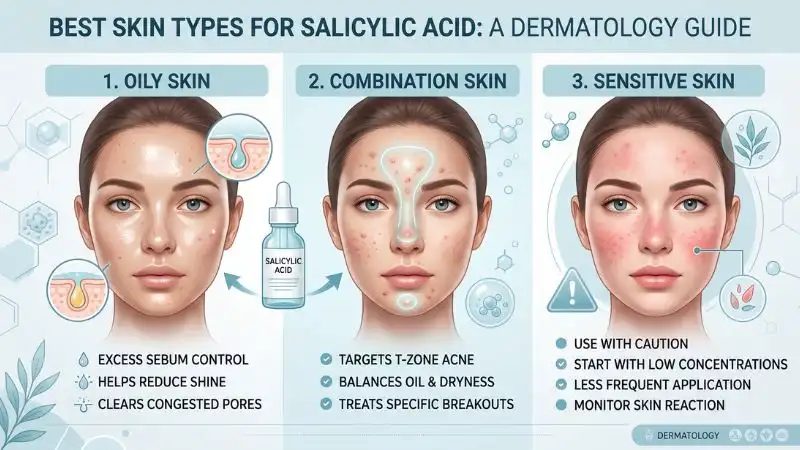
Oily Skin
It is highly effective for oily skin because it reduces excess sebum and unclogs pores.
Combination Skin
Works well on T-zone areas that tend to get oily and acne-prone.
Sensitive Skin (Use Carefully)
Sensitive skin can tolerate salicylic acid in low concentrations, but it should be used less frequently to avoid irritation.
Side Effects and Precautions
Although BHA acid is generally safe, improper use can cause side effects.
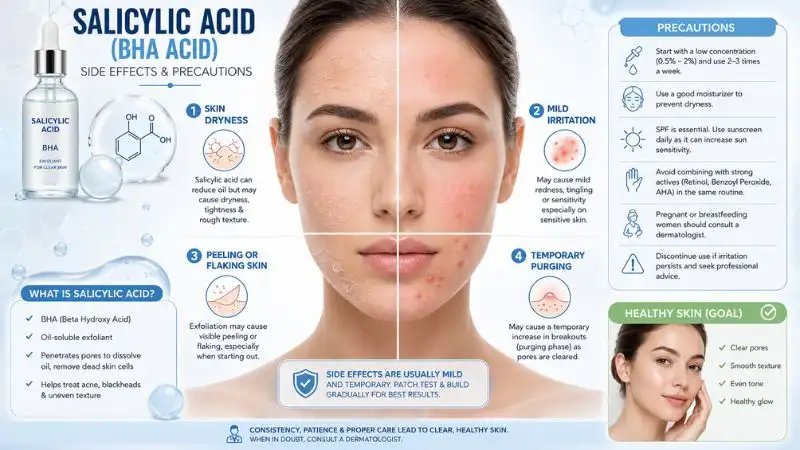
Possible Side Effects:
- Skin dryness
- Mild irritation
- Peeling or flaking
- Temporary purging (initial breakout phase)
Precautions:
- Always patch test before full use
- Avoid combining with harsh exfoliants
- Use moisturizer regularly
- Stop use if severe irritation occurs
Purging is common when starting salicylic acid because it speeds up skin cell turnover and brings hidden acne to the surface.
Expert Skincare Tips for Better Results
To get the best results from BHA acid, follow these expert tips:

Keep Skin Hydrated
Hydration helps balance oil production and prevents dryness caused by exfoliation.
Use Sunscreen Daily
Sun protection is essential because exfoliated skin becomes more sensitive to UV rays.
Be Consistent
Results do not happen overnight. Consistent use for 4–8 weeks gives visible improvement.
Avoid Overloading Skincare
Using too many active ingredients can damage the skin barrier and worsen acne.
Support with Healthy Lifestyle
Drink water, eat balanced meals, and reduce stress to improve overall skin health.
FAQs
1. Is salicylic acid safe for daily use?
Yes, it is safe for daily use if your skin tolerates it well. Beginners should start slowly.
2. How long does salicylic acid take to work on acne?
Most people see improvements in 2–6 weeks depending on skin type and severity.
3. Can salicylic acid cause purging?
Yes, it can cause temporary purging as it speeds up cell turnover and clears clogged pores.
4. Can I use salicylic acid with vitamin C?
It is better to separate them—use vitamin C in the morning and salicylic acid at night.
5. Is it good for sensitive skin?
Yes, but only in low concentrations and limited frequency.
6. What percentage of salicylic acid is best for acne?
For most people, 0.5% to 2% is effective and safe for regular use.
Conclusion
Salicylic acid is one of the most powerful and scientifically proven ingredients for acne-prone skin. It works by penetrating deep into pores, removing excess oil, and preventing clogged pores that lead to breakouts. This makes it highly effective for blackheads, whiteheads, and mild to moderate acne.
When used correctly, it can significantly improve skin clarity and texture over time. However, consistency, proper usage, and hydration are key to avoiding irritation and achieving the best results.
If you are struggling with acne-prone skin, salicylic acid can be a game-changing addition to your skincare routine. With patience and proper care, you can achieve clearer, smoother, and healthier-looking skin.







Leave a Reply