
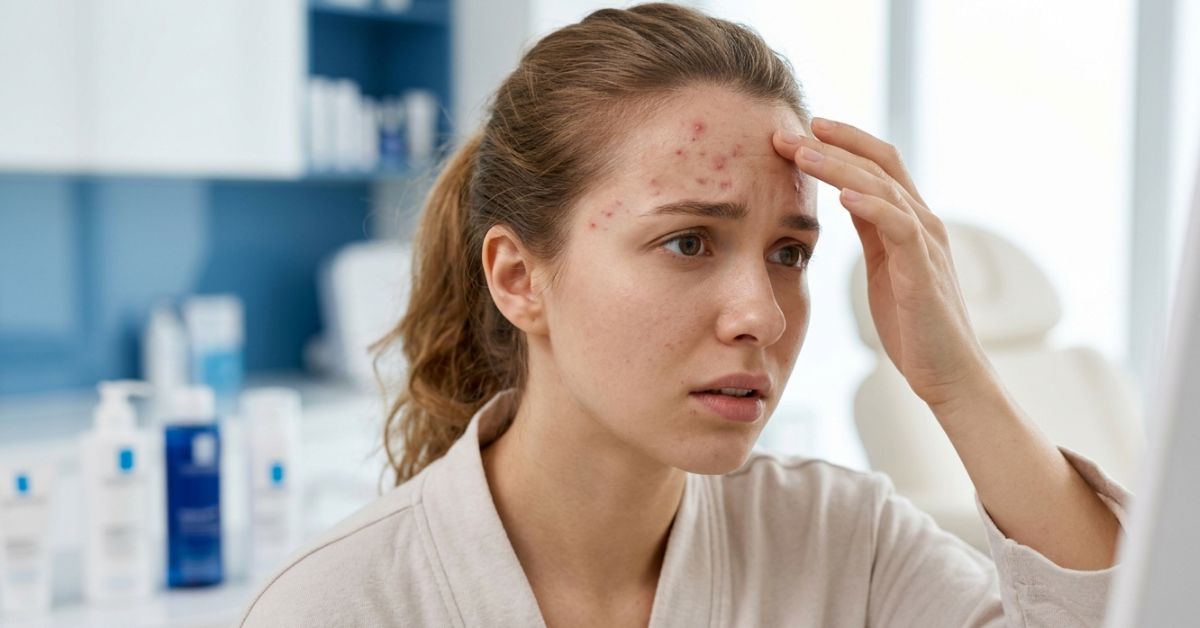
forheadacne is one of the most frustrating skin problems for teenagers and adults. Small bumps, painful pimples, whiteheads, blackheads, and oily skin on the forehead can affect confidence and make the skin appear unhealthy. Many people struggle to remove forehead acne because the forehead produces excess oil and easily traps sweat, dirt, and bacteria.
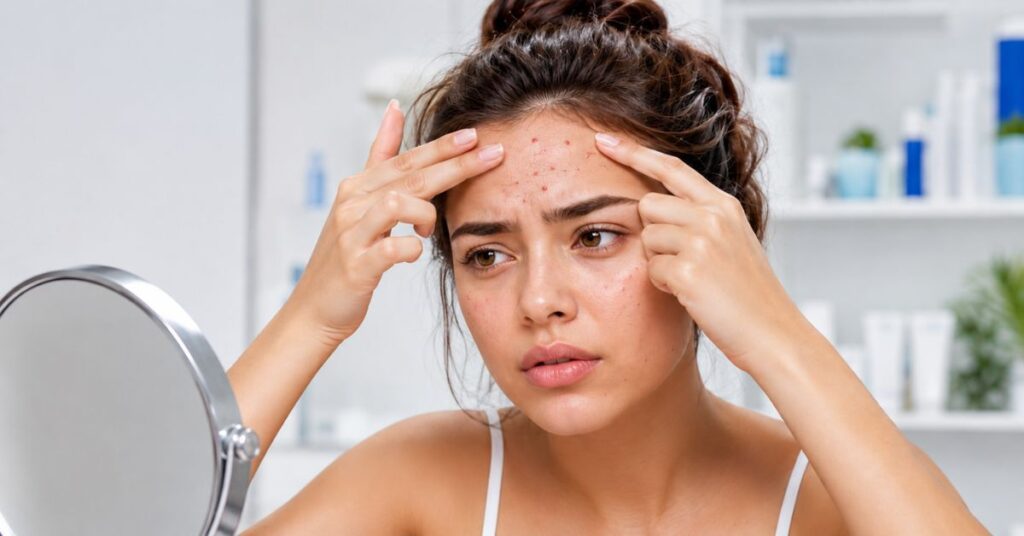
The good news is that forehead acne can be treated naturally and effectively with the right skincare routine, healthy habits, acne-fighting ingredients, and proper lifestyle changes. Whether your acne is caused by hormones, oily skin, stress, or clogged pores, this complete guide explains how to get rid of forehead acne fast and prevent future breakouts.
Quick Tips to Get Rid of Forehead Acne Fast
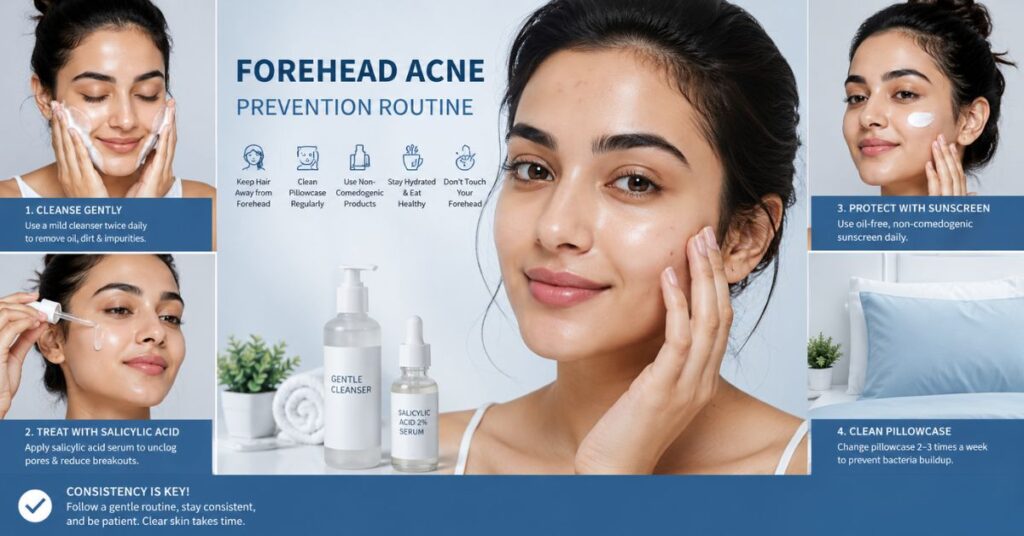
- Wash your face twice daily with a gentle cleanser
- Use salicylic acid to unclog pores
- Avoid touching or squeezing pimples
- Keep oily hair away from your forehead
- Use non-comedogenic skincare products
- Remove makeup before sleeping
- Change pillowcases regularly
- Drink enough water daily
- Apply sunscreen every morning
- Avoid harsh scrubs and over-exfoliation
What Causes Forehead Acne?
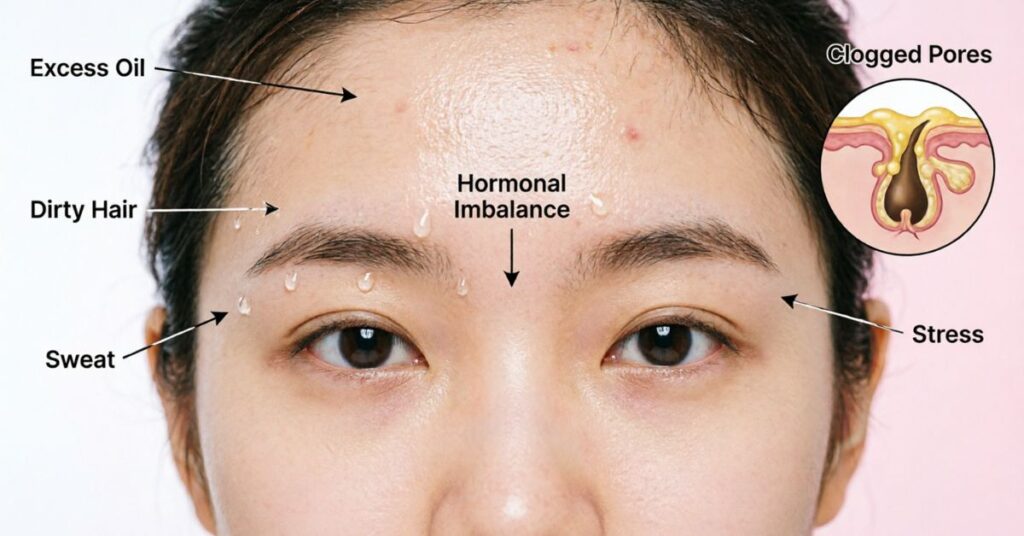
Forehead acne develops when pores become blocked with oil, dead skin cells, sweat, and bacteria. Since the forehead belongs to the oily T-zone area, it is more likely to experience clogged pores and breakouts.
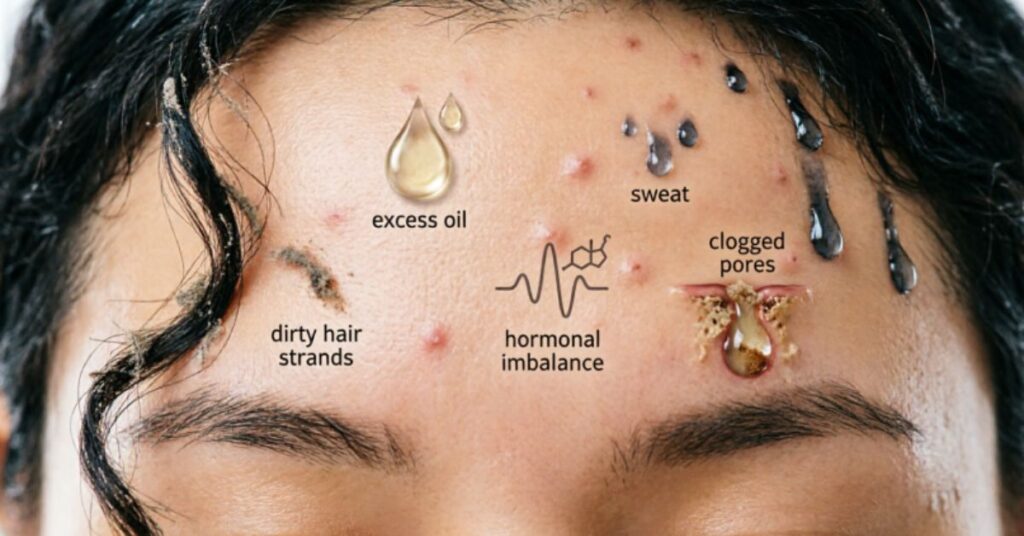
Several common factors trigger forehead pimples.
Excess Oil Production
The sebaceous glands on the forehead produce more oil compared to other facial areas. Excess oil mixes with dirt and dead skin cells, leading to blocked pores and acne.
People with naturally oily skin often experience repeated forehead breakouts.
Sweat and Dirty Hair
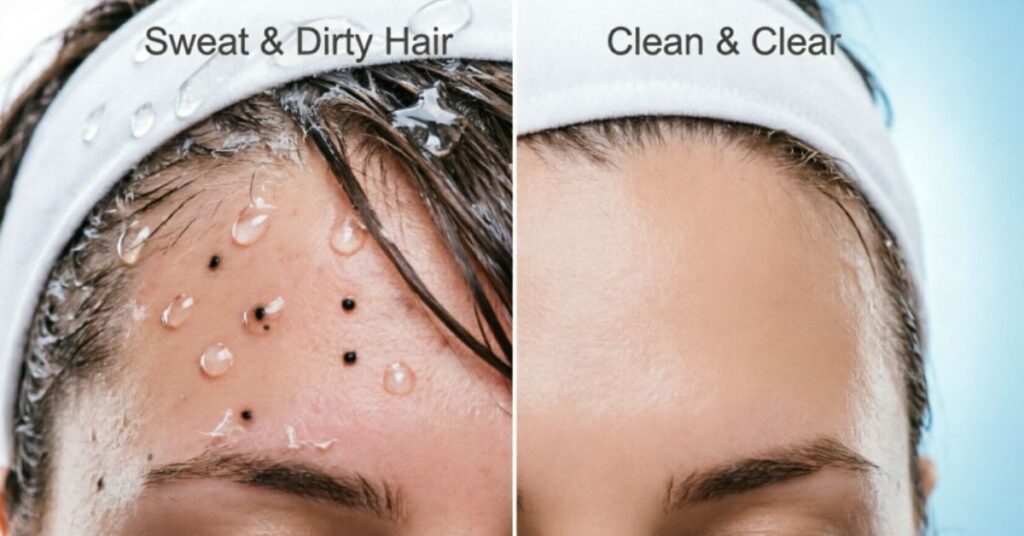
Sweat trapped under hats, bangs, helmets, or headbands can irritate the skin and clog pores. Hair products like oils, sprays, waxes, and gels may also transfer onto the forehead.
Dirty hair touching the forehead all day can spread bacteria and worsen acne.
Hormonal Changes
Hormonal fluctuations increase oil production and make acne more severe.
Hormonal forehead acne is common during:
- Puberty
- Menstruation
- Pregnancy
- Stress
- PCOS
Stress and Lack of Sleep
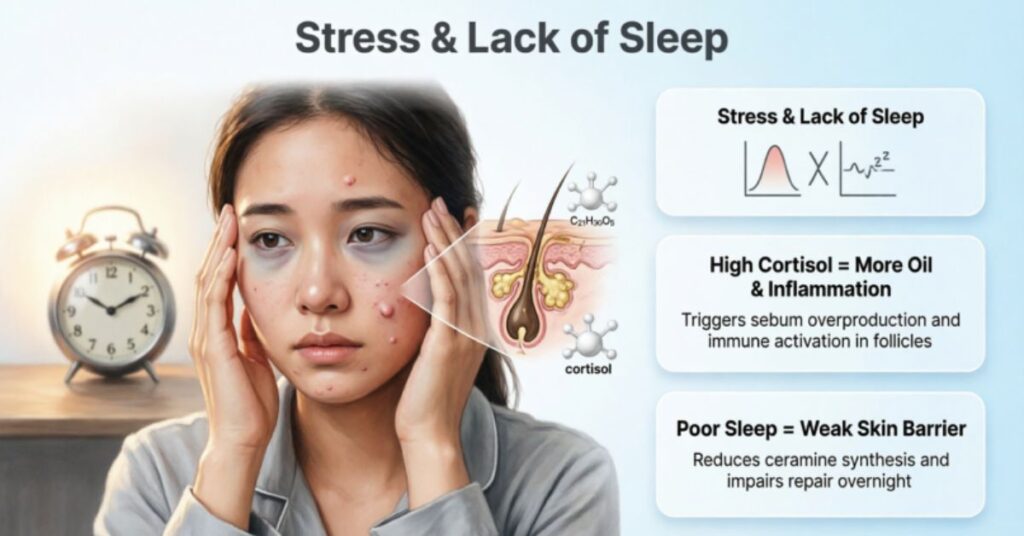
Stress raises cortisol levels, which can increase inflammation and oil production. Poor sleep also weakens the skin barrier and slows healing.
Poor Skincare Habits
Using harsh products or skipping proper cleansing routines can worsen acne.
Common skincare mistakes include:
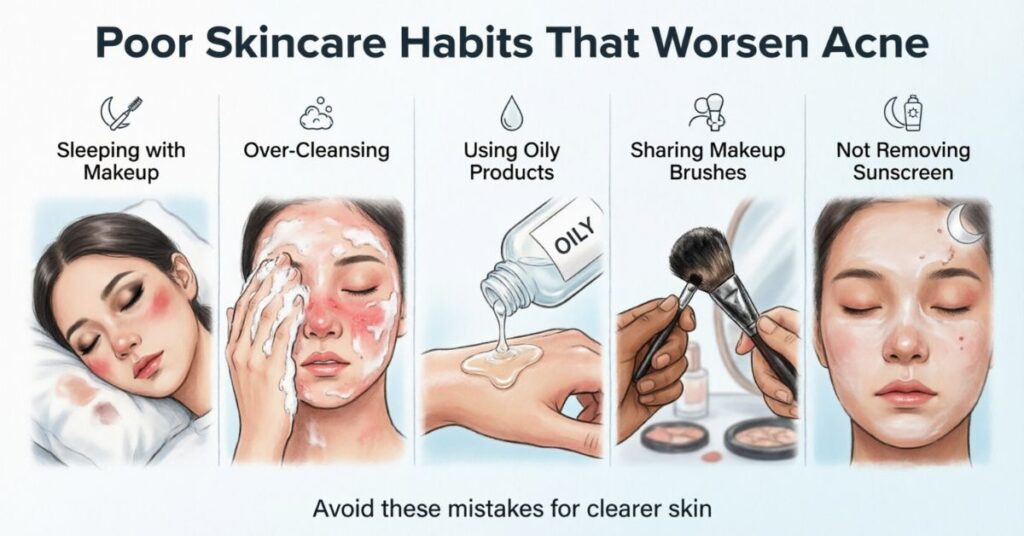
- Sleeping with makeup
- Over-cleansing the face
- Using oily skincare products
- Sharing makeup brushes
- Not removing sunscreen properly
Forehead Acne Causes vs Solutions
| Acne Cause | How It Affects Skin | Best Solution |
| Excess Oil | Blocks pores quickly | Use salicylic acid cleanser |
| Dirty Hair | Transfers oil and bacteria | Wash hair regularly |
| Hormonal Changes | Increases oil production | Use retinoids and healthy routine |
| Stress | Triggers inflammation | Improve sleep and reduce stress |
| Heavy Makeup | Clogs pores | Use non-comedogenic makeup |
| Sweat Build-Up | Irritates and blocks pores | Wash face after sweating |
Different Types of Forehead Acne
Understanding the type of acne helps you choose the best treatment.
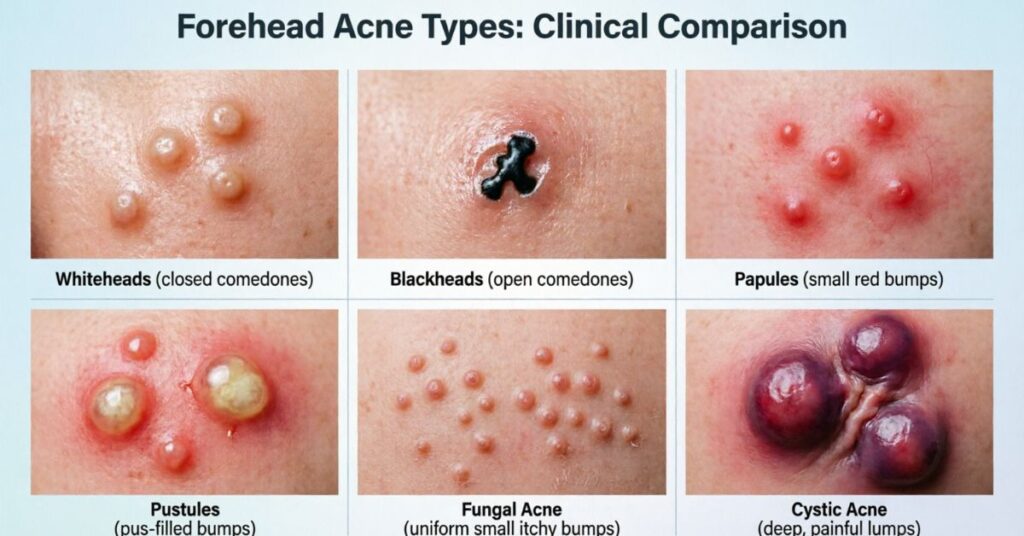
Whiteheads
Whiteheads are closed clogged pores that appear as tiny white bumps.
Blackheads
Blackheads occur when clogged pores stay open and oxidize after contact with air.
Papules and Pustules
Papules are small red bumps, while pustules contain pus and are more inflamed.
Fungal Acne
Fungal acne appears as tiny itchy bumps that often worsen with sweat and humidity.
Cystic Acne
Cystic acne forms deep beneath the skin and can become painful and swollen.
How to Get Rid of Forehead Acne Fast
Clearing forehead acne requires consistency and patience. Proper skincare habits can improve acne significantly within a few weeks.
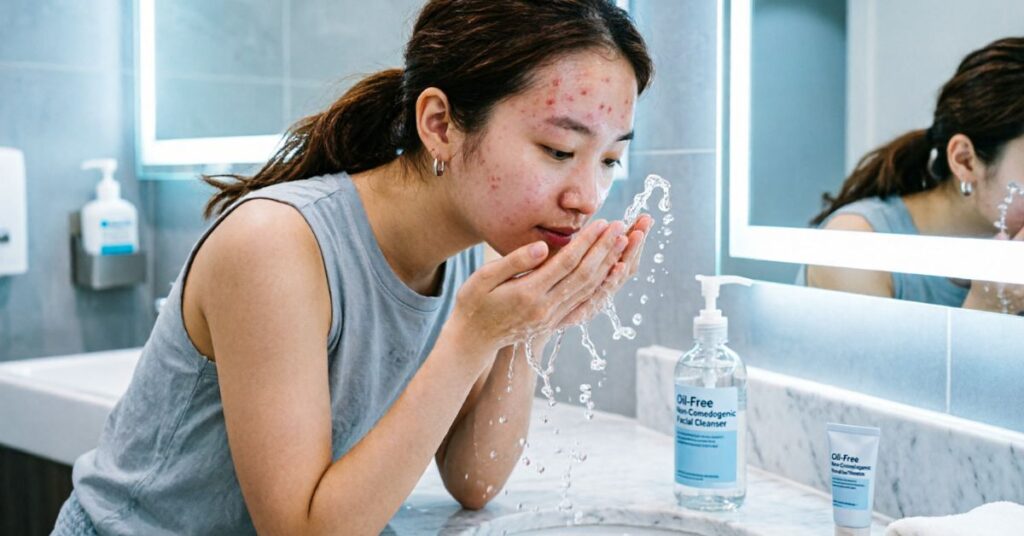
Wash Your Face Twice Daily
Gentle cleansing removes excess oil, sweat, bacteria, and dirt without damaging the skin barrier.
Choose a cleanser that is:
- Oil-free
- Fragrance-free
- Non-comedogenic
- Suitable for sensitive skin
Avoid washing your face too often because over-cleansing may increase oil production.
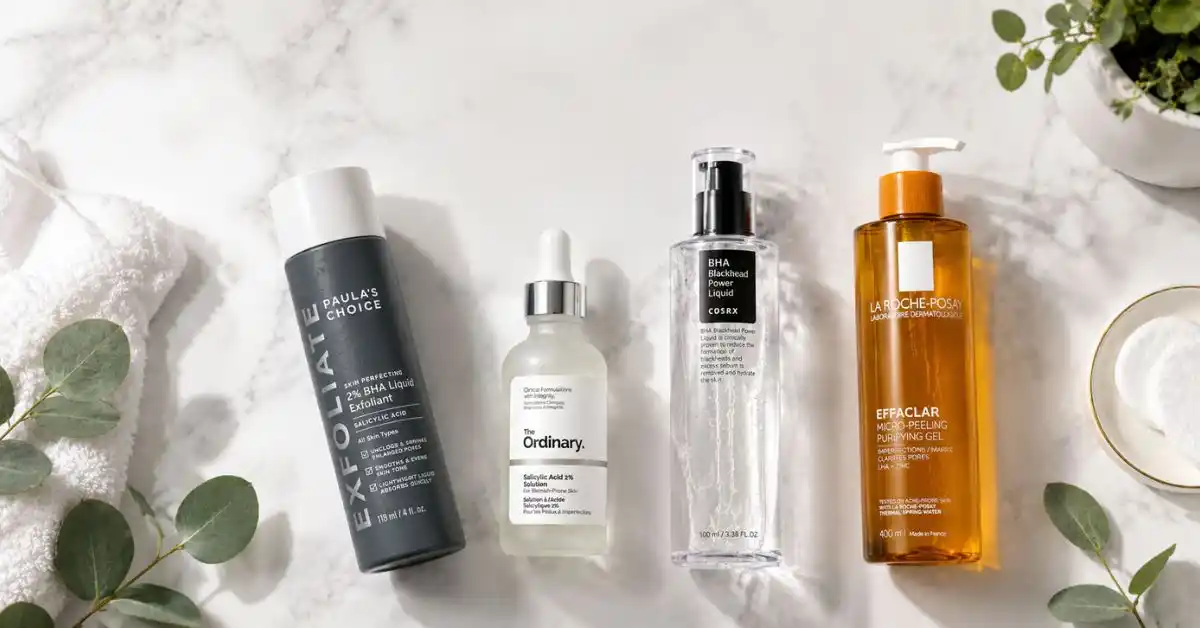
Use Salicylic Acid
Salicylic acid is one of the best ingredients for forehead acne because it penetrates deep into pores and removes trapped oil.
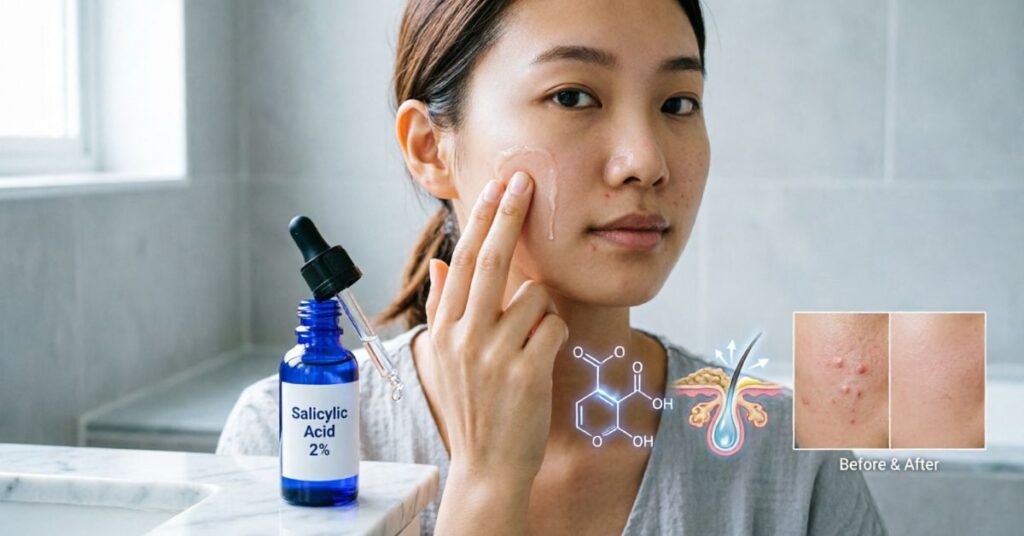
Benefits include:
- Unclogging pores
- Reducing blackheads
- Controlling excess oil
- Preventing future breakouts
Apply Benzoyl Peroxide Carefully
Benzoyl peroxide kills acne-causing bacteria and reduces inflammation.
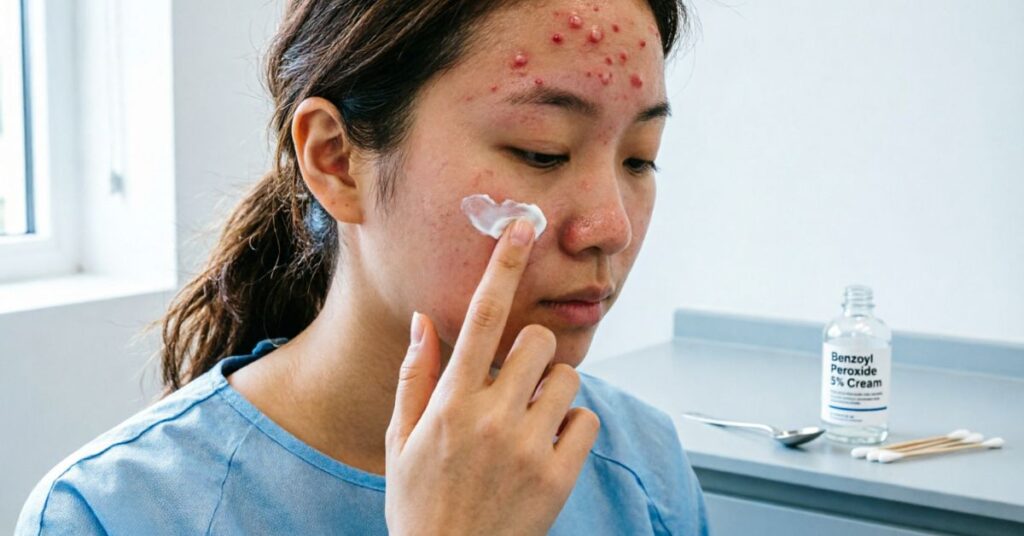
It works well for:
- Red pimples
- Inflamed acne
- Pus-filled breakouts
Use small amounts because overuse can dry the skin.
Keep Hair Away From Your Forehead
Hair oils and styling products can easily block pores.
Helpful habits include:
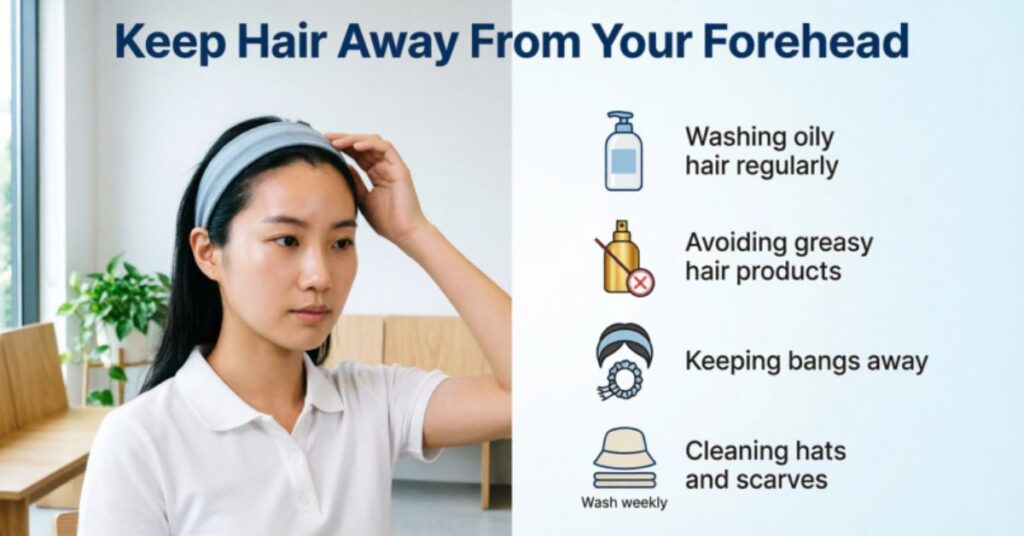
- Washing oily hair regularly
- Avoiding greasy hair products
- Keeping bangs away from the forehead
- Cleaning hats and scarves frequently
Avoid Touching Pimples
Picking acne spreads bacteria and increases the risk of acne scars and dark spots.
Instead:
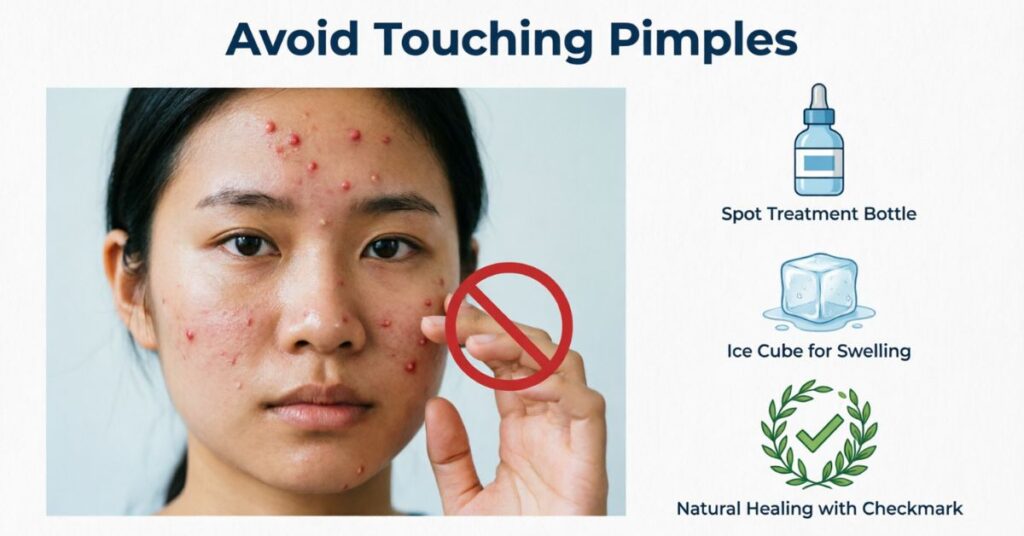
- Use spot treatments
- Apply ice for swelling
- Allow pimples to heal naturally
Change Pillowcases Frequently
Dirty pillowcases collect sweat, bacteria, and oil that transfer back onto the skin.
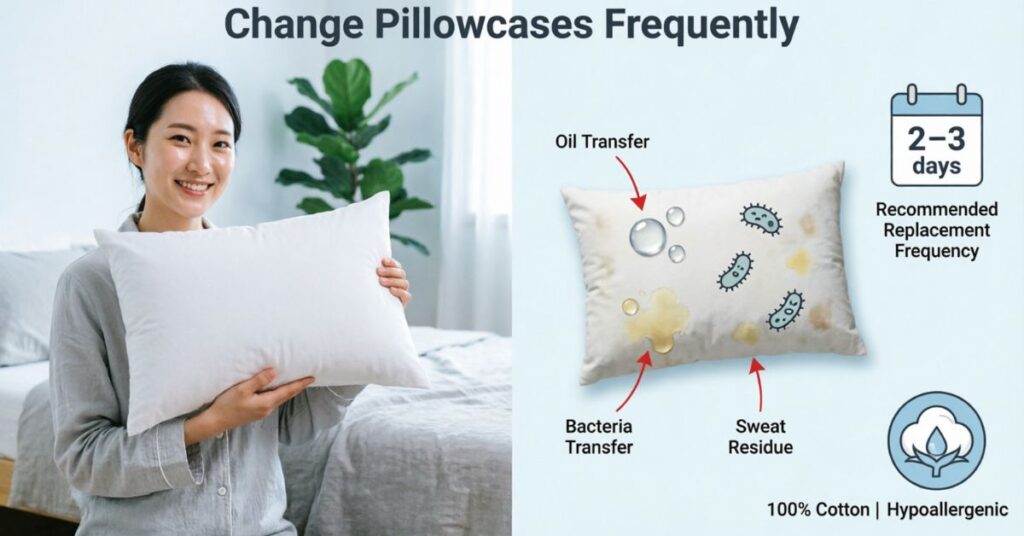
Changing pillowcases every few days may reduce forehead breakouts.
Best Ingredients for Forehead Acne Treatment
The table below compares the best skincare ingredients for forehead acne.
| Ingredient | Best For | Main Benefits | Possible Side Effects | Suitable Skin Type |
| Salicylic Acid | Blackheads & oily skin | Unclogs pores, reduces oil | Dryness, peeling | Oily & acne-prone |
| Benzoyl Peroxide | Red inflamed pimples | Kills acne bacteria | Irritation, dryness | Combination & oily |
| Niacinamide | Redness & oil control | Calms skin, strengthens barrier | Mild irritation | All skin types |
| Retinoids | Severe acne & scars | Speeds cell turnover | Peeling, sensitivity | Acne-prone & mature |
| Tea Tree Oil | Mild acne | Natural antibacterial support | Irritation if overused | Combination skin |
| Hyaluronic Acid | Dry acne-prone skin | Deep hydration without clogging pores | Rare irritation | Dry & sensitive |
Salicylic Acid
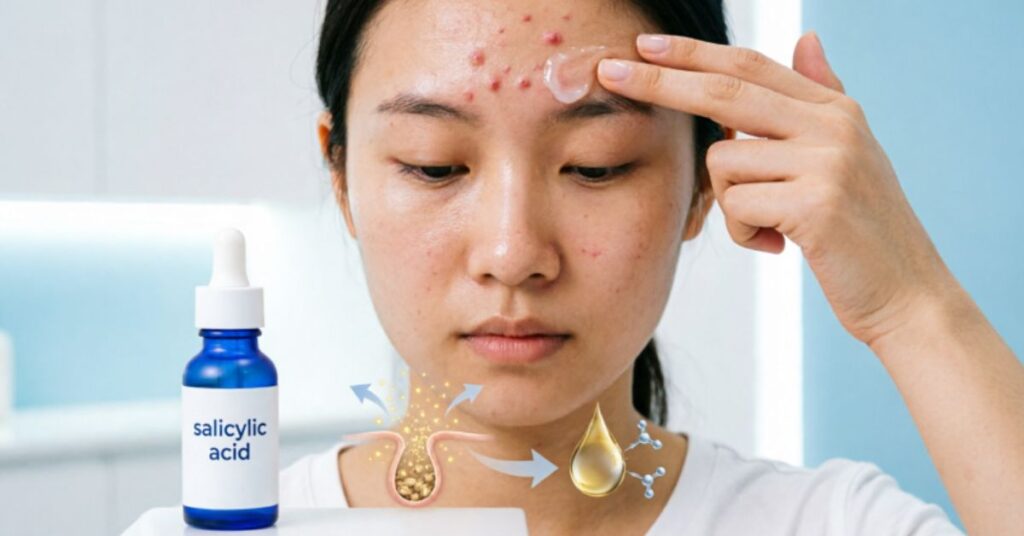
Salicylic acid exfoliates inside the pores and reduces oil buildup.
Best for:
- Oily skin
- Blackheads
- Whiteheads
- Mild acne
Niacinamide
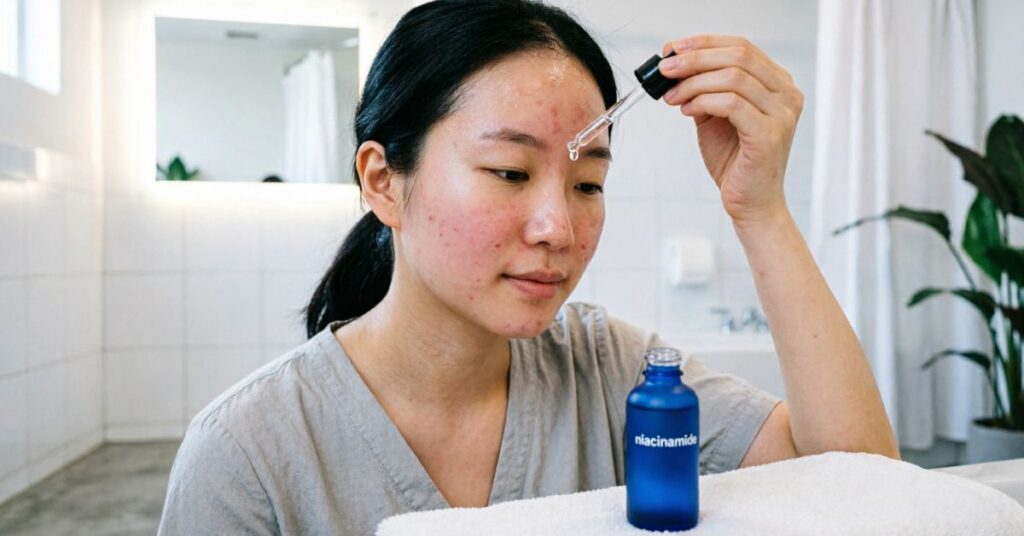
Niacinamide controls oil production and reduces redness.
Benefits include:
- Calming irritation
- Improving skin barrier
- Reducing inflammation
- Balancing oil levels
Retinoids
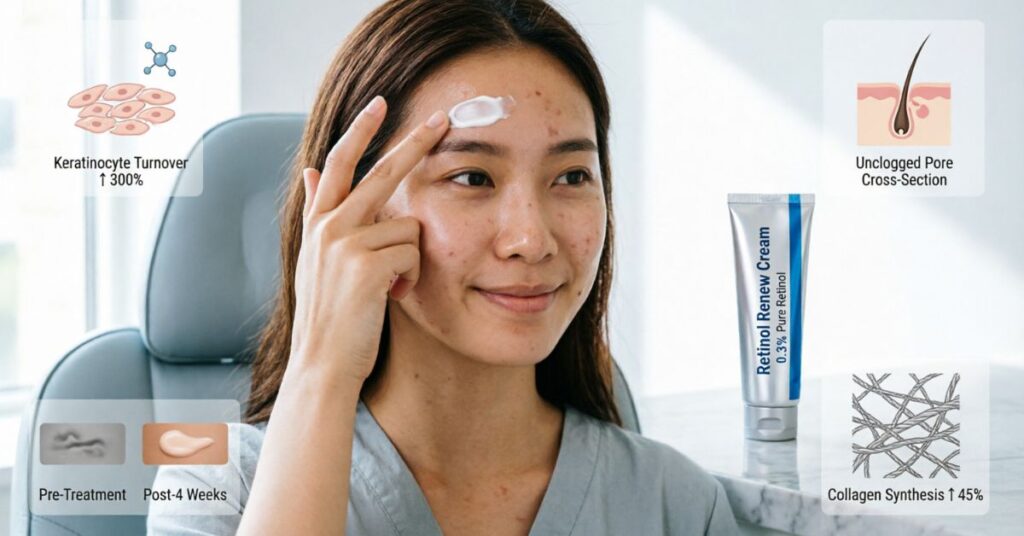
Retinoids speed up skin cell turnover and help prevent clogged pores.
They are highly effective for:
- Persistent acne
- Acne scars
- Uneven texture
- Fine lines
Always use sunscreen while using retinoids.
Benzoyl Peroxide
Benzoyl peroxide targets acne-causing bacteria and helps reduce inflamed pimples.
Tea Tree Oil
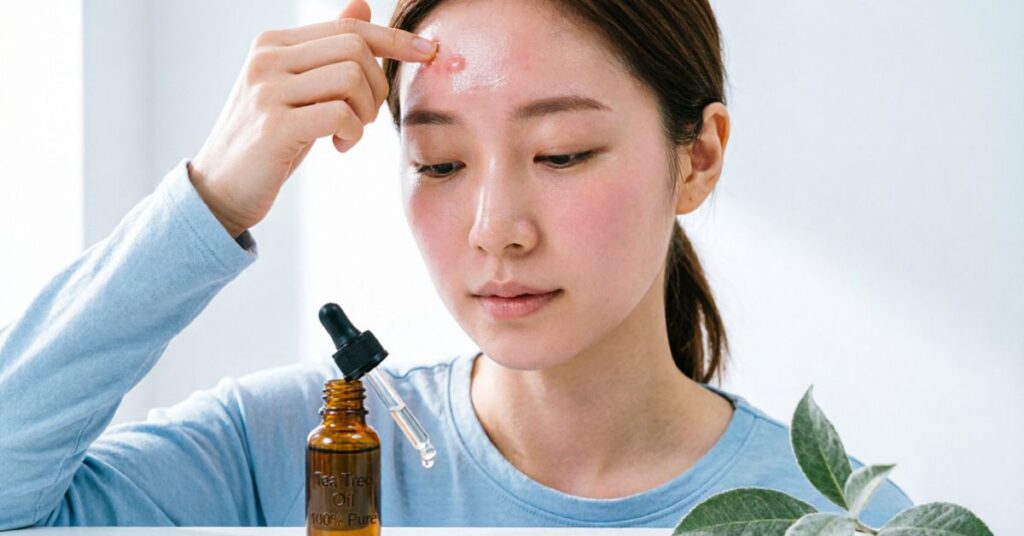
Tea tree oil contains antibacterial properties and may help mild acne when diluted correctly.
Hyaluronic Acid
Hydrated skin heals better. Hyaluronic acid provides moisture without clogging pores.
Best Skincare Routine for Forehead Acne
A proper skincare routine is essential for reducing forehead pimples and maintaining healthy skin.
Morning Routine
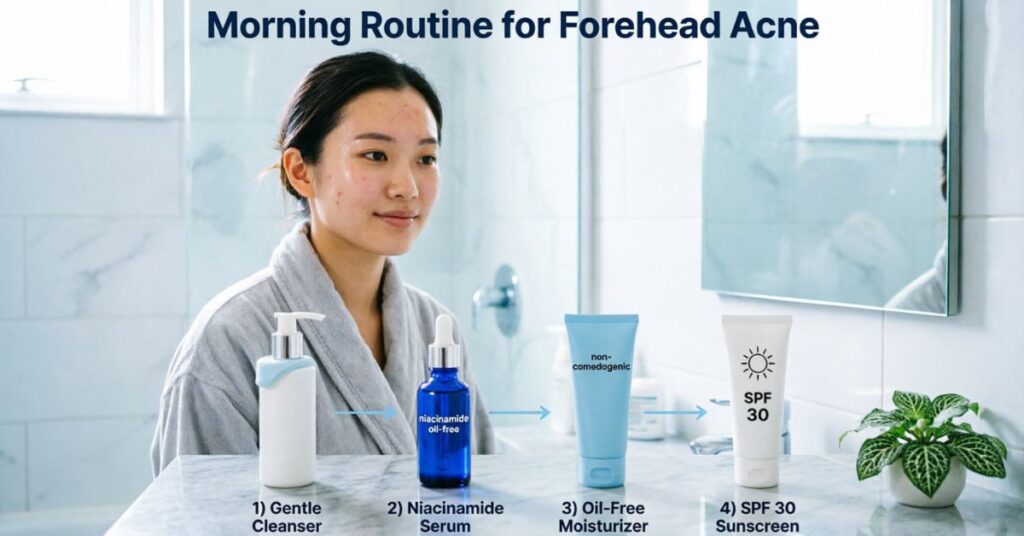
Step 1: Gentle Cleanser
Wash away excess oil and sweat accumulated overnight.
Step 2: Acne Treatment Serum
Use niacinamide or salicylic acid serum.
Step 3: Lightweight Moisturizer
Choose an oil-free gel moisturizer.
Step 4: Sunscreen
Apply sunscreen with SPF 30 or higher every morning.
Look for:
- Non-comedogenic formulas
- Lightweight texture
- Oil-free protection
Night Routine
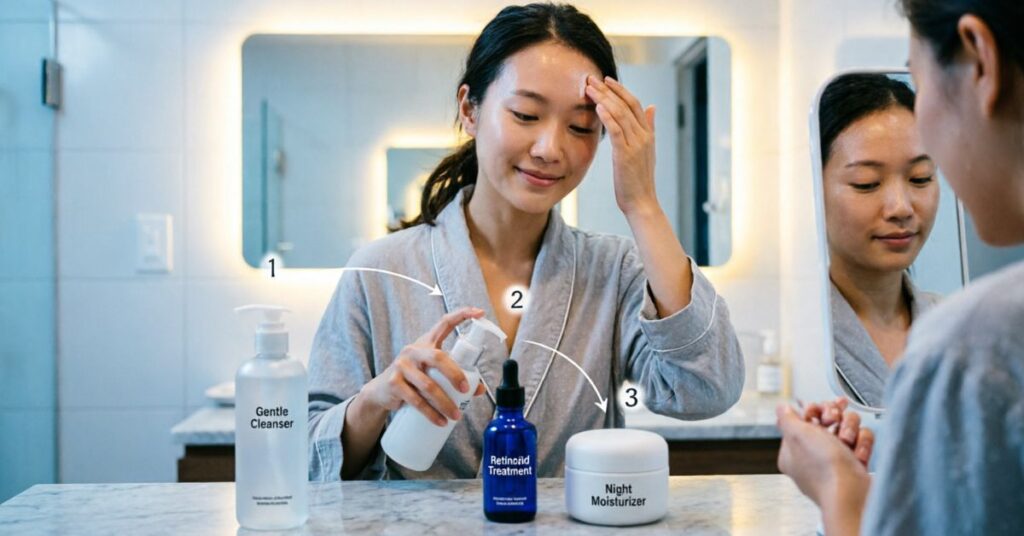
Step 1: Double Cleansing
Remove sunscreen and makeup completely.
Step 2: Acne Treatment
Apply salicylic acid or retinoids on alternate nights.
Step 3: Moisturizer
Hydrate and repair the skin barrier overnight.
Morning vs Night Skincare Routine
| Morning Routine | Night Routine |
| Gentle cleanser | Double cleansing |
| Niacinamide serum | Salicylic acid or retinoid |
| Lightweight moisturizer | Hydrating moisturizer |
| Sunscreen SPF 30+ | Overnight acne treatment |
| Oil control products | Skin repair products |
Natural Remedies for Forehead Acne
Natural remedies may support your skincare routine and reduce irritation.
Aloe Vera
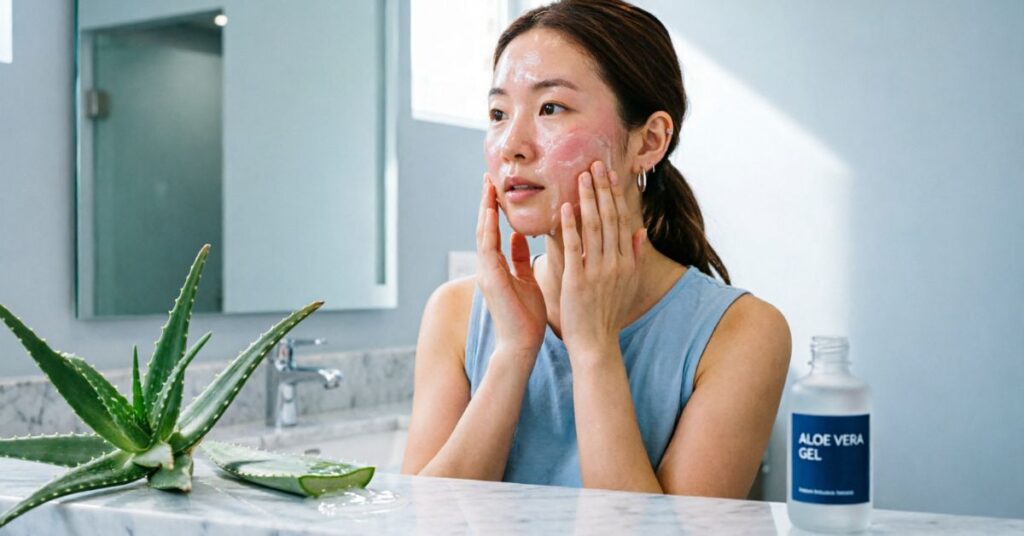
Aloe vera soothes redness and provides lightweight hydration.
Ice Therapy
Ice helps reduce swelling and inflammation temporarily.
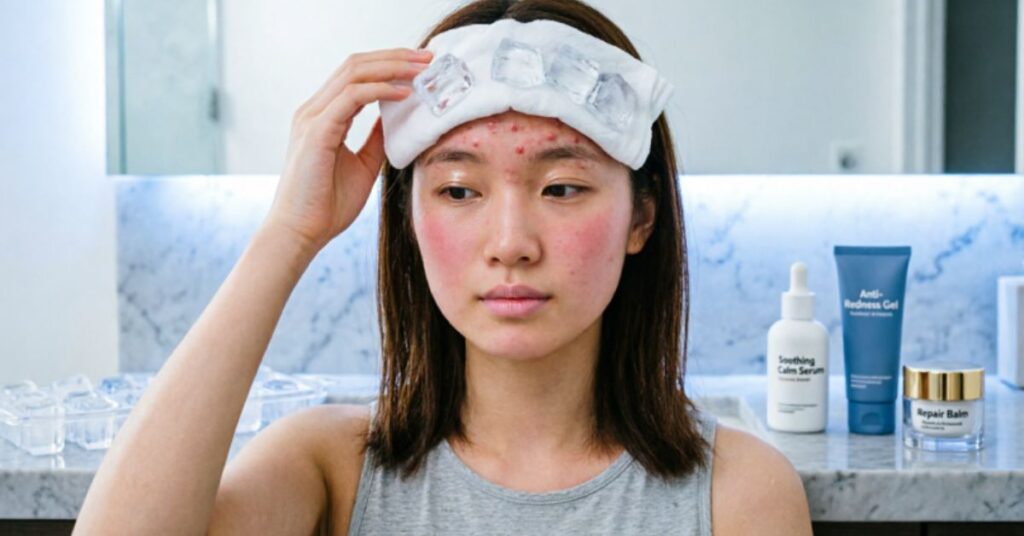
Wrap ice in a clean cloth before applying.
Honey
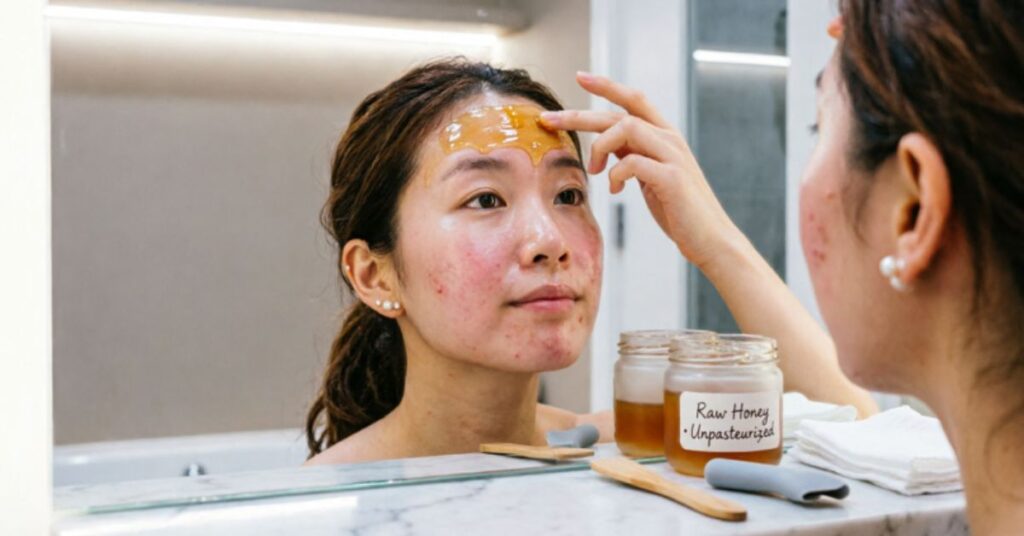
Honey has antibacterial properties that may calm irritated skin.
Green Tea
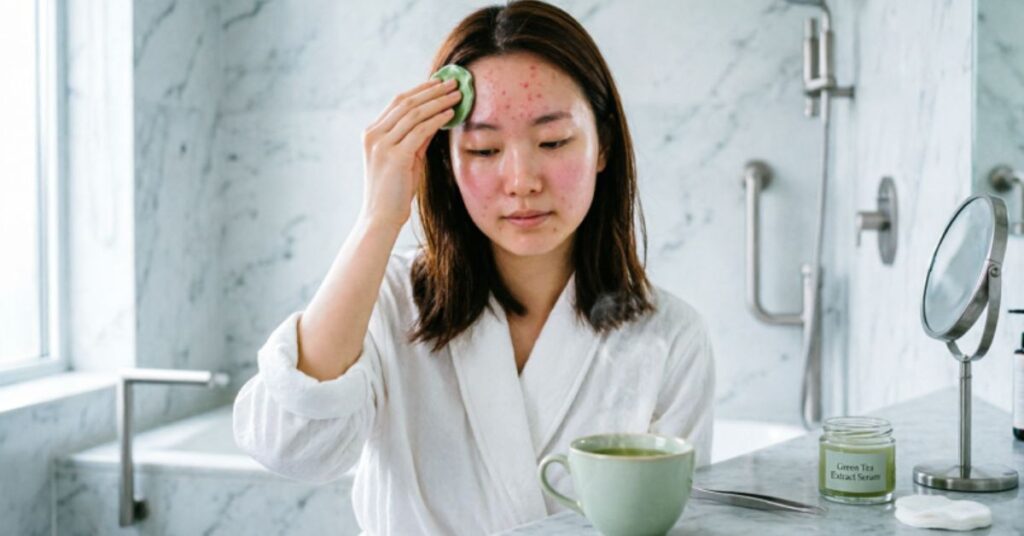
Green tea contains antioxidants that may reduce inflammation and oil production.
Foods That May Trigger Forehead Acne
Diet affects acne differently for everyone, but certain foods may worsen breakouts.
Foods That May Trigger Acne
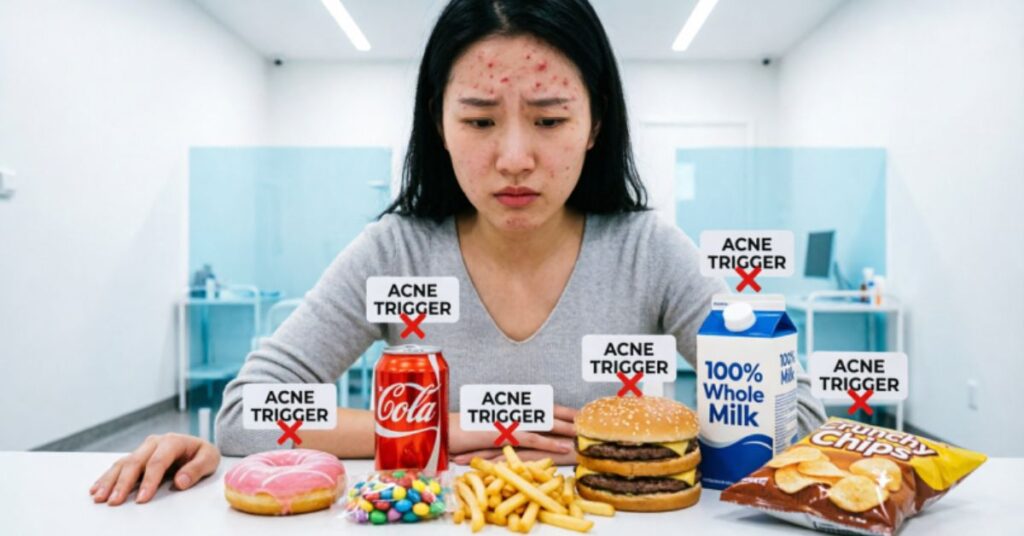
- Sugary snacks
- Soft drinks
- Fried foods
- Fast food
- Excess dairy products
- Highly processed foods
Best Foods for Acne-Prone Skin

- Fresh fruits and vegetables
- Green tea
- Nuts and seeds
- Omega-3 rich foods
- Whole grains
- Water-rich foods like cucumber and watermelon
Drinking enough water daily supports healthy skin and may reduce excess oil production.
Common Mistakes That Make Forehead Acne Worse
Many people unknowingly worsen acne with poor skincare habits.
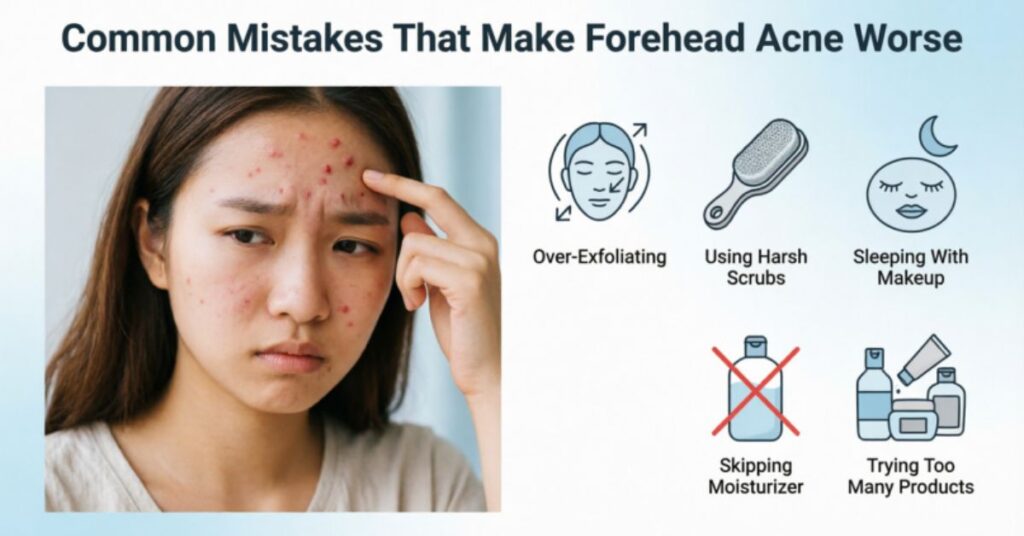
Over-Exfoliating
Too much exfoliation damages the skin barrier and increases irritation.
Using Harsh Scrubs
Physical scrubs can create tiny tears in inflamed skin.
Sleeping With Makeup
Makeup mixed with sweat and oil clogs pores overnight.
Skipping Moisturizer
Dehydrated skin may produce more oil to compensate.
Trying Too Many Products
Using too many active ingredients at once may worsen redness and irritation.
Mistakes You Must Avoid
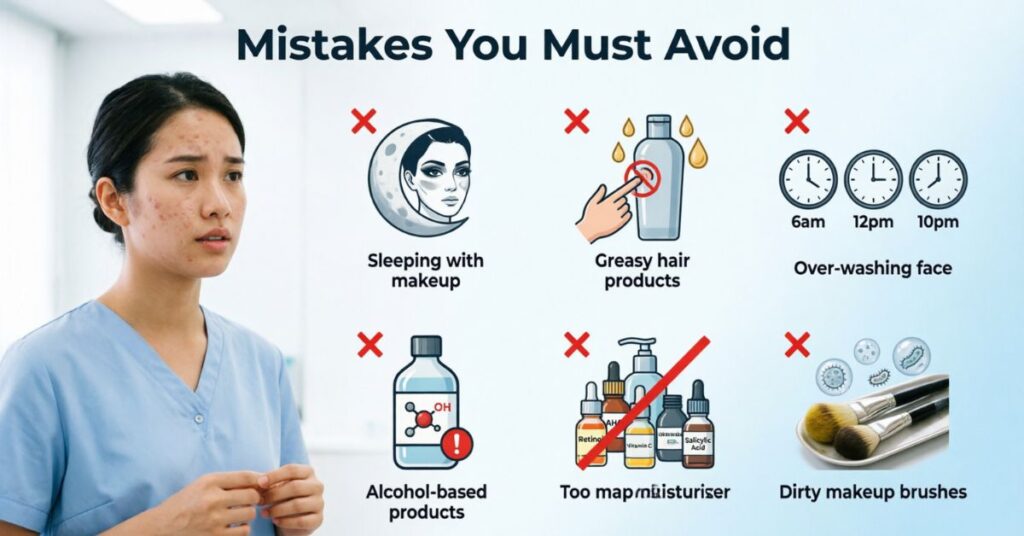
- Sleeping with makeup on
- Using greasy hair products
- Picking acne repeatedly
- Washing face too many times daily
- Using strong alcohol-based products
- Skipping moisturizer completely
- Mixing too many active ingredients
- Not cleaning makeup brushes
How Long Does It Take to Clear Forehead Acne?
The healing timeline depends on the severity of acne and treatment consistency.
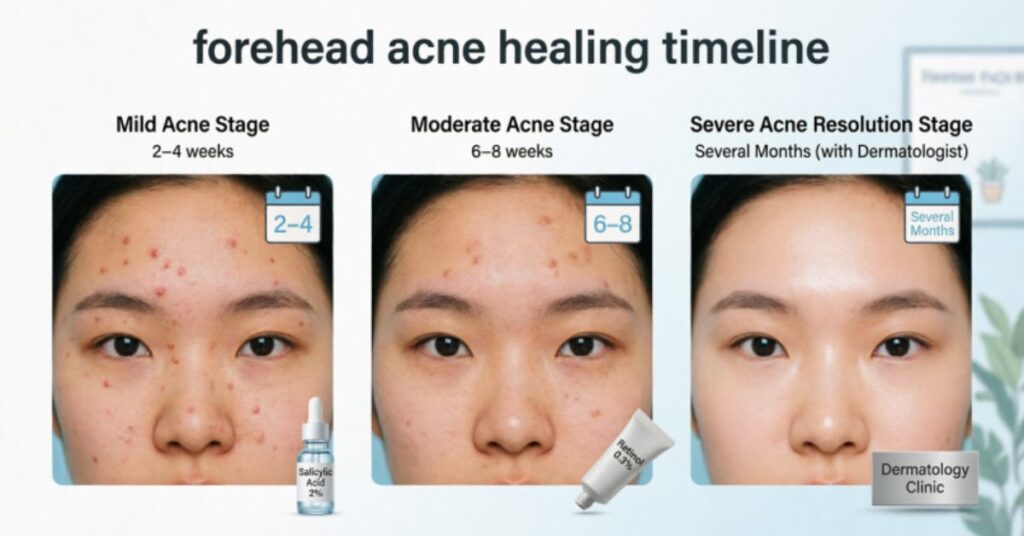
Mild Acne
Mild forehead acne may improve within 2 to 4 weeks.
Moderate Acne
Moderate acne often requires 6 to 8 weeks of consistent care.
Severe Acne
Cystic or hormonal acne may require prescription treatments from a dermatologist.
Professional Treatments for Forehead Acne
If over-the-counter treatments fail, professional dermatology treatments may help.
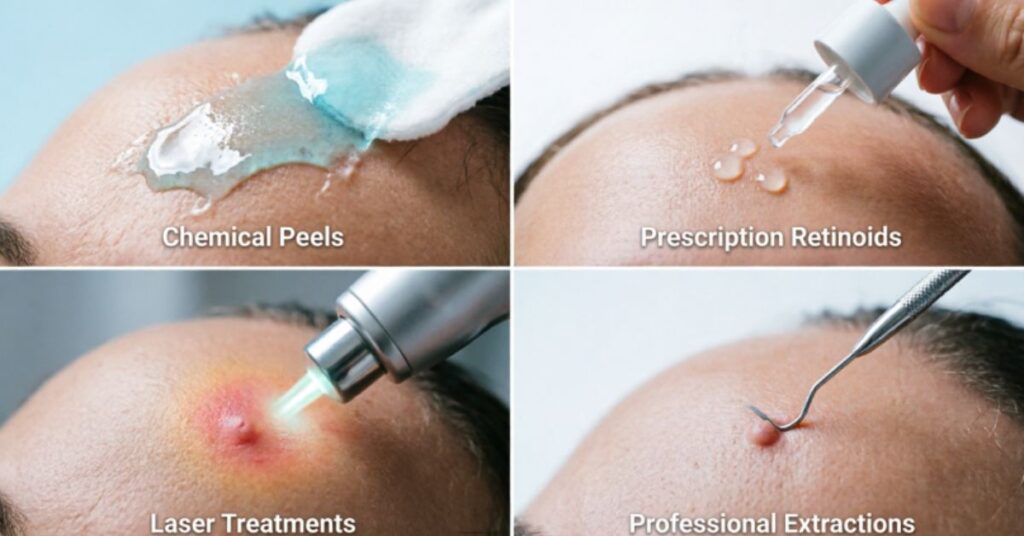
Chemical Peels
Chemical peels deeply exfoliate the skin and unclog pores.
Prescription Retinoids
Dermatologists may prescribe stronger retinoids for severe acne.
Laser Treatments
Laser therapy reduces acne-causing bacteria and inflammation.
Professional Extractions
Professional extraction safely removes blackheads and clogged pores.
Signs You Should Visit a Dermatologist
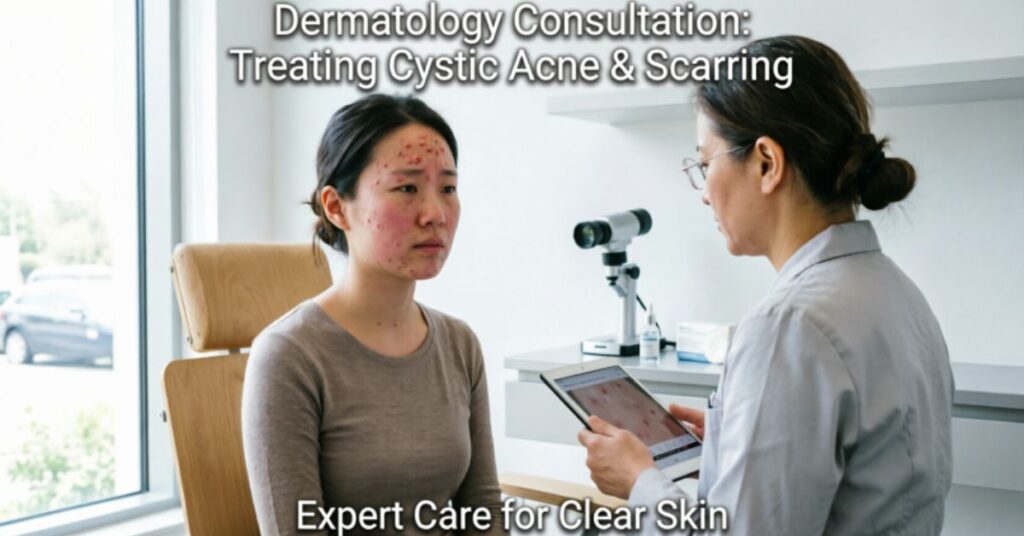
- Painful cystic acne
- Acne scars developing
- No improvement after 2 months
- Severe redness and swelling
- Sudden acne flare-ups
- Persistent hormonal breakouts
Best Lifestyle Habits for Clear Skin
Healthy daily habits play a major role in preventing forehead acne.

Keep Hair Clean
Wash oily hair regularly to prevent oil transfer onto the forehead.
Clean Accessories Frequently
Phones, hats, helmets, and pillowcases collect bacteria and sweat.
Exercise Regularly
Exercise improves circulation and reduces stress levels.
Always wash your face after sweating.
Sleep Properly
Aim for at least 7 to 8 hours of sleep every night.
Manage Stress
Stress management techniques include:

- Meditation
- Walking
- Yoga
- Deep breathing
- Journaling
Can Makeup Cause Forehead Acne?
Heavy makeup products may clog pores, especially if they contain oils or comedogenic ingredients.
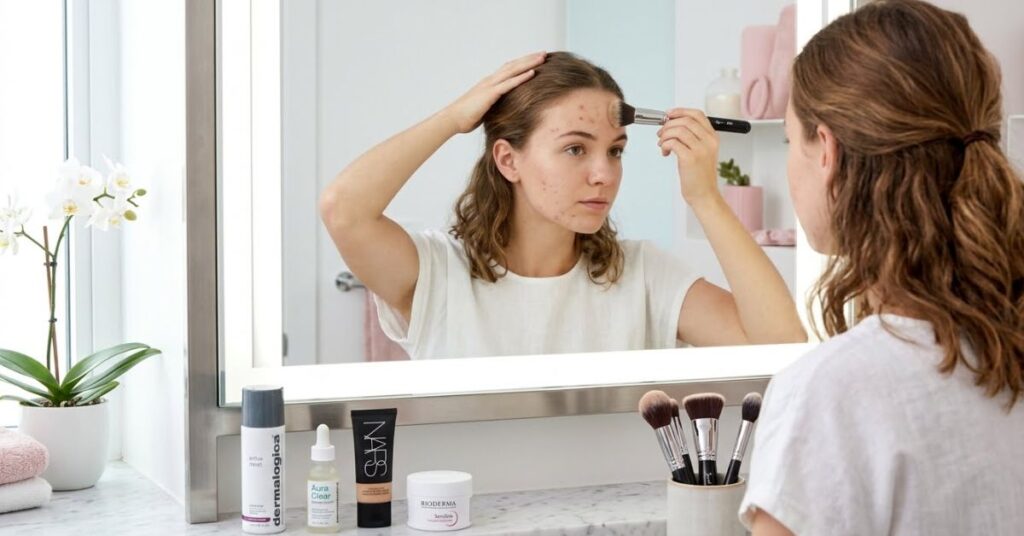
To reduce makeup-related acne:
- Use non-comedogenic makeup
- Remove makeup before bed
- Clean makeup brushes weekly
- Avoid expired products
Lightweight mineral makeup is often better for acne-prone skin.
How to Prevent Forehead Acne Permanently
Preventing acne requires consistency and healthy skincare habits.
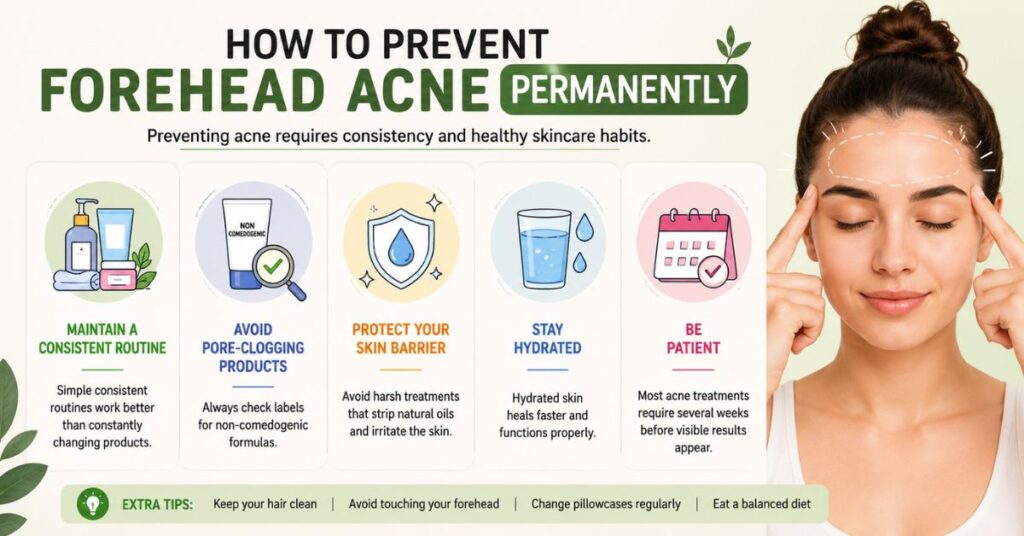
Maintain a Consistent Routine
Simple consistent routines work better than constantly changing products.
Avoid Pore-Clogging Products
Always check labels for non-comedogenic formulas.
Protect Your Skin Barrier
Avoid harsh treatments that strip natural oils.
Stay Hydrated
Hydrated skin heals faster and functions properly.
Be Patient
Most acne treatments require several weeks before visible results appear.
FAQs
Why do I only get acne on my forehead?
The forehead naturally produces more oil and frequently comes into contact with sweat, hair, and dirt.
Can dandruff cause forehead acne?
Yes. Oily scalp conditions and dandruff may contribute to clogged pores near the hairline.
What is the fastest way to clear forehead acne?
Using salicylic acid, gentle cleansing, lightweight moisturizers, and avoiding pore-clogging habits can improve acne quickly.
Is forehead acne hormonal?
Hormonal imbalances may increase oil production and trigger forehead breakouts.
Can oily hair cause forehead pimples?
Yes. Hair oils and styling products can transfer onto the forehead and clog pores.
Conclusion
Forehead acne is a common but manageable skin concern. Excess oil, sweat, hormones, poor skincare habits, and clogged pores are some of the biggest causes of forehead pimples. Fortunately, consistent skincare routines, acne-fighting ingredients like salicylic acid and niacinamide, proper hydration, and healthy lifestyle habits can significantly improve forehead acne over time.
Focus on gentle skincare instead of harsh treatments, avoid picking pimples, and use non-comedogenic products to protect your skin barrier. Remember that acne treatments take time, so consistency and patience are essential for long-term clear skin.
If your acne becomes painful, severe, or leaves scars, consult a dermatologist for professional treatment options and personalized skincare advice.





Leave a Reply