
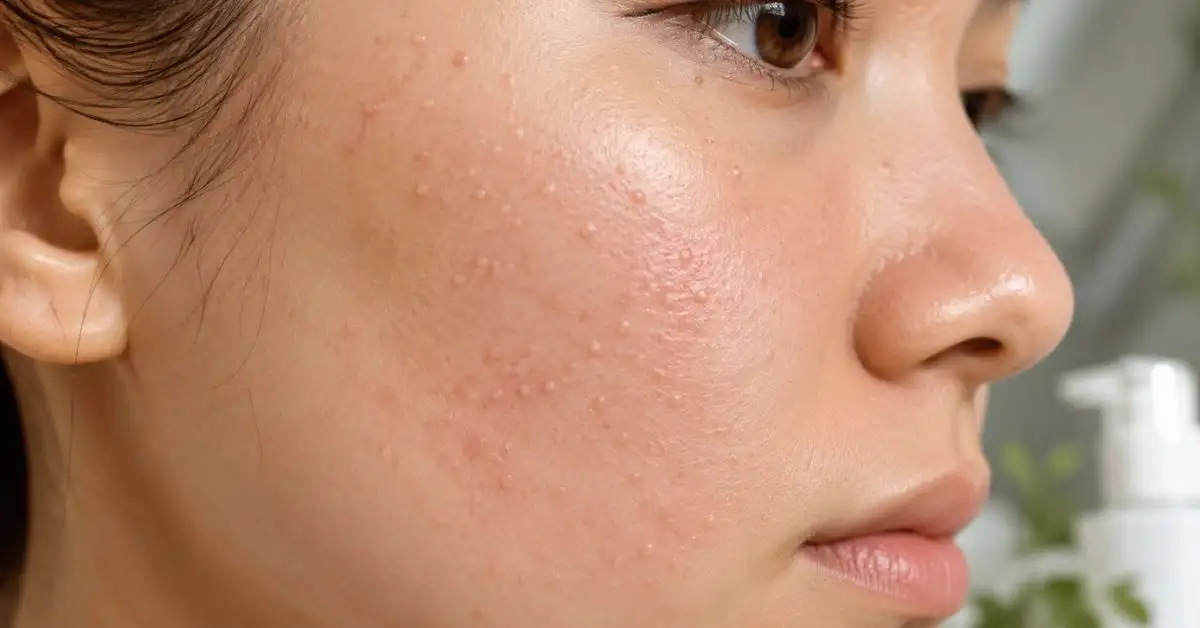
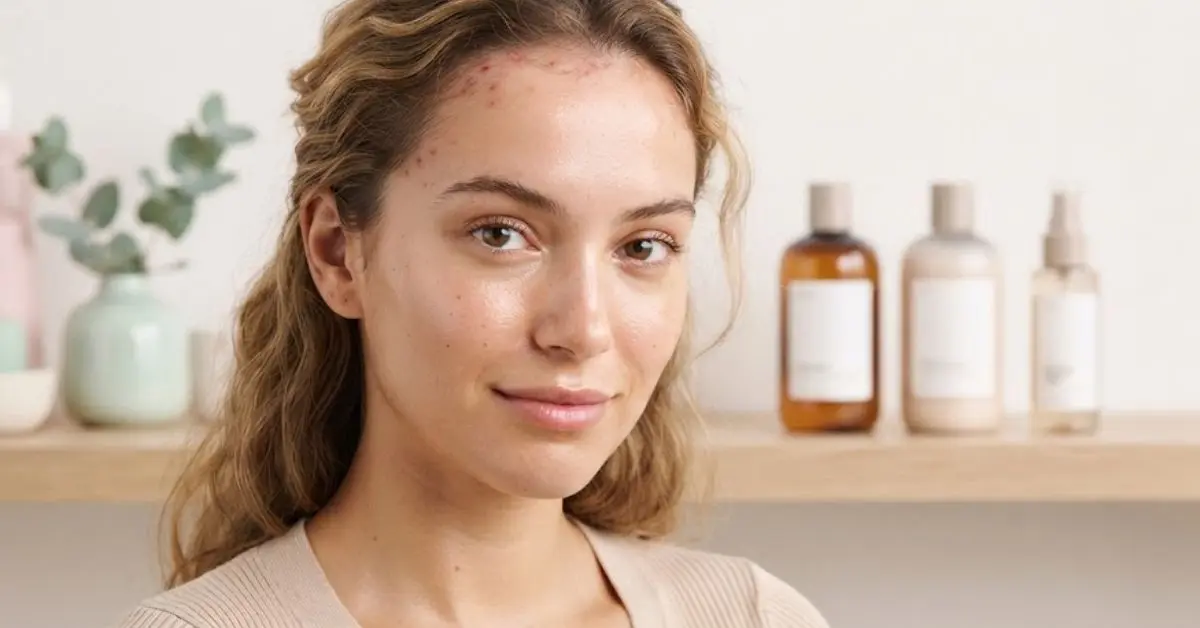
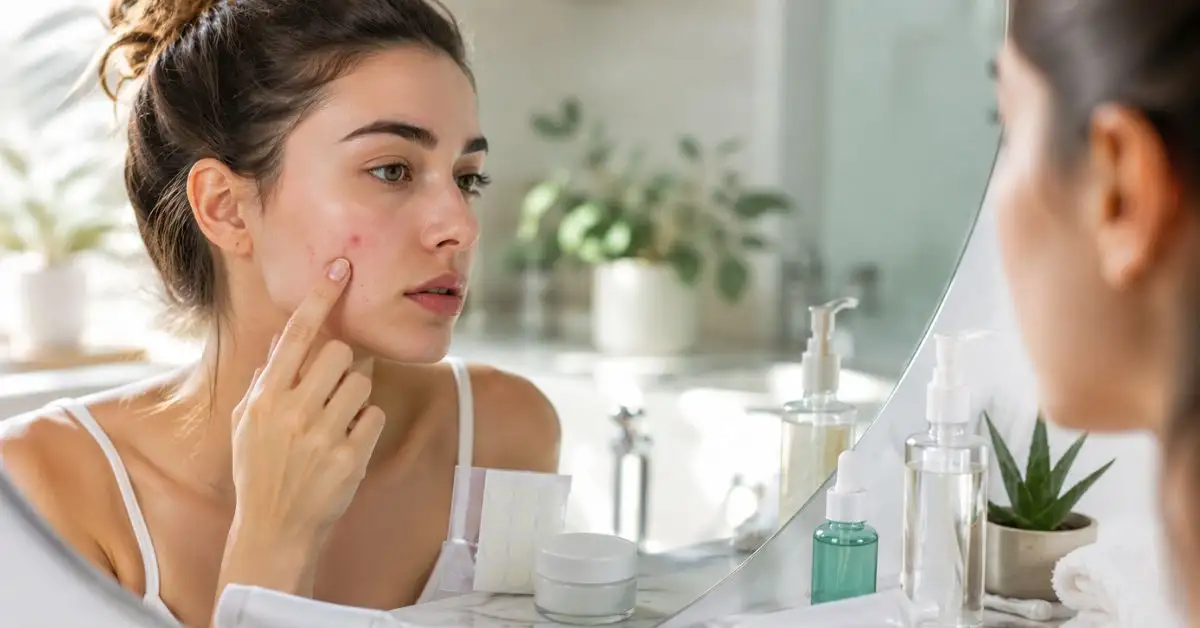
Have you been dealing with tiny bumps on your forehead, cheeks, chest, or back that simply refuse to disappear?
You may have tried acne cleansers, spot treatments, and expensive skincare products, only to see little or no improvement. Even worse, some products seem to make the bumps itchier, redder, or more widespread.
If this sounds familiar, you may not be dealing with traditional acne at all.
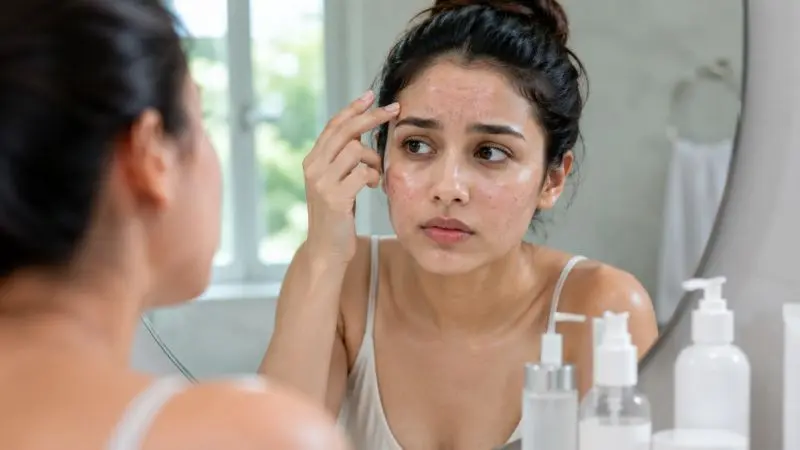
Many people worldwide mistakenly treat fungal acne like regular acne, which often leads to irritation and frustration. These stubborn bumps are commonly associated with a condition called Malassezia folliculitis, often referred to as fungal acne.
The good news is that a proper fungal-acne-safe skincare routine can help reduce these bumps while protecting your skin from irritation.
In this guide, you’ll learn exactly how to build a simple, effective routine using fungal-acne-safe products, understand which ingredients to avoid, and discover practical habits that support clearer skin—especially if you live in hot, humid climates like Thailand, Southeast Asia, parts of the United States, Canada during summer, or the United Kingdom during warmer months.
What Is Fungal Acne?
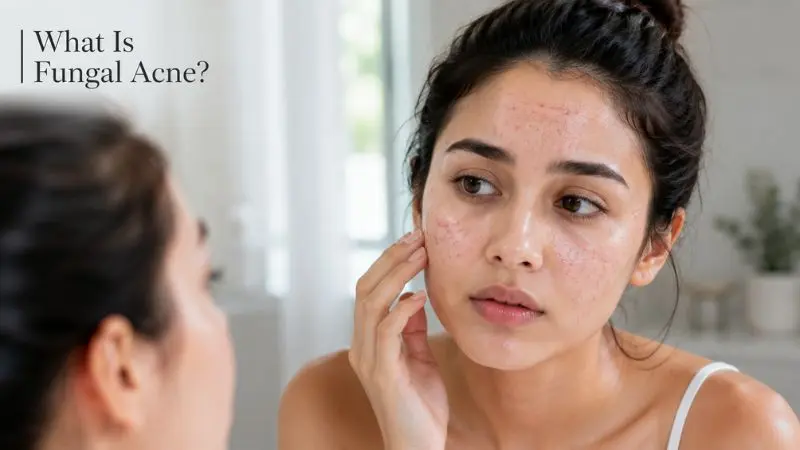
Fungal acne is not actually acne in the traditional sense.
It occurs when an overgrowth of yeast called Malassezia develops inside hair follicles. This can trigger inflammation, itching, and clusters of tiny bumps that often resemble acne.
Unlike traditional acne, fungal acne is caused by yeast rather than clogged pores, excess oil, or acne-causing bacteria.
Common Signs of Fungal Acne
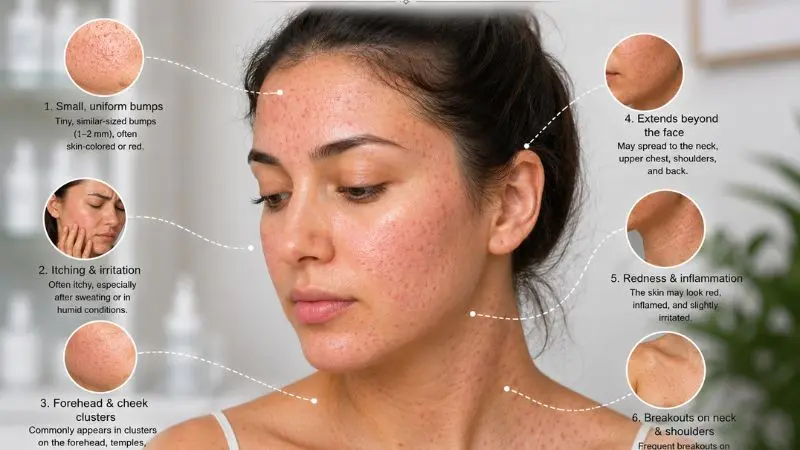
You may be dealing with fungal acne if you notice:
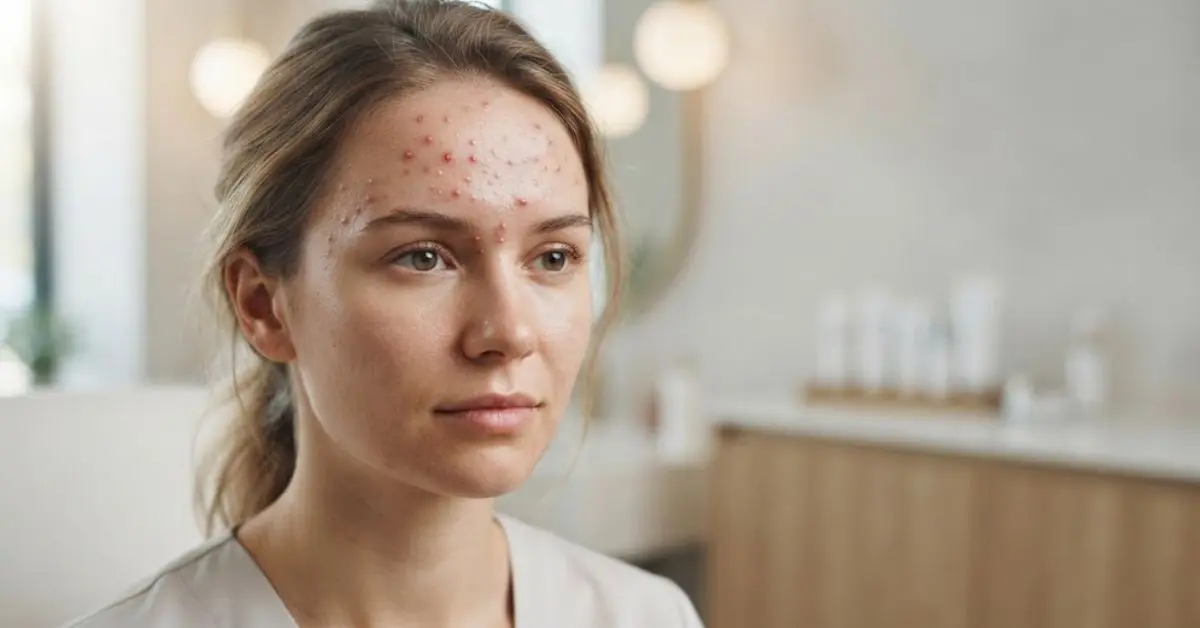
- Tiny bumps that look similar in size
- Persistent itching
- Clusters of bumps on the forehead
- Breakouts on the chest, shoulders, or back
- Symptoms that worsen in humid weather
- Little improvement from traditional acne treatments
Because fungal acne behaves differently from regular acne, it often requires a different skincare approach.
Why Humidity Makes Fungal Acne Worse
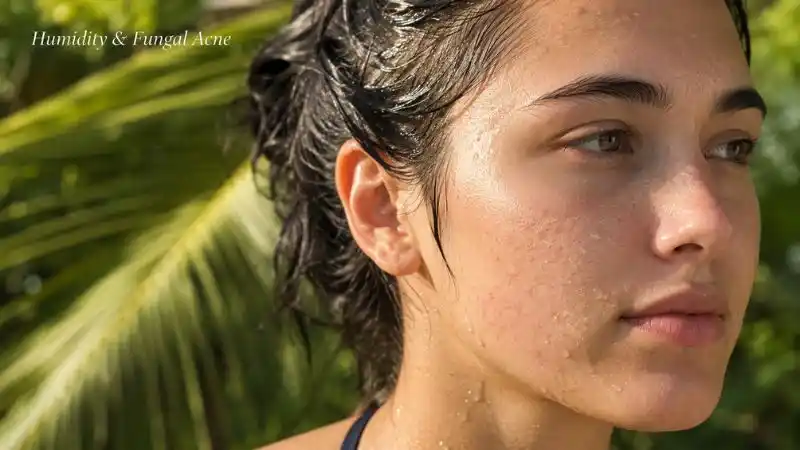
Humidity plays a major role in fungal acne flare-ups.
Warm temperatures, excessive sweating, and moisture create an environment where Malassezia yeast can thrive.
This is why fungal acne is particularly common in:
- Thailand
- Singapore
- Malaysia
- Florida
- Texas
- Tropical regions
- Coastal areas
- Hot summer climates worldwide
Sweaty skin, tight clothing, and heavy skincare products can further contribute to the problem.
For people living in humid environments, choosing lightweight, oil-free, and non-comedogenic skincare products becomes especially important.
Fungal-Acne-Safe Ingredients vs Common Trigger Ingredients
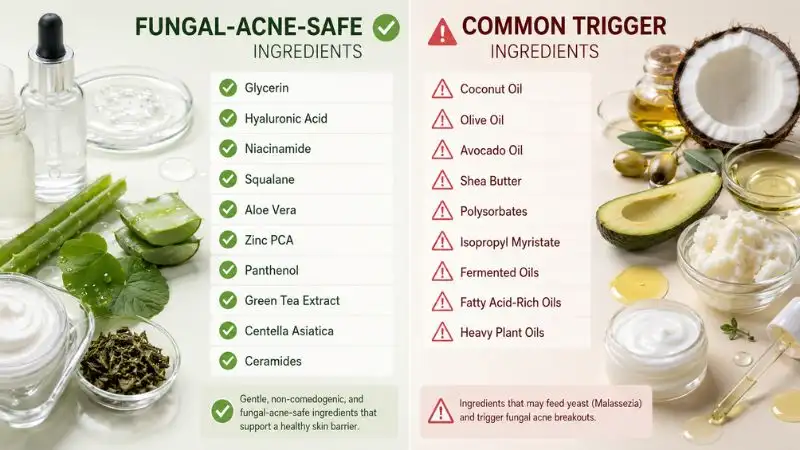
One of the most important steps in managing fungal acne is understanding ingredient labels.
Some ingredients support healthy skin, while others may feed Malassezia and worsen breakouts.
| Fungal-Acne-Safe Ingredients | Common Trigger Ingredients to Avoid |
| Glycerin | Coconut Oil |
| Hyaluronic Acid | Olive Oil |
| Niacinamide | Avocado Oil |
| Squalane | Shea Butter |
| Aloe Vera | Polysorbates |
| Zinc PCA | Isopropyl Myristate |
| Panthenol | Esters |
| Green Tea Extract | Fermented Oils |
| Centella Asiatica | Fatty Acid-Rich Oils |
| Ceramides (selected formulas) | Heavy Plant Oils |
Always check product labels carefully because even products marketed as acne-friendly may contain fungal acne triggers.
The Best Fungal Acne Safe Skincare Routine
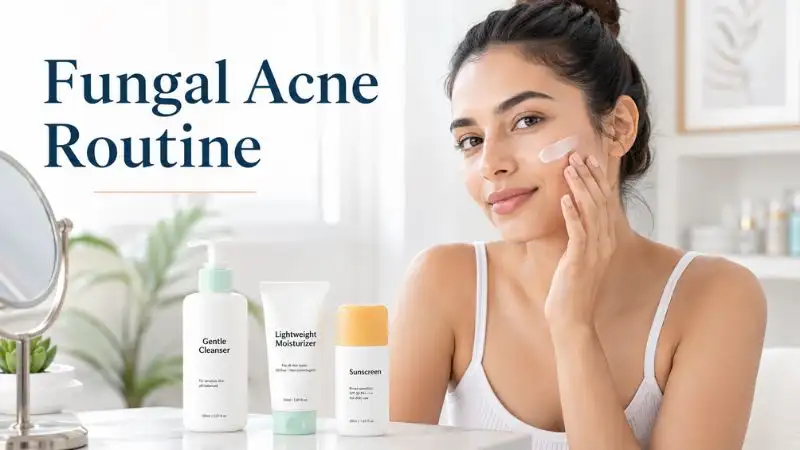
A simple routine often works better than a complicated one.
Overloading your skin with too many active ingredients can damage the skin barrier and increase irritation.
Let’s look at the three essential steps.
Step 1: Use a Gentle Cleanser
Why Cleansing Matters
Cleansing removes:
- Sweat
- Excess oil
- Dirt
- Environmental pollutants
These factors can contribute to fungal acne flare-ups, especially in humid climates.
The goal is to clean the skin without stripping away its natural protective barrier.
What to Look For
Choose a cleanser that is:
- Fragrance-free
- Sulfate-free
- Non-comedogenic
- Oil-free
- Lightweight
Benefits
A gentle cleanser helps:
- Reduce excess oil
- Minimize irritation
- Keep pores clear
- Support skin barrier repair
Pro Tip
Wash your face twice daily.
If you sweat heavily from exercise or outdoor activities, cleanse your skin afterward to remove moisture that may encourage yeast growth.
Step 2: Apply a Lightweight Moisturizer
Why Moisturizer Is Essential
Many people mistakenly skip moisturizer because they believe fungal acne is caused by excess oil.
This often backfires.
When skin becomes dehydrated, it may produce more oil and become more vulnerable to irritation.
A lightweight moisturizer helps maintain healthy hydration levels while supporting skin barrier repair.
What to Look For
Choose a moisturizer that is:
- Oil-free
- Non-comedogenic
- Lightweight
- Fast-absorbing
- Fungal-acne-safe
Beneficial Ingredients
Look for:
- Hyaluronic acid
- Niacinamide
- Glycerin
- Panthenol
- Centella asiatica
Benefits
A quality moisturizer helps:
- Reduce dryness
- Calm redness
- Strengthen the skin barrier
- Improve overall skin health
Why This Matters in Humid Climates
People often avoid moisturizers in hot weather.
However, air conditioning, sun exposure, and frequent cleansing can still leave skin dehydrated.
A lightweight moisturizer provides hydration without feeling greasy.
Step 3: Wear Sunscreen Every Day
Why Sunscreen Is Non-Negotiable
Sun damage can worsen inflammation, discoloration, and skin sensitivity.
Daily sunscreen use protects your skin while supporting recovery from fungal acne.
What to Look For
Choose a sunscreen that is:
- Non-comedogenic
- Oil-free
- Lightweight
- Broad-spectrum SPF 30 or higher
Benefits
Daily sunscreen helps:
- Prevent dark spots
- Reduce irritation
- Protect healing skin
- Maintain an even skin tone
Best Choice for Hot Weather
Gel-based and fluid sunscreens tend to feel lighter on the skin and work well in humid conditions.
Ingredients That Support Skin Barrier Repair
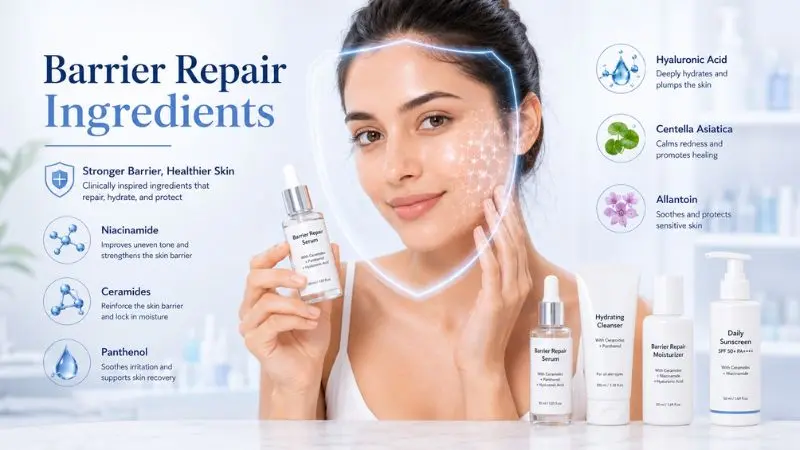
A damaged skin barrier can make fungal acne symptoms feel worse.
Supporting skin barrier repair helps your skin become more resilient and less reactive.
Helpful Ingredients
- Niacinamide
- Ceramides
- Panthenol
- Hyaluronic Acid
- Centella Asiatica
- Allantoin
These ingredients help reduce irritation while maintaining healthy hydration.
Daily Habits to Clear Skin Faster
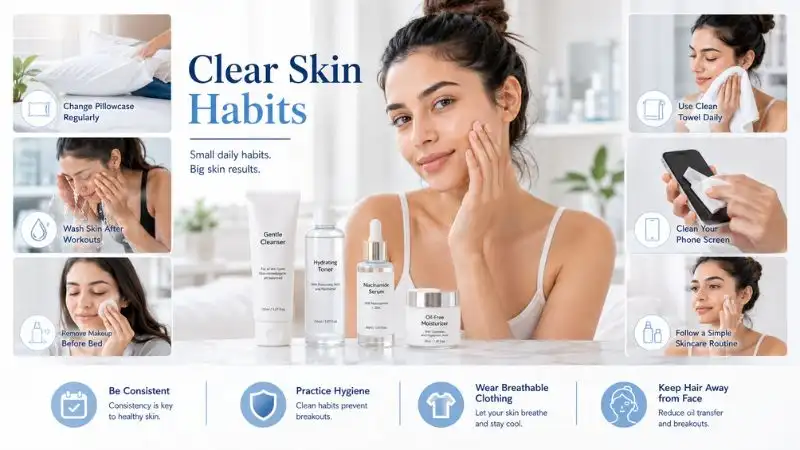
Good skincare works best when combined with healthy daily habits.
Follow These Tips
- Wash sweaty skin after workouts
- Change pillowcases regularly
- Avoid touching your face frequently
- Use clean towels
- Remove makeup before bed
- Avoid heavy oil-based products
- Stay consistent with your routine
- Keep hair products away from facial skin
- Wear breathable clothing
- Clean phone screens regularly
Small habits can make a surprisingly big difference over time.
Lifestyle Tips to Prevent Fungal Acne
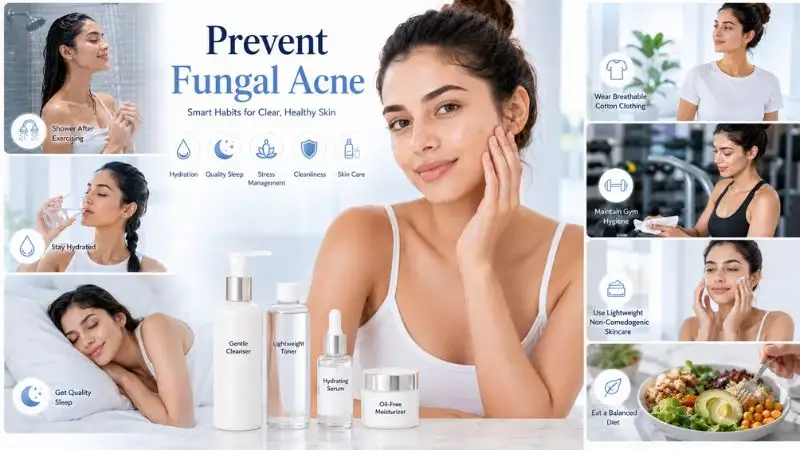
Lifestyle factors often contribute to recurring flare-ups.
Simple Prevention Strategies
- Shower after excessive sweating
- Avoid staying in damp clothing
- Choose breathable fabrics
- Reduce unnecessary skincare products
- Manage stress levels
- Get adequate sleep
- Stay hydrated throughout the day
- Eat a balanced diet
- Avoid excessively heavy creams
- Keep gym equipment clean before use
These strategies help create an environment that is less favorable for Malassezia overgrowth.
Common Mistakes That Can Make Fungal Acne Worse
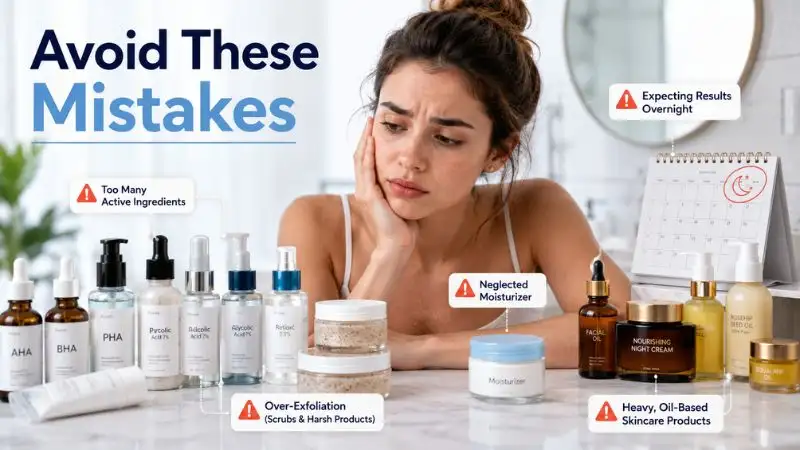
Many people unintentionally worsen fungal acne through skincare choices.
Mistakes to Avoid
Using Too Many Active Ingredients
Combining multiple acids, retinoids, and treatments may irritate the skin barrier.
Over-Exfoliating
Excessive exfoliation can increase redness and sensitivity.
Skipping Moisturizer
Hydration remains important, even for oily skin.
Using Heavy Oils
Some oils may contribute to fungal acne flare-ups.
Expecting Overnight Results
Skin healing takes time and consistency.
How Long Does It Take to See Results?
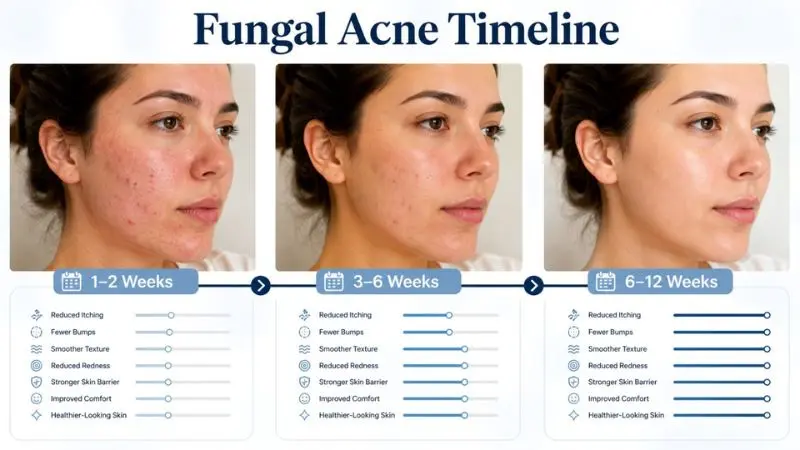
Results vary depending on severity and consistency.
Many people notice:
Within 1–2 Weeks
- Less itching
- Reduced redness
- Improved comfort
Within 3–6 Weeks
- Fewer bumps
- Smoother skin texture
- Better overall appearance
Within 6–12 Weeks
- Significant improvement
- Stronger skin barrier
- Reduced recurrence
Patience and consistency are essential for long-term success.
Can You Use Active Ingredients With Fungal Acne?
Yes, but moderation is important.
Some active ingredients may support clearer skin when used appropriately.
Potentially Helpful Ingredients
- Niacinamide
- Azelaic Acid
- Sulfur
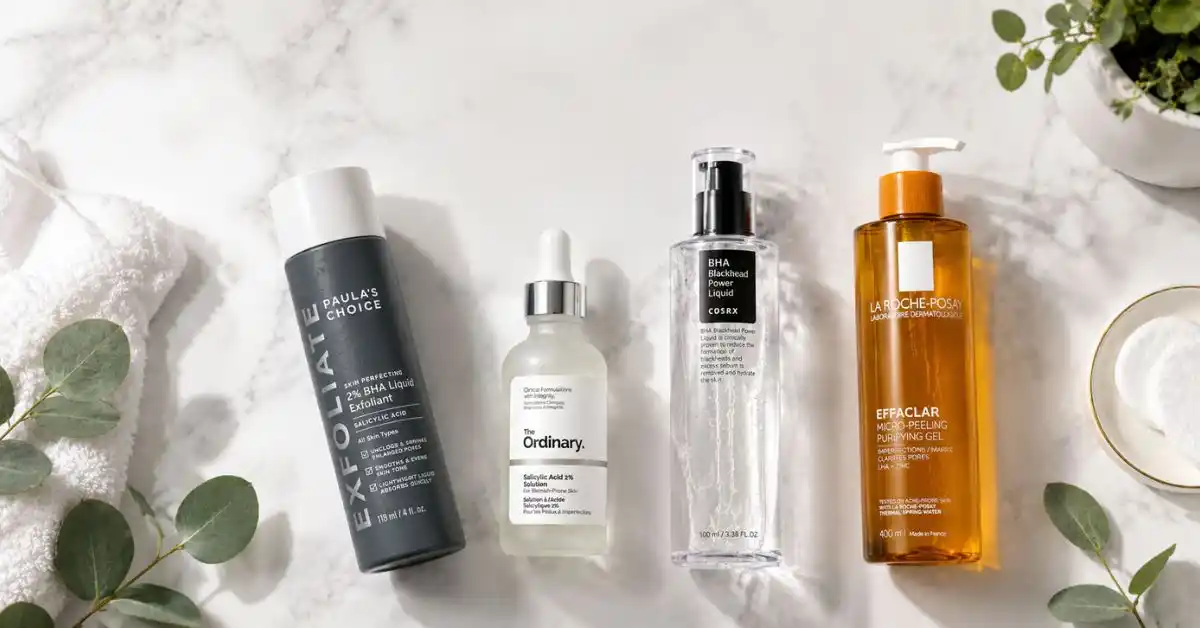
- Salicylic Acid (in moderation)
Always introduce one product at a time and monitor your skin’s response.
When Should You See a Dermatologist?
While many cases improve with a fungal-acne-safe skincare routine, professional evaluation may be necessary.
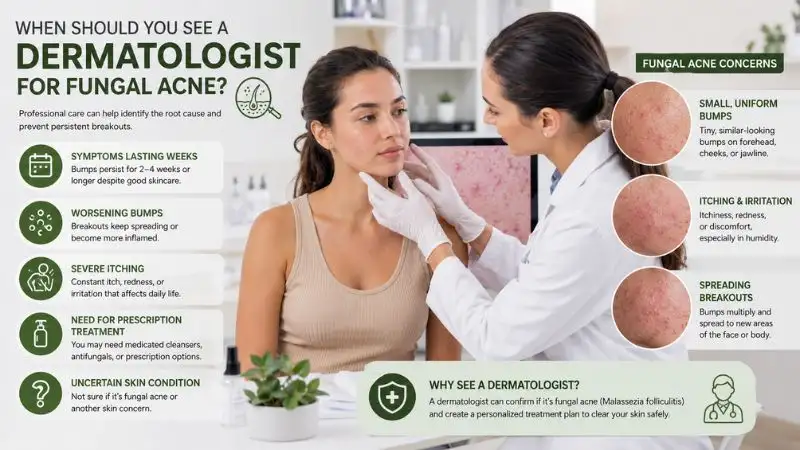
Consult a dermatologist if:
- Symptoms persist for several weeks
- The bumps continue spreading
- Itching becomes severe
- Prescription treatment may be needed
- You are unsure whether the condition is fungal acne or another skin concern
A dermatologist can accurately diagnose Malassezia folliculitis and recommend targeted treatments.
This expert guidance improves outcomes and helps prevent unnecessary irritation from ineffective products.
Frequently Asked Questions
Is fungal acne the same as regular acne?
No. Fungal acne involves yeast overgrowth, while traditional acne typically involves clogged pores, oil, and bacteria.
Can fungal acne go away on its own?
Mild cases sometimes improve, but proper skincare and treatment usually help speed recovery.
Is moisturizer safe for fungal acne?
Yes. Choose a lightweight, oil-free, non-comedogenic formula.
Does humidity worsen fungal acne?
Yes. Heat, sweat, and humidity can create favorable conditions for Malassezia growth.
Should I exfoliate fungal acne?
Gentle exfoliation may help some people, but excessive exfoliation can worsen irritation.
Final Thoughts
Dealing with itchy, stubborn bumps can feel frustrating, especially when traditional acne treatments fail to deliver results.
The key is understanding that fungal acne requires a different approach.
A simple routine built around a gentle cleanser, lightweight moisturizer, and daily sunscreen can help support clearer skin while minimizing irritation. Choosing fungal-acne-safe, non-comedogenic, and oil-free products is especially important for people living in hot and humid climates where Malassezia folliculitis tends to thrive.
Remember that consistency matters more than using dozens of products. Focus on hydration, skin barrier repair, and avoiding common trigger ingredients.
If symptoms persist, don’t hesitate to seek advice from a dermatologist for a personalized treatment plan.
What has been your biggest struggle with fungal acne—finding the right products, managing humidity, or dealing with stubborn bumps that won’t go away? Share your experience in the comments below!

Leave a Reply