
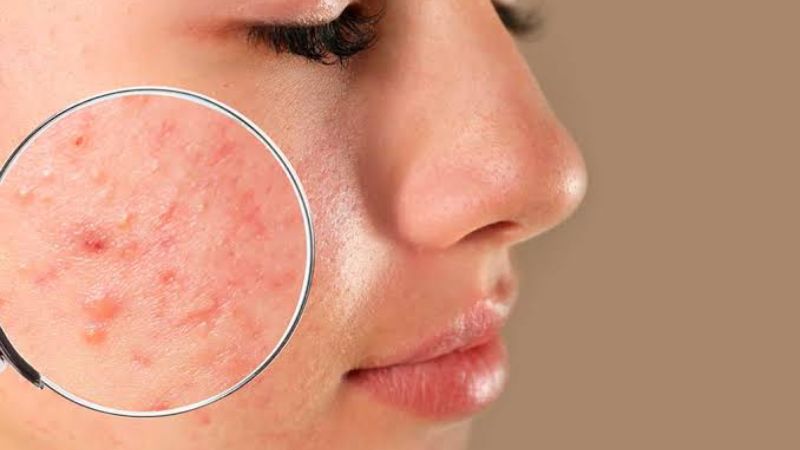
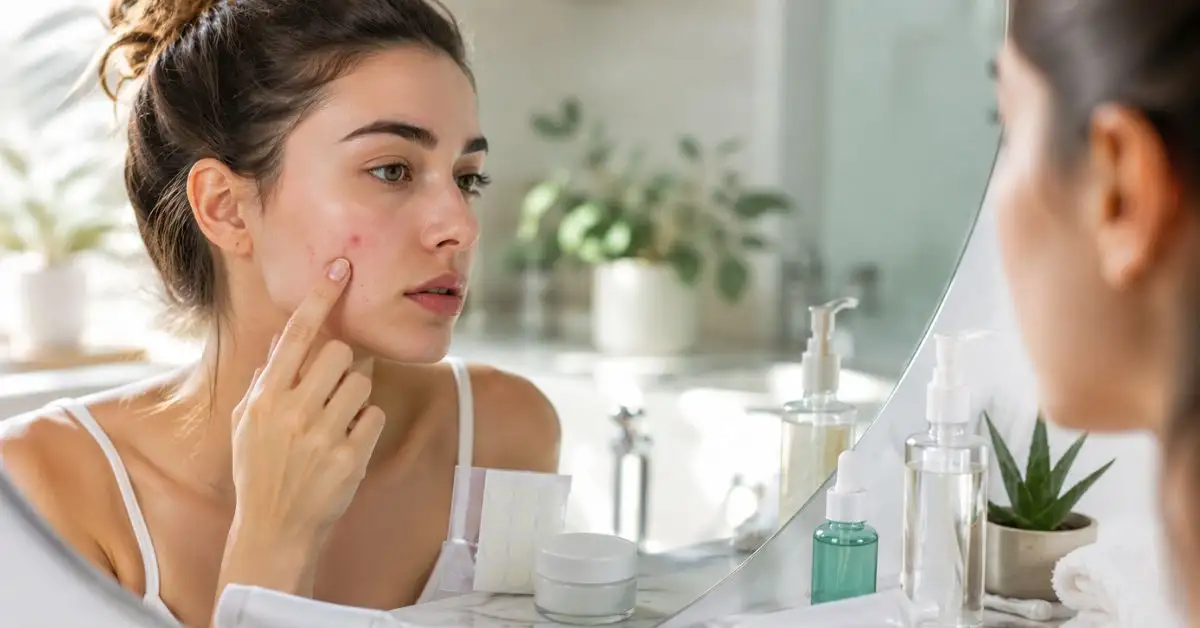
Bacterial acne is one of the most common skin problems affecting people of all ages, especially teenagers and young adults. It occurs when bacteria infect clogged pores, leading to inflammation, redness, and painful breakouts.
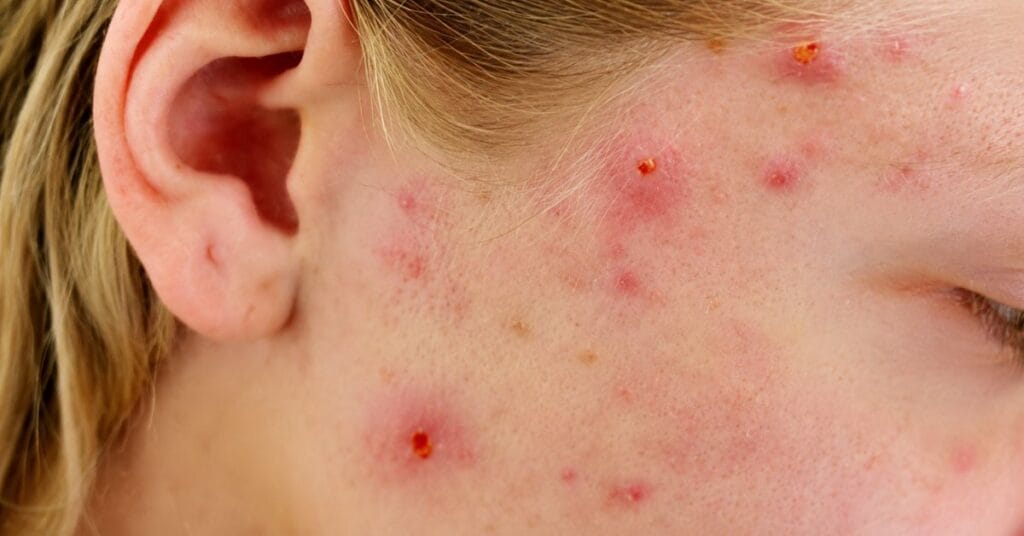
Understanding this condition is essential for maintaining clear and healthy skin. In this guide, we’ll explore its causes, symptoms, treatments, and prevention tips to help you manage breakouts effectively.
What is Bacterial Acne?
This type of acne develops when bacteria grow inside clogged hair follicles. Excess oil (sebum), dead skin cells, and dirt block pores, creating an environment where bacteria thrive and cause inflammation.
Common signs include:
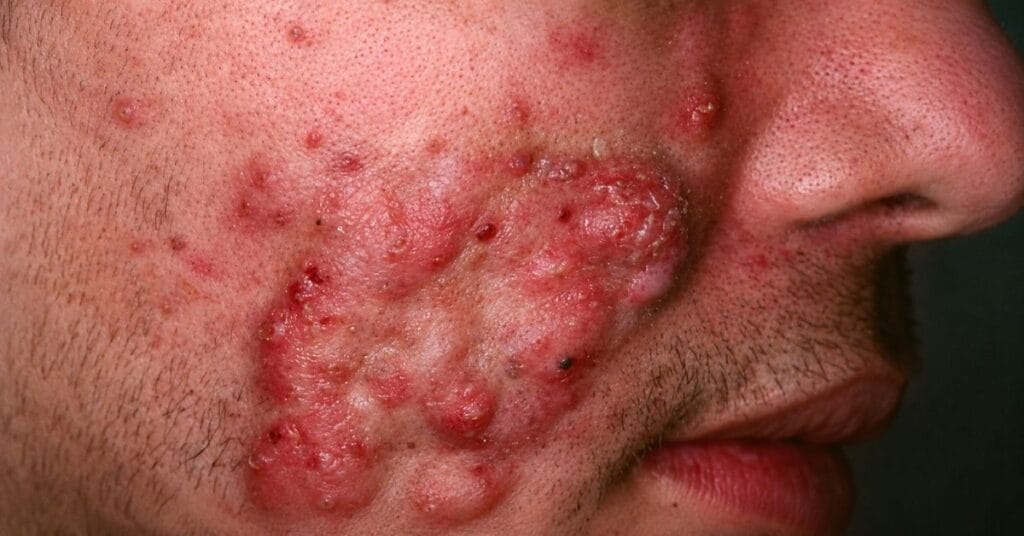
- Red pimples
- Pus-filled breakouts
- Painful cysts
- Swelling and irritation
Main Causes of Bacterial Acne
1. Excess Oil Production
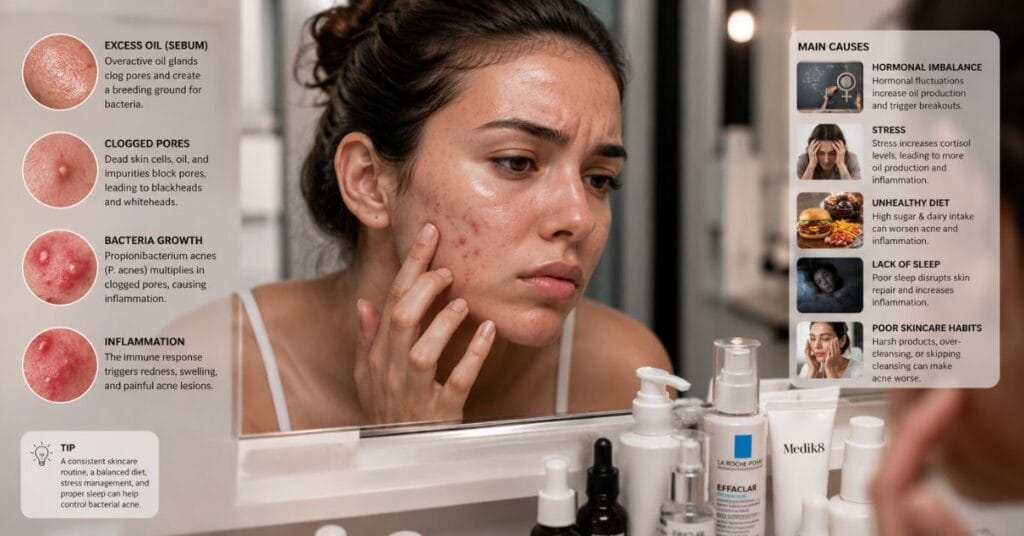
Too much oil on the skin creates the perfect environment for bacteria to multiply, especially in people with oily skin.
2. Hormonal Changes
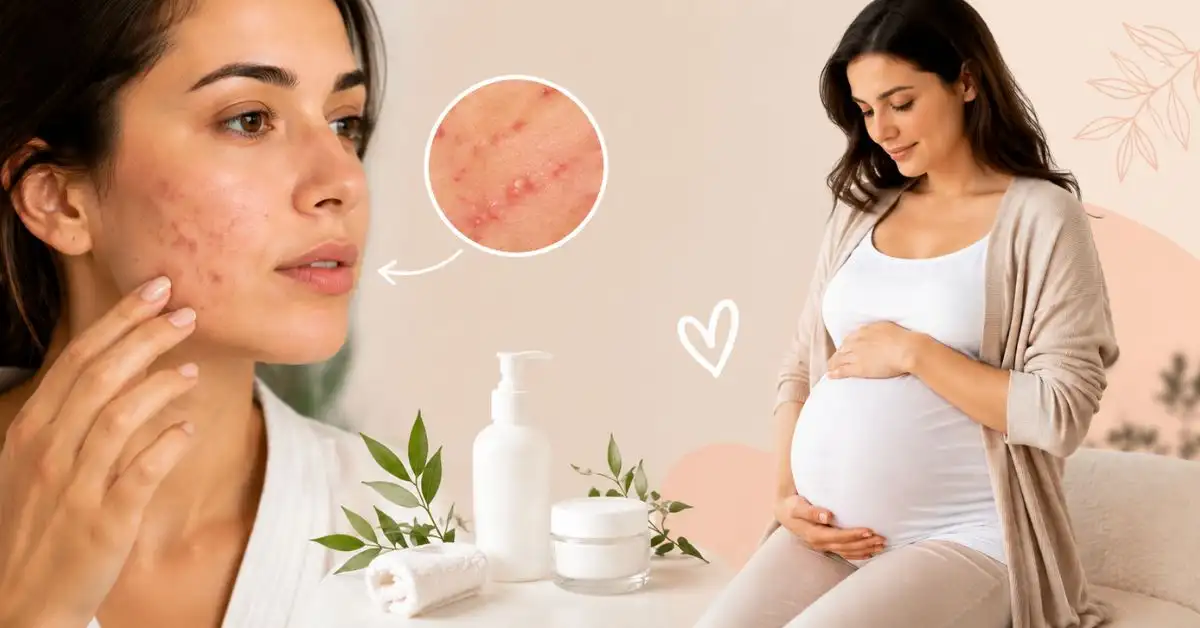
Hormonal fluctuations during puberty, menstruation, pregnancy, or stress can increase oil production and trigger breakouts.
3. Poor Skincare Habits
Not cleansing properly or using harsh products can allow bacteria and dirt to build up on the skin.
4. Clogged Pores
Blocked pores reduce oxygen levels, making it easier for acne-causing bacteria to grow.
5. Diet and Lifestyle
Unhealthy eating habits, stress, and lack of sleep can weaken your skin’s natural defense system.
Signs and Symptoms
Recognizing symptoms early can help prevent severe breakouts:
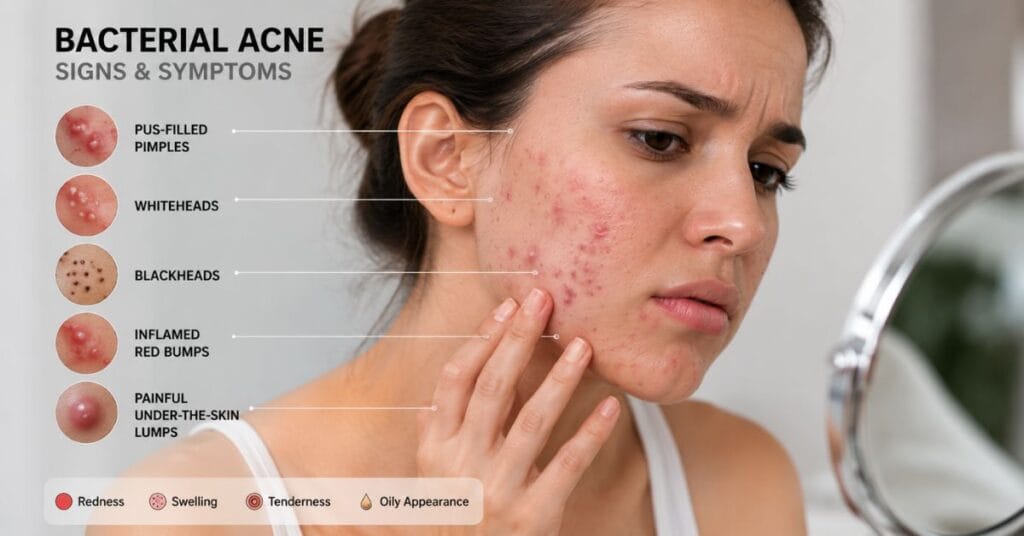
- Red, inflamed pimples
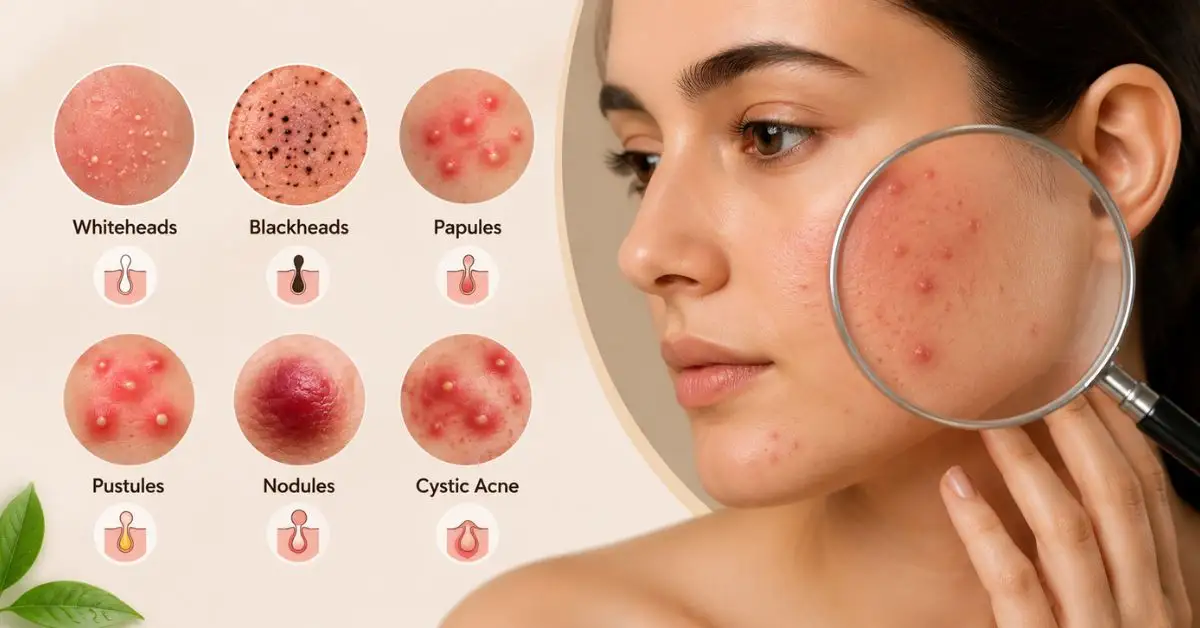
- Whiteheads and blackheads
- Pus-filled spots
- Painful lumps under the skin
- Skin sensitivity and irritation
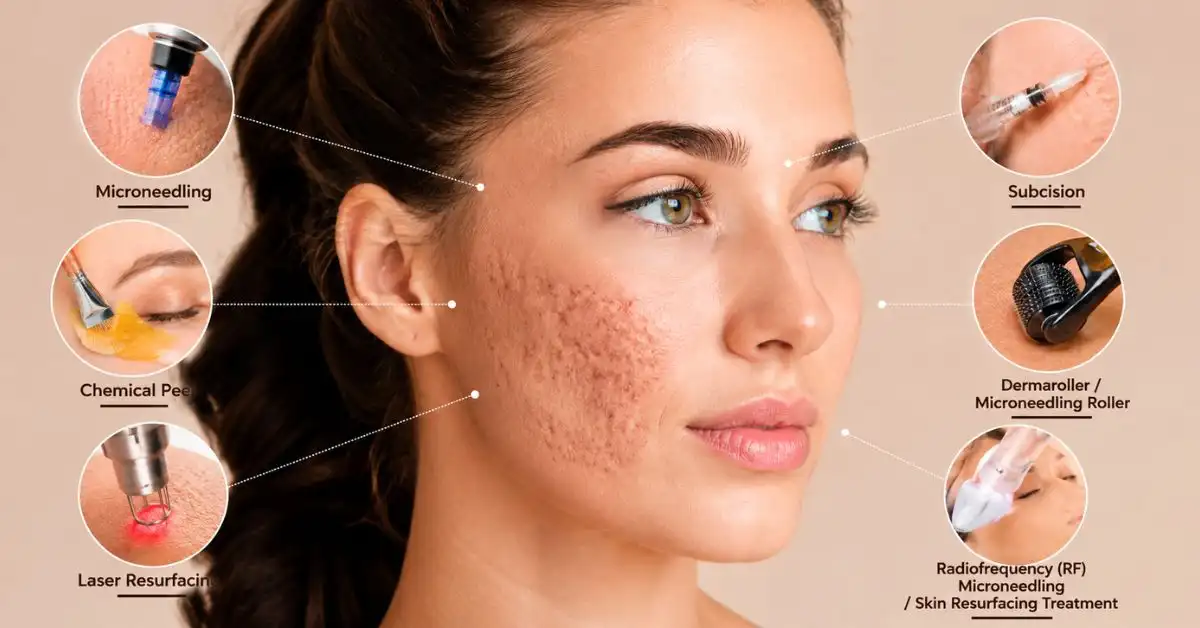
In severe cases, it may lead to scars and dark spots.
Types of Acne Caused by Bacteria
1. Papules
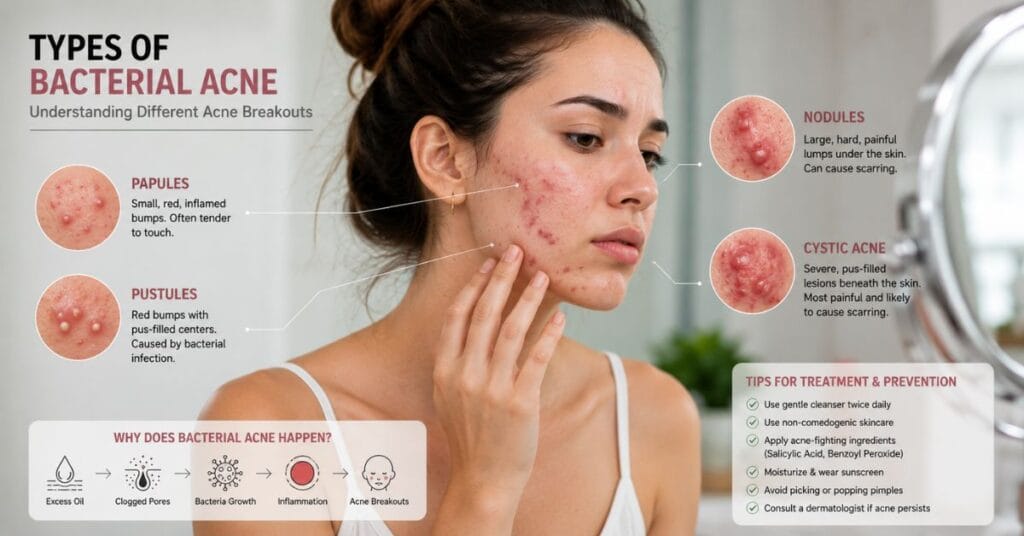
Small red bumps caused by inflammation.
2. Pustules
Pimples filled with pus and a visible white or yellow center.
3. Nodules
Large, painful lumps deep under the skin.
4. Cystic Acne
A severe form that causes deep infections and may leave scars.
How It Differs from Other Acne Types
Not all acne is the same. This condition:
- Involves infection and inflammation
- Is often painful and swollen
- May contain pus
- Can worsen if untreated
Other types like hormonal or fungal acne require different treatments, so proper identification is important.
Best Treatments
1. Over-the-Counter Options
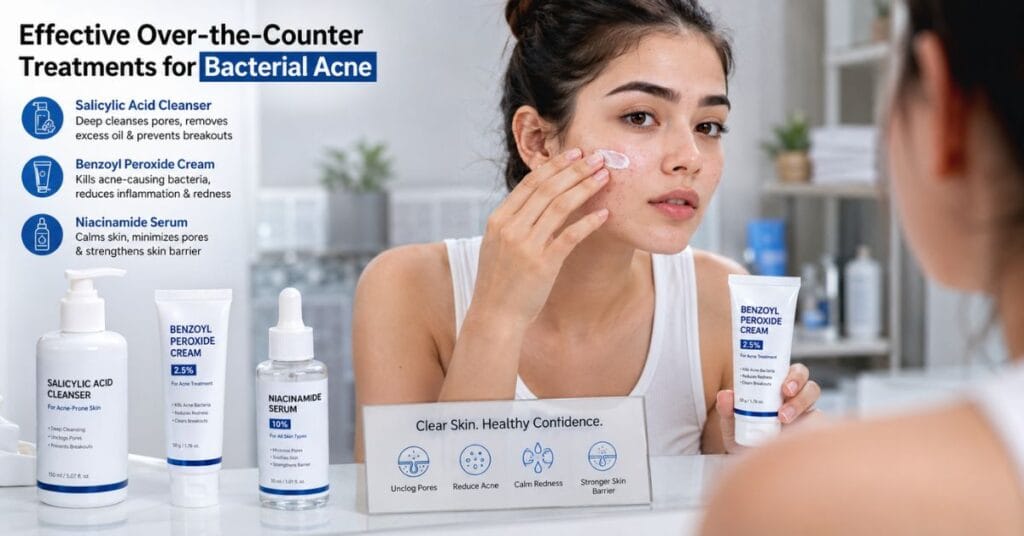
Mild cases can be treated with:
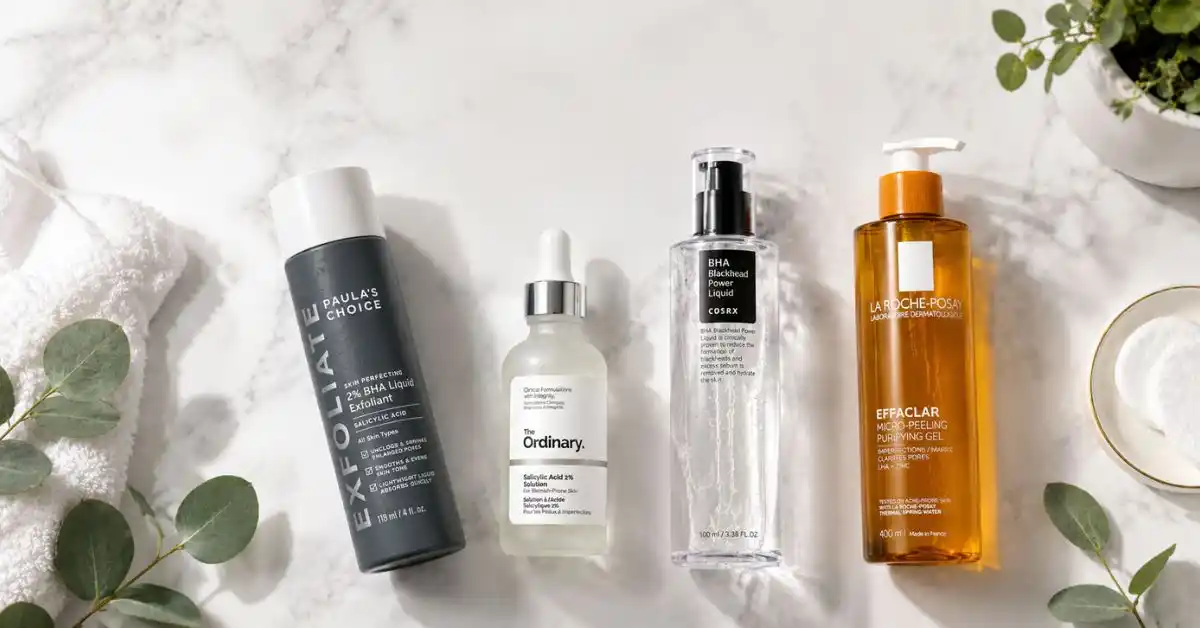
- Salicylic acid – unclogs pores
- Benzoyl peroxide – kills bacteria
- Niacinamide – reduces inflammation
2. Prescription Treatments
For more severe cases:
- Topical or oral antibiotics
- Retinoids
- Hormonal therapy
3. Natural Remedies
Some natural ingredients may help:
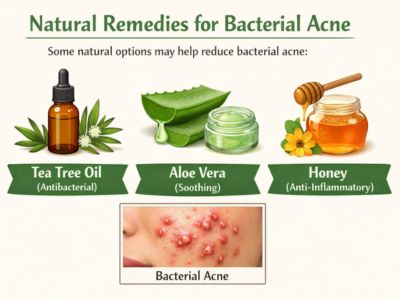
- Tea tree oil (antibacterial)
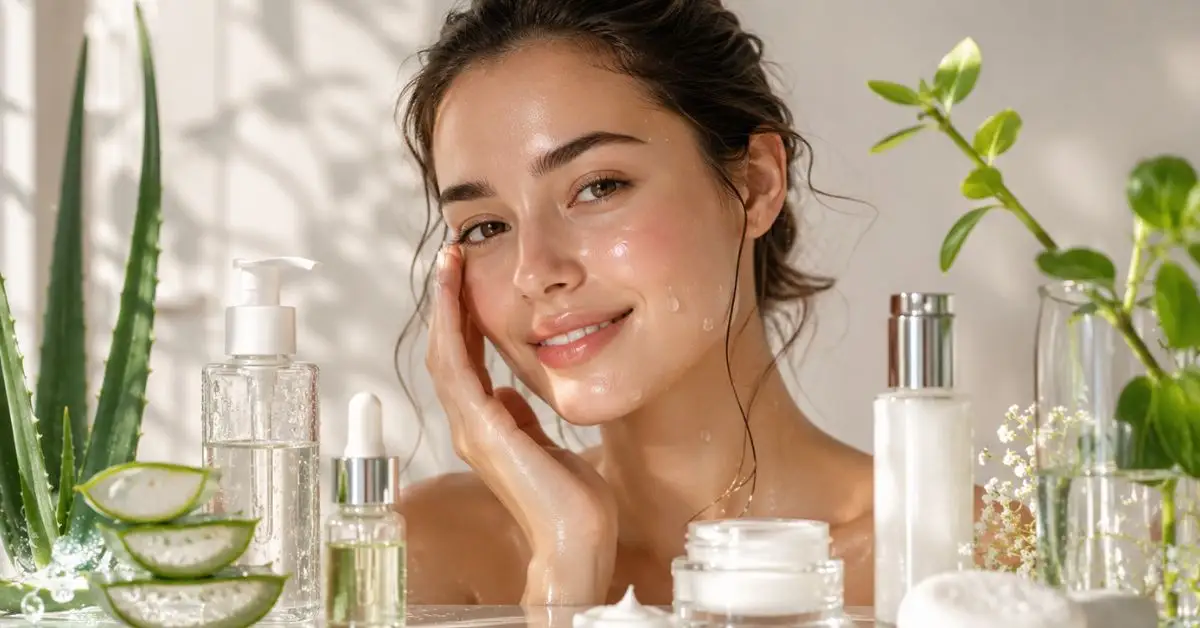
- Aloe vera (soothing)
- Honey (anti-inflammatory)
Effective Skincare Routine
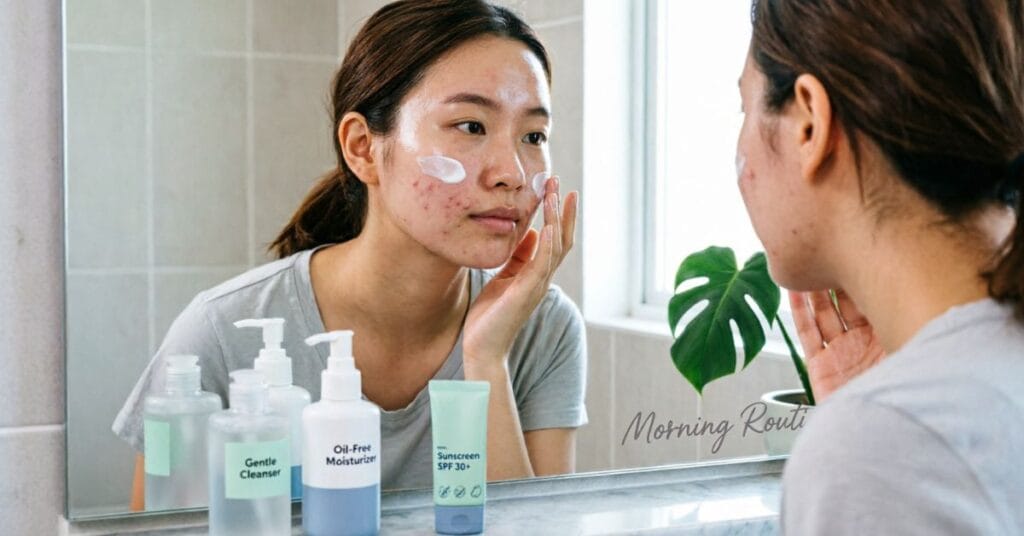
Morning Routine
- Gentle cleanser
- Oil-free moisturizer
- Sunscreen (SPF 30+)
Night Routine
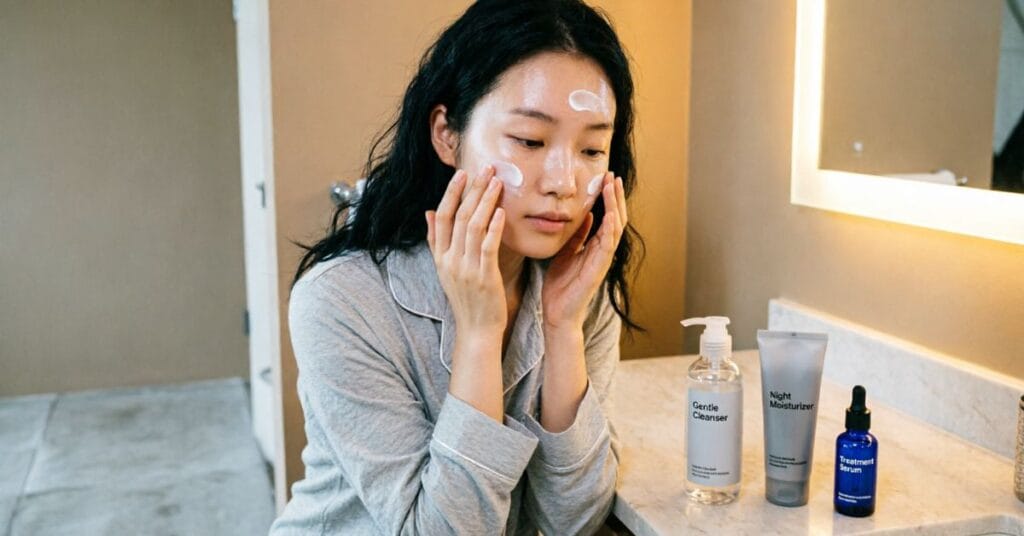
- Cleanser
- Acne treatment (e.g., benzoyl peroxide)
- Lightweight moisturizer
Avoid harsh scrubbing, as it can irritate the skin.
Prevention Tips
Preventing breakouts is easier than treating them:
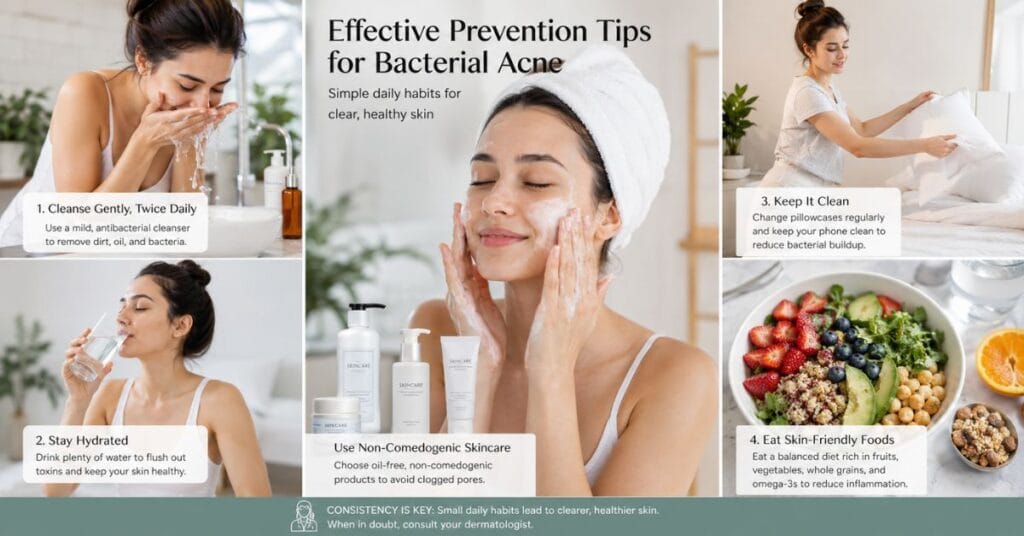
- Wash your face twice daily
- Avoid touching your face
- Change pillowcases regularly
- Use non-comedogenic products
- Stay hydrated
- Maintain a balanced diet
Consistency is key for healthy skin.
Common Mistakes to Avoid
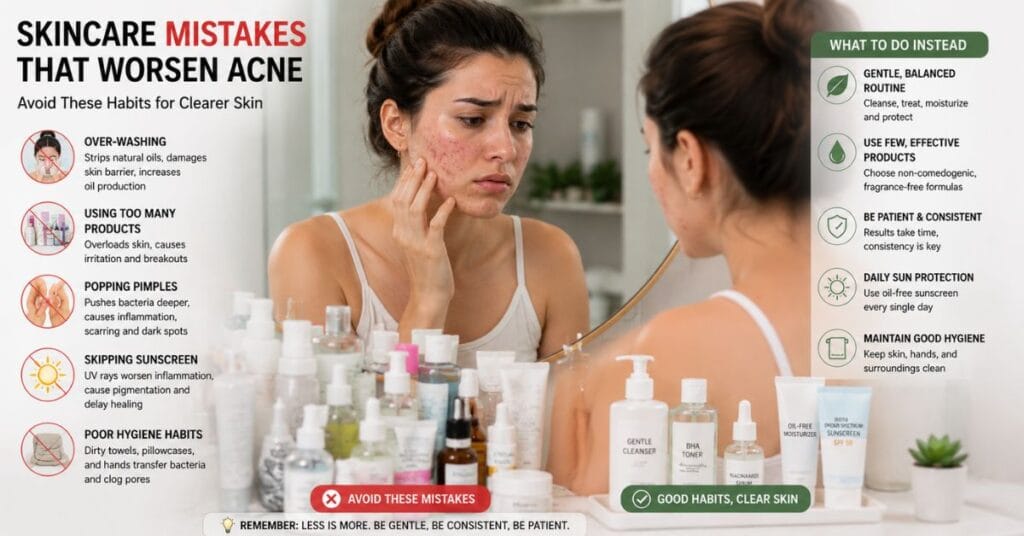
Avoid these habits that can worsen your skin:
- Over-washing
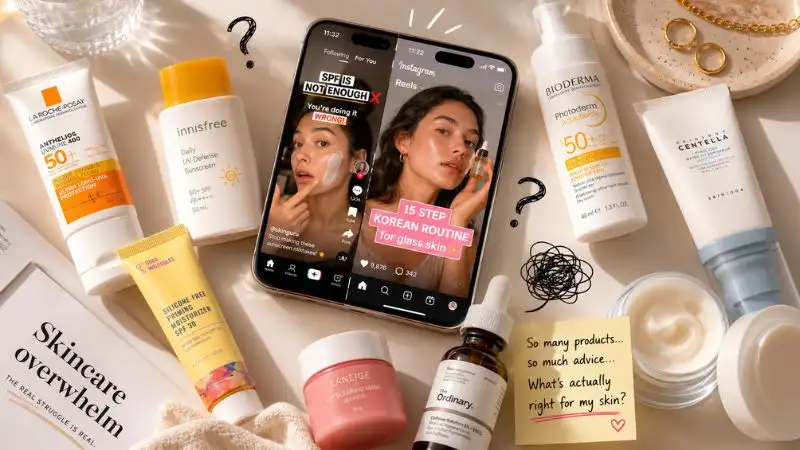
- Using too many products
- Popping pimples
- Skipping sunscreen
- Poor hygiene
When to See a Dermatologist
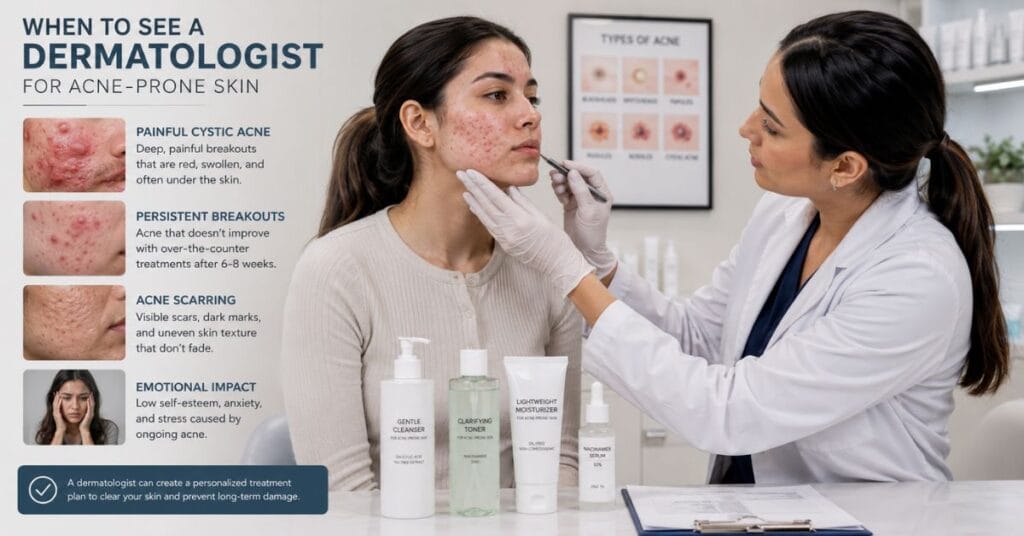
Consult a dermatologist if:
- Acne is severe or painful
- Treatments aren’t working
- Scarring is developing
- Breakouts keep returning
Professional care can prevent long-term damage.
FAQs
1. What causes bacterial acne?
It is caused by clogged pores, excess oil, and bacterial growth.
2. Is it contagious?
No, but bacteria can spread across your own skin.
3. How long does it take to heal?
Mild cases heal in days; severe cases may take weeks.
4. Can diet affect acne?
Yes, high sugar and unhealthy foods may worsen breakouts.
5. What is the best treatment?
Benzoyl peroxide and salicylic acid are highly effective.
Conclusion
Bacterial acne is a common but manageable condition. With the right skincare routine, proper treatments, and healthy habits, you can reduce breakouts and maintain clear skin.
Consistency and early action are the keys to preventing long-term skin issues.

Leave a Reply