
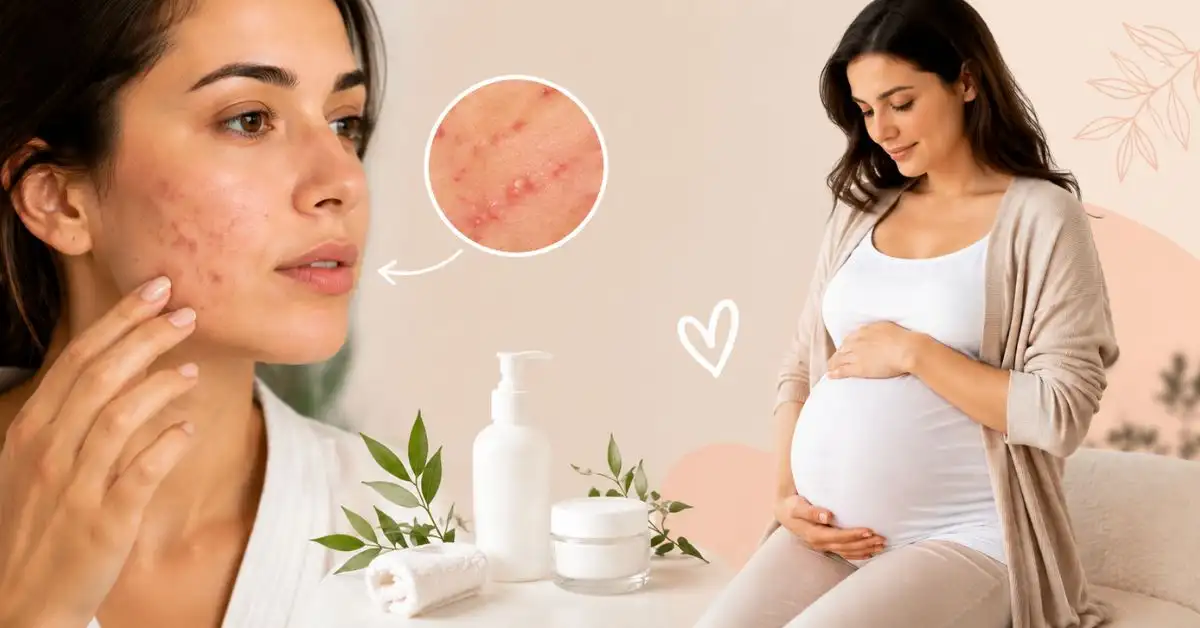
Pregnancy is an exciting journey filled with many physical and emotional changes. While most people expect a glowing complexion, many women experience the exact opposite. Sudden breakouts, oily skin, and painful pimples can appear even if they have never struggled with acne before.
If you’re dealing with pregnancy acne, you’re not alone. Acne is one of the most common skin concerns during pregnancy, especially in the first and second trimesters. Hormonal changes can increase oil production, clog pores, and trigger breakouts on the face, chest, back, and shoulders.
The good news is that pregnancy acne is usually temporary. With the right skincare routine, pregnancy-safe ingredients, and healthy lifestyle habits, you can manage breakouts while protecting both your skin and your growing baby.
This guide explains everything you need to know about pregnancy acne, including its causes, safe treatment options, ingredients to avoid, home remedies, prevention tips, and when it’s time to see a dermatologist.
How to Treat Pregnancy Acne Safely
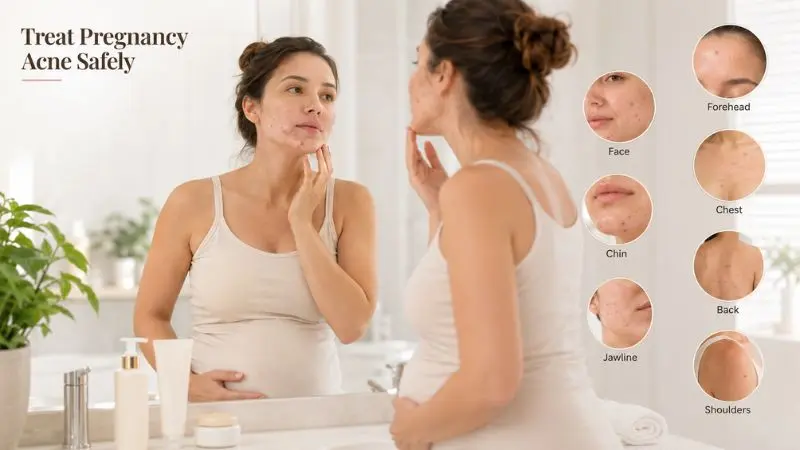
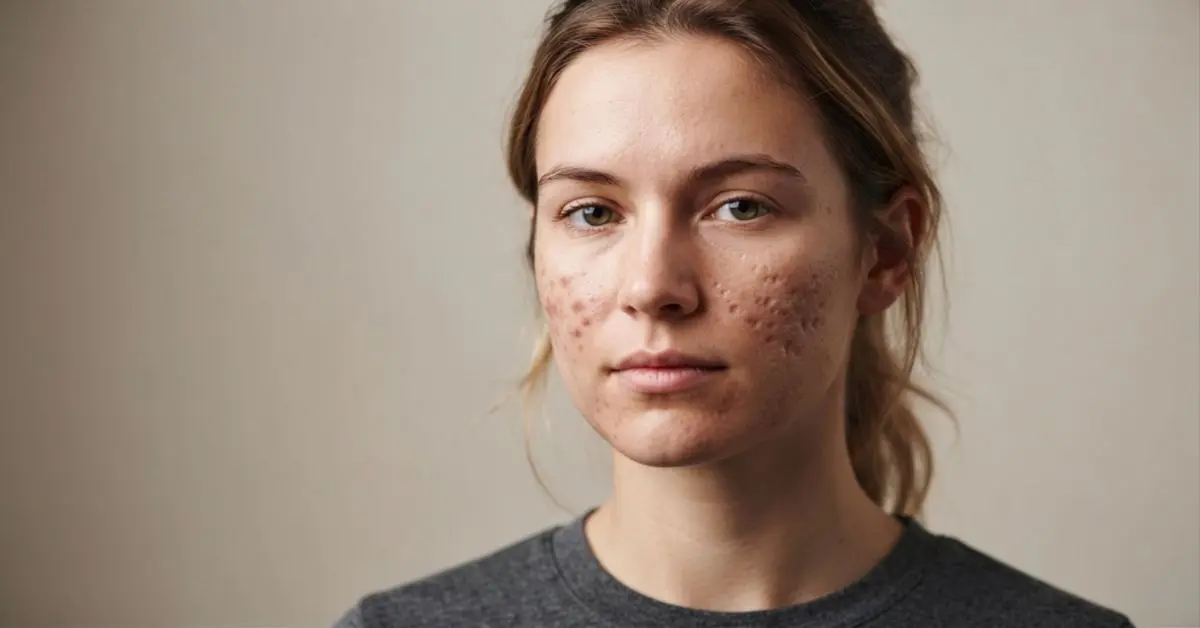
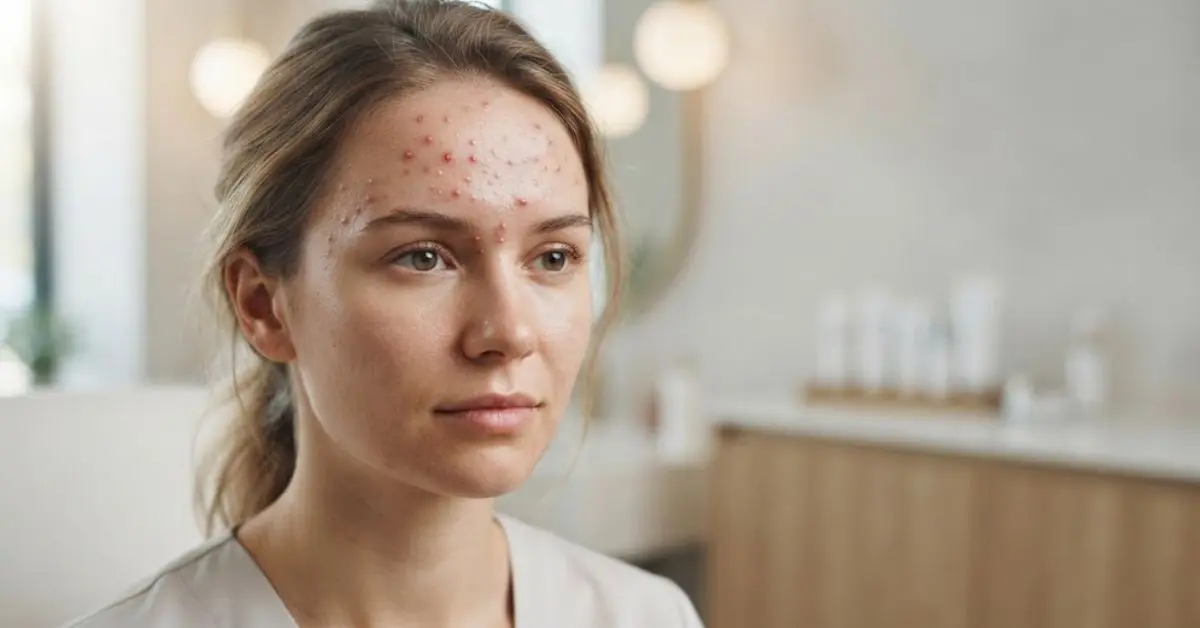
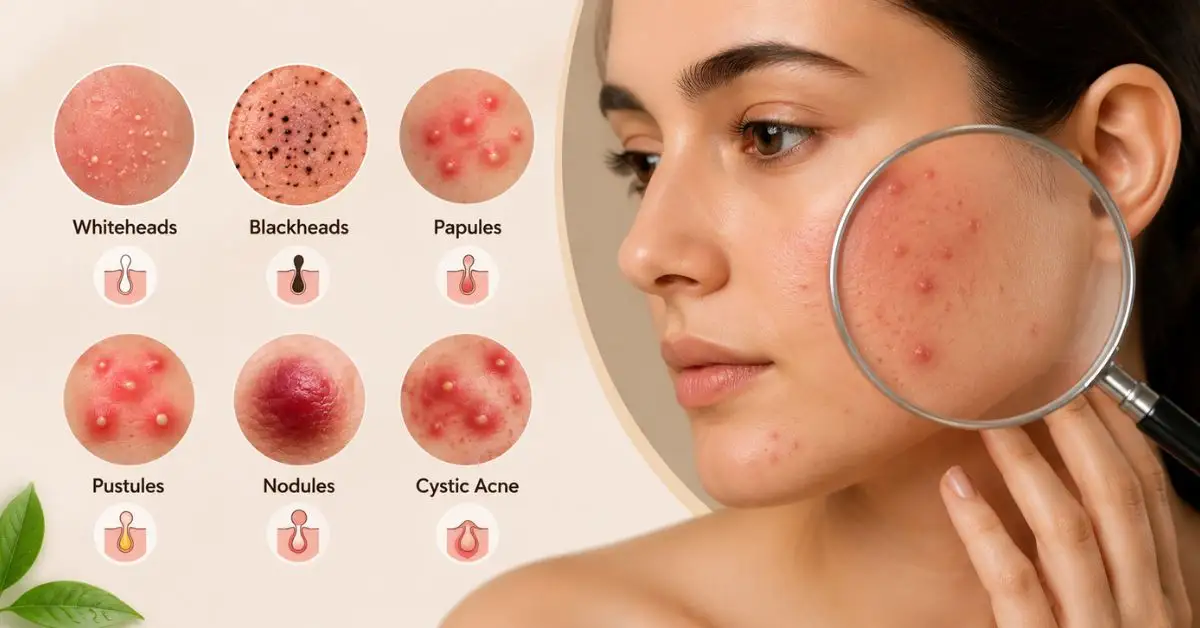
Pregnancy acne is acne that develops during pregnancy due to hormonal changes. It often appears as whiteheads, blackheads, inflamed pimples, or deeper, more painful cystic breakouts.
Some women develop acne for the first time during pregnancy, while others notice that their existing acne becomes worse. These breakouts most commonly affect the:
- Face
- Chin
- Jawline
- Forehead
- Chest
- Back
- Shoulders
Pregnancy acne is not dangerous, but it can affect confidence and emotional well-being. Fortunately, it usually improves after hormone levels return to normal following childbirth.
What Causes Pregnancy Acne?
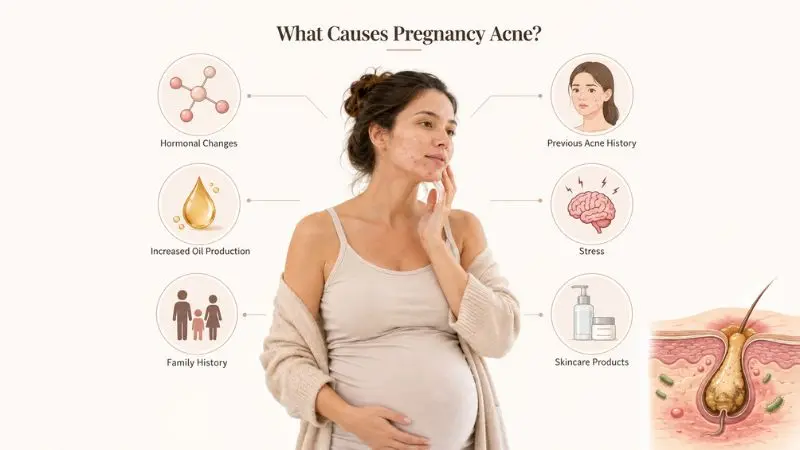
The primary reason for pregnancy acne is the increase in pregnancy hormones.
During pregnancy, hormone levels—especially progesterone—rise significantly. These hormonal changes stimulate the sebaceous (oil) glands, causing them to produce more sebum.
Sebum is essential for keeping the skin moisturized, but excessive oil can mix with dead skin cells and clog pores. Once a pore becomes blocked, bacteria naturally present on the skin can multiply, leading to inflammation and acne.
Several factors may contribute to pregnancy acne, including:
Hormonal Changes
Hormonal fluctuations are the leading cause of pregnancy acne. Increased progesterone often leads to excess oil production, making breakouts more likely.
Increased Oil Production
Pregnancy can make your skin noticeably oilier than usual. Excess oil creates the ideal environment for clogged pores.
Family History
If your mother or sisters experienced pregnancy acne, you may also be more likely to develop it.
Previous Acne History
Women who had acne before pregnancy or experienced breakouts around their menstrual cycle have a higher chance of developing pregnancy acne.
Stress
Pregnancy can be stressful both physically and emotionally. Although stress doesn’t directly cause acne, it may worsen existing breakouts by increasing inflammation and affecting hormone balance.
Skincare Products
Heavy or pore-clogging cosmetics and skincare products may contribute to pregnancy breakouts, especially if they are not labeled non-comedogenic.
When Does Pregnancy Acne Usually Start?
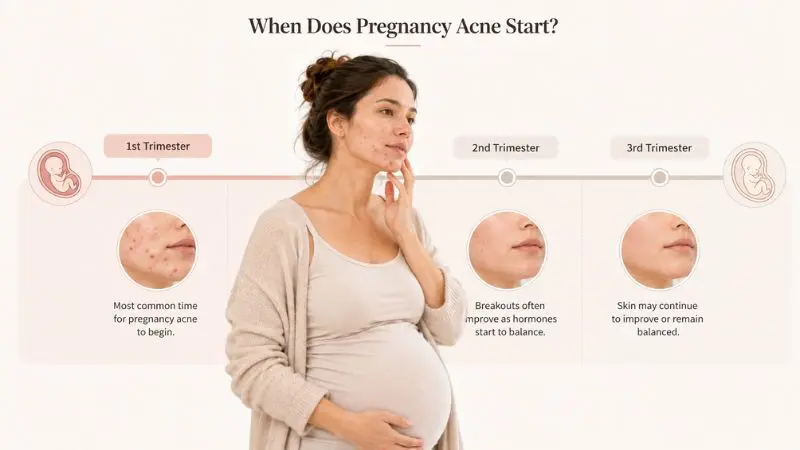
Pregnancy acne most often develops during the first trimester, when hormone levels change rapidly.
For some women, breakouts continue into the second trimester, while others notice clearer skin as their hormones begin to stabilize.
Every pregnancy is different. Some women experience only a few pimples, while others develop more persistent acne that lasts until after delivery.
Is Pregnancy Acne Normal?
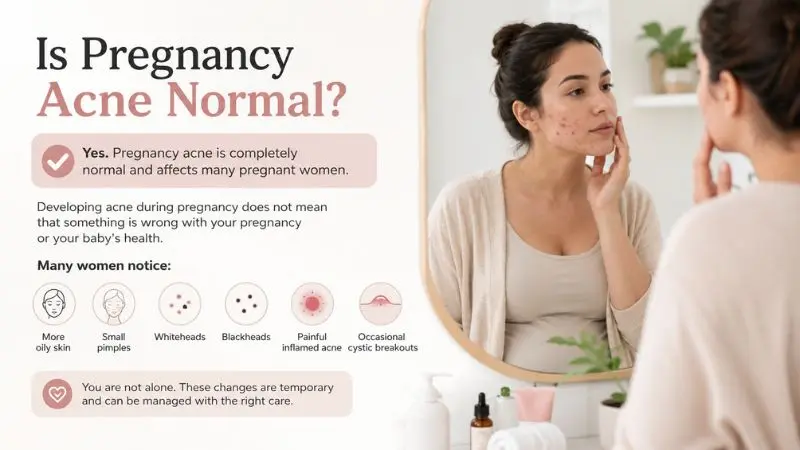
Yes. Pregnancy acne is completely normal and affects many pregnant women.
Developing acne during pregnancy does not mean that something is wrong with your pregnancy or your baby’s health.
Many women notice:
- More oily skin
- Small pimples
- Whiteheads
- Blackheads
- Painful inflamed acne
- Occasional cystic breakouts
These changes are usually temporary and often improve after childbirth when hormone levels return to their normal balance.
What Does Pregnancy Acne Look Like?
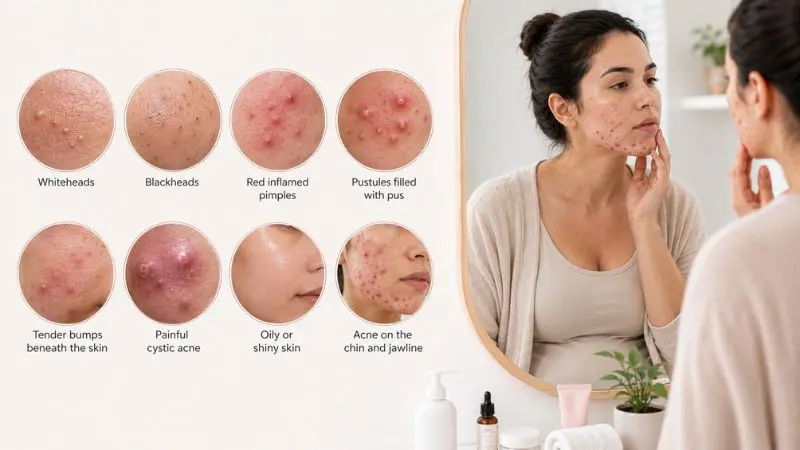
Pregnancy acne can vary from mild to severe.
Common signs include:
- Whiteheads
- Blackheads
- Red inflamed pimples
- Pustules filled with pus
- Tender bumps beneath the skin
- Painful cystic acne
- Oily or shiny skin
- Acne on the chin and jawline
Hormonal acne often appears around the lower face, particularly along the jawline and chin.
Who Is More Likely to Get Pregnancy Acne?
Although anyone can develop pregnancy acne, certain factors increase the likelihood:
- A history of acne before pregnancy
- Hormonal acne before menstrual periods
- Oily skin
- A family history of acne
- Carrying high hormone sensitivity
- Using heavy skincare or makeup products
- High stress levels
Having one or more of these risk factors does not guarantee you’ll develop acne, but it may increase your chances.
Can Pregnancy Acne Predict Your Baby’s Gender?
One of the most common pregnancy myths is that acne means you’re carrying a girl because “she is taking your beauty.”
There is no scientific evidence to support this belief.
Pregnancy acne is caused by hormonal changes and increased oil production—not by your baby’s gender. Whether you’re expecting a boy or a girl, hormonal shifts can trigger breakouts.
Safe Treatments for Pregnancy Acne
Treating acne during pregnancy requires extra care because not every acne medication is considered safe. Some ingredients commonly used to fight acne can potentially affect a developing baby, so choosing pregnancy-safe skincare is essential.
The goal is not to eliminate every pimple overnight. Instead, focus on reducing breakouts safely while protecting your skin barrier.
Always speak with your healthcare provider or dermatologist before starting any new acne treatment during pregnancy, especially if you have moderate or severe acne.
Pregnancy-Safe Acne Treatments
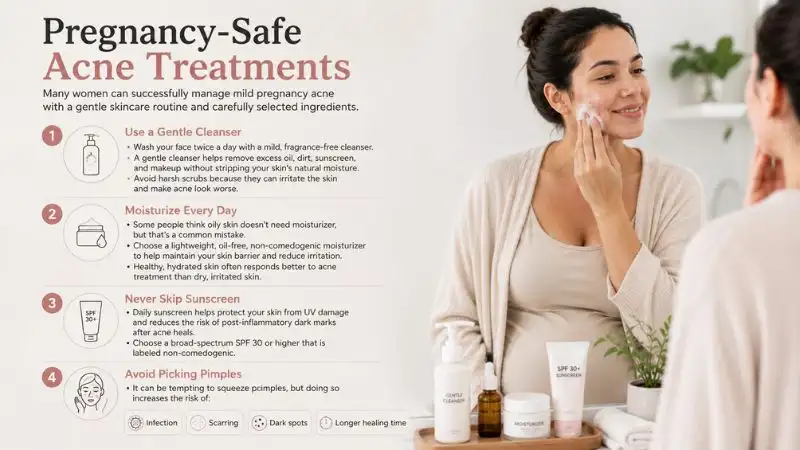
Many women can successfully manage mild pregnancy acne with a gentle skincare routine and carefully selected ingredients.
1. Use a Gentle Cleanser
Wash your face twice a day with a mild, fragrance-free cleanser.
A gentle cleanser helps remove excess oil, dirt, sunscreen, and makeup without stripping your skin’s natural moisture.
Avoid harsh scrubs because they can irritate the skin and make acne look worse.
2. Moisturize Every Day
Some people think oily skin doesn’t need moisturizer, but that’s a common mistake.
Choose a lightweight, oil-free, non-comedogenic moisturizer to help maintain your skin barrier and reduce irritation.
Healthy, hydrated skin often responds better to acne treatment than dry, irritated skin.
3. Never Skip Sunscreen
Daily sunscreen helps protect your skin from UV damage and reduces the risk of post-inflammatory dark marks after acne heals.
Choose a broad-spectrum SPF 30 or higher that is labeled non-comedogenic.
4. Avoid Picking Pimples
It can be tempting to squeeze pimples, but doing so increases the risk of:
- Infection
- Scarring
- Dark spots
- Longer healing time
Allow blemishes to heal naturally whenever possible.
Pregnancy-Safe Skincare Ingredients
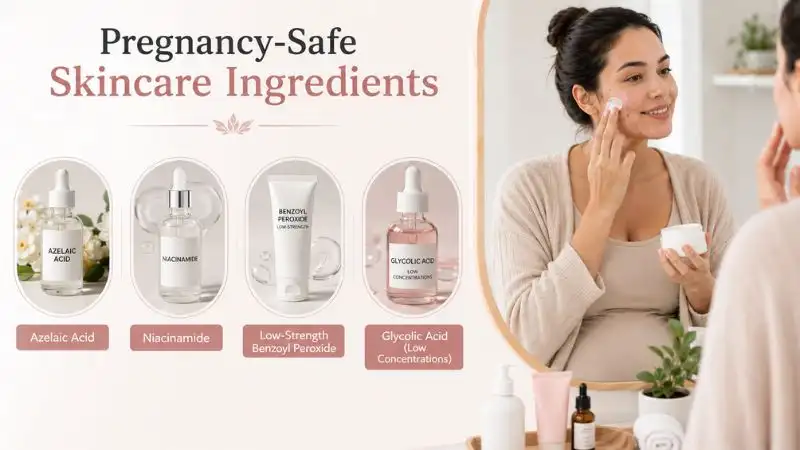
Several ingredients are generally considered safer than many traditional acne medications, but individual situations differ. Check with your healthcare provider before adding new products during pregnancy.
Azelaic Acid
Azelaic acid is widely used to help reduce acne, redness, and post-acne marks.
It may help:
- Reduce inflammation
- Unclog pores
- Fade acne marks
- Improve overall skin texture
It is often recommended by dermatologists as one option during pregnancy because of its safety profile, but personal medical advice is still important.
Niacinamide
Niacinamide is a gentle ingredient that helps strengthen the skin barrier and reduce excess oil.
Benefits include:
- Calms redness
- Supports the skin barrier
- Helps regulate oil production
- Improves uneven skin tone
It can be a useful addition to a pregnancy-safe skincare routine.
Low-Strength Benzoyl Peroxide
Some healthcare providers may recommend limited use of low-strength benzoyl peroxide for certain patients.
Because recommendations vary depending on your health history and pregnancy, only use it after discussing it with your doctor.
Glycolic Acid (Low Concentrations)
Products containing lower concentrations of glycolic acid are sometimes used to improve skin texture and clogged pores.
Use only as advised by your healthcare provider and avoid over-exfoliating.
Ingredients to Avoid During Pregnancy
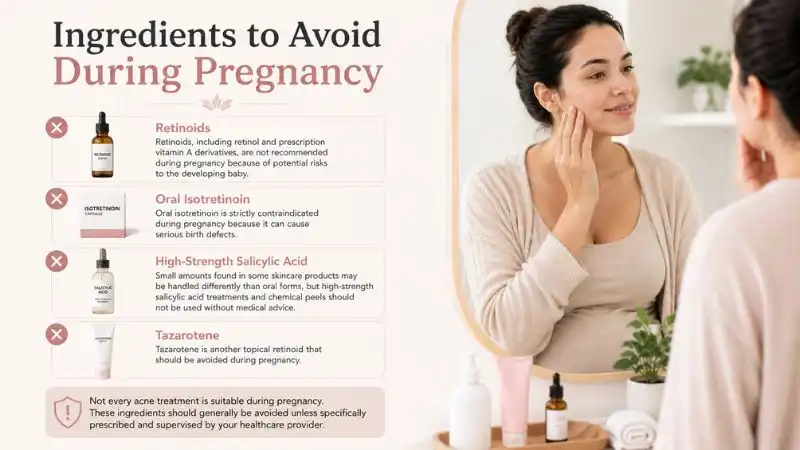
Not every acne treatment is suitable during pregnancy.
These ingredients should generally be avoided unless specifically prescribed and supervised by your healthcare provider.
Retinoids
Retinoids, including retinol and prescription vitamin A derivatives, are not recommended during pregnancy because of potential risks to the developing baby.
Always stop using retinoid products if you become pregnant unless your doctor tells you otherwise.
Oral Isotretinoin
Oral isotretinoin is strictly contraindicated during pregnancy because it can cause serious birth defects.
Anyone taking isotretinoin should follow their prescribing program’s pregnancy prevention requirements.
High-Strength Salicylic Acid
Small amounts found in some skincare products may be handled differently than oral forms, but high-strength salicylic acid treatments and chemical peels should not be used without medical advice.
If you’re unsure about a product, ask your doctor before using it.
Tazarotene
Tazarotene is another topical retinoid that should be avoided during pregnancy.
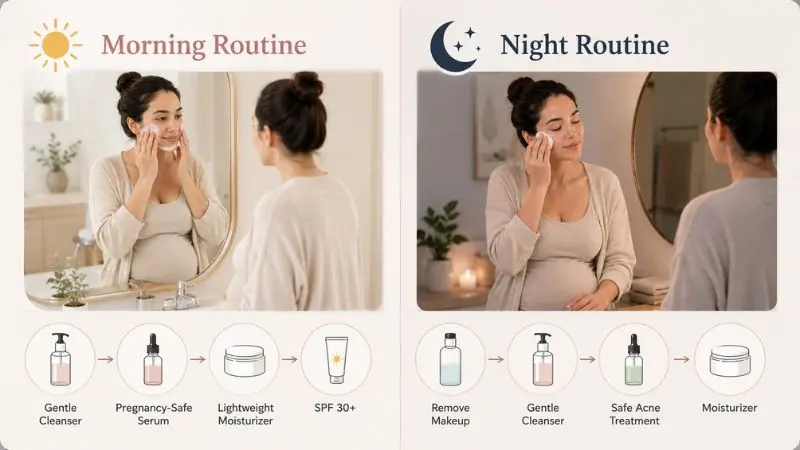
A Simple Pregnancy-Safe Morning Skincare Routine
A consistent routine is more effective than using many products at once.
Step 1
Wash your face with a gentle cleanser.
Step 2
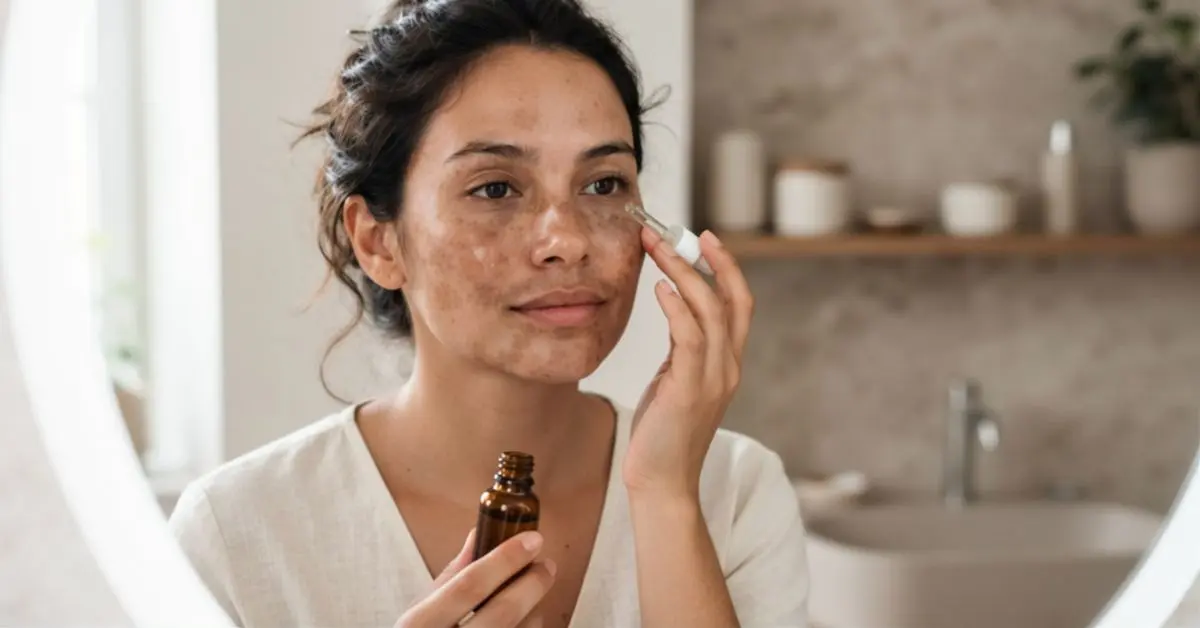
Apply a pregnancy-safe serum if recommended by your dermatologist, such as niacinamide or azelaic acid.
Step 3
Use a lightweight moisturizer.
Step 4
Finish with a broad-spectrum SPF 30 or higher every morning.
Pregnancy-Safe Night Routine
Step 1
Remove makeup completely.
Step 2
Cleanse gently.
Step 3
Apply your pregnancy-safe acne treatment if recommended by your healthcare provider.
Step 4
Seal in moisture with a gentle moisturizer.
Common Skincare Mistakes That Can Make Pregnancy Acne Worse
Many breakouts become worse because of daily habits rather than hormones alone.
Avoid these common mistakes:
- Washing your face more than twice a day.
- Using harsh scrubs or cleansing brushes.
- Sleeping with makeup on.
- Picking or popping pimples.
- Skipping moisturizer.
- Trying multiple acne products at the same time.
- Using products that are not pregnancy-safe.
- Forgetting sunscreen.
Making small changes to your routine can help your skin heal while reducing irritation.
Home Remedies for Pregnancy Acne
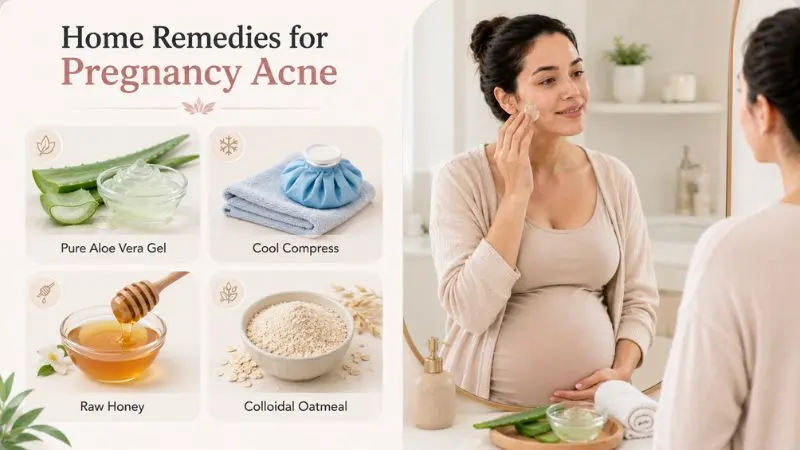
Natural remedies may help soothe mild pregnancy acne, but they should not replace medical treatment for moderate or severe breakouts. Even natural ingredients can irritate sensitive skin, so always do a patch test before applying them to your face.
1. Pure Aloe Vera Gel
Aloe vera contains soothing compounds that may help calm irritated skin and reduce redness.
How to use:
- Apply a thin layer of pure aloe vera gel to clean skin.
- Leave it on for 15–20 minutes or overnight if your skin tolerates it.
- Use once daily.
2. Colloidal Oatmeal Mask
Oatmeal is known for its calming properties and may help reduce irritation caused by inflamed acne.
How to use:
- Mix colloidal oatmeal with water until it forms a smooth paste.
- Apply for 10–15 minutes.
- Rinse with lukewarm water.
3. Honey
Honey has natural moisturizing and soothing properties. While it is not a cure for acne, it may help support the skin barrier.
How to use:
- Apply a thin layer of raw honey.
- Leave for 10–15 minutes.
- Rinse gently.
4. Cool Compress
If acne becomes swollen or painful, place a clean, cool compress on the area for a few minutes to help reduce discomfort.
Natural Remedies to Avoid
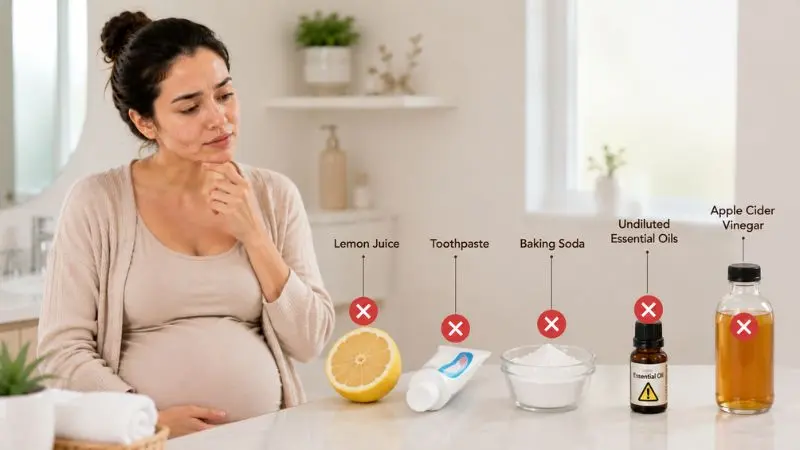
Some DIY treatments found online may do more harm than good.
Avoid applying:
- Lemon juice
- Toothpaste
- Baking soda
- Undiluted essential oils
- Apple cider vinegar directly on the skin
These remedies can irritate the skin, damage the skin barrier, and sometimes worsen acne.
Can Diet Help Pregnancy Acne?

No single food causes acne in everyone. However, eating a balanced diet supports overall skin health and may help some people manage breakouts.
Consider including:
- Fresh vegetables
- Fruits rich in vitamin C
- Whole grains
- Lean protein
- Healthy fats from nuts, seeds, and fish (when pregnancy-safe)
- Plenty of water
Limiting highly processed foods and sugary snacks may benefit overall health, but diet alone is not a guaranteed acne treatment.
Daily Habits That May Help Prevent Pregnancy Acne
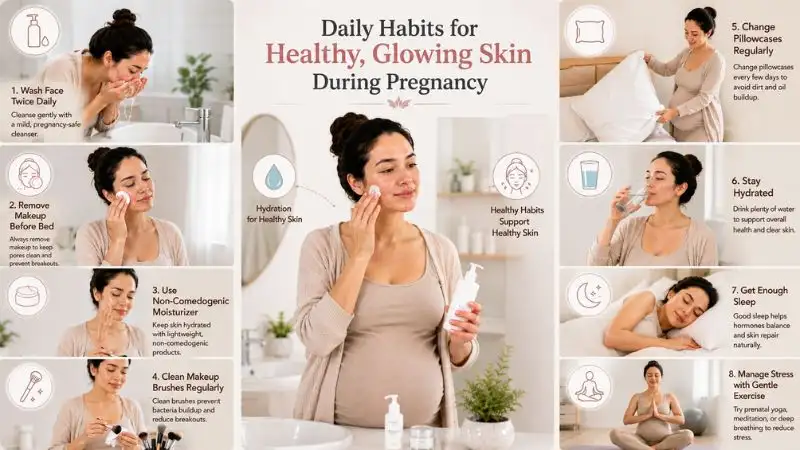
Healthy habits can make a noticeable difference over time.
Try to:
- Wash your face twice daily.
- Remove makeup before sleeping.
- Choose non-comedogenic skincare and makeup.
- Clean makeup brushes regularly.
- Change pillowcases every few days.
- Avoid touching your face unnecessarily.
- Stay hydrated.
- Get enough sleep whenever possible.
- Manage stress through gentle exercise, meditation, or deep breathing if approved by your healthcare provider.
Consistency matters more than using many products.
When Should You See a Dermatologist?
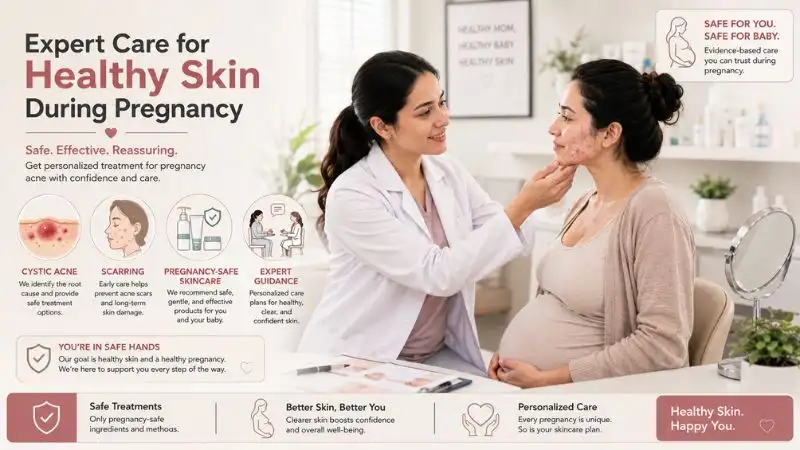
Mild pregnancy acne often improves with a gentle skincare routine. However, you should speak with your healthcare provider or dermatologist if:
- Acne becomes painful or cystic.
- Breakouts cover large areas of your body.
- Acne leaves scars.
- Over-the-counter skincare is not helping.
- You are unsure whether a product is safe during pregnancy.
- Acne is affecting your emotional well-being or confidence.
A dermatologist can recommend treatments that balance effectiveness with pregnancy safety.
Frequently Asked Questions
Does pregnancy acne mean I’m having a girl?
No. This is a common myth. There is no scientific evidence that acne predicts your baby’s gender.
When does pregnancy acne go away?
For many women, acne improves after hormone levels return to normal following childbirth. However, the timeline varies from person to person.
Can I use retinol during pregnancy?
No. Retinol and other topical retinoids are generally not recommended during pregnancy because of potential risks to the developing baby.
Can I use salicylic acid while pregnant?
Some low-strength topical products may be appropriate in certain situations, but you should always check with your healthcare provider before using salicylic acid during pregnancy.
Is pregnancy acne permanent?
No. Pregnancy acne is usually temporary and often improves after pregnancy, although some women may continue to experience acne if other factors are involved.
Final Takeaway
Pregnancy acne is a common and completely normal skin concern caused mainly by hormonal changes that increase oil production. While breakouts can be frustrating, many women can manage mild acne with a gentle skincare routine, pregnancy-safe ingredients, and healthy daily habits.
Avoid using acne medications that are not considered safe during pregnancy, and always discuss new treatments with your healthcare provider before starting them.
Remember, your skin may not clear overnight. Consistent care, patience, and safe skincare choices can help you protect both your skin and your baby’s health

Leave a Reply