
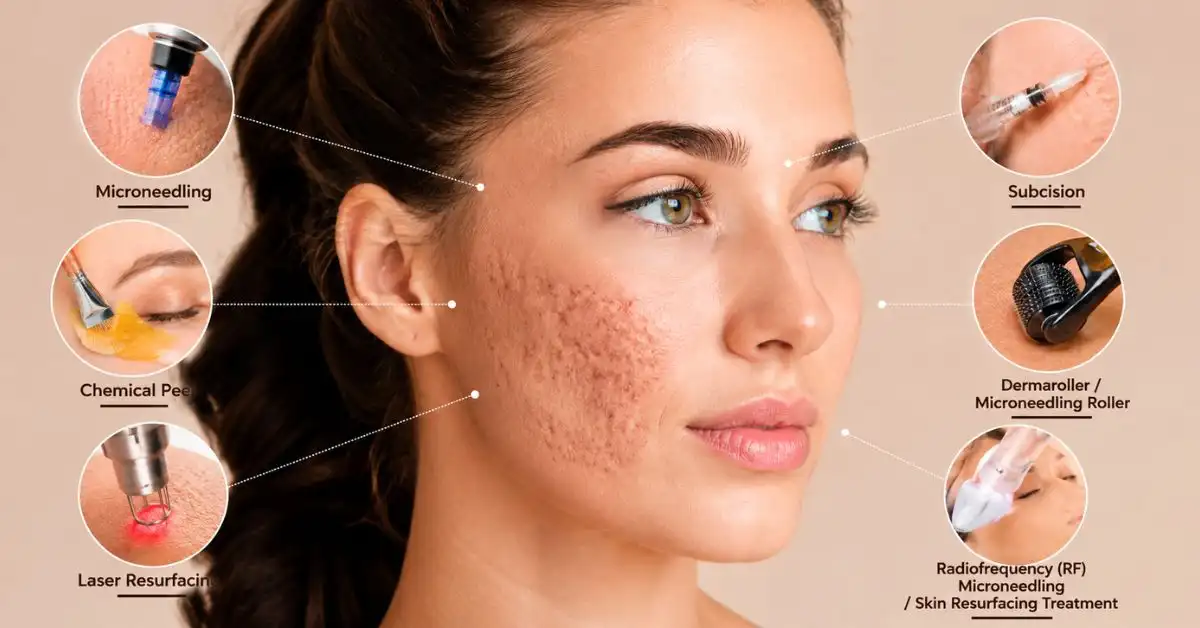
Acne may eventually disappear, but the scars it leaves behind can remain for months or even years. Many people struggle with uneven skin texture, dark marks, and visible indentations long after active breakouts have healed. If you’ve ever felt frustrated looking in the mirror and wondering how to treat acne scars effectively, you’re not alone.
The good news is that modern skincare and dermatological treatments offer several effective solutions. If you’re wondering how to treat acne scars, the answer depends on the type of scars you have. Whether you’re dealing with post-inflammatory hyperpigmentation, rolling scars, boxcar scars, or ice-pick scars, there are proven methods that can significantly improve your skin’s appearance and overall skin texture.
In this guide, you’ll learn how to treat acne scars using evidence-based treatments, understand which methods work best for different scar types, and discover how to support your skin’s natural healing process.
How to Treat Acne Scars: Understanding Your Options
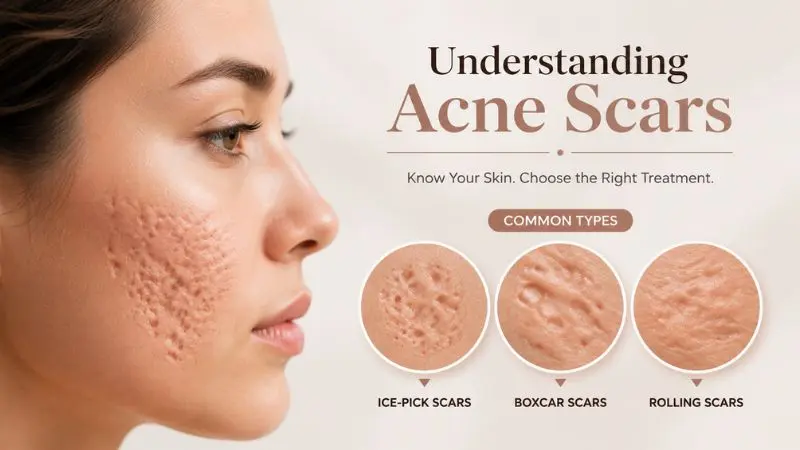
Before choosing a treatment, it’s important to understand what type of acne scars you’re dealing with.
Acne scars develop when inflammation damages the skin’s deeper layers. Understanding this process can help you learn how to treat acne scars more effectively. During healing, the body produces collagen. Too little collagen can create depressed scars, while too much collagen can result in raised scars.
Common Types of Acne Scars
Atrophic Scars
These scars appear as depressions in the skin.
Examples include:
- Ice-pick scars
- Boxcar scars
- Rolling scars
Hypertrophic and Keloid Scars
These scars are raised above the skin surface due to excess collagen production.
Post-Inflammatory Hyperpigmentation (PIH)
Although technically not a true scar, these dark spots often appear after acne heals and can take months to fade.
Understanding your scar type is an important first step in learning how to treat acne scars, as it helps determine which treatment is most likely to produce visible improvements.
Acne Scar Treatment Comparison Table
| Treatment Method | Best For | Recovery Time |
| Retinoids | Mild scars and uneven texture | Minimal |
| Chemical Peels | Hyperpigmentation and shallow scars | 3–7 days |
| Microneedling | Rolling and boxcar scars | 1–3 days |
| Laser Resurfacing | Moderate to severe scars | 5–14 days |
| Subcision | Rolling scars | 3–7 days |
| Dermal Fillers | Depressed scars | 1–2 days |
| Sunscreen & Daily Care | Prevention and maintenance | None |
1. Use Retinoids to Stimulate Collagen Production
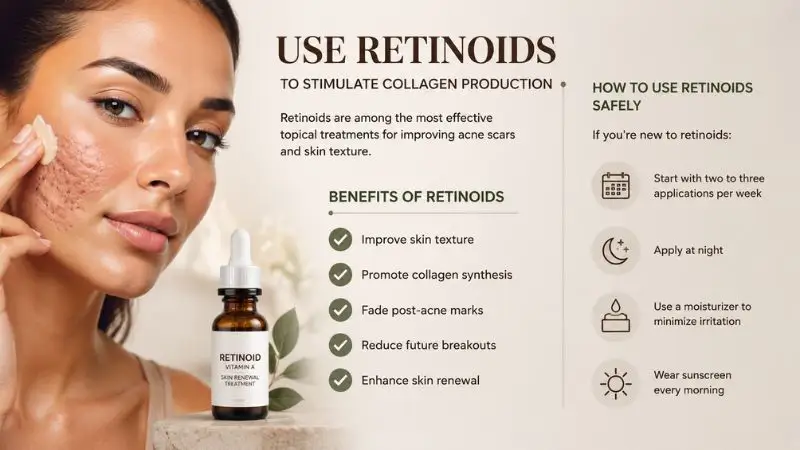
Retinoids are among the most effective topical treatments for improving acne scars and skin texture.
Derived from vitamin A, retinoids work by increasing cell turnover and stimulating collagen production. Over time, they can help smooth uneven skin and reduce the appearance of shallow scars.
Benefits of Retinoids
- Improve skin texture
- Promote collagen synthesis
- Fade post-acne marks
- Reduce future breakouts
- Enhance skin renewal
How to Use Retinoids Safely
If you’re new to retinoids:
- Start with two to three applications per week
- Apply at night
- Use a moisturizer to minimize irritation
- Wear sunscreen every morning
Results typically become noticeable after several months of consistent use.
2. Chemical Peels for Smoother Skin
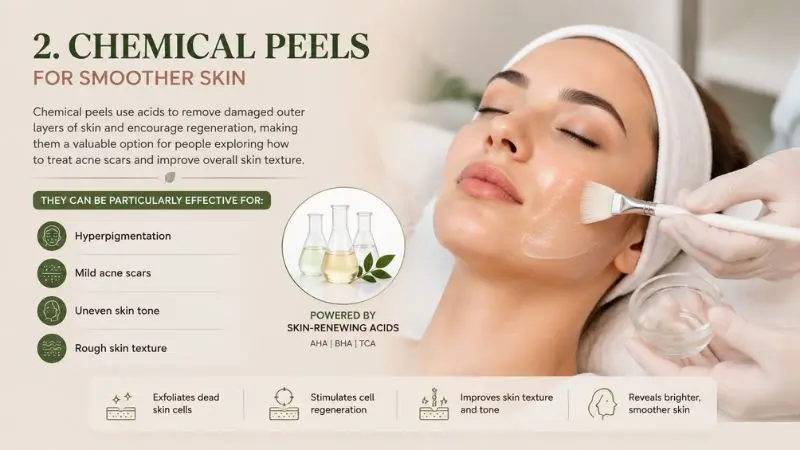
Chemical peels use acids to remove damaged outer layers of skin and encourage regeneration, making them a valuable option for people exploring how to treat acne scars and improve overall skin texture.
They can be particularly effective for:
- Hyperpigmentation
- Mild acne scars
- Uneven skin tone
- Rough skin texture
Common Types of Chemical Peels
Glycolic Acid Peels
Ideal for beginners and mild discoloration.
Salicylic Acid Peels
Helpful for acne-prone skin because they penetrate oil-filled pores.
TCA Peels
Often used by professionals to target deeper scars and pigmentation concerns.
What to Expect
After treatment, mild redness and peeling may occur. New skin gradually appears smoother and more even.
Multiple sessions are often necessary for significant improvement.
3. Microneedling: One of the Most Popular Acne Scar Treatments
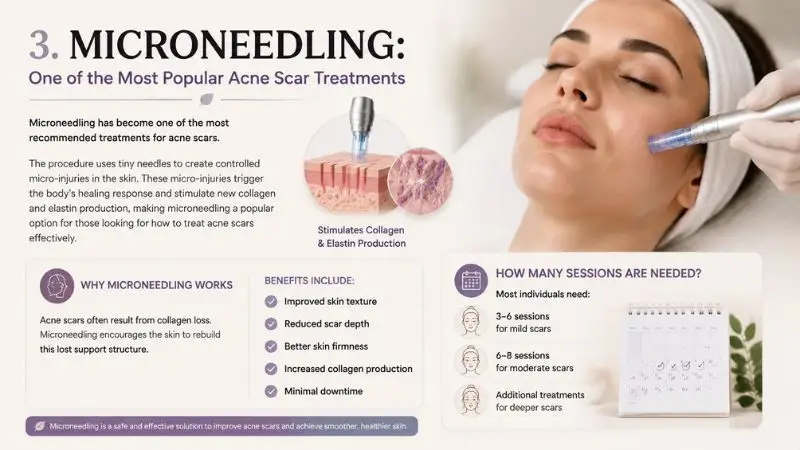
Microneedling has become one of the most recommended treatments for acne scars.
The procedure uses tiny needles to create controlled micro-injuries in the skin. These micro-injuries trigger the body’s healing response and stimulate new collagen and elastin production, making microneedling a popular option for those looking for how to treat acne scars effectively.
Why Microneedling Works
Acne scars often result from collagen loss. Microneedling encourages the skin to rebuild this lost support structure.
Benefits include:
- Improved skin texture
- Reduced scar depth
- Better skin firmness
- Increased collagen production
- Minimal downtime
How Many Sessions Are Needed?
Most individuals need:
- 3–6 sessions for mild scars
- 6–8 sessions for moderate scars
- Additional treatments for deeper scars
Results continue improving for several months after treatment.
4. Laser Resurfacing for Moderate to Severe Acne Scars
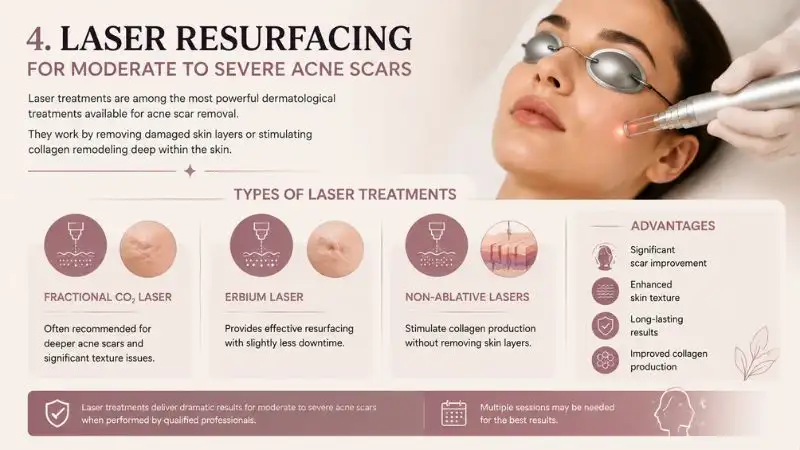
Laser treatments are among the most powerful dermatological treatments available for acne scar removal.
They work by removing damaged skin layers or stimulating collagen remodeling deep within the skin.
Types of Laser Treatments
Fractional CO2 Laser
Often recommended for deeper acne scars and significant texture issues.
Erbium Laser
Provides effective resurfacing with slightly less downtime.
Non-Ablative Lasers
Stimulate collagen production without removing skin layers.
Advantages
- Significant scar improvement
- Enhanced skin texture
- Long-lasting results
- Improved collagen production
Considerations
Laser treatments typically require consultation with a dermatologist and may involve downtime depending on treatment intensity.
5. Subcision for Rolling Acne Scars
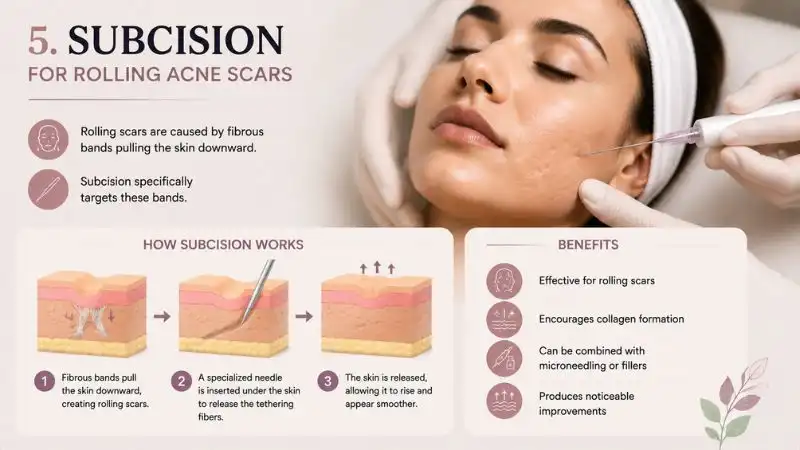
Rolling scars are caused by fibrous bands pulling the skin downward.
Subcision specifically targets these bands.
How Subcision Works
A dermatologist inserts a specialized needle beneath the skin to release the tethering fibers.
This allows the skin to rise and appear smoother.
Benefits
- Effective for rolling scars
- Encourages collagen formation
- Can be combined with microneedling or fillers
- Produces noticeable improvements
Recovery
Temporary bruising and swelling are common but usually resolve within a week. For many people seeking the best treatment for acne scars, subcision is an effective option for improving rolling scars.
6. Dermal Fillers for Immediate Improvement
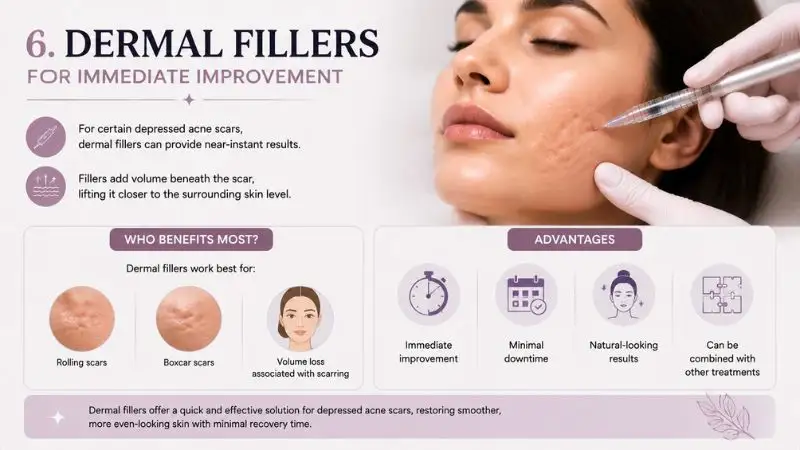
For certain depressed acne scars, dermal fillers can provide near-instant results.
Fillers add volume beneath the scar, lifting it closer to the surrounding skin level.
Who Benefits Most?
Dermal fillers work best for:
- Rolling scars
- Boxcar scars
- Volume loss associated with scarring
Advantages
- Immediate improvement
- Minimal downtime
- Natural-looking results
- Can be combined with other treatments
Keep in mind that most fillers are temporary and require maintenance treatments.
7. Daily Sun Protection and Skincare Maintenance
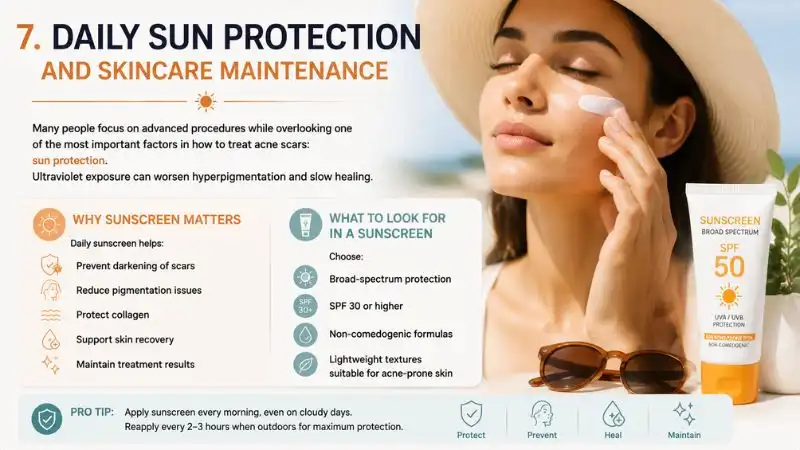
Many people focus on advanced procedures while overlooking one of the most important factors in how to treat acne scars: sun protection.
Ultraviolet exposure can worsen hyperpigmentation and slow healing.
Why Sunscreen Matters
Daily sunscreen helps:
- Prevent darkening of scars
- Reduce pigmentation issues
- Protect collagen
- Support skin recovery
- Maintain treatment results
What to Look for in a Sunscreen
Choose:
- Broad-spectrum protection
- SPF 30 or higher
- Non-comedogenic formulas
- Lightweight textures suitable for acne-prone skin
Consistent sunscreen use is one of the simplest yet most powerful ways to improve long-term outcomes.
Lifestyle Habits That Support Acne Scar Healing
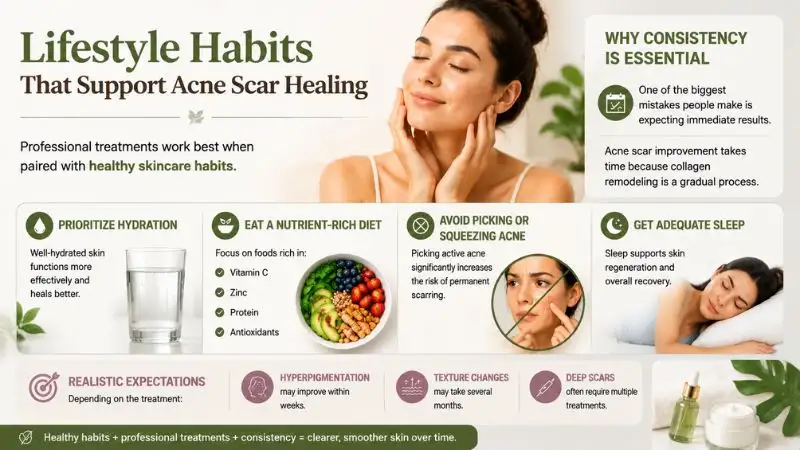
Professional treatments work best when paired with healthy skincare habits.
Prioritize Hydration
Well-hydrated skin functions more effectively and heals better.
Eat a Nutrient-Rich Diet
Focus on foods rich in:
- Vitamin C
- Zinc
- Protein
- Antioxidants
These nutrients support collagen production and skin repair.
Avoid Picking or Squeezing Acne
Picking active acne significantly increases the risk of permanent scarring.
Get Adequate Sleep
Sleep supports skin regeneration and overall recovery.
Why Consistency Is Essential
One of the biggest mistakes people make is expecting immediate results.
Acne scar improvement takes time because collagen remodeling is a gradual process.
Realistic Expectations
Depending on the treatment:
- Hyperpigmentation may improve within weeks
- Texture changes may take several months
- Deep scars often require multiple treatments
Consistency matters more than perfection.
Following a treatment plan regularly gives your skin the best chance to heal and improve.
Can Acne Scars Be Removed Completely?
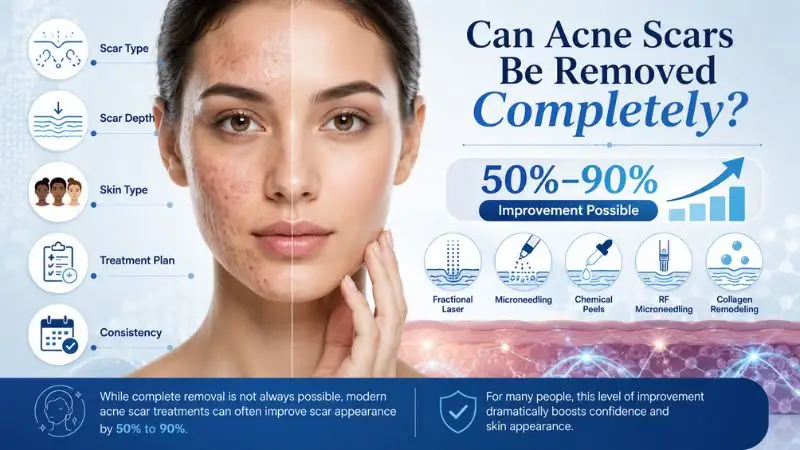
This is one of the most common questions dermatologists hear.
The answer depends on several factors:
- Scar type
- Scar depth
- Skin type
- Treatment approach
- Consistency
While complete removal is not always possible, modern acne scar treatments can often improve scar appearance by 50% to 90%.
For many people, this level of improvement dramatically boosts confidence and skin appearance.
When to See a Dermatologist
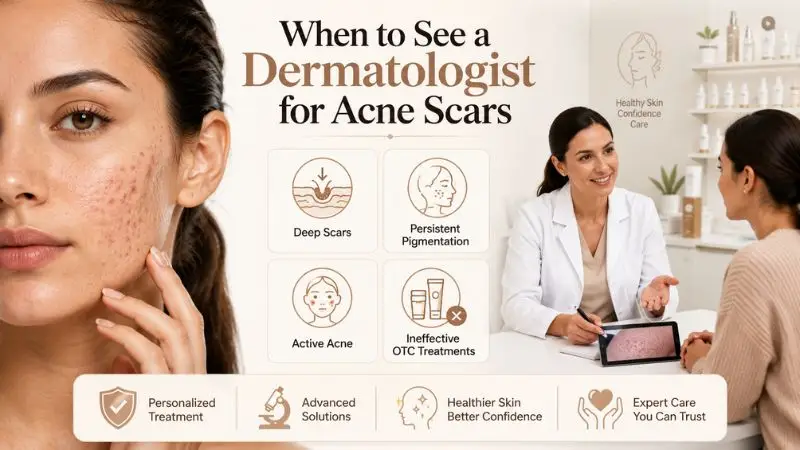
Consider professional evaluation if:
- Scars are deep or widespread
- Over-the-counter products aren’t helping
- Hyperpigmentation persists for months
- Acne is still active
- Scars affect your confidence or quality of life
A dermatologist can create a personalized treatment plan and recommend the most effective approach for how to treat acne scars based on your specific skin concerns.
Frequently Asked Questions
What is the best treatment for acne scars?
There is no single best treatment for everyone. Microneedling, laser resurfacing, subcision, and retinoids are among the most effective options depending on scar type.
How long does it take to see results?
Most treatments require several weeks to months. Collagen remodeling is a gradual process.
Can acne scars disappear naturally?
Some post-inflammatory hyperpigmentation may fade over time. However, deeper acne scars usually require targeted treatment.
Is microneedling better than chemical peels?
Microneedling generally performs better for textural acne scars, while chemical peels are often more effective for discoloration and mild surface irregularities.
Does sunscreen help acne scars?
Yes. Daily sunscreen prevents darkening of scars and supports overall skin healing.
Final Thoughts
Learning how to treat acne scars starts with understanding your scar type and choosing the right treatment strategy. Whether you use retinoids, chemical peels, microneedling, laser resurfacing, subcision, or fillers, consistency remains the key to achieving visible improvements.
Acne scars can be challenging, but effective solutions exist. With patience, proper skincare, sun protection, and evidence-based treatments, smoother and healthier-looking skin is possible.
If you’re unsure where to start, you can get a personalized skincare routine and treatment recommendations using the GlowVixa Skin Analyzer tool. It can help identify your skin concerns and guide you toward products and treatments that best suit your unique skin needs while helping you understand how to treat acne scars more effectively.




Leave a Reply