

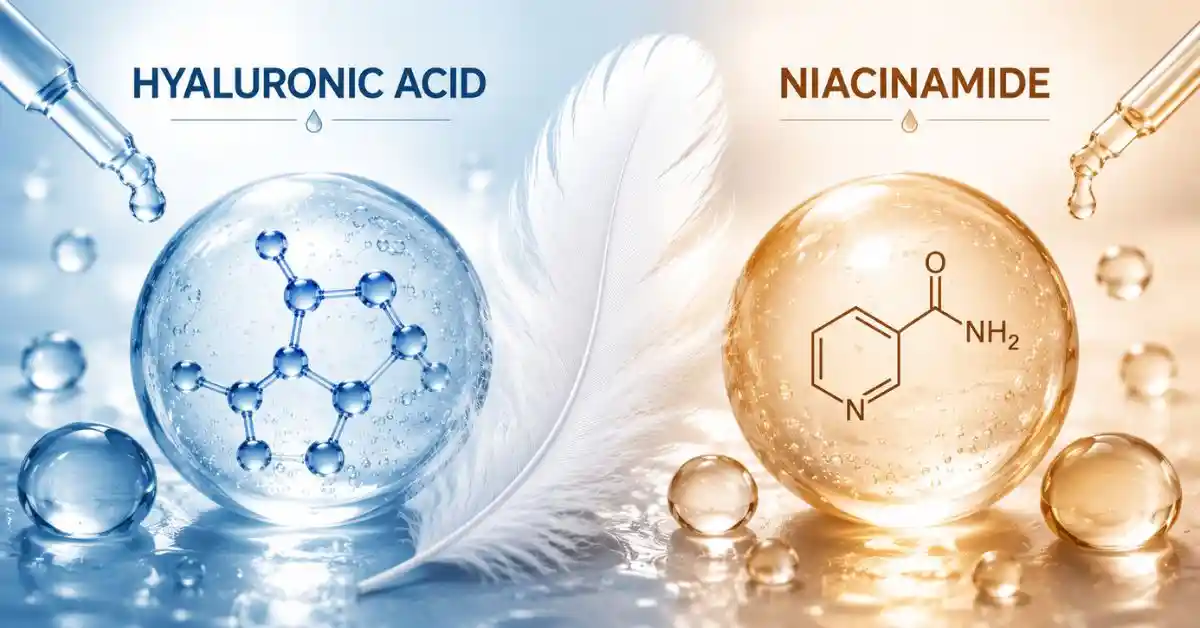
Skincare has become an important part of daily life because people want healthy, smooth, and glowing skin. Many skincare ingredients promise great results, but two ingredients that have gained huge popularity are niacinamide and hyaluronic acid. These ingredients work in different ways, but together they can improve your skin’s overall appearance.
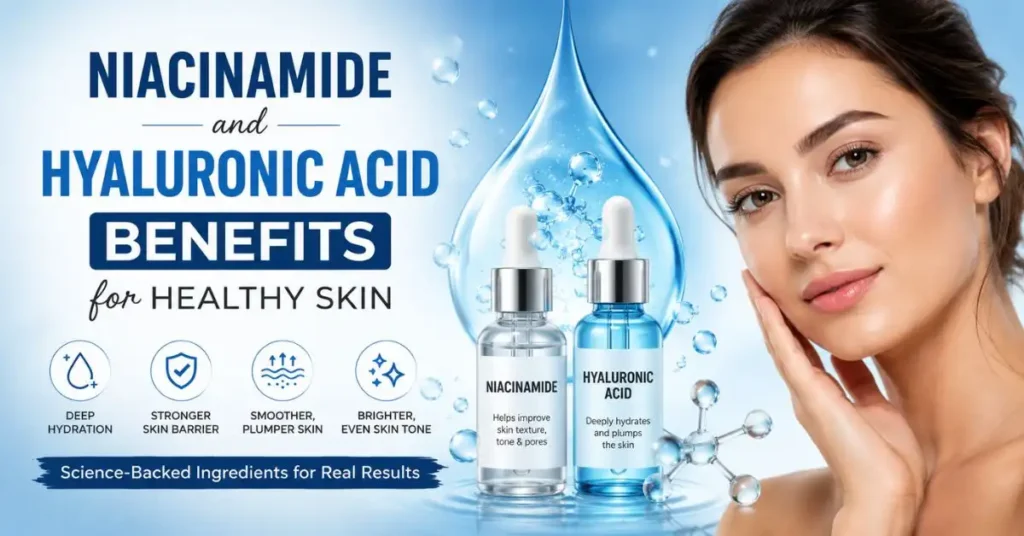
Niacinamide and hyaluronic acid benefits include better hydration, stronger skin barrier support, improved skin texture, and a healthier-looking glow. Niacinamide helps balance oil, calm redness, and improve uneven skin tone, while hyaluronic acid keeps the skin hydrated and soft.
Many people use these ingredients because they suit different skin types. Whether you have dry skin, oily skin, sensitive skin, or combination skin, these ingredients can become a useful part of your skincare routine when used correctly.
This guide explains the benefits, uses, differences, and best ways to include niacinamide and hyaluronic acid in your daily skincare routine.
What Are Niacinamide and Hyaluronic Acid?
Niacinamide and hyaluronic acid are popular skincare ingredients found in many serums, moisturizers, and skincare products. They have different properties, but they can work well together to support healthier skin.
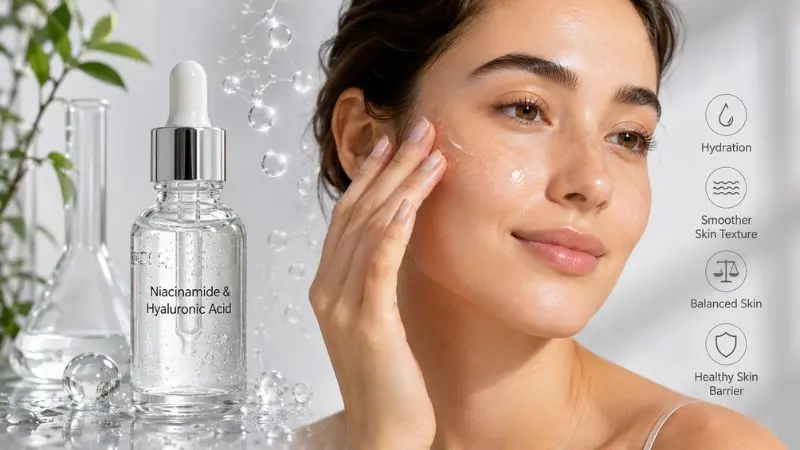
Niacinamide is a form of vitamin B3. It helps improve the skin barrier and supports a balanced skin condition. It is known for calming irritated skin, reducing excess oil, and improving the appearance of pores.
Hyaluronic acid is a powerful hydrating ingredient. It naturally exists in the body and helps the skin hold moisture. When applied to the skin, it helps make the skin look smoother, softer, and more refreshed.
Niacinamide Benefits
Niacinamide offers many benefits for different skin concerns.
- Helps reduce the appearance of uneven skin tone
- Supports a healthy skin barrier
- Controls extra oil production
- Helps calm visible redness
- Improves the look of enlarged pores
- Makes skin texture appear smoother
Niacinamide does not work by changing your skin overnight. It gives better results with regular use and proper skincare habits.
Hyaluronic Acid Benefits
Hyaluronic acid mainly focuses on hydration and moisture balance.
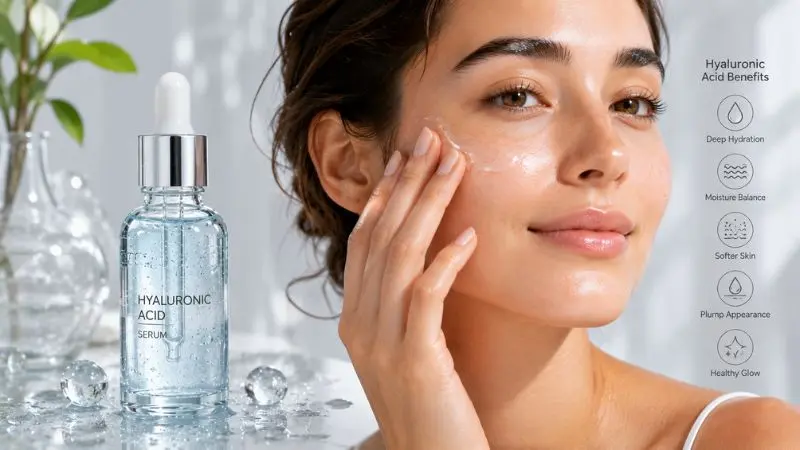
- Attracts and holds moisture in the skin
- Helps dry skin feel softer
- Makes skin appear plumper
- Reduces the feeling of tight and rough skin
- Supports a fresh and healthy appearance
Using both ingredients together creates a balanced skincare routine because one focuses on skin strength while the other focuses on hydration.
Niacinamide and Hyaluronic Acid Benefits for Skin Hydration
One of the biggest niacinamide and hyaluronic acid benefits is improved skin hydration. Healthy skin needs enough moisture to stay smooth and comfortable. When skin loses moisture, it may become dry, rough, and sensitive.
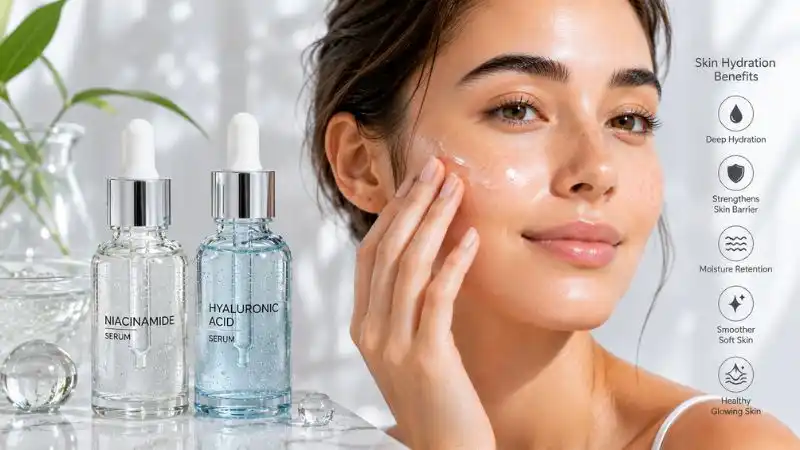
Hyaluronic acid works like a moisture magnet. It helps attract water and keeps it on the skin surface. This makes the skin look fresh and hydrated. People with dry skin often use hyaluronic acid because it helps reduce dryness and improves softness.
Niacinamide also supports hydration by improving the skin barrier. Niacinamide and hyaluronic acid benefits include better moisture retention because the skin barrier protects moisture inside the skin. When this barrier becomes weak, the skin can lose water easily.
Together, these ingredients create better moisture support.
How They Improve Skin Moisture

- Hyaluronic acid adds hydration to the skin
- Niacinamide helps prevent moisture loss
- Both ingredients support smoother skin texture
- They help skin look healthier and more balanced
A good skincare routine usually includes applying these ingredients on clean skin and following with a moisturizer to lock in hydration.
People with dry or dehydrated skin can especially benefit from using both ingredients regularly.
Niacinamide and Hyaluronic Acid Benefits for Acne-Prone Skin
Many people with acne-prone skin search for gentle ingredients that improve skin without causing extra irritation. The niacinamide and hyaluronic acid benefits make them useful choices for many people dealing with acne concerns.

Niacinamide helps control excess oil, which can contribute to clogged pores. It also helps calm the look of redness caused by skin irritation.
Hyaluronic acid does not directly treat acne, but it provides hydration without feeling heavy. Well-hydrated skin can support a healthier skin barrier.
Why These Ingredients Help Acne-Prone Skin
- Niacinamide helps balance oil production
- It supports calmer-looking skin
- Hyaluronic acid provides lightweight moisture
- Both ingredients are usually gentle on skin
Many acne treatments can make skin dry. Adding hyaluronic acid can help maintain moisture, while niacinamide can support overall skin balance.
However, everyone’s skin reacts differently. If you have severe acne, professional advice may be helpful.
Niacinamide and Hyaluronic Acid Benefits for Skin Barrier Repair
The skin barrier plays an important role in keeping skin healthy. It protects the skin from environmental stress and helps maintain moisture.

A damaged skin barrier may cause dryness, sensitivity, and discomfort. Niacinamide is especially helpful because it supports barrier function.
Hyaluronic acid adds hydration, which helps skin feel comfortable and soft.
Ways They Support the Skin Barrier
- Niacinamide supports natural skin protection
- Hyaluronic acid improves moisture levels
- They help reduce the feeling of dryness
- They support smoother-looking skin
A strong skin barrier helps your skin look healthier over time. Niacinamide and hyaluronic acid benefits include supporting a stronger skin barrier by improving moisture balance and protecting the skin. Using gentle products and avoiding harsh skincare habits can also protect your barrier.
Niacinamide and Hyaluronic Acid Benefits for Anti-Aging Skincare
As people age, skin naturally loses moisture and may become less firm. Many people add niacinamide and hyaluronic acid to their routine because they support a youthful appearance.

Hyaluronic acid helps the skin look fuller because it improves hydration. Well-moisturized skin often appears smoother and fresher.
Niacinamide supports skin texture and helps improve the appearance of uneven tone.
Anti-Aging Support
- Helps skin look smoother
- Improves the appearance of dryness
- Supports healthy skin texture
- Helps maintain a fresh appearance
These ingredients do not stop aging, but they can help your skin look healthier with consistent use.
Difference Between Niacinamide and Hyaluronic Acid
Although both ingredients are popular, they work differently.
| Feature | Niacinamide | Hyaluronic Acid |
| Main purpose | Skin support and balance | Hydration |
| Type | Vitamin B3 | Moisture-binding ingredient |
| Best for | Oil control, uneven tone, barrier support | Dryness and dehydration |
| Skin feel | Lightweight and calming | Hydrating and refreshing |
| Suitable for | Most skin types | Most skin types |
Both ingredients can complement each other because they solve different skincare needs.
How to Use Niacinamide and Hyaluronic Acid Together
Using these ingredients together is simple. They can be added to both morning and night skincare routines.

Simple Application Steps
- Clean your face with a gentle cleanser
- Apply hyaluronic acid on slightly damp skin
- Apply niacinamide serum
- Use moisturizer
- Apply sunscreen during the daytime
The order may vary depending on product formulas, but lightweight serums usually come before thicker creams.
Consistency matters more than using many products.
Can You Use Niacinamide and Hyaluronic Acid Every Day?
Yes, many people use both ingredients daily. They are generally considered gentle skincare ingredients.
Daily use can help maintain hydration and support healthy-looking skin.
Daily Skincare Tips

- Start slowly if your skin is sensitive
- Use sunscreen every morning
- Avoid using too many active ingredients together
- Choose products suitable for your skin type
Using skincare regularly gives better results than changing products frequently.
Common Mistakes When Using Niacinamide and Hyaluronic Acid
Even good ingredients may not work well if used incorrectly.
Mistakes to Avoid

- Applying too many skincare products at once
- Skipping moisturizer
- Not using sunscreen
- Using products that irritate your skin
- Expecting instant results
Healthy skin usually requires patience and consistency.
Who Can Use Niacinamide and Hyaluronic Acid?
These ingredients are suitable for many people.
| Skin Type | Benefit |
| Dry skin | Adds moisture and softness |
| Oily skin | Helps balance skin appearance |
| Sensitive skin | Supports gentle skincare |
| Combination skin | Helps maintain balance |
Always patch test a new product before applying it fully.
Final Thoughts on Niacinamide and Hyaluronic Acid Benefits
The niacinamide and hyaluronic acid benefits make these ingredients valuable additions to many skincare routines. Niacinamide helps support skin balance, improve texture, and maintain a healthy barrier. Hyaluronic acid provides hydration and helps skin feel smooth and refreshed.
When used together, they create a simple but effective combination for maintaining healthy-looking skin. Regular use, proper application, and sun protection can help you get better results over time.
Remember that skincare results depend on your skin type, routine, and consistency. Niacinamide and hyaluronic acid benefits can appear better with regular use, but choosing products carefully and giving your skin enough time to improve is important.
FAQs
1. Can I use niacinamide and hyaluronic acid together?
Yes, you can use niacinamide and hyaluronic acid together. They work well because hyaluronic acid provides hydration while niacinamide supports skin balance.
2. Which is better, niacinamide or hyaluronic acid?
Neither ingredient is better because they have different purposes. Hyaluronic acid focuses on hydration, while niacinamide helps with oil balance, texture, and skin barrier support.
3. Can I use niacinamide and hyaluronic acid every day?
Yes, many people use both daily. Start slowly if you have sensitive skin.
4. Does hyaluronic acid help dry skin?
Yes, hyaluronic acid helps dry skin by attracting moisture and improving softness.
5. Does niacinamide help acne-prone skin?
Niacinamide may help acne-prone skin by supporting oil balance and calming the appearance of redness.
6. Should I apply hyaluronic acid before niacinamide?
Usually, you can apply hyaluronic acid first because it is often used as a hydrating layer, followed by niacinamide and moisturizer. Always follow product instructions.









Leave a Reply