


Quick Answer
Acne marks vs true scars are different skin changes. Acne marks are usually flat areas of discoloration left after acne heals, while true acne scars change the skin’s texture or structure. Marks often fade with time, but depressed or raised scars may need professional treatment.
About the Author
Saira
Publisher & Skincare Content Writer
Saira has 5+ years of experience researching skincare, acne care, and beauty topics. Her content focuses on practical, evidence-informed skincare guidance based on trusted dermatology resources and established skincare research.
Introduction
If a pimple disappears but leaves behind a brown spot, red patch, or small dent, it can be difficult to know what you are actually dealing with. Understanding acne marks vs true scars matters because these two problems do not affect the skin in the same way.
A flat dark spot after acne is often post-inflammatory hyperpigmentation (PIH), not a true scar. A red or pink flat area can also remain after inflammation. True acne scars are different because they involve a change in the skin’s texture or structure. Some appear as small pits or wider depressions, while others form raised areas.
This difference also changes the treatment approach. Gentle skincare, sun protection, and ingredients that target discoloration may help acne marks become less noticeable. Structural scars often need a dermatologist’s assessment because treatment depends on the scar type, skin tone, and depth.
In this guide, you will learn seven practical differences between Acne Marks vs True Scars, how to identify each one, what you can safely do at home, which professional treatments dermatologists may use, and how to reduce the chance of developing new marks or scars.
1. Acne Marks Change Skin Color, While True Scars Change Texture
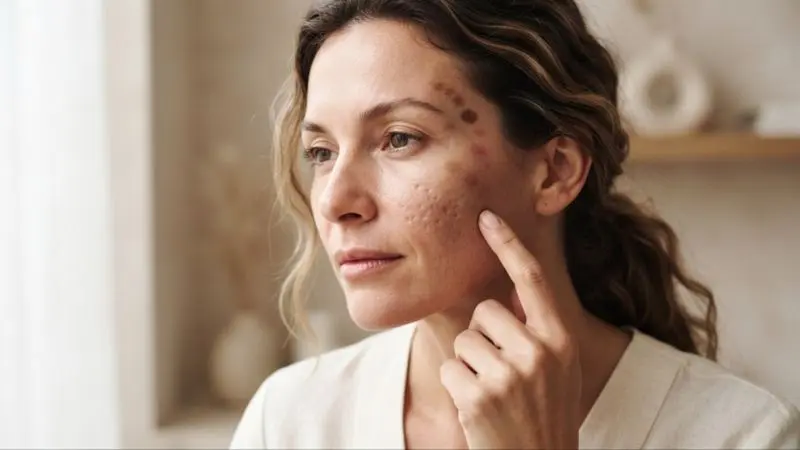
The easiest way to understand acne marks vs true scars is to look at what actually changed after the pimple healed.
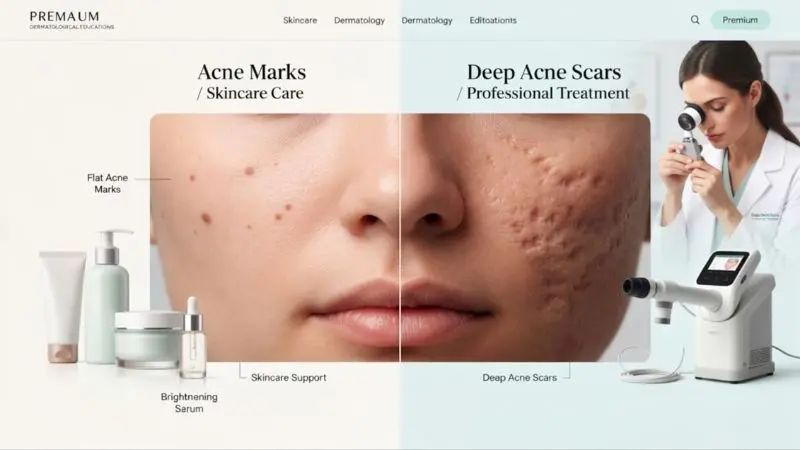
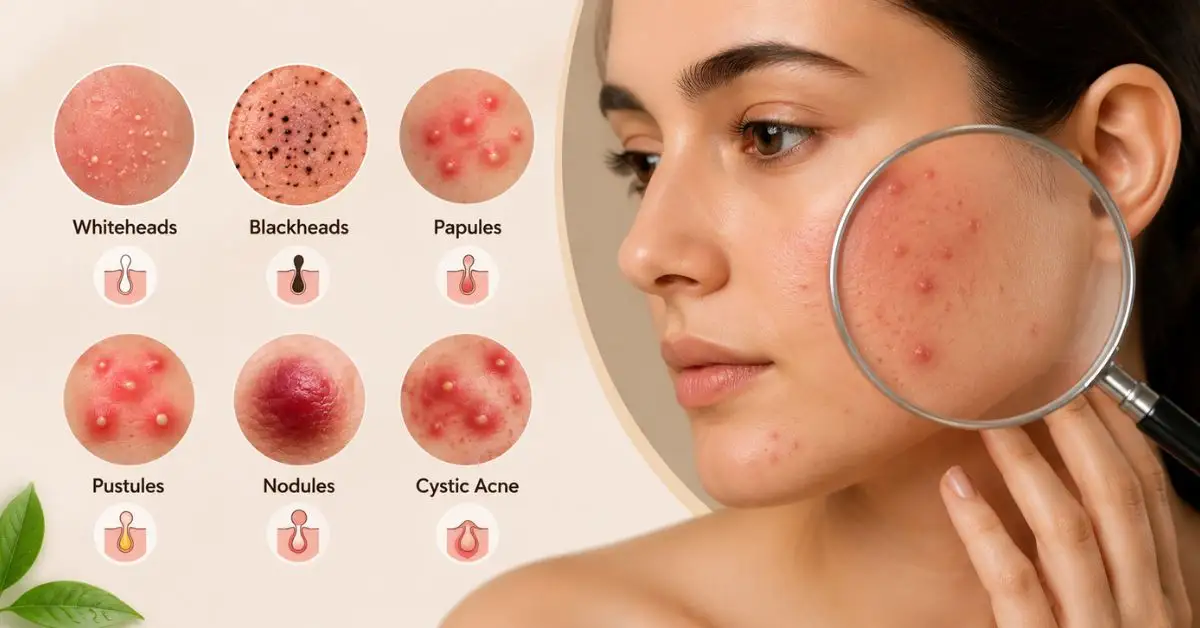
An acne mark is usually flat. You may see a brown, dark, red, pink, purple, or sometimes lighter area where the breakout used to be. The skin surface remains smooth even though the color looks different. Post-inflammatory hyperpigmentation is one common example.
When comparing Acne Marks vs True Scars, a true acne scar involves the structure of the skin. You may notice a depression, pit, uneven surface, or raised area. The color can also change, but texture is the key difference.
A Simple Texture Test
Stand near a window in natural light and look closely at the area.
Then gently run a clean fingertip over the skin.
- Smooth surface + different color: more likely an acne mark.
- Visible depression: may be a depressed acne scar.
- Raised, firm area: may be a raised scar.
- Uneven or wavy texture: may indicate a textural acne scar.
This simple check cannot replace a professional diagnosis, but it can help you understand what you are seeing.
The American Academy of Dermatology explains that flat pigmented spots after acne are usually not scars, while acne scars can appear as depressed or raised changes.
Understanding Acne Marks vs True Scars is important because treating pigmentation and treating structural scarring are two different goals.
2. Acne Marks Are Often Flat, While Scars Can Be Depressed or Raised
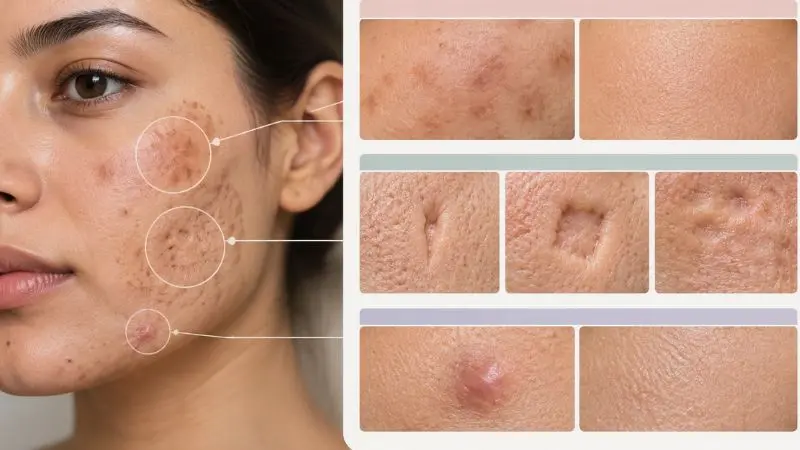
The second major difference is appearance.
Acne marks commonly look like flat patches on the cheeks, forehead, chin, jawline, or other areas where acne recently healed. Their color depends partly on your natural skin tone and the type of inflammation involved.
People with darker skin tones may notice brown or darker pigmentation after acne, while lighter skin may show pink or red areas. These flat spots can remain visible for months.
True acne scars can look very different.
Common depressed scar patterns include:
- Ice pick scars: narrow, deep-looking openings.
- Boxcar scars: wider depressions with clearer edges.
- Rolling scars: shallow depressions that create an uneven or wavy surface.
Raised acne scars can also occur when the skin produces excess scar tissue.
What You See Can Give You a Clue
| Feature | Acne Marks | True Acne Scars |
| Main change | Color | Texture or structure |
| Surface | Usually flat | Depressed, uneven, or raised |
| Common appearance | Brown, red, pink, or dark spots | Pits, dents, waves, or raised tissue |
| Typical focus | Pigmentation and discoloration | Scar structure |
| Professional treatment | Sometimes | Often considered for noticeable scars |
When considering Acne Marks vs True Scars, not every person with acne develops scars. Deep breakouts such as cysts and nodules carry a higher risk, and picking or scratching can also increase the risk of scarring.
3. Acne Marks Usually Fade, but True Scars Can Persist
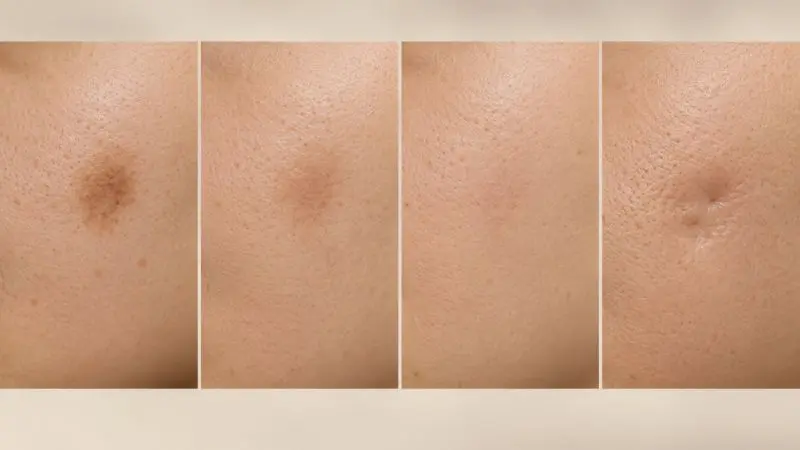
Another important difference is how long these changes remain.
When comparing Acne Marks vs True Scars, many flat acne marks gradually become lighter. However, fading can take time. Some dark spots can remain for a year or longer, especially when the pigmentation is deeper or when new inflammation keeps appearing.
This does not mean you should keep adding stronger products to your routine.
Skin irritation can make acne-prone skin harder to manage. A gentle routine and consistent sun protection are often more useful than constantly changing products.
True acne scars behave differently.
The American Academy of Dermatology notes that acne scars can fade but rarely disappear completely on their own.
That is because a structural scar is not simply extra pigment sitting on the skin. The tissue itself has changed.
Understanding Acne Marks vs True Scars also means knowing how different scars form. For example, a depressed scar can develop when the skin does not produce enough collagen to completely fill an area damaged by inflammation. Raised scars develop through excess scar tissue.
This explains why a brightening serum may help a dark spot but cannot be expected to completely fill a deep indentation.
A Better Way to Think About Progress
For acne marks, look for:
- Gradually lighter color
- More even skin tone
- Fewer new dark spots
- Less contrast between the mark and surrounding skin
For true scars, look for:
- Smoother-looking texture
- Less visible indentation
- Reduced contrast under different lighting
- Professional improvement after appropriate treatment
Give your skin time. Visible improvement rarely happens overnight.
4. The Cause Behind Acne Marks and Scars Is Not Exactly the Same
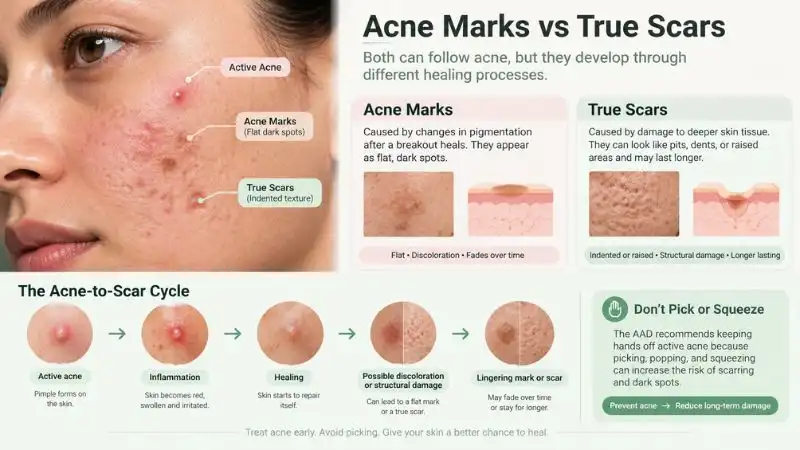
When comparing Acne Marks vs True Scars, both problems can follow acne, but they develop through different healing processes.
When an acne lesion becomes inflamed, the skin can respond with changes in pigmentation after the breakout settles. This can create post-inflammatory hyperpigmentation, which appears as a flat dark spot.
True scars are more closely linked with damage to deeper skin tissue.
Deep inflammatory acne, including cysts and nodules, has a higher chance of producing scars. When understanding Acne Marks vs True Scars, it is also important to know that picking or scratching an active breakout can damage the skin and increase the risk of lasting changes.
This is why acne prevention matters even after you have started worrying about old marks.
With Acne Marks vs True Scars, if new pimples keep forming, each inflamed lesion creates another opportunity for discoloration or scarring.
The Acne-to-Scar Cycle
Active acne → inflammation → healing → possible discoloration or structural damage → lingering mark or scar
You cannot always prevent every mark or scar. Some people develop scarring even when they try to care for their skin carefully.
When it comes to Acne Marks vs True Scars, treating acne early and avoiding picking can reduce some preventable damage. The AAD recommends keeping hands off active acne because picking, popping, and squeezing can increase the risk of scarring and dark spots.
5. Acne Marks May Respond to Skincare, While Deep Scars Often Need Professional Treatment
This is where the practical difference becomes most important.
If your main concern is a flat dark spot, your routine can focus on preventing additional pigmentation and supporting a more even skin tone.
Useful skincare habits may include:
- Daily broad-spectrum sunscreen
- Gentle cleansing
- Regular moisturizing
- Avoiding picking
- Using suitable brightening ingredients
- Treating active acne
- Avoiding excessive exfoliation
Some ingredients used in acne and pigmentation care include azelaic acid, retinoids, niacinamide, and certain exfoliating acids. The right choice depends on your skin type, tolerance, other products, and whether you have active acne.
The AAD notes that some topical retinoids can help acne and may also help lighten dark spots left after acne.
For true scars, the situation changes.
When comparing Acne Marks vs True Scars, a dermatologist may consider procedures such as microneedling, laser treatments, chemical peels, scar surgery, fillers, or other techniques depending on the scar type.
| Concern | Common Care Approach | Important Point |
| Flat dark marks | Sunscreen + suitable brightening skincare | Improvement can take time |
| Red or pink post-acne areas | Gentle skincare + acne control | Persistent changes may need assessment |
| Depressed scars | Professional scar treatments | Treatment depends on scar type |
| Raised scars | Dermatologist-guided treatment | Raised scars need a different approach |
| Active acne | Acne-focused treatment | Controlling new acne helps prevent new marks |
No single acne-scar treatment works for everyone. Mayo Clinic notes that treatment depends on factors such as scar type, skin type, and severity.
6. Your Daily Routine Can Help Prevent More Marks and Scars
Once you understand acne marks vs true scars, prevention becomes easier.
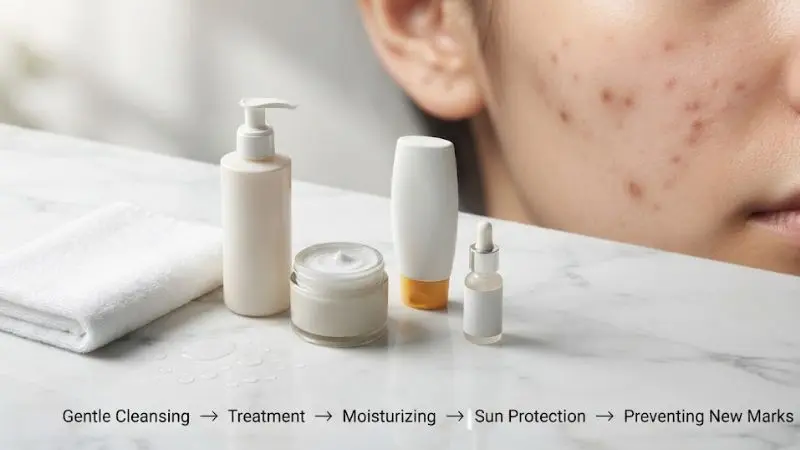
You do not need a complicated 10-step routine. The goal is to control active acne while protecting your skin from unnecessary irritation.
Simple Daily Framework
Morning
- Wash with a gentle cleanser.
- Apply a suitable moisturizer.
- Finish with broad-spectrum sunscreen.
After Exercise
- Gently cleanse or rinse your face when practical.
- Avoid rubbing sweat into the skin.
- Change out of sweaty clothing when possible.
Evening
- Cleanse gently.
- Apply your chosen acne or pigmentation treatment.
- Moisturize.
Weekly
Review your skin rather than adding a new product automatically.
Ask:
- Am I developing new breakouts?
- Are old marks becoming lighter?
- Is my skin irritated?
- Am I using too many active ingredients?
- Am I picking at pimples?
Product Introduction Framework
When adding a new active product:
Patch test → Start slowly → Monitor → Adjust
Do not introduce several strong actives at once. If your skin becomes significantly irritated, stop the new product and return to a simpler routine.
The AAD recommends gentle skincare and warns that irritating products can make acne appear worse. It also recommends giving acne treatments enough time to work instead of repeatedly switching products.
.
7. Sunscreen and Gentle Skincare Matter for Both Problems
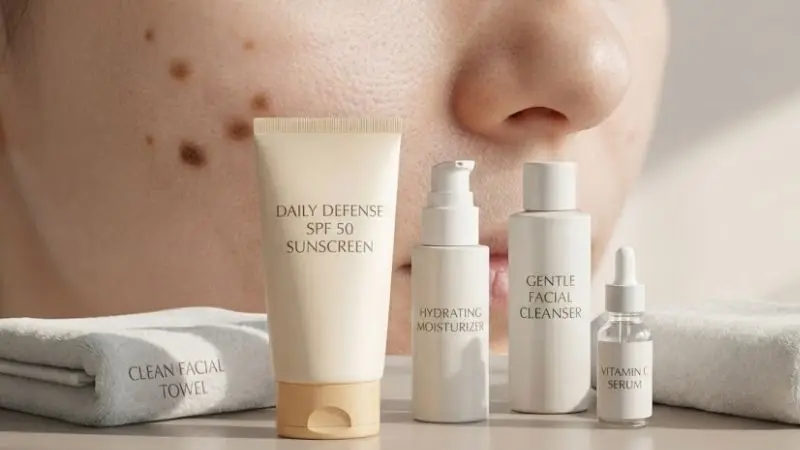
Sunscreen does not erase an acne scar, but it can be an important part of managing skin that has discoloration or has undergone scar treatment.
Sun exposure can make pigmentation more noticeable and can increase the contrast between an affected area and surrounding skin.
For acne-prone skin, look for a broad-spectrum sunscreen that feels comfortable and is labeled non-comedogenic when possible. The AAD recommends broad-spectrum, water-resistant SPF 30 or higher for exposed skin when outdoors.
Moisturizer also matters.
People with oily or acne-prone skin sometimes avoid moisturizer because they fear it will make their skin more greasy. But when dealing with Acne Marks vs True Scars, removing moisturizer completely can make a routine harder to tolerate, especially when using acne treatments that cause dryness.
Choose a lightweight moisturizer that suits your skin and does not make you uncomfortable.
Skin Barrier Checklist
☐ Use a gentle cleanser
☐ Avoid harsh physical scrubs
☐ Moisturize regularly
☐ Introduce active ingredients slowly
☐ Wear broad-spectrum sunscreen
☐ Avoid picking pimples
☐ Do not use several strong exfoliants together
☐ Stop a new product if it causes significant irritation
☐ Give acne treatments enough time to work
A calm skin barrier makes it easier to maintain a consistent routine.
8. Professional Acne Scar Treatment Depends on the Scar Type
If you have a true acne scar, buying more skincare products is not always the answer.
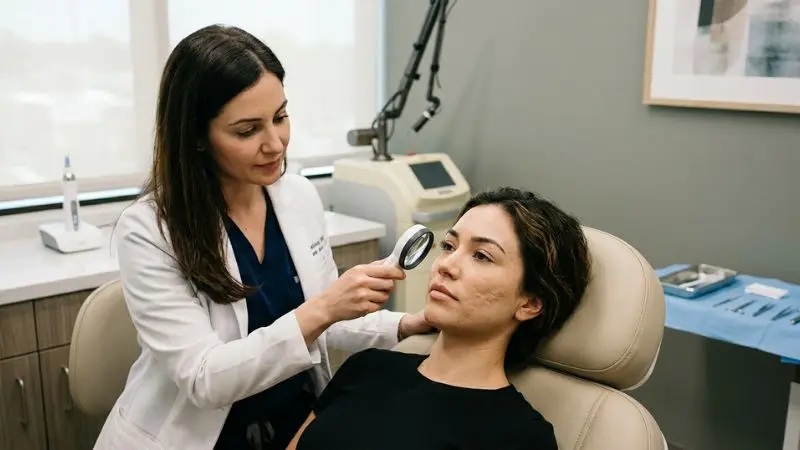
A dermatologist first needs to identify the type of scar. Ice pick, boxcar, rolling, raised, and keloid scars can require different approaches. The AAD specifically notes that different scar types may need different treatments.
Possible professional options include:
- Microneedling
- Laser resurfacing
- Chemical peels
- Fillers
- Subcision
- Scar surgery
- Treatments for raised scars
When comparing Acne Marks vs True Scars, microneedling, for example, uses tiny needles to stimulate collagen production and can reduce the appearance of acne scars when performed appropriately. The AAD describes it as a minimally invasive treatment that can be used for acne scars and uneven texture.
Mayo Clinic also explains that there is no single best acne-scar treatment for everyone. The choice depends on scar type, skin type, severity, and other factors.
Do not attempt medical scar procedures at home with unregulated devices or aggressive treatments. Professional procedures require proper skin assessment and aftercare.
When Should You See a Dermatologist?
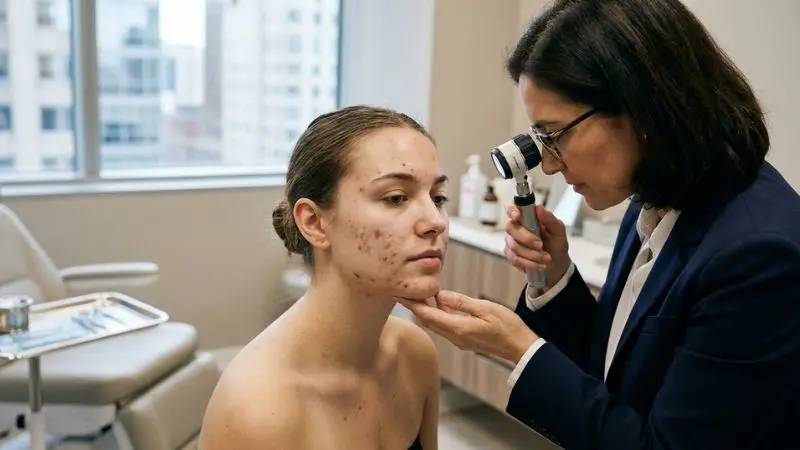
Consider professional care if:
- You have deep, painful acne.
- New scars continue appearing.
- You have obvious depressions or raised scars.
- Dark spots remain persistent or widespread.
- Your acne does not improve with appropriate over-the-counter care.
- You are unsure whether you have pigmentation or scarring.
- You want professional scar procedures.
- A skin reaction becomes severe or persistent.
The AAD recommends dermatology care when acne treatment is not producing the desired results and notes that dark spots after acne can also be a reason to seek professional advice.
For Acne Marks vs True Scars, a dermatologist can examine your skin and determine whether you are dealing with pigmentation, redness, structural scarring, active acne, or a combination.
5-Step “Mark or Scar?” Check
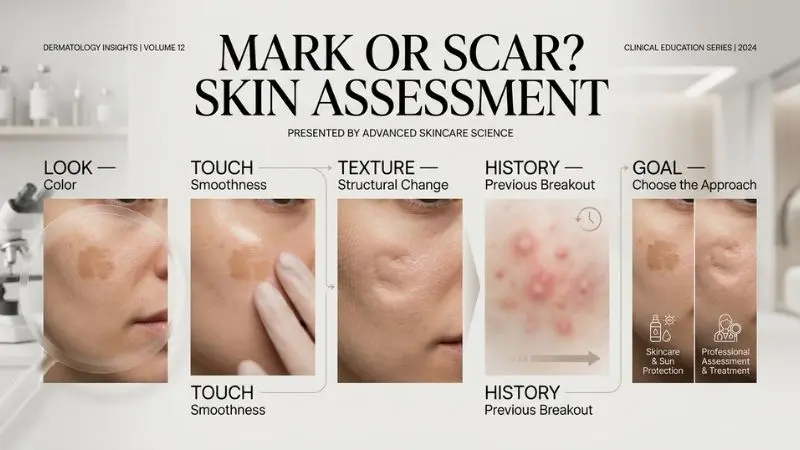
Use this quick framework before changing your skincare routine.
Step 1 — Look:
Is the area mainly a different color?
Step 2 — Touch:
Does the skin feel completely smooth?
Step 3 — Check texture:
Can you see a dent, pit, wave, or raised area?
Step 4 — Review the history:
Did the area appear after a deep or inflamed breakout?
Step 5 — Choose the goal:
For flat discoloration, focus on gentle pigmentation care and sun protection. For structural changes, consider professional assessment.
This framework helps you avoid treating every post-acne change as if it were the same problem.
Common Mistakes That Can Make Post-Acne Changes Worse
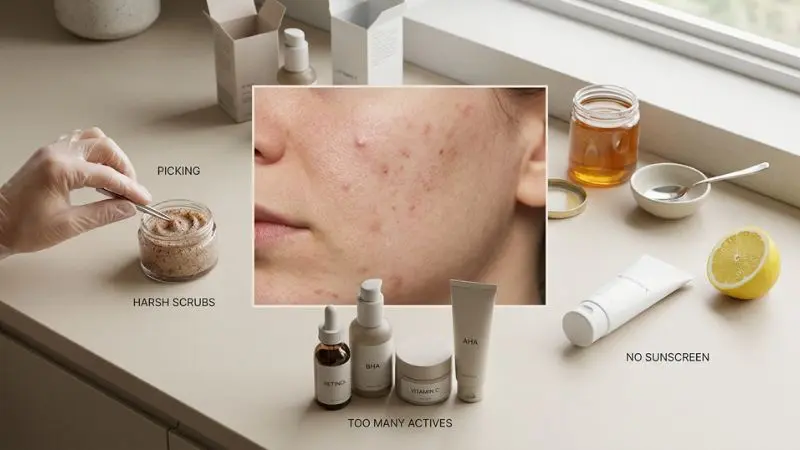
One of the biggest mistakes is picking or squeezing active acne.
This can increase inflammation and damage the skin. The AAD specifically warns that popping, squeezing, or picking can increase the risk of scarring and post-inflammatory hyperpigmentation.
Other mistakes include:
- Using harsh scrubs
- Starting multiple strong actives together
- Skipping sunscreen
- Changing products every few days
- Trying aggressive DIY treatments
- Ignoring ongoing inflammatory acne
- Using products that repeatedly irritate your skin
More products do not automatically mean faster results.
When dealing with Acne Marks vs True Scars, a simple routine that you can tolerate consistently is often easier to maintain than a complicated routine that leaves your skin irritated.
Frequently Asked Questions
1. Are acne marks and scars the same?
No. Acne marks are usually flat discoloration, while true scars change the skin’s texture or structure.
2. Do acne marks fade?
Yes, many acne marks gradually fade over time. Sunscreen and gentle skincare can help improve their appearance.
3. How can I tell if I have a scar?
A dent, pit, raised area, or uneven texture is more likely to be a true acne scar.
4. Can skincare remove acne scars?
Skincare may improve skin quality, but deeper scars often need professional treatments such as microneedling or laser therapy.
5. Does picking acne cause scars?
Yes. Picking or squeezing pimples can increase inflammation and raise the risk of marks and scarring.
6. When should I see a dermatologist?
See a dermatologist if you have deep scars, painful acne, persistent breakouts, or marks that are not improving.
Conclusion
Understanding acne marks vs true scars helps you choose the right skincare approach. Flat dark or red spots are usually marks, while dents, pits, or raised areas are more likely to be true scars.
For acne marks, focus on gentle skincare, sunscreen, and consistent acne care. Avoid picking or squeezing pimples, as this can increase the risk of lasting marks and scars.
If you have deep scars, painful acne, or persistent skin changes, a dermatologist can help identify the problem and discuss suitable treatment options.
With patience and consistent care, you can improve your skin’s overall appearance without relying on harsh or quick-fix treatments..
Your skin does not need to look perfect to be healthy. The goal is to understand what you are treating and choose a safe, consistent approach that supports your skin over time.







Leave a Reply