
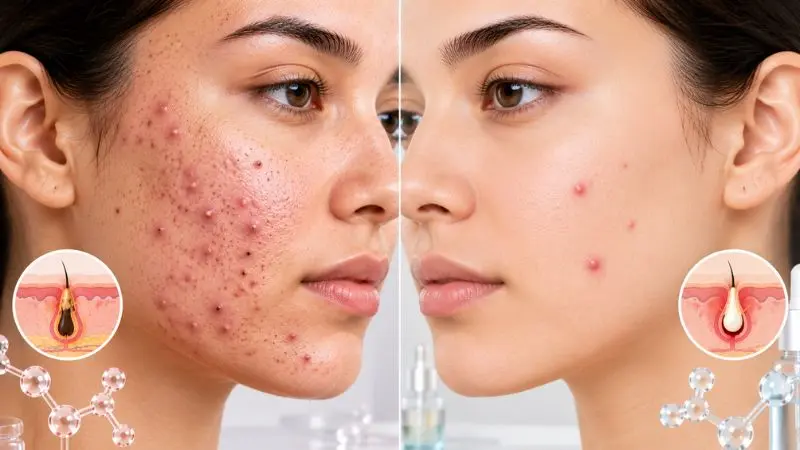
Acne vs Pimples is one of the most searched skincare topics worldwide, yet many people still don’t understand the difference between the two. While both conditions affect the skin and can impact confidence, they are not exactly the same. Acne is a long-term skin condition that can cause various types of breakouts, while pimples are individual skin lesions that often appear as a symptom of acne.
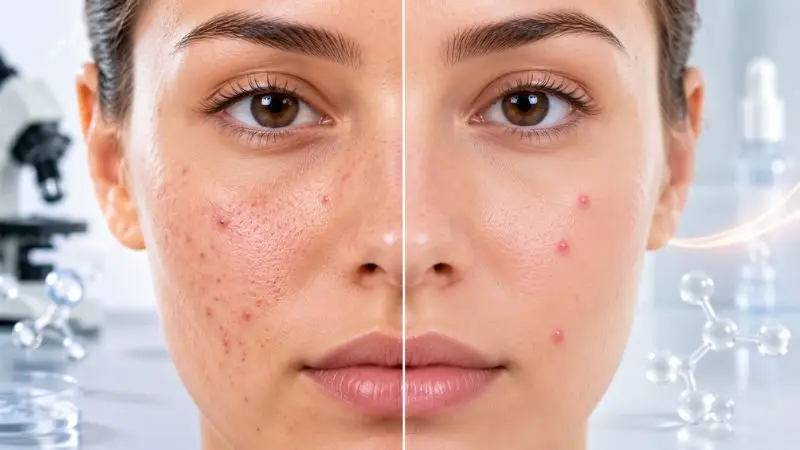
Understanding Acne vs Pimples is essential for choosing the right skincare routine, preventing unnecessary breakouts, and avoiding long-term scarring. Whether you live in the USA, UK, Canada, Thailand, or anywhere else, knowing what causes these skin concerns and how to treat them properly can help you achieve healthier, clearer skin.
In this guide, you will learn exactly how acne differs from pimples, why it happens, and the most effective treatments recommended by skincare experts.
What is Acne?
Acne is a chronic inflammatory skin condition that develops when pores become clogged with oil, dead skin cells, and bacteria.
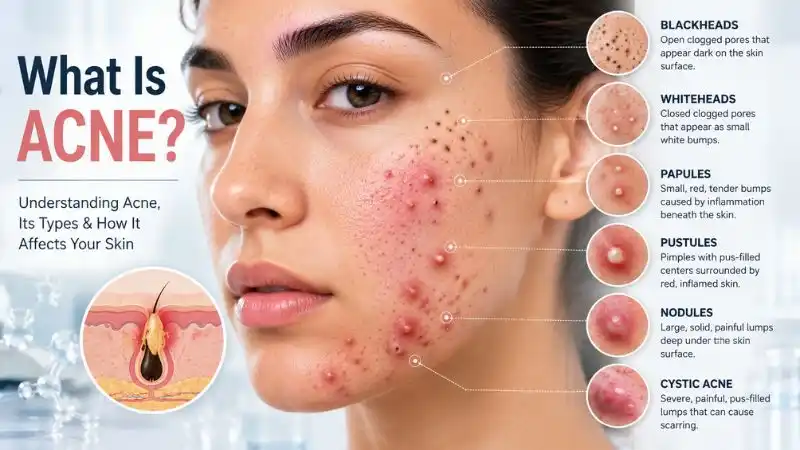
It can appear in different forms such as:
- Blackheads
- Whiteheads
- Papules
- Pustules
- Nodules
- Cystic acne
Acne commonly affects the face, chest, shoulders, and back. It is strongly linked to hormones, genetics, stress levels, and environmental factors. In countries like the USA and UK, acne is one of the most common dermatology concerns among teenagers and adults.
What are Pimples?
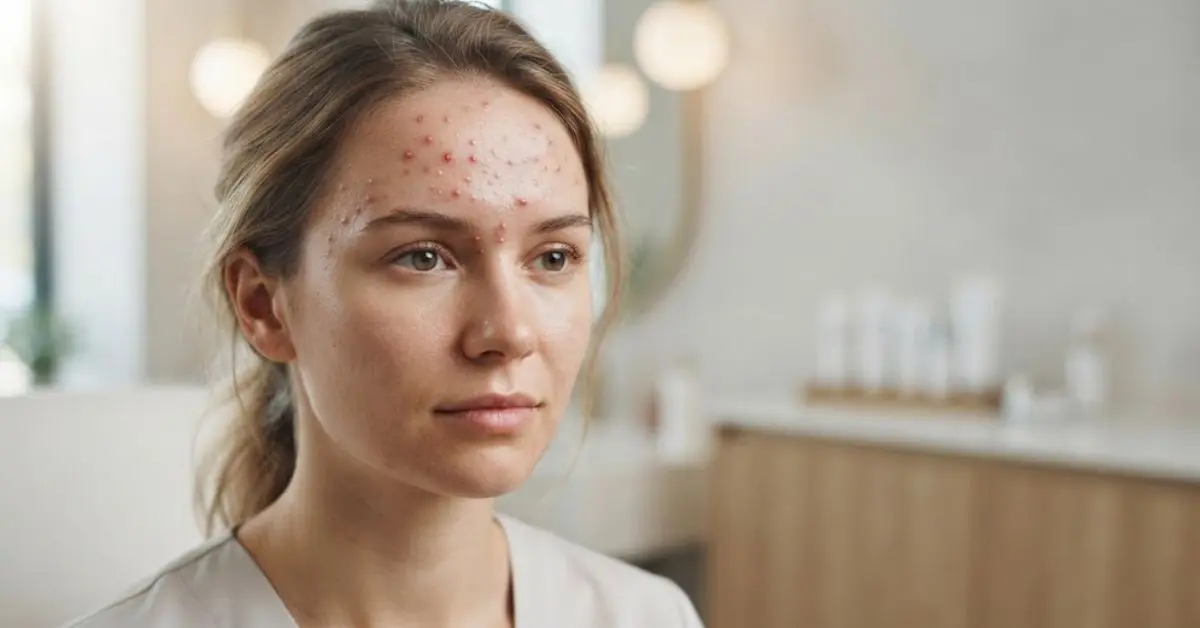
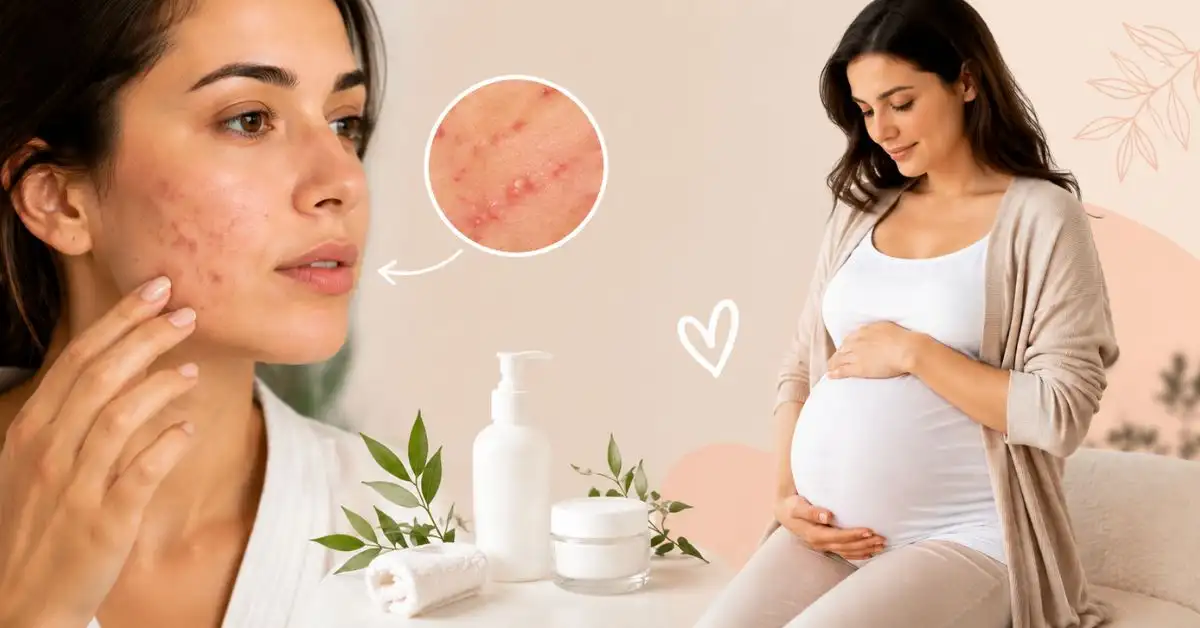
A pimple is a single inflamed bump that forms when a clogged pore becomes infected or irritated, while Acne vs Pimples refers to the difference between a skin condition and an individual breakout.
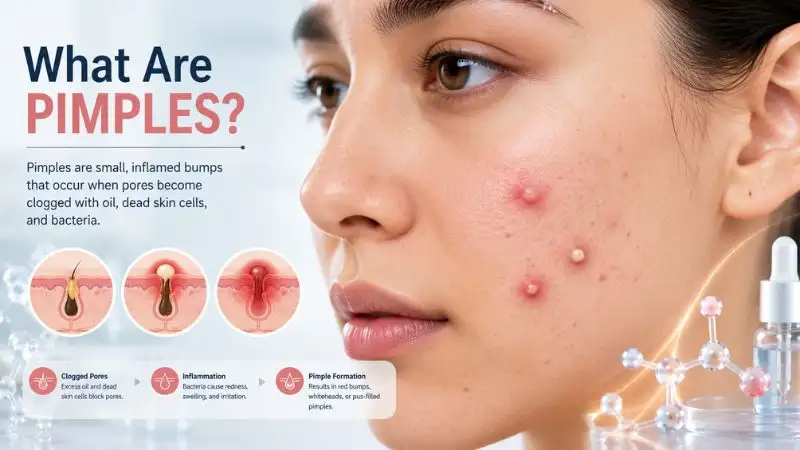
A pimple may appear as:
- Red bump
- White pus-filled spot
- Painful swollen lesion
Unlike acne, a pimple is not a condition it is a symptom. You can think of pimples as “individual breakout events” that happen due to acne or clogged pores.
Acne vs Pimples: The Real Difference
The key difference is simple but important:
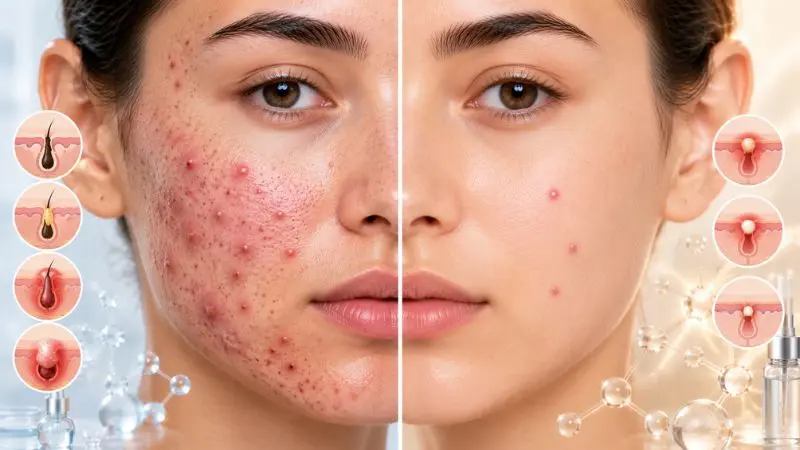
- Acne = Skin condition
- Pimples = Individual lesions
Acne is long-term and recurring, while pimples are temporary breakouts. Acne may last for months or years if untreated, but pimples usually heal within days.
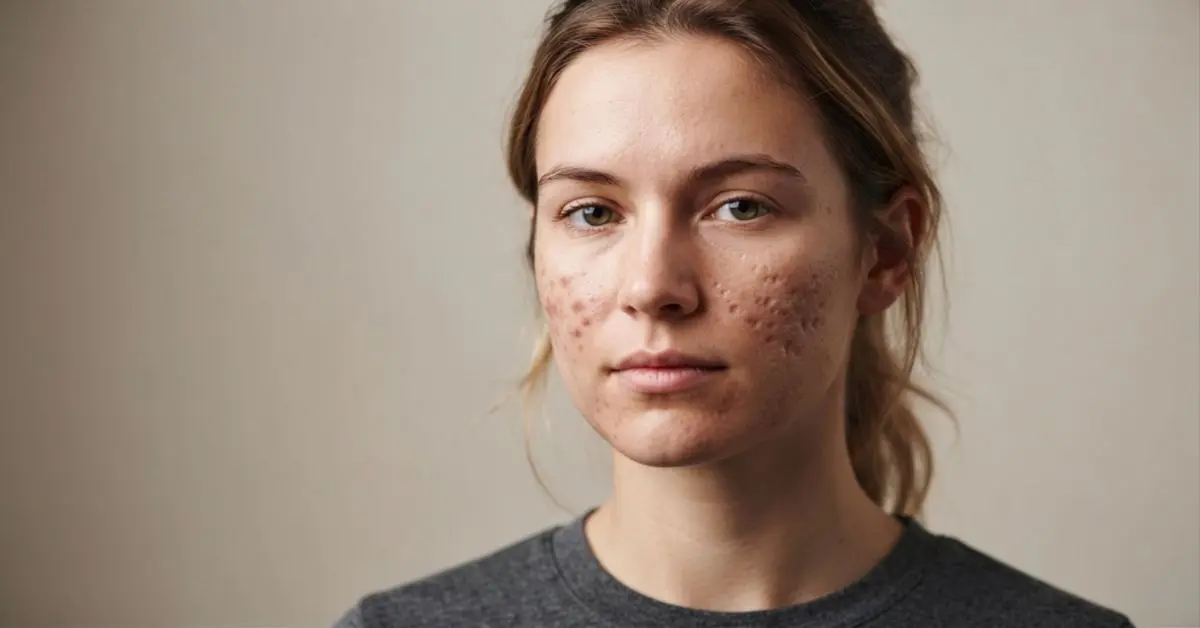
In severe cases (especially cystic acne), multiple pimples appear together and cause inflammation, scarring, and pigmentation.
Acne vs Pimples: Comparison Table
| Feature | Acne | Pimples |
| Definition | Chronic skin condition affecting pores and oil glands | Single inflamed skin lesion |
| Severity | Mild to severe (can be long-term) | Usually mild and temporary |
| Appearance | Blackheads, whiteheads, cysts, nodules | Red or white raised bump |
| Duration | Weeks, months, or years | 3–7 days (usually short-term) |
| Cause | Hormones, bacteria, oil buildup, genetics | Clogged pore + bacteria |
| Treatment | Requires consistent skincare + medical treatment | Spot treatment or basic skincare |
| Scarring Risk | High if untreated | Low to moderate |
| Recurrence | Frequent and chronic | Occasional |
Why Acne vs Pimples Confusion Matters Globally
In countries like the USA, UK, Canada, and Thailand, understanding Acne vs Pimples can help people avoid self-treating skin issues without properly identifying the condition.
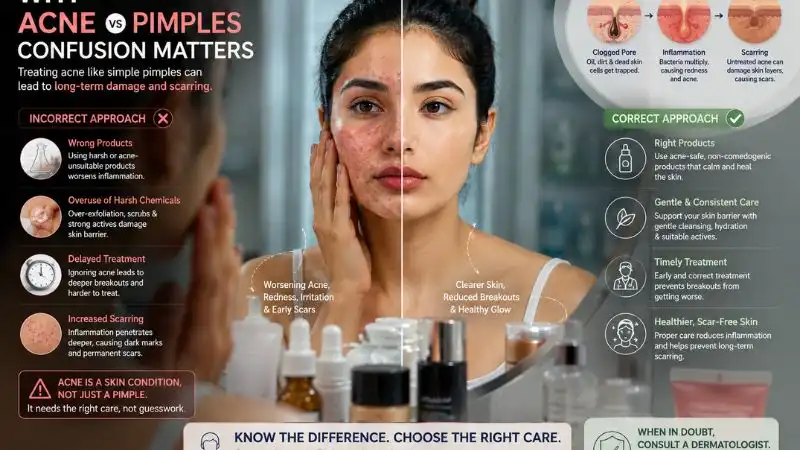
This confusion leads to:
- Wrong skincare product use
- Overuse of harsh chemicals
- Increased acne scarring
- Delayed proper treatment
When you understand the difference, you can choose targeted treatments instead of random solutions.
Main Causes of Acne and Pimples
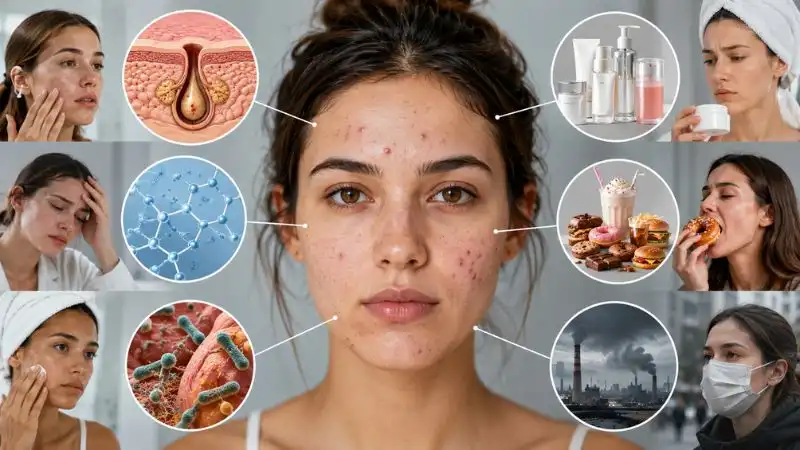
1. Excess Sebum Production
Overactive oil glands clog pores and trigger breakouts.
2. Hormonal Imbalance
Common during puberty, menstrual cycles, pregnancy, or stress.
3. Bacterial Growth
Bacteria trapped in pores cause inflammation and pus formation.
4. Poor Skincare Routine
Not cleansing properly or using comedogenic products worsens acne.
5. Diet & Lifestyle Factors
High sugar, dairy, and processed foods may increase breakouts in some individuals.
6. Environmental Pollution
Common in urban areas like London, New York, Toronto, and Bangkok.
Types of Acne You Should Recognize
Understanding acne types helps you treat them correctly:
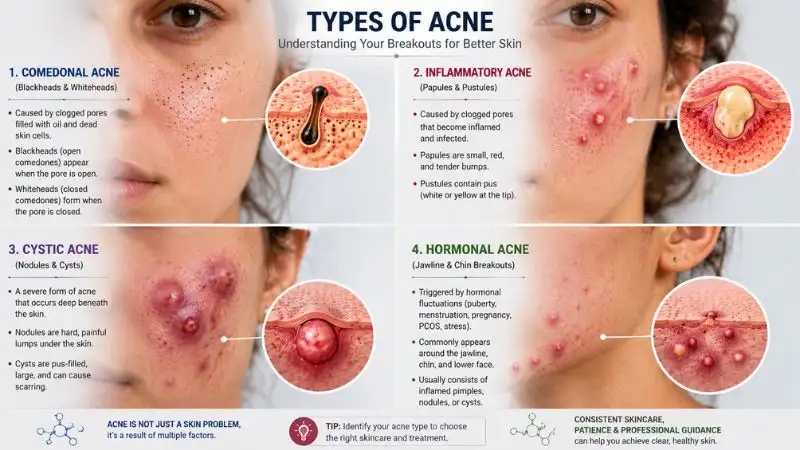
- Comedonal Acne → Blackheads & whiteheads
- Inflammatory Acne → Red, swollen pimples
- Cystic Acne → Deep, painful lumps
- Hormonal Acne → Jawline & chin breakouts
Each type requires a different treatment approach.
Best Dermatologist-Approved Treatments
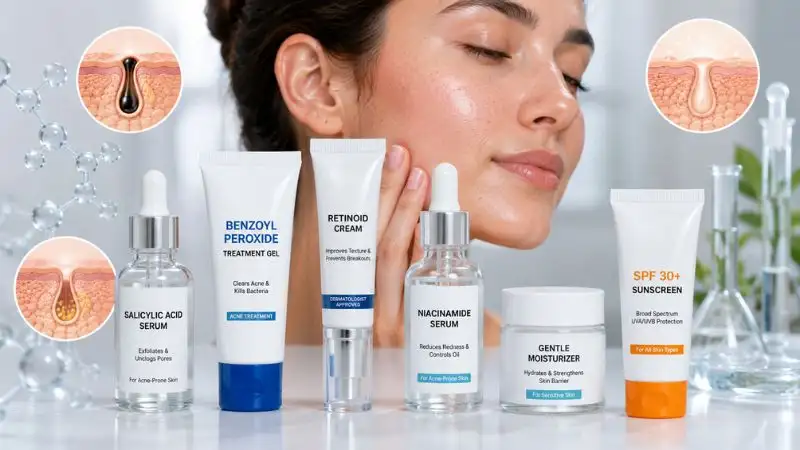
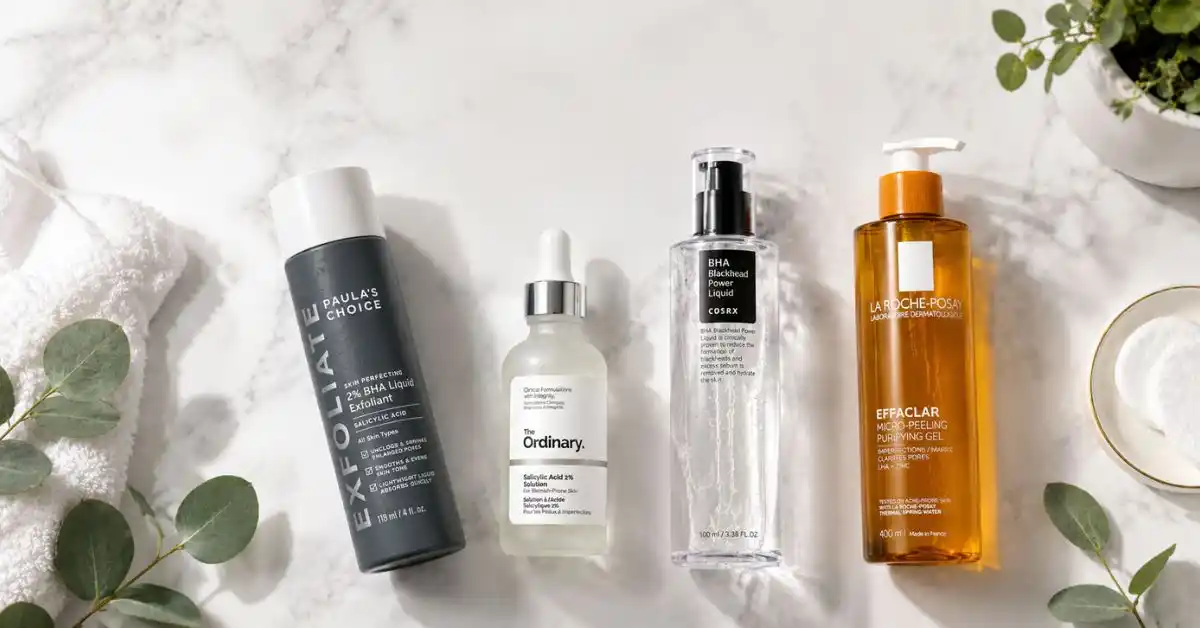
1. Salicylic Acid (BHA)
Helps deeply clean pores and reduce blackheads and whiteheads.
2. Benzoyl Peroxide
Kills acne-causing bacteria and reduces inflammation.
3. Retinoids
Increase skin cell turnover and prevent clogged pores.
4. Niacinamide
Controls oil production and improves skin barrier.
5. Gentle Moisturizer
Prevents dryness and keeps skin balanced.
6. Sunscreen (SPF 30+)
Prevents dark spots and acne scars from worsening.
Expert Skincare Tips for Clear Skin
Dermatologists in the USA and UK recommend simple consistency over complicated routines:

- Wash face twice daily
- Avoid touching your face
- Change pillowcases 2–3 times weekly
- Stay hydrated
- Manage stress through sleep and exercise
Small habits create long-term skin improvement.
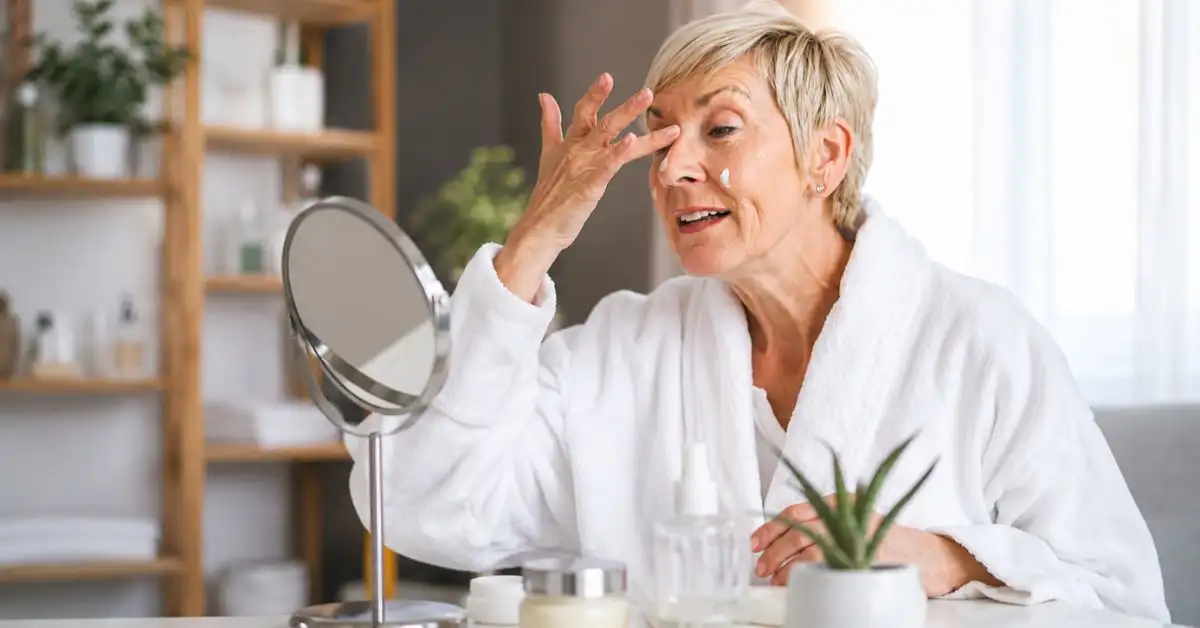
Maintenance Routine for Healthy Skin
A consistent routine is more important than expensive products.
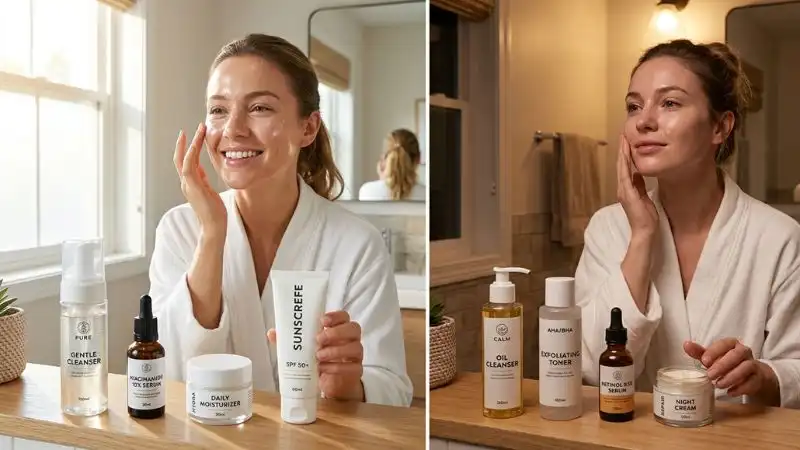
Morning:
- Gentle cleanser
- Niacinamide serum
- Moisturizer
- Sunscreen
Night:
- Cleanser
- Treatment serum (retinoid or salicylic acid)
- Moisturizer
Avoid over-exfoliation and keep your routine simple.
Common Mistakes People Make
Many people worsen acne without realizing it:
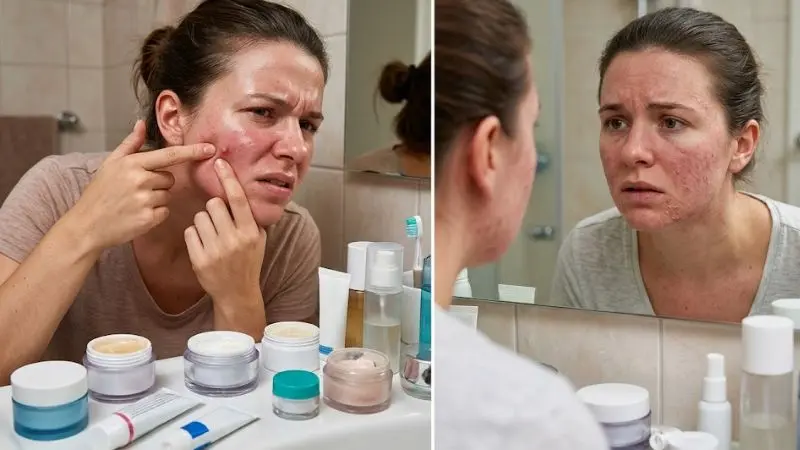
- Popping pimples aggressively
- Overusing acne treatments
- Using multiple active ingredients together
- Skipping moisturizer
- Changing products too often
These mistakes damage the skin barrier and slow healing.
How to Choose the Right Acne Products
When selecting skincare, focus on ingredients, not marketing.
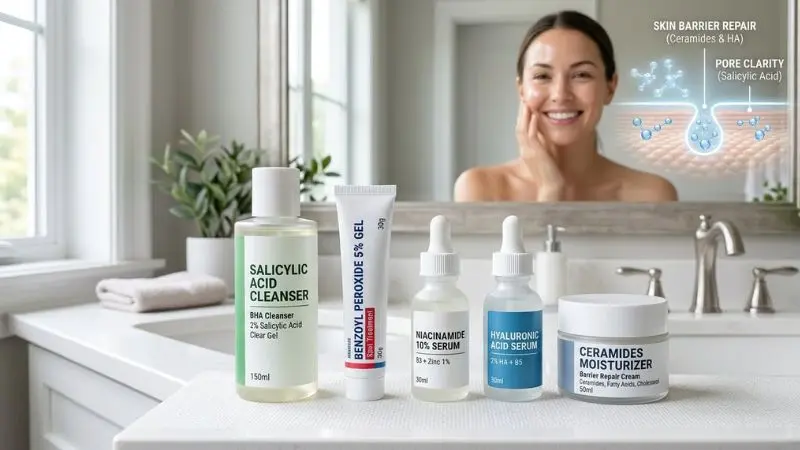
Best ingredients:
- Salicylic Acid
- Benzoyl Peroxide
- Niacinamide
- Hyaluronic Acid
- Ceramides
Avoid:
- Heavy oils
- Artificial fragrances
- Harsh alcohol-based toners
Match products to your skin type (oily, dry, combination, sensitive).
Conclusion
When it comes to Acne vs Pimples, understanding the difference is the first step toward healthier skin. Acne is a long-term skin condition that requires consistent care, while pimples are individual breakouts that usually heal more quickly. By learning the facts about Acne vs Pimples, you can choose the right skincare routine, avoid common treatment mistakes, and reduce the risk of scarring. With the right products, healthy habits, and patience, achieving clearer and healthier skin is possible.
Understanding Acne vs Pimples can help you choose the right treatment and skincare routine. Acne is a long-term skin condition, while pimples are temporary breakouts. Whether you are in the USA, UK, Canada, or Thailand, consistent skincare, the right ingredients, and patience are key to clearer skin. By understanding Acne vs Pimples, you can avoid common mistakes and focus on treating the root cause of breakouts.
Clear skin is not instant, but it is absolutely achievable with the right knowledge and routine.
FAQs
1. Is acne more serious than pimples?
Yes, acne is a chronic condition while pimples are temporary breakouts.
2. Can pimples turn into acne?
Frequent pimples may indicate underlying acne.
3. What is the fastest way to reduce pimples?
Use benzoyl peroxide or salicylic acid spot treatment.
4. Does diet affect acne?
Yes, high sugar and dairy may worsen acne in some people.
5. Can acne be cured permanently?
It can be controlled effectively with consistent treatment and skincare.

Leave a Reply