
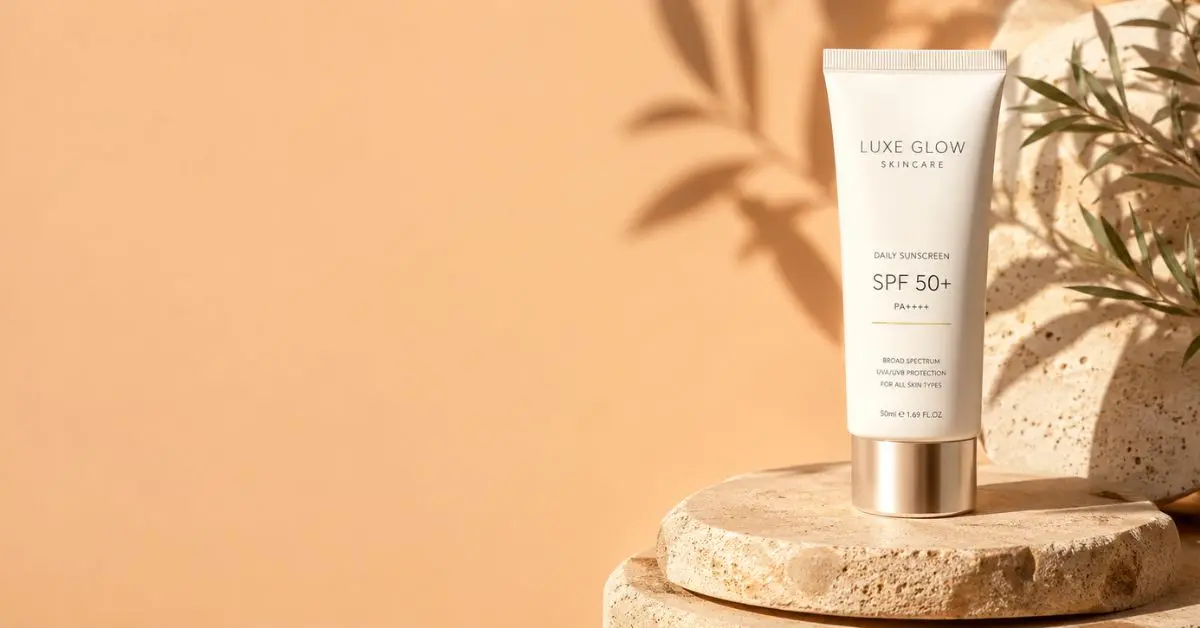
Finding the best sunscreen for acne prone skin without clogging pores (2026 guide) can feel confusing. Many people with acne-prone or oily skin avoid sunscreen because they fear breakouts, greasiness, or blocked pores. However, dermatologists strongly recommend daily sunscreen use even for acne-prone skin.
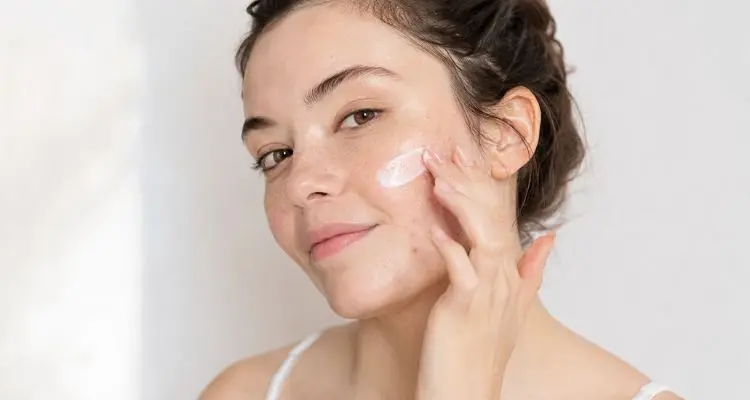
Sun exposure does not only cause tanning. It also worsens acne marks, inflammation, pigmentation, and premature aging. The key is choosing a sunscreen that is lightweight, non-comedogenic, oil-free, and formulated specifically for sensitive or acne-prone skin.
In this guide, you will learn how to choose the right sunscreen, which ingredients to look for, which to avoid, and which products perform best in 2026. A comparison table and FAQs are also included to help you make the right decision.
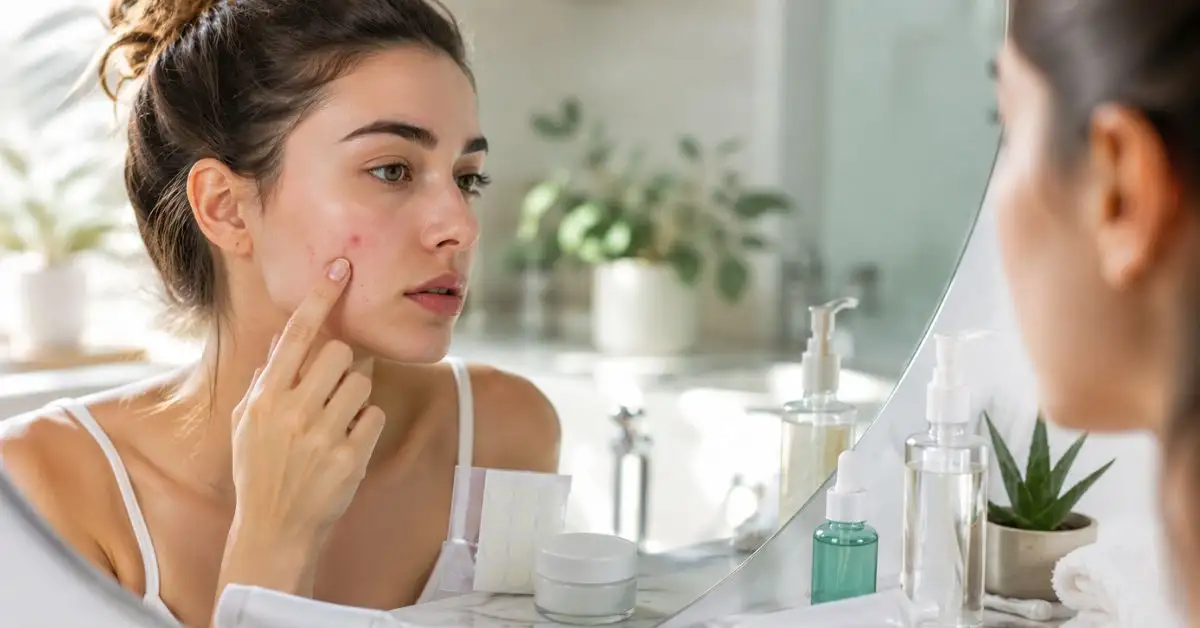
Why Sunscreen Is Important for Acne-Prone Skin
Many people believe sunscreen makes acne worse. In reality, skipping sun protection often leads to more long-term skin damage, which is why choosing the best sunscreen for acne prone skin is crucial.
Here’s why sunscreen is essential:
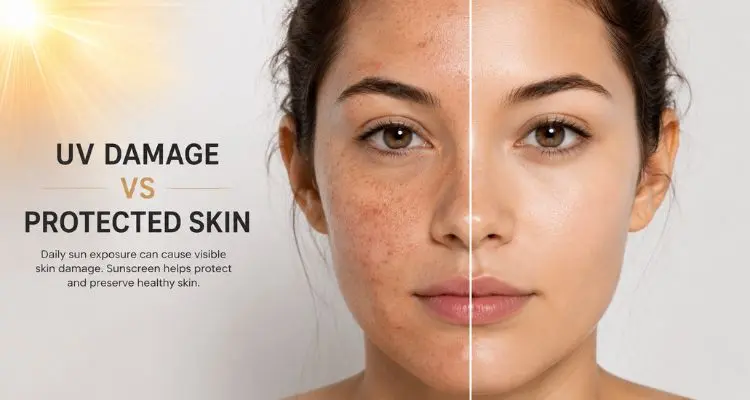
- Prevents dark acne marks (post-inflammatory hyperpigmentation)
- Protects skin from UV-induced inflammation
- Reduces risk of acne scars becoming darker
- Prevents premature aging
- Supports healing of active acne
UV rays can make acne scars more visible and slow down skin recovery. That’s why finding the best sunscreen for acne prone skin is highly recommended by experts, and dermatologists consider sunscreen a non-negotiable step in any acne skincare routine.
What to Look for in the Best Sunscreen for Acne-Prone Skin Without Clogging Pores
When choosing sunscreen, you should focus on formulation rather than brand popularity.
1. Non-Comedogenic Formula
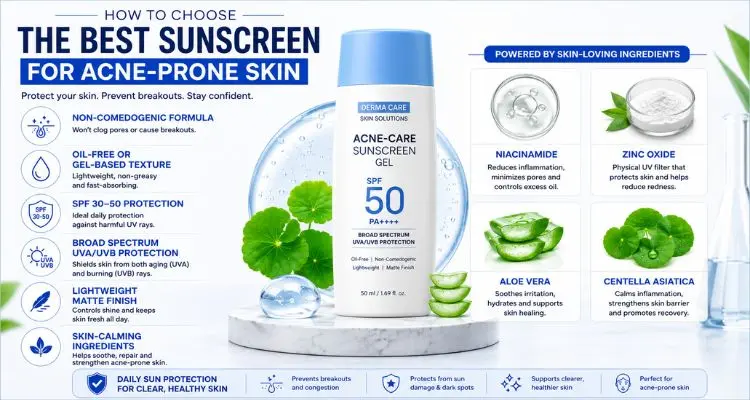
This means the product will not clog pores or trigger acne.
2. Oil-Free or Gel-Based Texture
Heavy creams can feel greasy and increase breakouts.
3. SPF 30–50 Protection
SPF 30 is minimum, but SPF 50 is better for daily protection.
4. Broad Spectrum Protection
Protects from both UVA and UVB rays.
5. Lightweight Finish
Matte or gel finish works best for oily skin.
6. Skin-Calming Ingredients
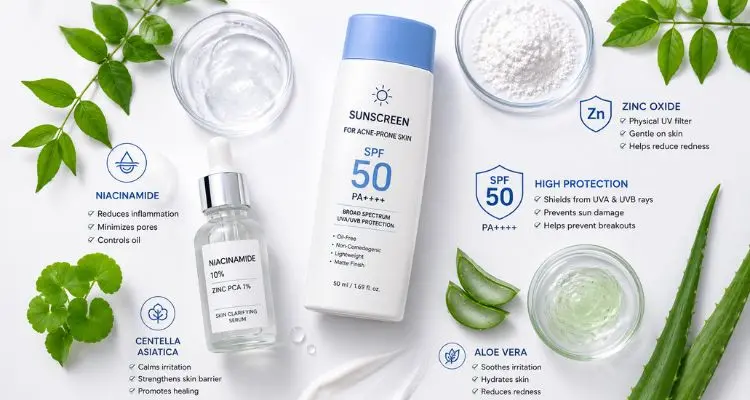
Look for:
- Niacinamide
- Zinc oxide
- Aloe vera
- Centella asiatica
Ingredients to Avoid for Acne-Prone Skin
- Heavy oils (coconut oil, palm oil)
- Lanolin
- Isopropyl myristate
- Artificial fragrance
- Thick wax-based formulas
These ingredients can trap oil and bacteria, leading to breakouts.
Top 5 Best Sunscreens for Acne Prone Skin Without Clogging Pores (2026)
Here are dermatologist-recommended sunscreen types that work well for acne-prone skin:
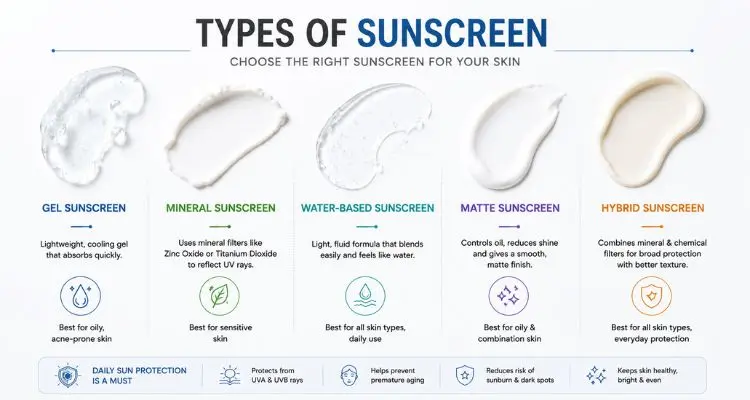
1. Gel-Based Sunscreens
Perfect for oily skin because they absorb quickly and feel weightless.
2. Mineral Sunscreens (Zinc Oxide-Based)
Ideal for sensitive acne-prone skin and reduce irritation.
3. Water-Based Sunscreens
Provide hydration without heaviness.
4. Matte Finish Sunscreens
Control oil production throughout the day.
5. Hybrid Sunscreens
Combination of mineral + chemical filters for balanced protection.
Comparison Table: Best Sunscreen Types for Acne-Prone Skin
| Type | Texture | Skin Type | Benefits | Drawbacks |
| Gel Sunscreen | Lightweight gel | Oily, acne-prone | Fast absorption, non-greasy | May feel too light for dry skin |
| Mineral Sunscreen | Creamy/light | Sensitive skin | Gentle, reduces irritation | Slight white cast |
| Water-Based Sunscreen | Watery lotion | Combination skin | Hydrating, non-sticky | Needs frequent reapplication |
| Matte Sunscreen | Dry-touch finish | Oily skin | Controls shine, long-lasting | Can feel drying |
| Hybrid Sunscreen | Balanced texture | All skin types | Broad protection | Slightly expensiveMany experts agree that the best sunscreen for acne prone skin must feel weightless. |
How to Apply Sunscreen Properly for Acne-Prone Skin
Even the best sunscreen for acne prone skin without clogging pores will not work if applied incorrectly.
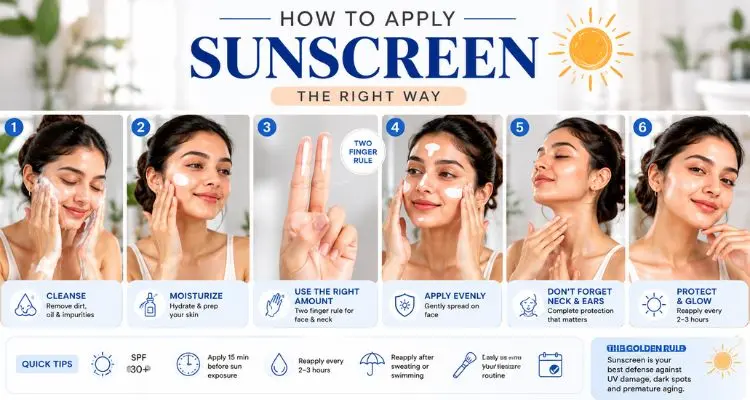
Step-by-step application:
- Clean your face with a gentle cleanser
- Apply lightweight moisturizer (if needed)
- Take two-finger amount of sunscreen
- Apply evenly on face and neck
- Reapply every 2–3 hours if outdoors
Important Tip:
Do not rub sunscreen too harshly. Pat it gently into the skin.
Common Mistakes to Avoid
Many people unknowingly damage their skin while using sunscreen.
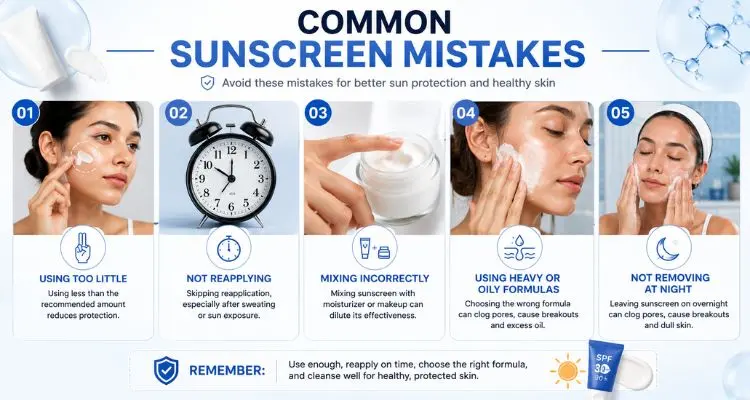
- Using too little sunscreen
- Skipping reapplication
- Mixing sunscreen with moisturizer incorrectly
- Choosing heavy, oily formulas
- Not removing sunscreen properly at night
Best Routine for Acne-Prone Skin (Simple Guide)
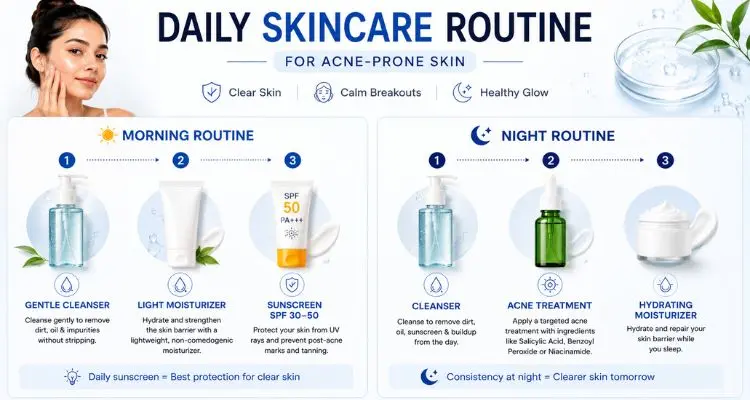
Morning Routine
- Gentle cleanser
- Light moisturizer
- Sunscreen (SPF 30–50)
Night Routine
- Cleanser
- Acne treatment (if needed)
- Hydrating moisturizer
Consistency matters more than expensive products.
Does Sunscreen Cause Acne?
No, sunscreen itself does not cause acne. Breakouts usually happen due to:
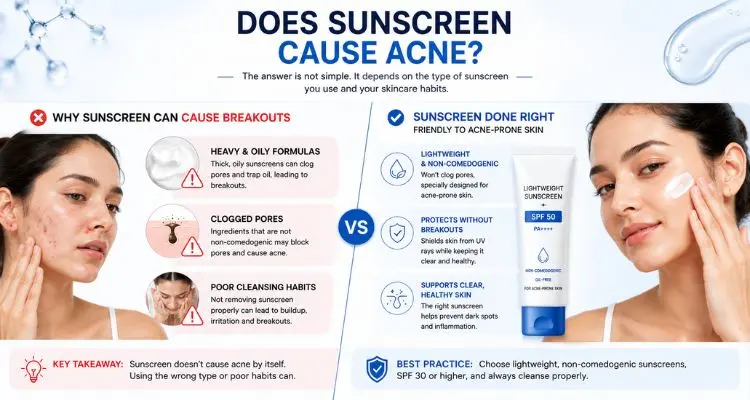
- Wrong formulation
- Heavy oils in product
- Poor cleansing routine
- Not removing sunscreen properly
Using a non-comedogenic sunscreen solves this issue completely.
Who Should Use Acne-Safe Sunscreen?
You should use acne-friendly sunscreen if you have:
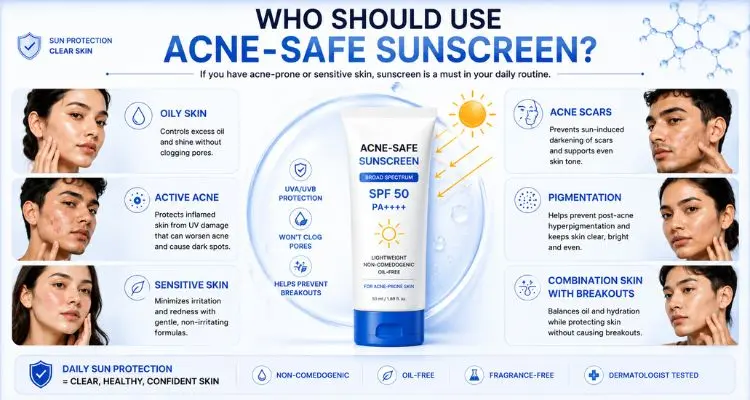
- Oily skin
- Active acne
- Sensitive skin
- Acne scars or pigmentation
- Combination skin with breakouts
Even dry skin with acne benefits from lightweight sunscreen formulas.
Expert Tips for 2026 Skincare Trends
Dermatologists in 2026 recommend:
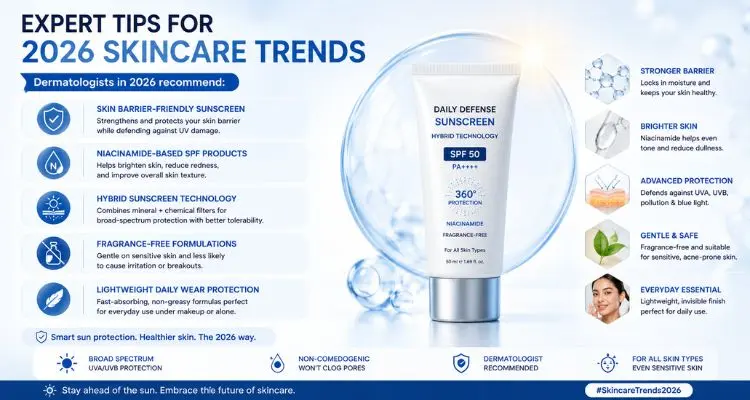
- Skin barrier-friendly sunscreen
- Niacinamide-based SPF products
- Hybrid sunscreen technology
- Fragrance-free formulations
- Lightweight daily wear protection
Modern sunscreens are now designed to treat skin while protecting it.
FAQs:
1. Which sunscreen is best for acne-prone skin?
Gel-based, oil-free, and non-comedogenic sunscreens are best for acne-prone skin.
2. Can sunscreen make acne worse?
Only if you use a heavy or pore-clogging formula. Proper sunscreen actually improves acne healing.
3. How often should I reapply sunscreen?
Every 2–3 hours when exposed to sunlight.
4. Is SPF 50 too strong for daily use?
No, SPF 50 is safe and recommended for daily protection.
5. What is the safest sunscreen type for sensitive acne skin?
Mineral sunscreen with zinc oxide is the safest option.
6. Should I wear sunscreen indoors?
Yes, UV rays and blue light can still affect your skin indoors.
conclusion
Choosing the best sunscreen for acne prone skin without clogging pores (2026 guide) is not about price it is about formulation. Lightweight, oil-free, and non-comedogenic sunscreens help protect your skin without triggering breakouts.
If you build the right skincare routine and stay consistent with sunscreen use, you will notice fewer acne marks, healthier skin, and improved texture over time.





Leave a Reply