
If you have breakout-prone skin, knowing the ingredients to avoid if you have breakout-prone skin can make a huge difference in the way your skin looks and feels. Many skincare products may seem gentle, hydrating, or beneficial at first glance, but certain ingredients can still trigger clogged pores, irritation, and acne flare-ups. For people who regularly deal with pimples, blackheads, whiteheads, or skin congestion, choosing the wrong products can make breakouts even harder to mana
That is why learning which ingredients to avoid if you have breakout-prone skin is so important. The wrong ingredients can make acne worse, increase oiliness, irritate the skin barrier, and lead to painful blemishes that take time to heal. On the other hand, understanding what your skin reacts to can help you build a skincare routine that feels calmer, cleaner, and more effective.
In this guide, we will break down the most common pore-clogging and irritating ingredients, explain why they may cause issues, and show you how to read labels more confidently. If you often deal with whiteheads, blackheads, inflamed breakouts, or stubborn congestion, this article will help you shop smarter and care for your skin more gently.
What Is Breakout-Prone Skin?
Before we talk about ingredients to avoid if you have breakout-prone skin, it helps to understand what breakout-prone skin actually means.
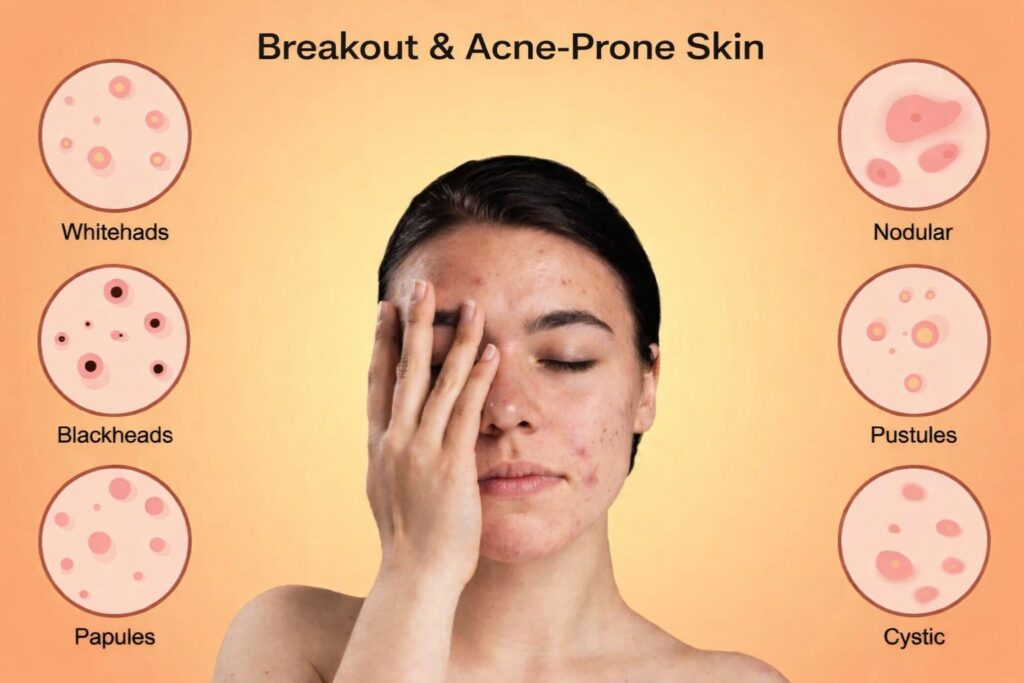
Breakout-prone skin is skin that tends to develop:
- Pimples
- Whiteheads
- Blackheads
- Clogged pores
- Small bumps
- Inflamed acne
- Congestion around the forehead, cheeks, chin, or jawline
Some people naturally have oily and acne-prone skin, while others only break out when they use the wrong products, wear heavy makeup, or over-exfoliate. Breakout-prone skin can also be influenced by hormones, stress, sweat, diet, or poor product compatibility.
The important thing to know is this: not every product works for every skin type. An ingredient that feels rich and nourishing for one person may feel heavy and pore-clogging for someone with acne-prone skin.
Why Ingredients Matter for Breakout-Prone Skin
If your skin breaks out easily, ingredients matter more than marketing claims.
A product can say things like:
- “Dermatologist tested”
- “Natural”
- “Clean beauty”
- “Deeply moisturizing”
- “Glow boosting”
How Certain Ingredients Can Trigger Breakouts
Some skincare and makeup ingredients may contribute to breakouts by:
- Clogging pores
- Trapping oil and dead skin cells
- Creating a heavy layer on acne-prone skin
- Causing irritation that leads to inflammation
- Weakening the skin barrier
- Making oily skin feel even greasier
Ingredients to Avoid if You Have Breakout-Prone Skin
Now let’s get into the most important part: the actual ingredients to avoid if you have breakout-prone skin.
Keep in mind that no ingredient is “bad” for everyone. Skin is personal, and reactions vary. But if your skin breaks out often, the following ingredients are worth watching closely.
1. Coconut Oil
Coconut oil is often praised in beauty content because it is natural and moisturizing. But for many people with breakout-prone skin, it can be too heavy.
Why Coconut Oil May Cause Breakouts
Coconut oil can feel rich and occlusive on the skin. For acne-prone skin types, that richness may increase congestion and clogged pores.
Common Products That May Contain Coconut Oil
- Moisturizers
- Cleansing balms
- Lip products
- Face oils
- Natural skincare products
Who Should Be Extra Careful
If you have oily skin, closed comedones, forehead bumps, or frequent clogged pores, coconut oil may not be your best match.
2. Isopropyl Myristate
This is one of the most talked-about comedogenic ingredients in skincare and cosmetics.
Why Isopropyl Myristate Can Be Problematic
It is often used to make products feel silky and smooth, but for some people, it can contribute to blocked pores and breakouts.
Where It Is Commonly Found
- Primers
- Foundations
- Sunscreens
- Creams
- Makeup removers
Who Should Watch Out for It
If you notice your skin gets tiny bumps or clogged pores after using makeup or sunscreen, this ingredient may be worth checking for.
3. Lanolin
Lanolin is derived from sheep’s wool and is commonly used in skincare because of its moisturizing properties.
Why Lanolin May Not Suit Acne-Prone Skin
Lanolin can be very rich and may feel too heavy for some people with breakout-prone skin, especially if used in facial products.
Products That Often Contain Lanolin
- Thick moisturizers
- Lip balms
- Healing creams
- Barrier creams
Who Should Be Careful
If your skin clogs easily or reacts badly to heavy creams, lanolin may be one of the ingredients to avoid if you have breakout-prone skin.
4. Fragrance (Parfum)
Fragrance does not always directly clog pores, but it can irritate sensitive or acne-prone skin.
Why Fragrance Can Trigger Skin Problems
Fragrance may lead to:
- Redness
- Sensitivity
- Barrier irritation
- Increased inflammation
When skin becomes irritated, breakouts can become worse or take longer to heal.
Common Products With Fragrance
- Face washes
- Serums
- Moisturizers
- Toners
- Face masks
- Makeup products
Who Should Be Extra Cautious
If you have sensitive breakout-prone skin, fragrance is one of the biggest things to monitor.
5. Denatured Alcohol (Alcohol Denat.)
This ingredient is common in many products made for oily or acne-prone skin because it gives a lightweight, quick-drying feel.
Why Denatured Alcohol Can Backfire
At first, it may make your skin feel fresh and less oily. But over time, too much drying alcohol can:
- Strip the skin
- Disrupt the skin barrier
- Trigger irritation
- Cause rebound oil production
That can create a cycle where your skin becomes both dry and breakout-prone.
Where It Often Appears
- Acne toners
- Gel moisturizers
- Sunscreens
- Mattifying products
- Spot treatments
Who Should Be Careful
If your skin feels tight, stings easily, or gets oily shortly after cleansing, this may be one of the irritating skincare ingredients affecting you.
6. Heavy Algae or Seaweed Extracts
Algae-based ingredients can work well for some people, but others find them difficult to tolerate.
Why Algae Extract May Be an Issue
Some users with acne-prone skin report congestion or breakouts after using products rich in algae or seaweed extracts, especially in thicker formulas.
Products That May Include It
- Masks
- Moisturizers
- Natural skincare
- “Detox” or marine-based beauty products
Who Should Be Extra Careful
If you have used seaweed-based skincare and noticed more bumps or clogged pores, it may be worth avoiding for a while.
7. Heavy Silicones in Certain Formulas
Silicones are not automatically bad. In fact, many people use them without any issue. But in some heavy or poorly formulated products, they may feel too occlusive for certain acne-prone skin types.
Why Silicones Sometimes Cause Problems
Silicones can create a smooth layer on the skin. While that can be helpful, some people feel that certain silicone-heavy products trap sweat, oil, or buildup—especially when layered with sunscreen and makeup.
Common Silicone Names
Look for ingredients such as:
- Dimethicone
- Cyclopentasiloxane
- Trimethicone
Where They Are Often Found
- Primers
- Foundations
- Moisturizers
- Sunscreens
Balanced Truth
Silicones are not always one of the top ingredients to avoid if you have breakout-prone skin, but if you consistently break out after using silicone-heavy products, it may be a personal trigger.
8. Certain Oils and Butters
Not all oils are bad for acne-prone skin. Some are lightweight and skin-friendly. But others may feel too rich depending on your skin type.
Oils and Butters That May Feel Too Heavy
Examples may include:
- Cocoa butter
- Wheat germ oil
- Coconut oil
- Certain thick plant oils
Why They May Trigger Breakouts
Rich oils and butters can feel nourishing, but if your pores clog easily, they may contribute to congestion.
Where They Are Commonly Found
- Face creams
- Night masks
- Natural skincare
- Balm cleansers
- Facial oils
Best Approach
Instead of fearing all oils, learn which ones your skin tolerates well. This is a much smarter approach than avoiding everything.
9. Waxes and Heavy Emollients
Some waxes and rich emollients help lock in moisture, but they can feel too thick for oily or acne-prone skin.
Why Waxes Can Be Problematic
They may create a heavy coating that does not always pair well with skin that already produces excess oil.
Common Examples
- Beeswax
- Certain synthetic waxes
- Heavy emollient blends
Products That May Include Them
- Cream cleansers
- Thick moisturizers
- Makeup sticks
- Healing balms
If your skin gets congested easily, these may be products that cause breakouts for you over time.
10. Overly Harsh Exfoliating Ingredients
This one surprises a lot of people. Some ingredients are not pore-clogging but they can still worsen breakouts when overused.
Why Harsh Exfoliation Can Make Acne Worse
Too much exfoliation can:
- Damage the skin barrier
- Cause redness and inflammation
- Increase sensitivity
- Trigger more oil production
Ingredients to Use Carefully
- High-strength acids
- Scrubs with rough particles
- Too many exfoliating products in one routine
The Problem Is Often Overuse
Even “good” acne ingredients can become a problem if used too often. More is not always better.
Ingredients That May Irritate Sensitive Breakout-Prone Skin
Some ingredients do not directly clog pores but may still make acne-prone skin worse through irritation.
Common Irritating Ingredients to Watch
- Strong fragrance
- Essential oils in high amounts
- Harsh drying alcohols
- Rough physical scrubs
- Highly concentrated active ingredients without balance
If your skin is both acne-prone and sensitive, irritation can quickly turn into redness, inflamed spots, and a damaged barrier.
That is why the best skincare routine for acne-prone skin is usually not the most aggressive one. It is often the most consistent, gentle, and balanced one.
How to Read Ingredient Labels for Breakout-Prone Skin
Learning to read labels is one of the best habits you can build if you have breakout-prone skin.
Tips for Reading Skincare Ingredient Lists
- Check the first 5–10 ingredients
These usually make up the largest part of the formula. - Look for known triggers
If your skin has reacted to something before, write it down. - Do not judge a product by the front label only
“Natural,” “clean,” or “non-toxic” does not always mean acne-safe. - Notice patterns
If several products break you out and they all share one or two ingredients, that is useful information. - Introduce one new product at a time
This helps you know what is actually causing the issue.
What Ingredients to Look for Instead
Knowing the ingredients to avoid if you have breakout-prone skin is helpful but it is just as important to know what to look for instead.
Ingredients Often Loved by Acne-Prone Skin
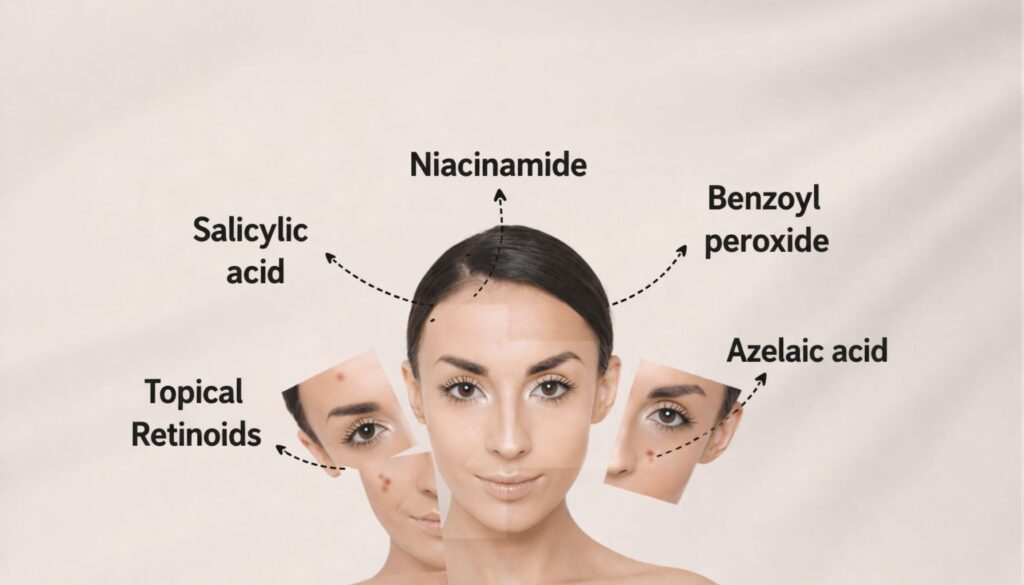
Depending on your skin’s needs, you may prefer products with:
- Niacinamide
- Salicylic acid
- Zinc
- Azelaic acid
- Glycerin
- Ceramides
- Hyaluronic acid
- Green tea extract
- Lightweight gel-based hydrators
These ingredients often support clearer skin, hydration, and a healthier skin barrier without feeling too heavy.
Skincare Shopping Tips for Breakout-Prone Skin
Buying products for acne-prone skin can feel overwhelming, especially when every brand claims to be “perfect” for breakouts.
Smart Shopping Tips
- Choose lightweight textures
- Avoid buying too many active products at once
- Be cautious with heavily fragranced skincare
- Patch test new products when possible
- Focus on simple, balanced formulas
- Do not change your whole routine overnight
A calm, consistent routine usually works better than constantly trying new “miracle” products.
Common Mistakes People Make With Breakout-Prone Skin
Even if you avoid the wrong ingredients, some routine habits can still trigger breakouts.
Mistakes to Avoid
- Using too many acne treatments at once
- Over-washing your face
- Skipping moisturizer because your skin is oily
- Trying every trending product online
- Using heavy makeup without removing it properly
- Ignoring ingredient lists completely
Breakout-prone skin often does best with a routine that is simple, gentle, and realistic.
FAQs
1. What ingredients clog pores the most?
Common ingredients that may clog pores for some people include coconut oil, isopropyl myristate, lanolin, and certain heavy oils or waxes.
2. Is fragrance bad for acne-prone skin?
Fragrance is not always a direct acne trigger, but it can irritate sensitive skin and worsen inflammation.
3. Are natural ingredients always better for breakout-prone skin?
No. Natural ingredients can still clog pores or irritate the skin. “Natural” does not automatically mean acne-safe.
4. Should people with breakout-prone skin avoid all oils?
Not necessarily. Some oils are lightweight and suitable for acne-prone skin. The key is finding what works for your skin personally.
5. Can moisturizer cause breakouts?
Yes, if the formula is too heavy or contains ingredients your skin does not tolerate well.
6. How do I know if a product is breaking me out?
If you notice new clogged pores, bumps, or pimples after starting a product, it may be contributing to breakouts.
Conclusion:
When it comes to ingredients to avoid if you have breakout-prone skin, the goal is not to fear every ingredient or obsess over every label. The real goal is to understand your skin better.
Some ingredients are more likely to cause issues for acne-prone skin, especially if your pores clog easily or your barrier is sensitive. By learning which ingredients may trigger breakouts, irritation, or congestion, you can make better product choices and avoid wasting money on skincare that does not suit your skin.