
If you have acne-prone skin, choosing sunscreen can feel frustrating. Many formulas seem too heavy, too greasy, or likely to clog pores. The good news is that the best sunscreen for acne prone skin does not have to make breakouts worse. In fact, the right SPF can help protect your skin barrier, reduce post-acne marks from getting darker, and support overall skin healing.
Dermatologists often remind patients that sun protection is not just for beach days. UV exposure can increase inflammation, worsen acne marks, and make sensitive skin more reactive especially if you use active ingredients like salicylic acid, benzoyl peroxide, adapalene, or retinol. That is why finding a lightweight, non-comedogenic sunscreen is one of the smartest steps in an acne-friendly skincare routine.
In this guide, you will learn how to choose the best sunscreen for acne prone skin, what ingredients to look for, what to avoid, and how to apply SPF without triggering breakouts. If you have ever searched for the best suncreem for acne prone skin, this dermatologist-informed guide will help you make a better choice.
Why Sunscreen Is Important for Acne-Prone Skin
Many people with acne skip sunscreen because they worry it will feel greasy or cause pimples. However, avoiding SPF can actually make skin concerns worse.
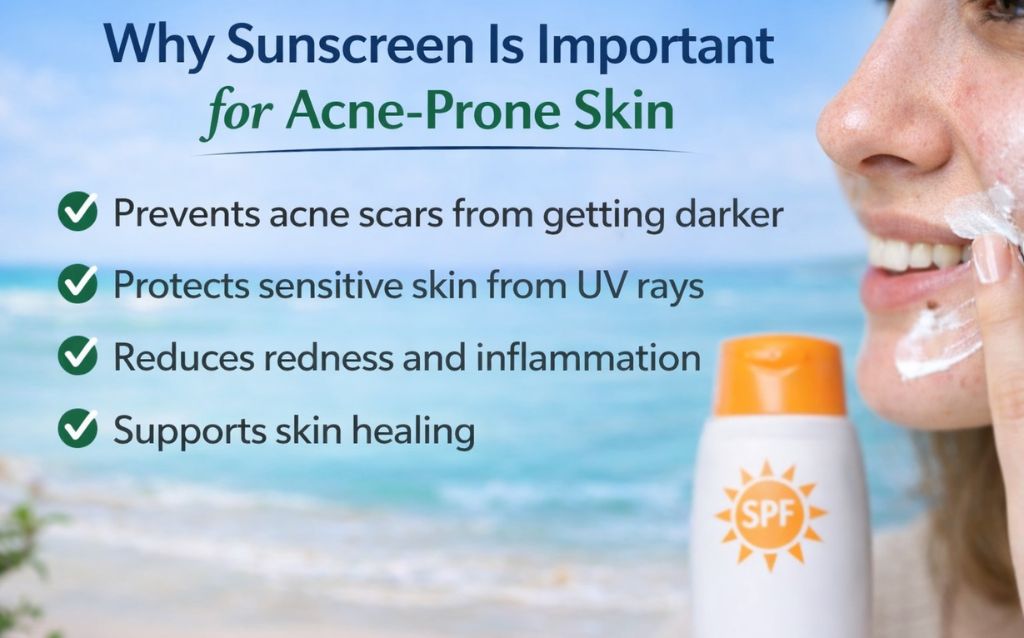
Here is why sunscreen matters:
- Prevents acne marks from getting darker
Sun exposure can deepen post-inflammatory hyperpigmentation (PIH), which are the dark marks left after pimples heal. - Protects a weakened skin barrier
Acne treatments often make skin more sensitive. Sunscreen helps reduce irritation caused by UV rays. - Reduces inflammation triggers
Too much sun can worsen redness and sensitivity, especially if your skin is already inflamed. - Supports healthy skin recovery
Protected skin tends to heal more evenly and maintain a stronger barrier.
In short, if you are serious about treating breakouts and fading acne marks, sunscreen is not optional it is essential.
How to Choose the Best Sunscreen for Acne Prone Skin
Not every sunscreen is acne-friendly. The key is to choose formulas that protect your skin without clogging pores or leaving a heavy film.
What dermatologists recommend looking for:
1) Non-Comedogenic Formula
This means the product is less likely to clog pores. While no label can guarantee zero breakouts for everyone, “non-comedogenic” is still a good place to start.
2) Broad-Spectrum Protection
Choose a sunscreen labeled broad-spectrum, which means it protects against both UVA and UVB rays.
3) SPF 30 or Higher
For everyday use, SPF 30 is a strong baseline. If you spend more time outdoors, SPF 50 can offer extra protection.
4) Lightweight Texture
Acne-prone skin often does better with:
- gels
- fluids
- milk sunscreens
- lightweight lotions
These textures usually feel less suffocating on the skin.
5) Oil-Free or Low-Residue Finish
If your skin gets oily during the day, look for formulas described as:
- oil-free
- matte finish
- fast-absorbing
- shine control
6) Fragrance-Free (If Sensitive)
Fragrance does not always cause acne, but it can irritate sensitive or inflamed skin, especially if you are using acne treatments.
Ingredients to Look for in the Best Sunscreen for Acne Prone Skin
The right ingredients can make a huge difference in how sunscreen feels and performs on breakout-prone skin.
Acne-Friendly Sunscreen Ingredients
Zinc Oxide
A mineral UV filter that is often well tolerated by sensitive or reactive skin. It can be a good option if your skin gets irritated easily.
Titanium Dioxide
Another mineral filter that offers sun protection with a gentle feel for many skin types.
Niacinamide
This ingredient is especially helpful for acne-prone skin because it may:
- support the skin barrier
- help reduce excess oil appearance
- calm visible redness
Silica or Mattifying Powders
These help absorb excess oil and reduce shine throughout the day.
Hyaluronic Acid
Useful if your acne treatments leave your skin feeling dry or tight. It adds hydration without necessarily making the skin greasy.
Green Tea or Soothing Antioxidants
These can support irritated or redness-prone skin.
Mineral vs Chemical Sunscreen for Acne-Prone Skin
This is a common question, and the answer depends on your skin.
Mineral Sunscreen
- Sits more on the skin’s surface
- Often preferred for sensitive, reactive, or redness-prone skin
- Can sometimes feel thicker or leave a white cast
Chemical Sunscreen
- Usually lighter and more invisible on the skin
- Often easier to wear daily under makeup
- May sting sensitive skin in some cases
Dermatologist tip: If you keep reacting to sunscreen, try a fragrance-free mineral formula first. If you hate heavy textures, a lightweight chemical fluid sunscreen may be easier to wear consistently.
Ingredients to Avoid in Sunscreen for Acne-Prone Skin
Not all “bad” ingredients cause acne for everyone, but certain formulas are more likely to feel too rich or irritating.
Be cautious with:
- Heavy occlusive textures if your skin clogs easily
- Strong fragrance if your skin is sensitive
- Very greasy cream sunscreens if you are oily
- Rich, balm-like formulas meant for very dry skin
- Products that feel sticky all day and trap sweat or oil
Important Reminder
A product does not need to be “perfect” for everyone. Acne-prone skin is personal. What breaks one person out may work beautifully for someone else. That is why patch testing is always a smart idea.
Best Sunscreen Types for Acne-Prone Skin
The best sunscreen texture often depends on how oily, sensitive, or dehydrated your skin is.
1) Gel Sunscreen
Best for: oily and acne-prone skin
Gel sunscreens usually feel:
- lightweight
- cooling
- less greasy
- fast-absorbing
If you dislike thick creams, this is often a great place to start.
2) Fluid Sunscreen
Best for: combination or breakout-prone skin
Fluid sunscreens are usually:
- thin
- breathable
- easy to layer under makeup
- ideal for daily wear
These are often among the best sunscreen for oily acne prone skin choices.
3) Mineral Sunscreen
Best for: sensitive, irritated, or treatment-exposed skin
A mineral sunscreen may work well if your skin:
- stings easily
- gets red fast
- reacts to active ingredients
Look for a version that is labeled lightweight or sheer to avoid a heavy feel.
4) Lightweight Lotion Sunscreen
Best for: acne-prone skin that is also dry or dehydrated
If acne treatments are making your skin flaky, a lotion sunscreen can help balance hydration and protection.
Best Sunscreen for Acne Prone Skin: Top Recommended Options
Instead of focusing only on one “perfect” product, it is better to know what kind of sunscreen profile suits your skin best.
Best Option for Oily Skin
Choose:
- gel or fluid texture
- matte finish
- oil-free formula
- non-comedogenic label
Best Option for Sensitive Acne-Prone Skin
Choose:
- fragrance-free
- mineral sunscreen
- soothing ingredients like niacinamide or zinc oxide
Best Option for Acne Marks and Daily Use
Choose:
- broad-spectrum SPF 30 or higher
- lightweight daily formula
- comfortable enough to reapply
Best Option Under Makeup
Choose:
- fast-absorbing fluid sunscreen
- no pilling
- smooth finish
- lightweight texture
Best Option for Hot and Humid Weather
Choose:
- sweat-resistant
- gel-based
- shine-control formula
Dermatologist-Style Buying Checklist
Before buying, ask yourself:
- Is it broad-spectrum?
- Is it SPF 30 or above?
- Does it feel lightweight?
- Is it non-comedogenic?
- Will I actually wear this every day?
That last question matters the most. The best sunscreen for acne prone skin is the one you will use consistently.
How to Apply Sunscreen Correctly on Acne-Prone Skin
Even the best product will not help much if you do not apply enough.
How much should you use?
For the face and neck, most adults need roughly:
- two finger lengths of sunscreen
or - about 1/4 teaspoon
Best Order in Your Routine
Use sunscreen as the last step of your morning skincare routine:
- Cleanser
- Acne treatment or serum (if using)
- Moisturizer (if needed)
- Sunscreen
Wait Before Makeup
Give sunscreen a minute or two to settle before applying foundation or concealer. This helps reduce pilling.
Reapply if Needed
Reapply every 2 hours if you are outdoors, sweating, or in direct sunlight.
Acne-Friendly Reapplication Tips
If reapplying feels messy, try:
- lightweight fluid sunscreen
- sunscreen stick for touch-ups
- SPF powder only as a backup, not your main protection
Common Mistakes People Make When Choosing Sunscreen
A lot of people think sunscreen is “breaking them out,” when the issue may actually be the formula, layering, or application habits.
Mistake 1: Choosing a Product That Is Too Heavy
If your sunscreen feels thick and greasy, you are less likely to wear enough—or at all.
Mistake 2: Skipping Sunscreen Because Your Skin Is Oily
Oily skin still needs UV protection. Oil does not protect you from sun damage.
Mistake 3: Not Patch Testing
Trying a new sunscreen all over your face immediately can make it harder to tell what caused irritation.
Mistake 4: Using Too Little
Applying a tiny amount may feel lighter, but it also lowers protection.
Mistake 5: Blaming Every Breakout on Sunscreen
Sometimes breakouts are caused by:
- hair products
- makeup
- not removing SPF properly at night
- stress or hormones
Mistake 6: Using Harsh Cleansers to “Remove” Sunscreen
Over-cleansing can strip your barrier and make acne worse. Use a gentle cleanser, and double cleanse only if needed.
Dermatologist Tips for Preventing Breakouts While Using Sunscreen
Here are some practical, dermatologist-style habits that can help your sunscreen work better for acne-prone skin.
1) Keep Your Morning Routine Simple
Do not layer too many heavy products underneath sunscreen. A simpler routine often reduces congestion.
2) Pair Acne Actives With Barrier Support
If you use:
- salicylic acid
- benzoyl peroxide
- retinoids
- adapalene
then barrier-friendly sunscreen becomes even more important.
3) Wash Off Sunscreen Properly at Night
A gentle cleanser is usually enough. If you wear makeup or water-resistant SPF, a double cleanse may help.
4) Give Products Time
Do not judge a sunscreen after one use unless it causes clear irritation. Sometimes skin needs a few days to adjust.
5) Prioritize Consistency Over Hype
A viral sunscreen is not automatically the right one for your skin. Focus on texture, tolerance, and wearability.
6) See a Dermatologist for Persistent Acne
If breakouts are severe, painful, or leaving scars, professional treatment can help far more than switching sunscreens repeatedly.
FAQS
1) Can sunscreen cause acne?
Some sunscreens may feel too heavy or irritating for certain skin types, but many acne-friendly formulas are designed to be non-comedogenic and lightweight.
2) Is mineral sunscreen better for acne-prone skin?
It can be, especially if your skin is sensitive or reactive. However, some people prefer lightweight chemical sunscreens because they feel more comfortable daily.
3) What SPF is best for acne-prone skin?
Most dermatologists recommend SPF 30 or higher for daily use.
4) Should oily acne-prone skin use moisturizer before sunscreen?
If your sunscreen is hydrating enough, you may not always need a separate moisturizer. But if your skin feels tight or dry, a light moisturizer can help.
5) Can sunscreen help acne marks?
Yes indirectly. Sunscreen helps prevent post-acne marks from getting darker and supports more even healing.
6) What is the best suncreem for acne prone skin?
The best choice is one that is:
- broad-spectrum
- SPF 30+
- non-comedogenic
- lightweight
- comfortable enough to wear every day
Conclusion
Finding the best sunscreen for acne prone skin can take a little trial and error, but it is absolutely worth it. The right SPF should protect your skin without feeling heavy, greasy, or pore-clogging. In most cases, the best option is a broad-spectrum, non-comedogenic, lightweight sunscreen that you can wear consistently every day.
If your skin is oily, go for gel or fluid formulas. If it is sensitive, try a fragrance-free mineral sunscreen. And if you are using acne treatments, daily sunscreen becomes even more important for protecting your skin barrier and preventing acne marks from getting worse.
So if you have been searching for the best suncreem for acne prone skin, start by focusing on texture, ingredients, and comfort not just hype. A sunscreen that works with your skin, not against it, can make a huge difference in your routine.